Self-Guided Heritage Trail · Savannah, GA
Stones and Squares | Trail 2
Discover the hidden stories behind Historic Savannah’s landmarks
- 1 hr 31 min
- 2.1 miles
- 10 stops
- Free
For an interactive map and audio narration, press Start this trail.
About This Trail
This second route in the Stones and Squares series follows a different path through downtown Savannah, bringing you to more familiar landmarks that reveal stories of worship, education, community, leadership, loss, and resilience.
Discover the cathedral— where enslaved children were baptized and freed alongside the sacraments—and the forgotten burial ground of the enslaved, resting quietly in one of her squares beneath the ancient oaks; uncover the unexpected later history associated with Sherman’s headquarters and its longstanding African American legacy.
The Route
1The Cathedral Basilica of Saint John the Baptist
Location: 222 East Harris Street
___
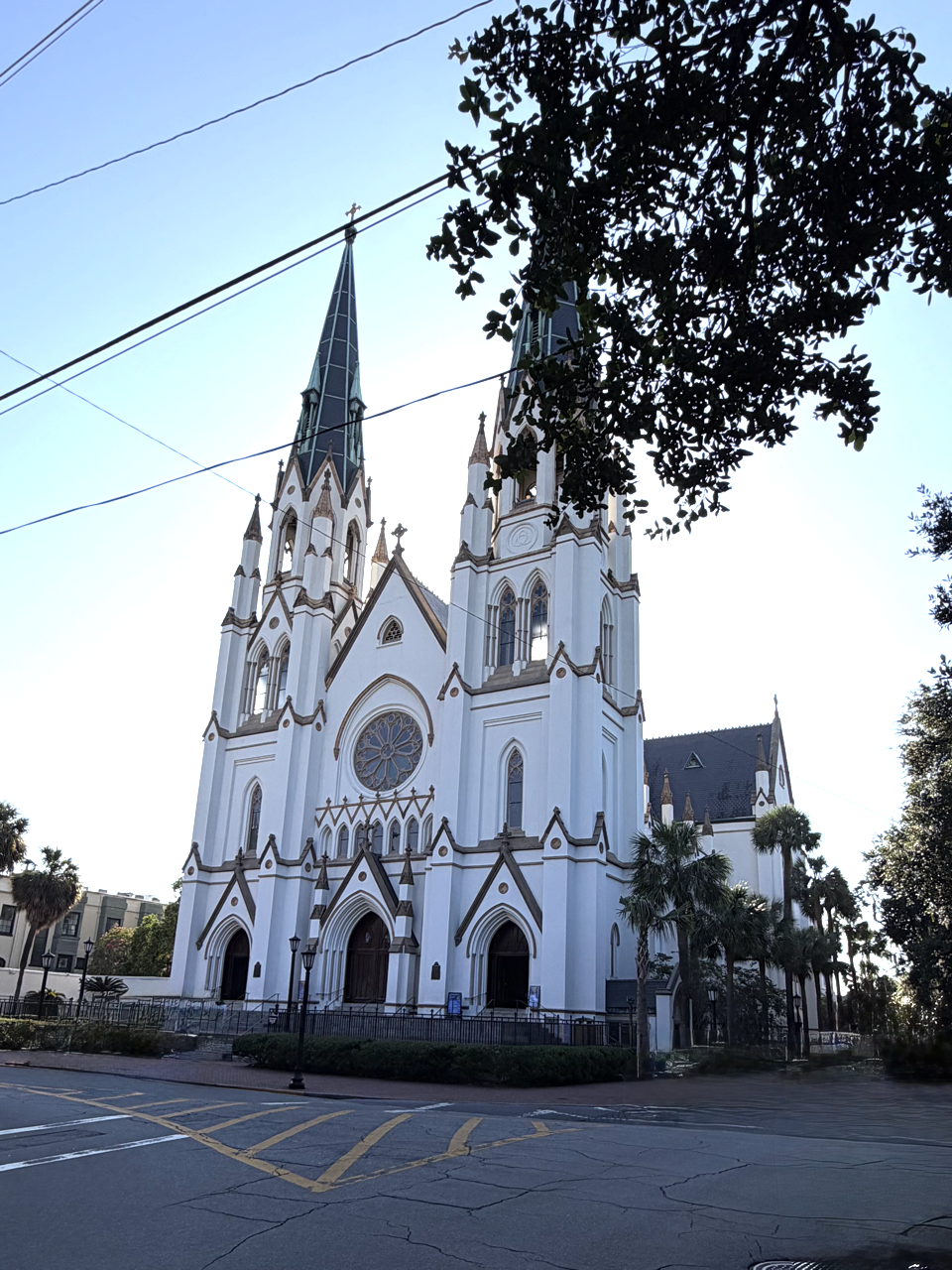
The cathedral rising before you wasn't built by Savannah's establishment. It was born in a refugee's kitchen.
The congregation that would become Saint John the Baptist began as the Congrégation de Saint Jean-Baptiste, and it found its early leadership in a man whose life held all the contradictions of his age: Pierre Michel Joseph Mirault.
He arrived in Savannah sometime between 1791 and 1794, fleeing the upheaval of the Haitian Revolution in St. Domingue. He was a baker. He was also a slaveholding planter — a man who enslaved others, and a Catholic refugee seeking a new beginning. And it was in his home that the first documented Catholic worship in Savannah took place, gathering under the clerical authority of a fellow refugee, Father LeMoyne.
For some time, the small congregation met within Mirault's own walls, until reinforcement arrived in the person of another Saint-Domingue refugee — Father Olivier LeMercier. He was a French Augustinian priest sent down from Baltimore by Bishop John Carroll in 1796. And then something extraordinary entered the church registers. Between 1797 and 1801, Father LeMercier baptized nine enslaved children and, in the very same act, freed them from slavery. The records set it down plainly: liberation, written in ink, right alongside the sacraments. Their entry into the faith and their entry into freedom, bound together in a single moment.
When the congregation finally outgrew a private home, it built its first true place of worship — a modest wooden chapel on Liberty Square, where the earliest masses of Savannah's catholic community were celebrated. And the first sacrament held there after the dedication says everything about the people it served. It was not a wedding, nor a Mass of Thanksgiving. It was the baptism of two enslaved Black children, held by Colonel Gordon and Louis Nicolas Allard.
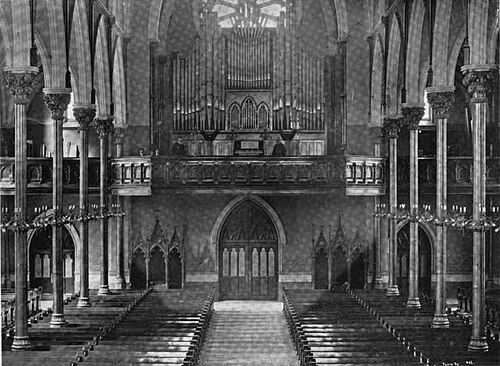
From the founding of that first church around 1804, Black and White Catholics worshipped together within a
single congregation — though the arrangement reflected the era's hierarchies, with Black worshippers seated in the gallery above the sanctuary. Even so, the participation ran deep. The parish registers record more than one hundred people of color receiving the church's sacraments between 1796 and 1808. And while the formal leadership of the Catholic Church in Savannah was predominantly White in these years, the founding congregation itself was strikingly diverse — many of the Haitian refugees who built it were Black or people of color, free men and women alongside enslaved persons who had arrived in the company of those who held them.
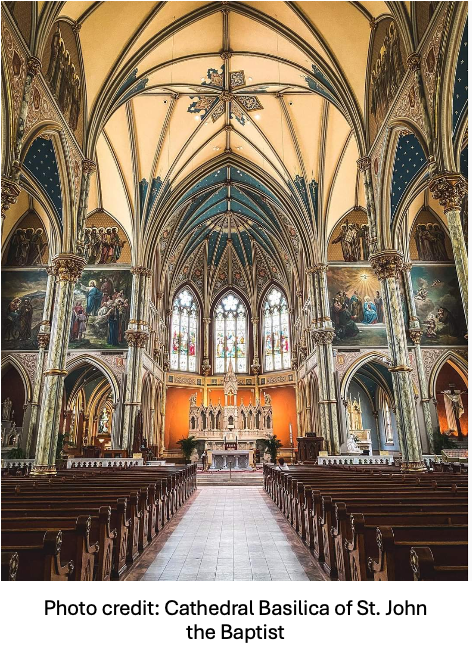
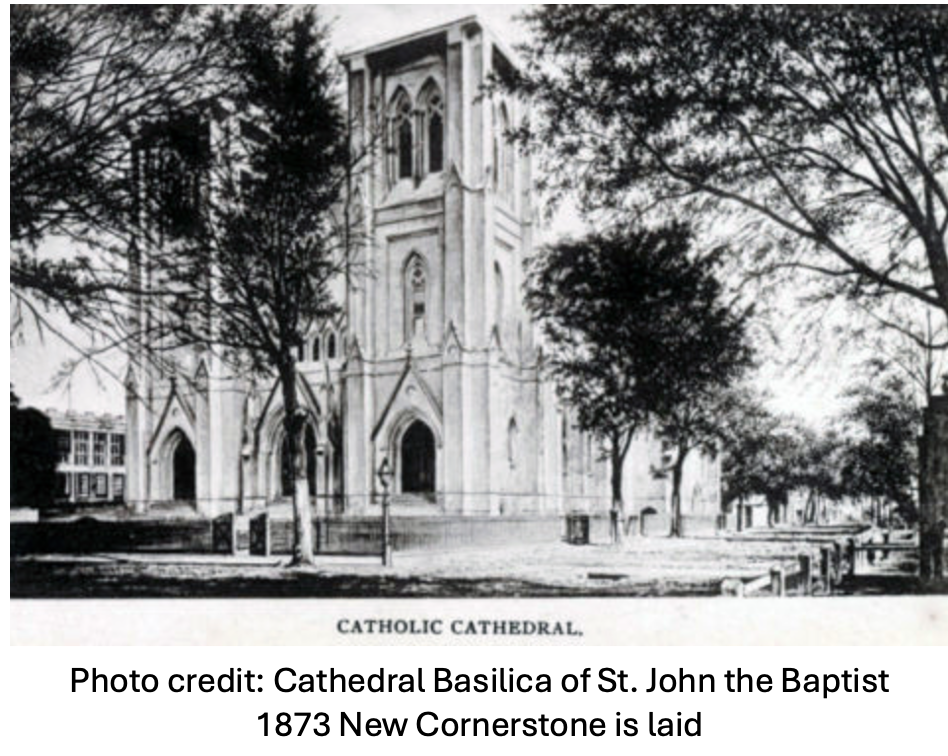
The church grew as Savannah grew. As Georgia gradually lifted its legal restrictions on Catholic worship, the parish put down deeper roots. In 1839, a more permanent brick church rose at the corner of Drayton and Perry Streets. By the 1870s, continued growth demanded something grander still: the cornerstone of the present cathedral on Lafayette Square was laid in 1873, and the church was formally dedicated in April 1876.
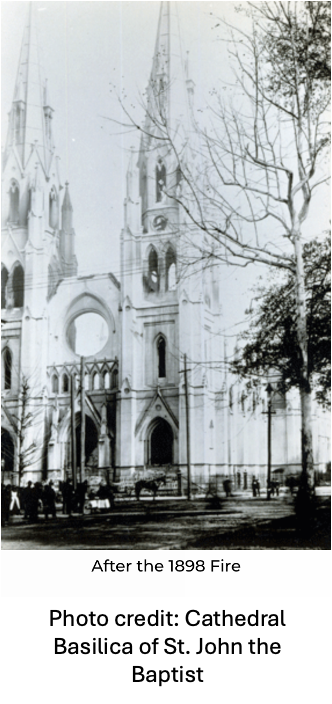
Then came disaster. On November 15, 1898, a devastating fire tore through the structure, consuming nearly everything and leaving only the exterior walls and spires standing against the sky. But the community rebuilt with remarkable speed, and the cathedral rose again, reopening its doors by 1900.
Through every era, one truth endured. This remained a gathering place for free and enslaved Black Catholics in Savannah — most of them Haitian — worshipping within the same congregation as White parishioners, in a city that enforced separation nearly everywhere else.
The history of this church doesn't begin with the stained glass. It begins with a refugee, a kitchen table, and an act of freedom.
___
Sources:
Cathedral Basilica of St. John the Baptist. "Church History."Accessed August 2, 2026
Davis, Cyprian. The History of Black Catholics in the United States. New York: Crossroad Publishing Company, 1990.
Hoskins, Charles Lwanga. Yet With a Steady Beat: Autobiographies of Early Black Savannah. Savannah: Gullah Press, 2001.
Lumpkin-White, Arva. Photograph credit.
McDonough, Gary Wray. Black and Catholic in Savannah, Georgia. Knoxville: University of Tennessee Press, 1993.
Sumler-Edmond, Janice. The Secret Trust of Aspasia Cruvellier: A Free Woman of Color in Antebellum Georgia. Fayetteville: University of Arkansas Press, 2008.
2Green-Meldrim House
Location: 14 West Macon Street
___
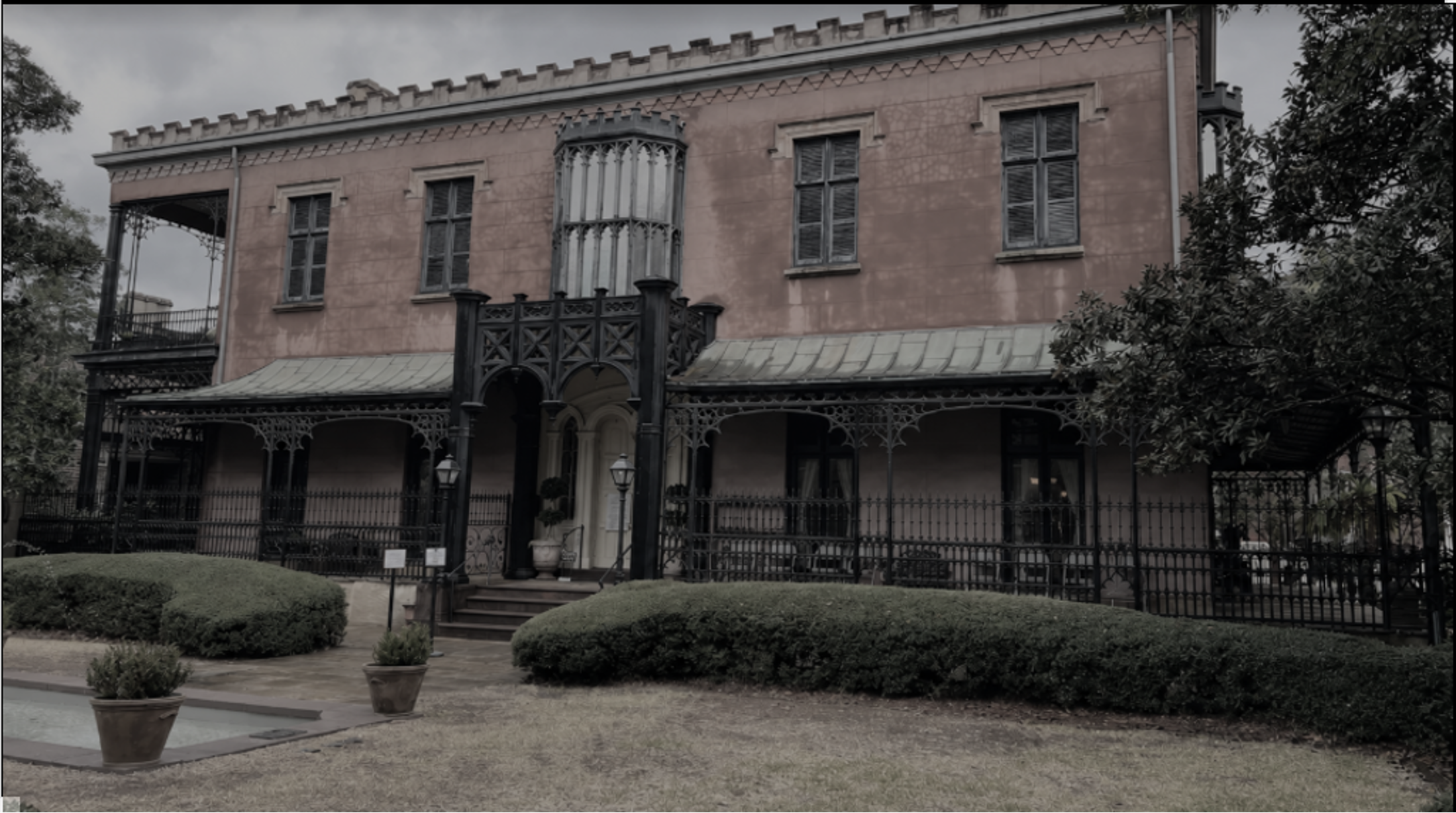
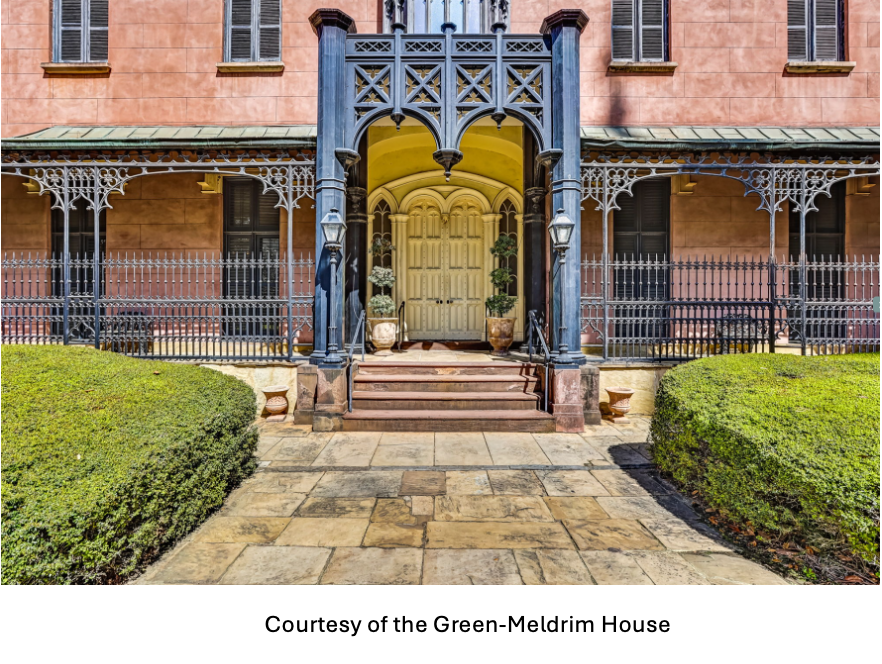
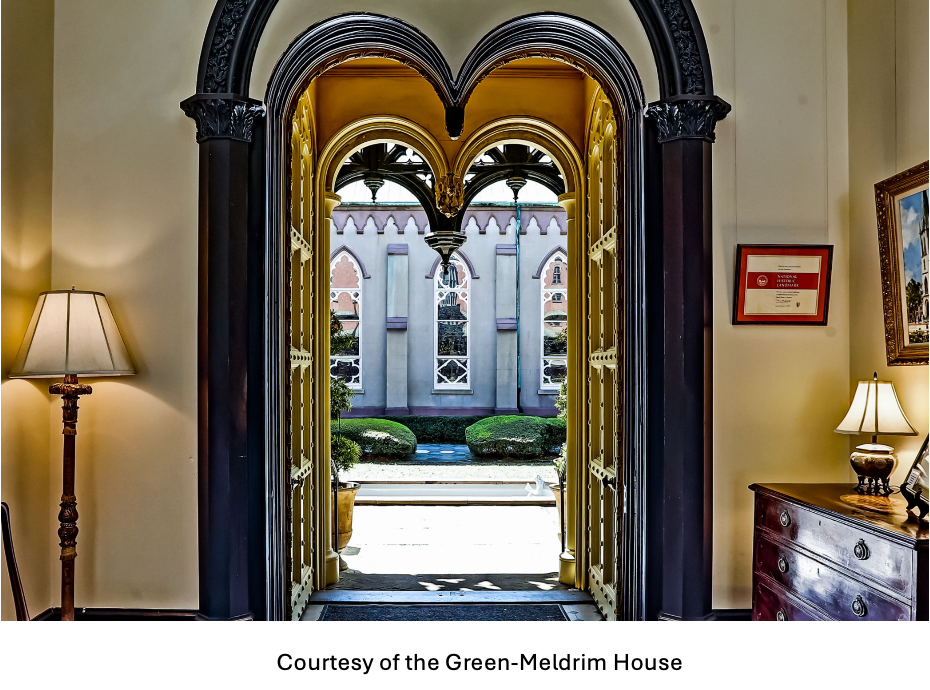
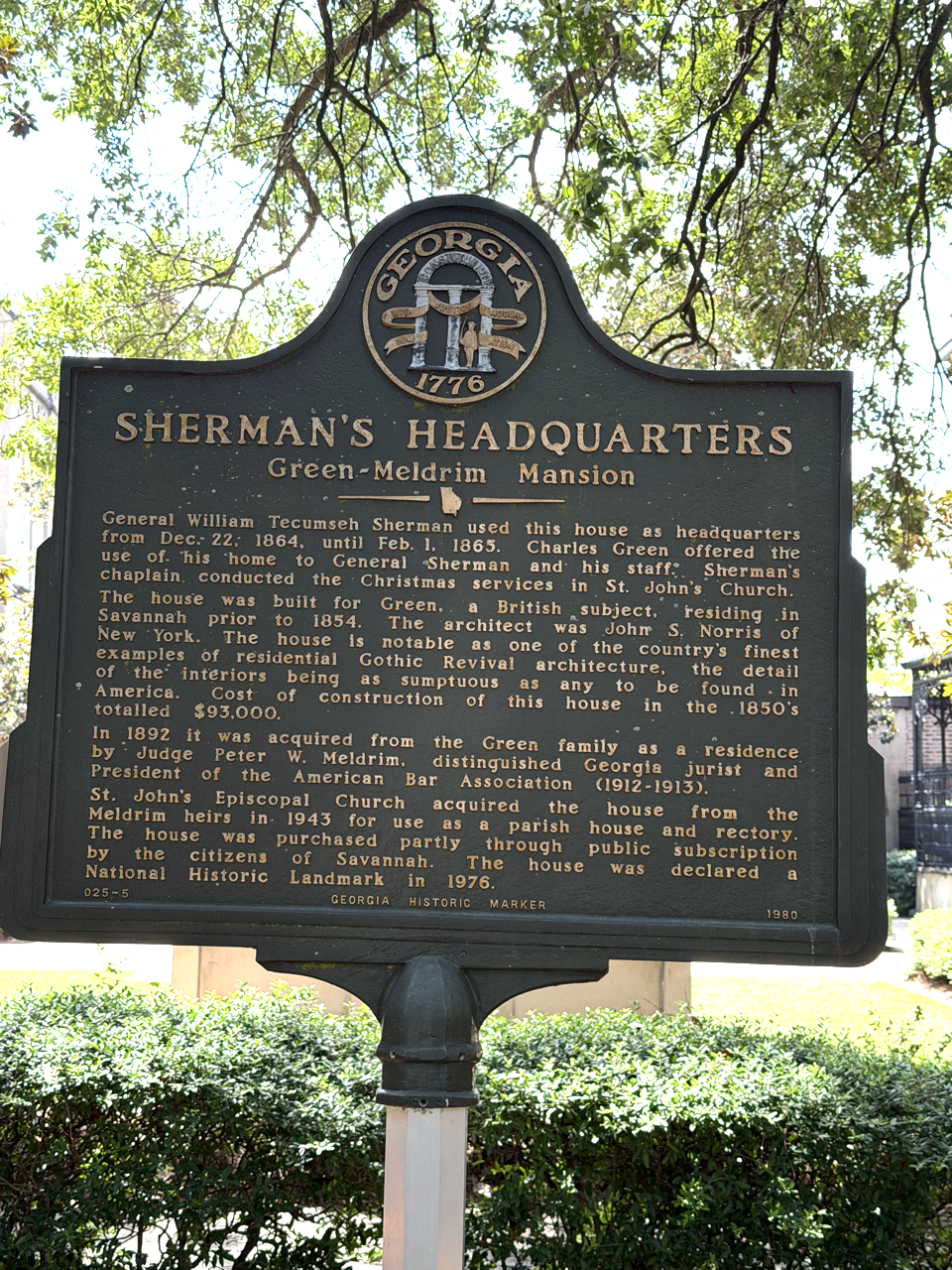
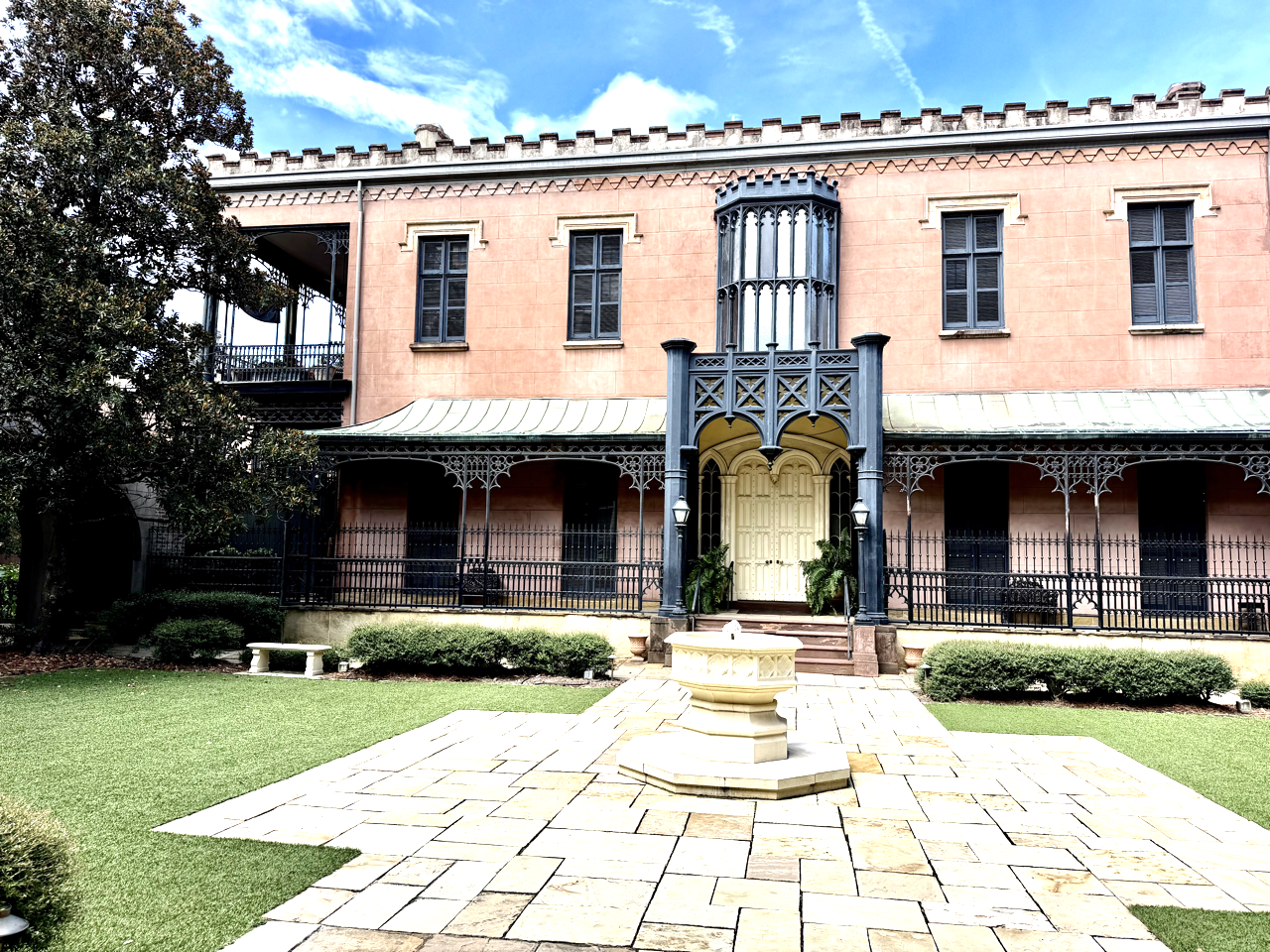
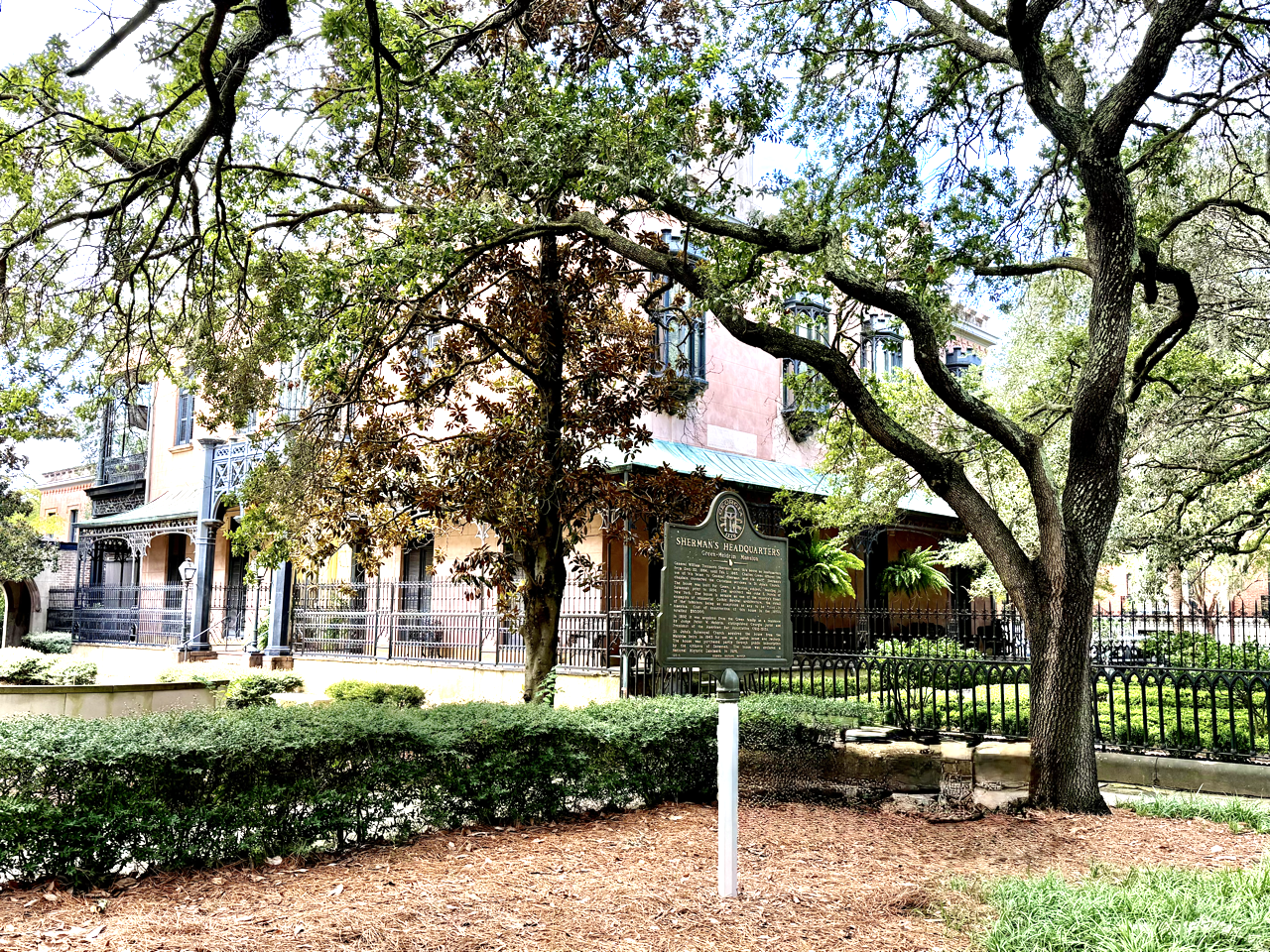
The Green-Meldrim House is best known as the Savannah headquarters of Union General William T. Sherman.
In December 1864, after his army reached Savannah, cotton merchant Charles Green offered Sherman the use of this magnificent mansion overlooking Madison Square. From here, Sherman sent President Abraham Lincoln his famous telegram presenting Savannah as a Christmas gift.
The history most often associated with this house began on January 16, 1865, when Sherman issued Special Field Order No. 15. The order reserved abandoned and confiscated coastal lands from South Carolina through Georgia and northern Florida for newly emancipated Black families. Each family could receive up to forty acres. Army mules were later distributed to some settlers, giving rise to the phrase “forty acres and a mule.”
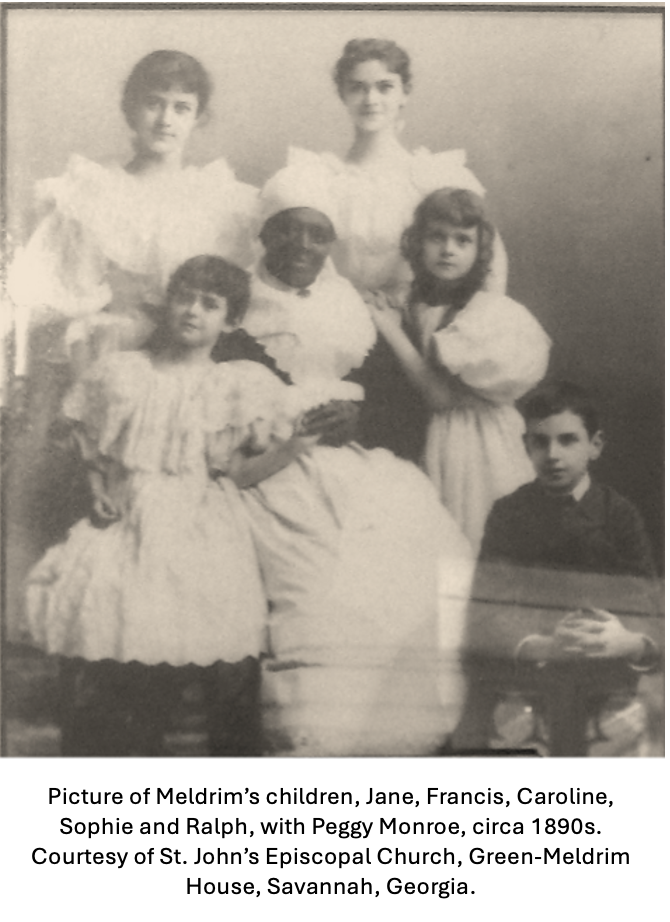
But the name Meldrim tells a lesser-known story. Peter Wiltberger Meldrim purchased the house in 1892, nearly three decades after Sherman occupied it. As a sixteen-year-old, he served in Savannah’s Confederate defenses during the Civil War. He later became one of Georgia’s most prominent attorneys, serving as a superior court judge, a state senator, the mayor of Savannah, and president of the American Bar Association. Today, the Green-Meldrim House is recognized as one of the finest examples of Gothic Revival residential architecture in the American South.
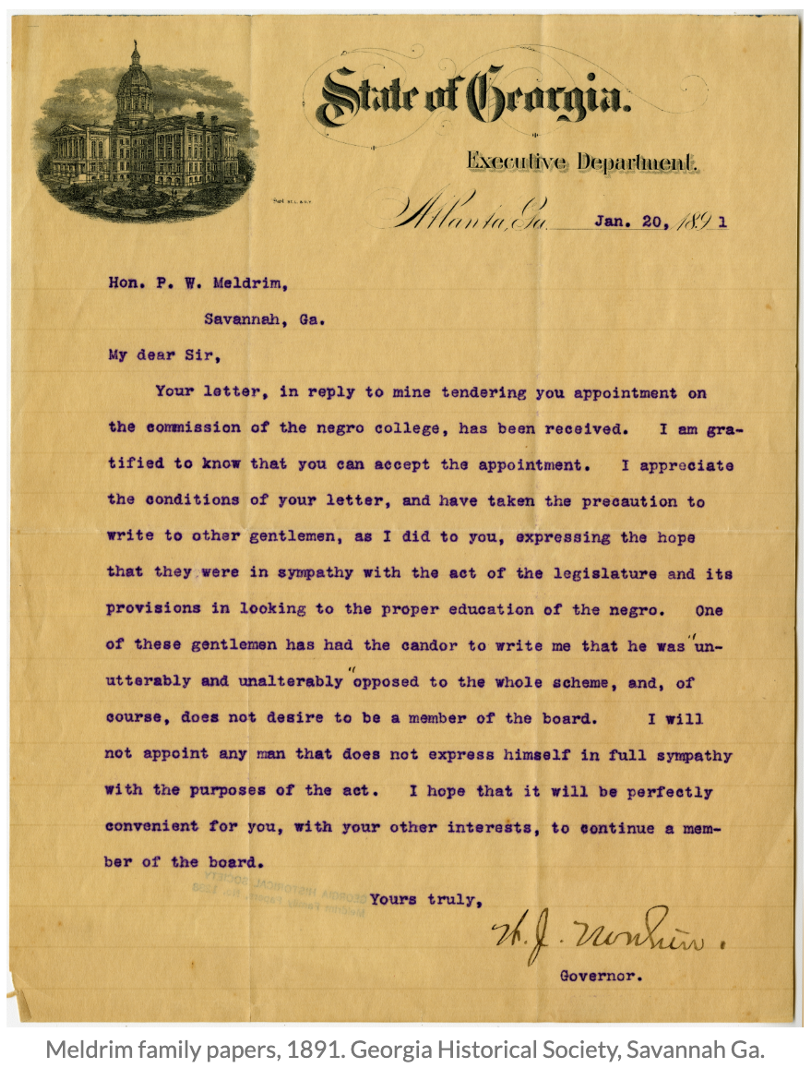
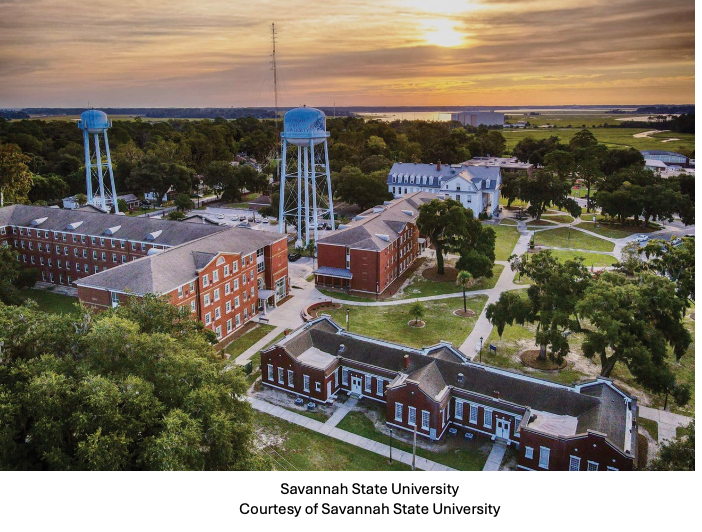
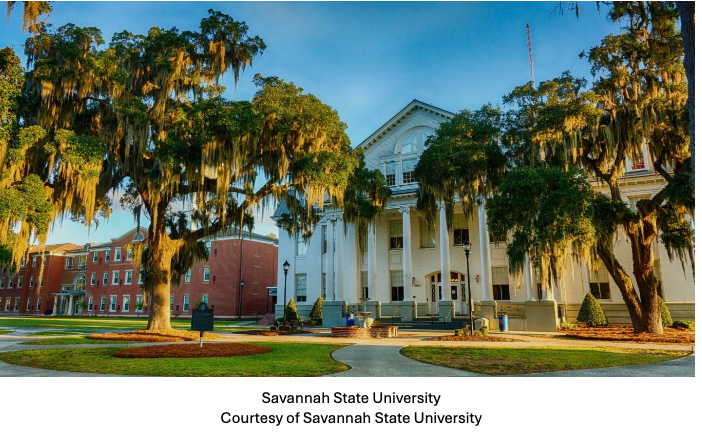
During Meldrim’s administration as mayor, Savannah’s official reports documented severe overcrowding in Black schools and the poor physical condition of many rural schools serving African American children. In 1891, at the request of Georgia Governor William J. Northen, Meldrim was asked to serve on the commission for the new “negro college.” He chaired the state commission and was responsible for locating Georgia’s new public college for Black students. Through his leadership, he played a central role in establishing the Georgia State Industrial College for Colored Youth, now known as Savannah State University, Georgia’s oldest public historically Black university.
When President William Howard Taft visited Savannah in 1912, Meldrim proudly escorted him on a tour of the college campus. In recognition of his decades of service, one of the college’s earliest principal buildings, constructed by faculty and students in 1896, was named Meldrim Hall. He remained chairman of the governing board until he died in 1933, serving a remarkable forty-two years.
Meldrim linked adequate housing to African Americans' ability to benefit from education. In the late 1880s, he developed a collection of modest cottages between West 33rd and West 34th Streets. The development became known as Meldrim Row and provided comparatively modern, affordable rental housing at a time when many Black residents were confined to deteriorated and overcrowded conditions. The homes have since been demolished.
The Green-Meldrim Household has had a legacy of remarkable contrasts. Its celebrated history begins with Sherman’s occupation, Lincoln’s Christmas gift, and the promise of forty acres and a mule. Its hidden story continues with Peter Meldrim, Meldrim Row, and the historically Black college institution that still stands today as Savannah State University—three histories connected by the long and unfinished struggle to define what freedom would mean after slavery in Savannah.
___
Sources:
Elmore, Charles J. First One Hundred Years of Savannah State College, 1890–1900. Savannah: Savannah State College, 1990.
Elmore, Charles J. "Savannah State University." New Georgia Encyclopedia, July 29, 2014
Freeman, John. "Mayors of Savannah: Peter Meldrim." Freeman's Rag, November 15, 2020
William J. Northen. Letter to Peter Meldrim, January 20, 1891. Peter Meldrim Papers. Georgia Historical Society.
Lumpkin-White, Arva. Photograph credit.
Meldrim Hall, Savannah State University
SSU Impressions. "Unbroken Ground." Savannah State University Student Magazine, February 9, 2017


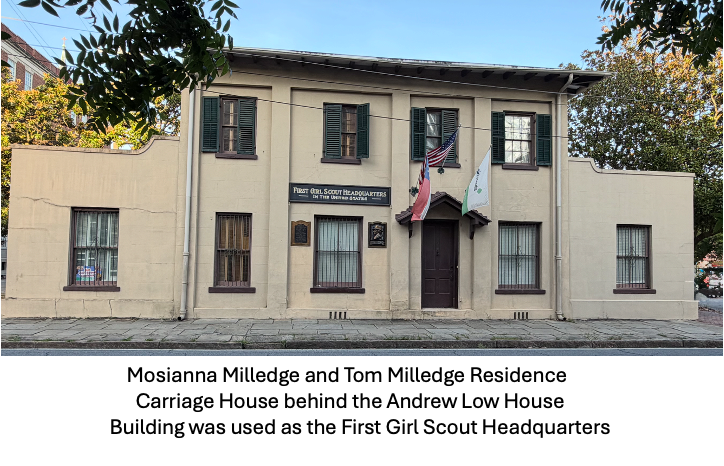
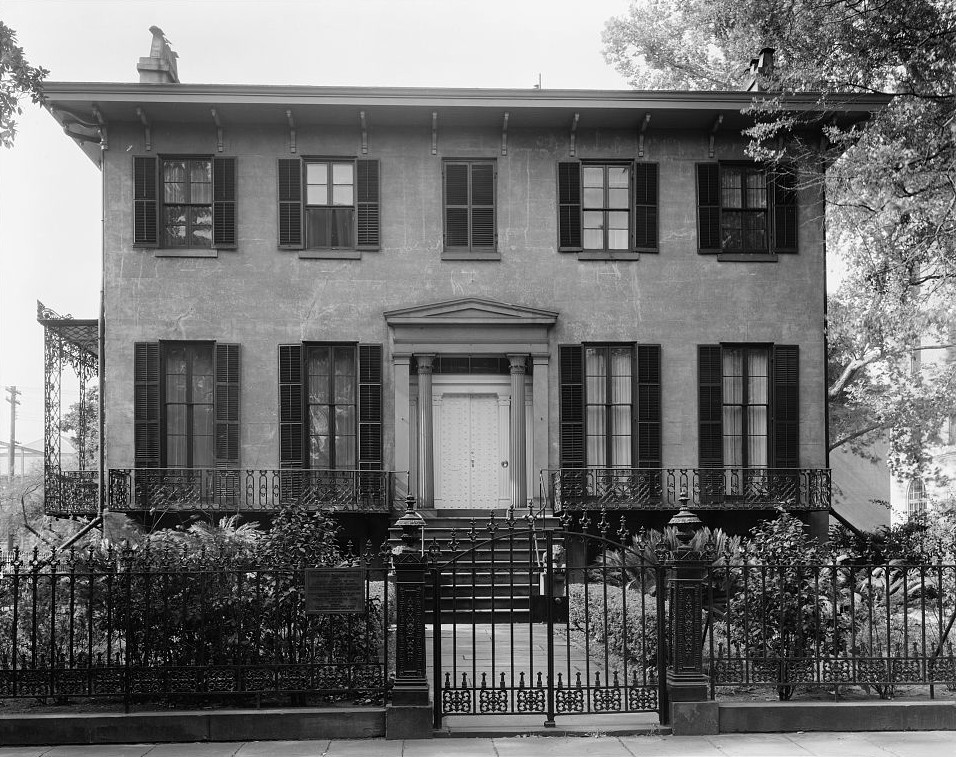
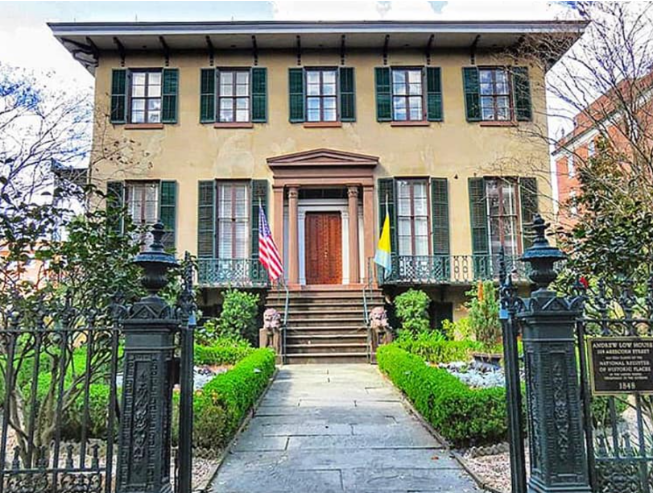
3Andrew Low House and Museum/Tom Milledge
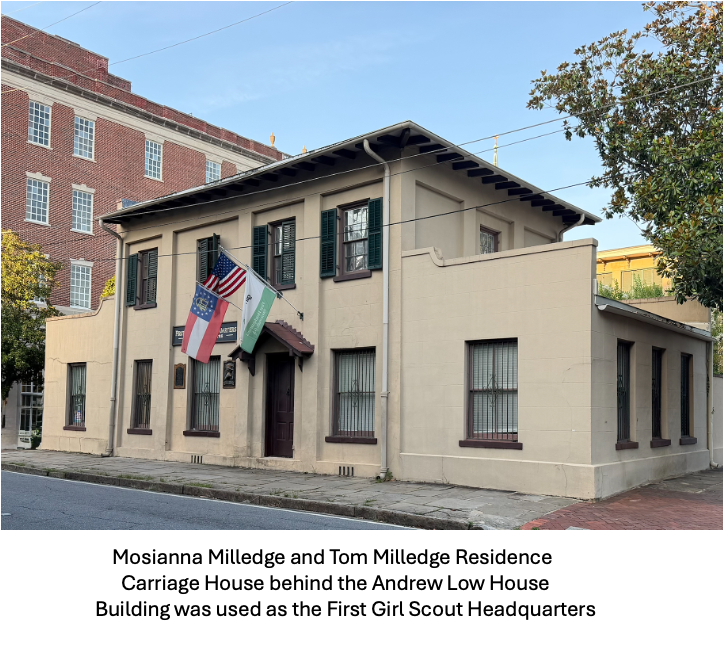
Location: 330 Drayton Street in the rear carriage house of the Andrew Low House and Museum.
___
Tom Milledge, faithful servant of Andrew Low
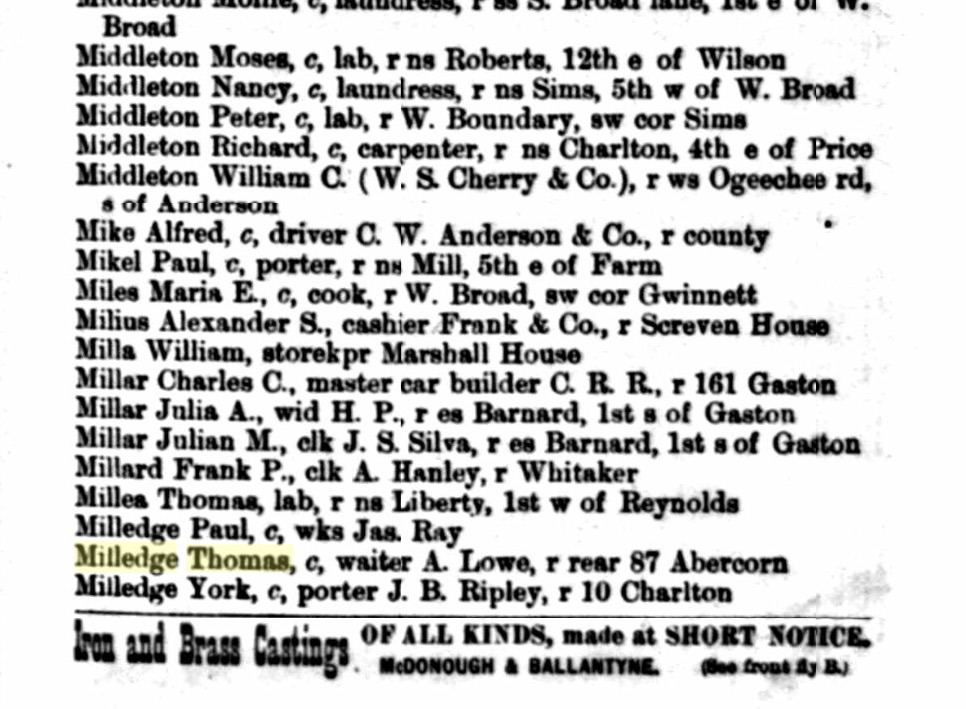
Savannah, Georgia. Thomas Milledge lived in the servants’ quarters or carriage house behind one of Savannah’s grandest residences. It is now home to the Girl Scouts Museum. Milledge's name would come to outlast the family he served. Tom — as he was called- was born into slavery in Georgia on August 20, 1818. No certificate marked the day. No record fixed the hour. He entered the world as property, his beginning unwritten.
In 1844, a slave trader named Wylly Woodbridge sold him. Tom passed first to the uncle of Andrew Low, and then to Andrew Low himself — a wealthy cotton merchant whose fortune moved on the tides of the Atlantic trade. The sale price of a human life that year for Tom was set at $398.92. With that figure, Tom became part of the household at Lafayette Square, in the mansion still known today as the Andrew Low House.
In 1860, the federal slave schedule recorded three people held by Andrew Low: two males — one of them Tom — and one female. Names were not always required. By the 1850s, Tom had risen to butler, the most trusted servant in the house. He held the keys. He ran the rooms. When the Low family sailed abroad, the entire Savannah household was left in his hands — month after month, year after year. He was not merely present in the family's life. He was woven into it.
Somewhere in those years he met Mosianna Ruth Delegall Milledge. How they found each other, and when they married, history does not say. We know only that Tom was about twenty years her senior, and that the two of them made their home in the carriage house behind the mansion. Together they had at least four children: William, born around 1857; Thomas Jr., born sometime between 1865 and 1867; Mary, born between 1870 and 1877; and Rebecca, born around 1880 — a family that spanned the divide between bondage and freedom.
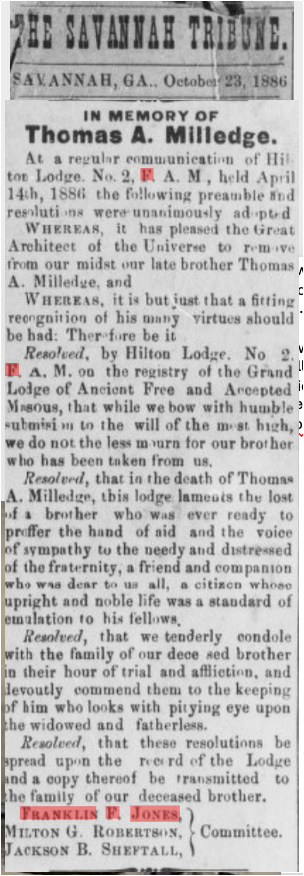
For Tom, freedom did not erase the man he had become. In 1868, he registered to vote. He joined the Black Masonic fraternity. He built a reputation in the community that had nothing to do with the house on Lafayette Square — a reputation as a leader, respected in his own right.
Andrew Low remembered him, too. In his 1879 will, Low set aside $300 per year for the rest of Tom's life, for the man he called his faithful servant. But the money never came. On February 7, 1886, Tom Milledge died — four months before Andrew Low himself. The pension intended for him was never paid.
He was buried the next day in Laurel Grove South Cemetery. Eureka Lodge No. 1 of the Colored Freemasons walked in the procession, as did the Forest City Light Infantry. And when the newspapers carried word of his death, they told two different stories of the same man. The White press praised his loyalty as a servant. The Black community celebrated his character, his leadership, and his service to his own people.
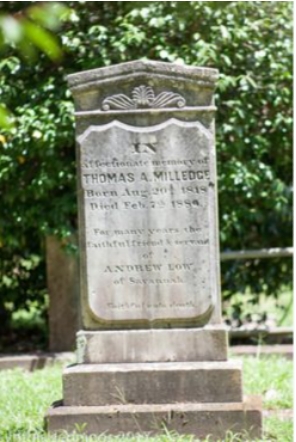
Over his grave stands a monument erected by Andrew Low. Its epitaph reads: "For many years the faithful friend and servant of Andrew Low of Savannah, faithful unto death.” The stone gives his birthdate as August 20, 1818. But that date, like so much else about his earliest years, was a guess — chosen by Low in the absence of any record, as was so often the case for those born into slavery, whose first day on earth may not have been recorded.
___
Sources:
Andrew Low House Museum. "Historical Figures: The Milledges"
Beehive Foundation. Historic photograph collection.
Cordery, Stacy A. Juliette Gordon Low: The Remarkable Founder of the Girl Scouts. New York: Viking, 2012.
Lane, Mills. Architecture of the Old South: Georgia. Savannah: Beehive Foundation, 1993.
Linley, John. The Georgia Catalog: Historic American Buildings Survey; A Guide to the Architecture of the State. Athens: University of Georgia Press, 1982.
Lumpkin-White, Arva, and others. Photograph credit.
Shooles, A. E., comp. Savannah City Directory for 1880. Savannah: Morning News Steam Printing House, 1880.
Toledano, Roulhac. The National Trust Guide to Savannah. New York: John Wiley & Sons, 1997.
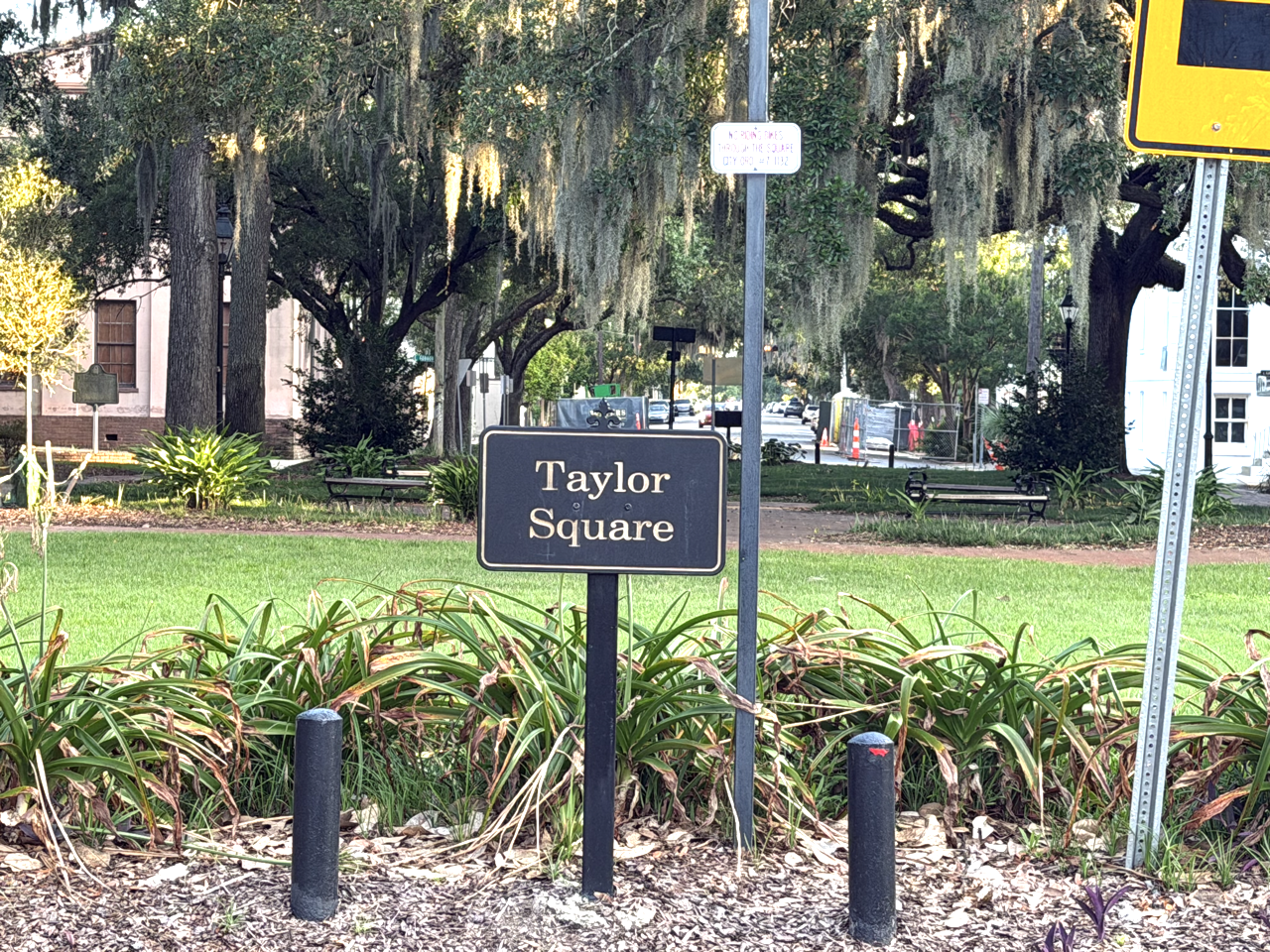
4Taylor Square (named for Susie King Taylor)
Location: 164 E Gordon Street
___
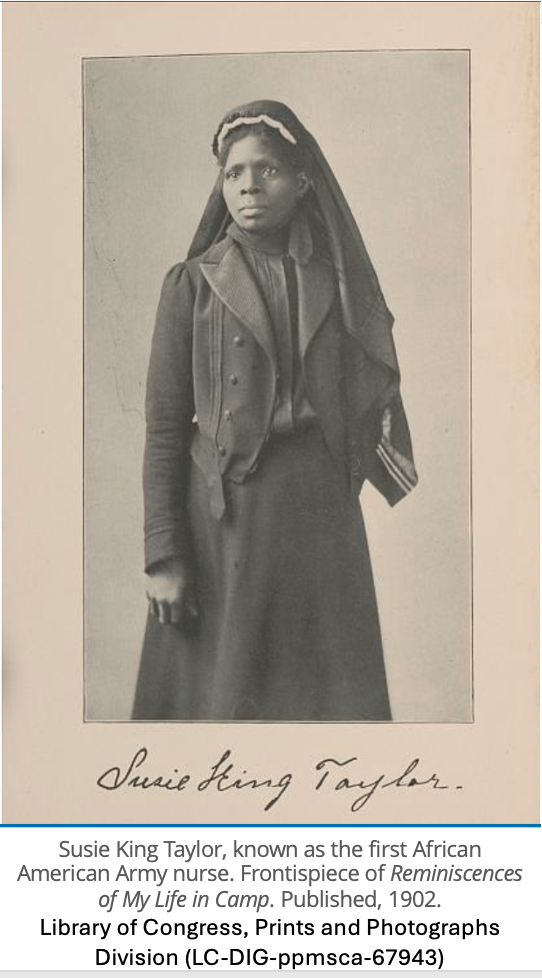
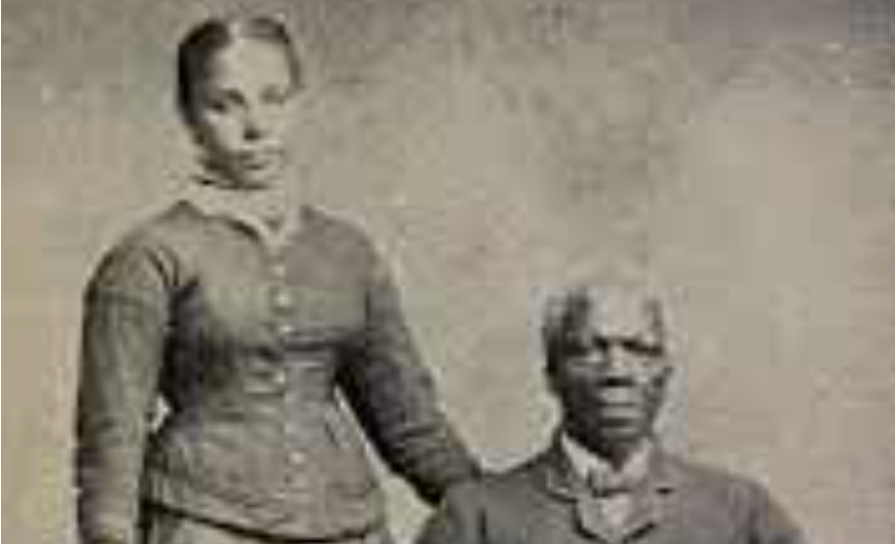
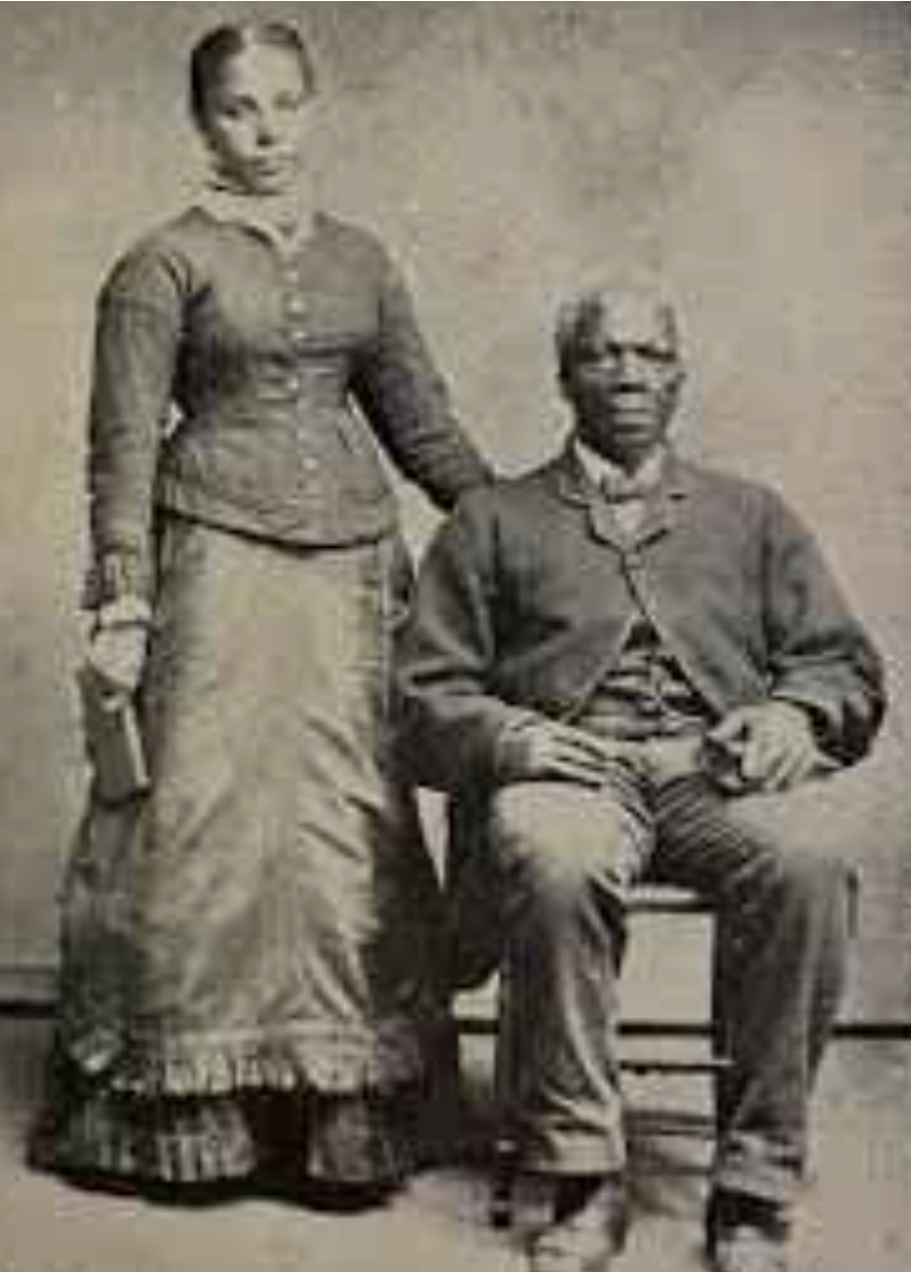
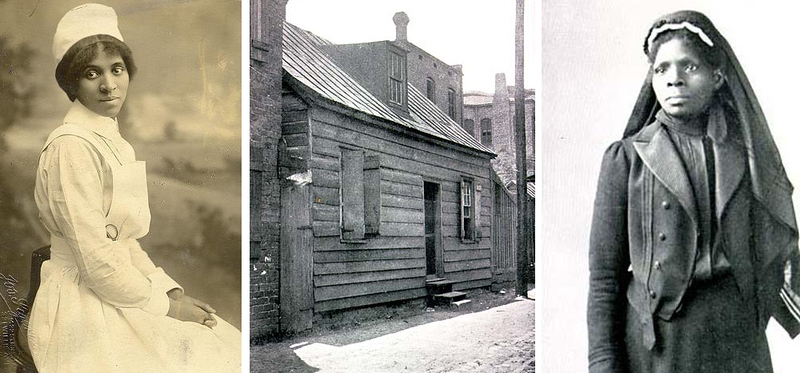
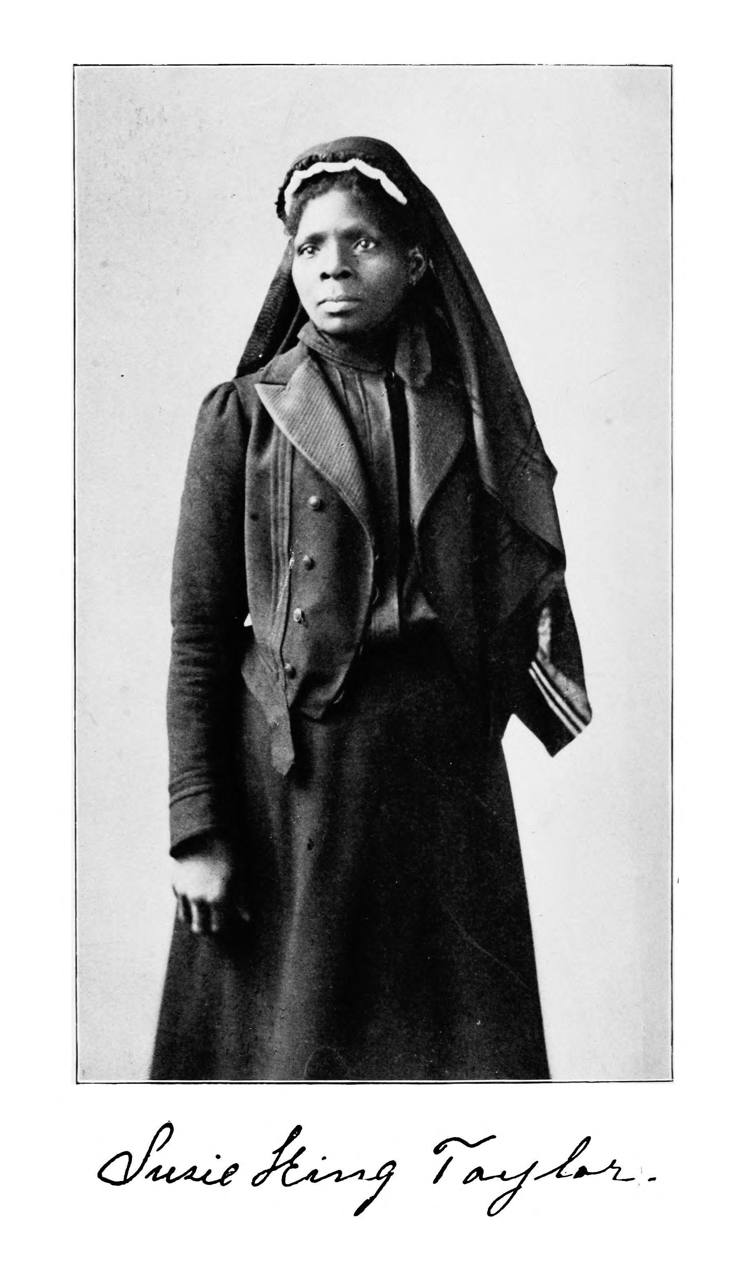
The Georgia coast, 1848. Susan Ann Baker—known as Susie—was born into slavery on the Isle of Wight’s Grest Plantation. At seven, she was sent to Savannah to live with her grandmother, Dolly Reed, a free woman of color. Susie's great-grandmother had been a midwife in the city, and her grandmother Dolly was a washerwoman who supplemented her income running a lucrative boarding house for bachelors, as well as selling chickens and eggs at city market.
Living in Savannah with her grandmother, Susie attended a secret school, now demolished, on Lot 11, Bay Lane, Warren Square. Here, Catherine Deveaux and Mary Woodhouse taught Black children to read and write—an illegal act under slavery. She took further lessons from a woman whose name, Matilda Taylor (Beasley), would also be written in history. Her grandmother bought her books, and Susie used her education for good, but also to dangerous use. A child’s handwriting turned into a key. She forged “travel passes” that helped grandmother Dolly move through Savannah after the curfew imposed on Black residents each night. Then Dolly was arrested for committing the crime of singing freedom hymns, and Susie returned to live with her mother at Fort Pulaski.
In April 1862, fourteen-year-old Susie fled slavery with her uncle and others, reaching a Union gunboat near a Confederate-held fort. On St. Simons Island, she began openly teaching enslaved children. Soon, Union commanders asked her to organize a school—and that she did.
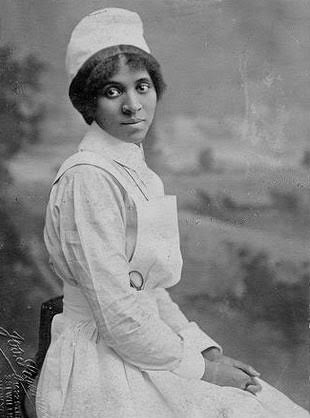
Susie later married Edward King, a soldier in the First South Carolina Volunteers of African Descent, eventually redesignated the 33rd United States Colored Troops. She followed the regiment and became recognized as the first Black Army nurse in American history. She cared for wounded soldiers and taught them to read and write—without pay.
After Edward died in 1872, Susie worked in Savannah for Mrs. Charles Green (Aminta) as a laundress. The Green family is known as the original owners of the local museum, the Green-Meldrim House. The house is famously known as General Sherman’s personal headquarters, where he organized Special Field Order No. 15, which gave rise to the term “forty acres and a mule.”
Susie traveled with the Greens to Rye Branch for the summer and served as their cook. The summering ladies at Rye Branch put on a fair where Susie won a prize for her excellent cooking. Later, traveling north to Boston, she married Russell Taylor and joined the Women’s Relief Corps. In 1893, she became president of her corps and published Reminiscences of My Life in Camp with the 33d United States Colored Troops, the only Civil War memoir published by a Black woman.
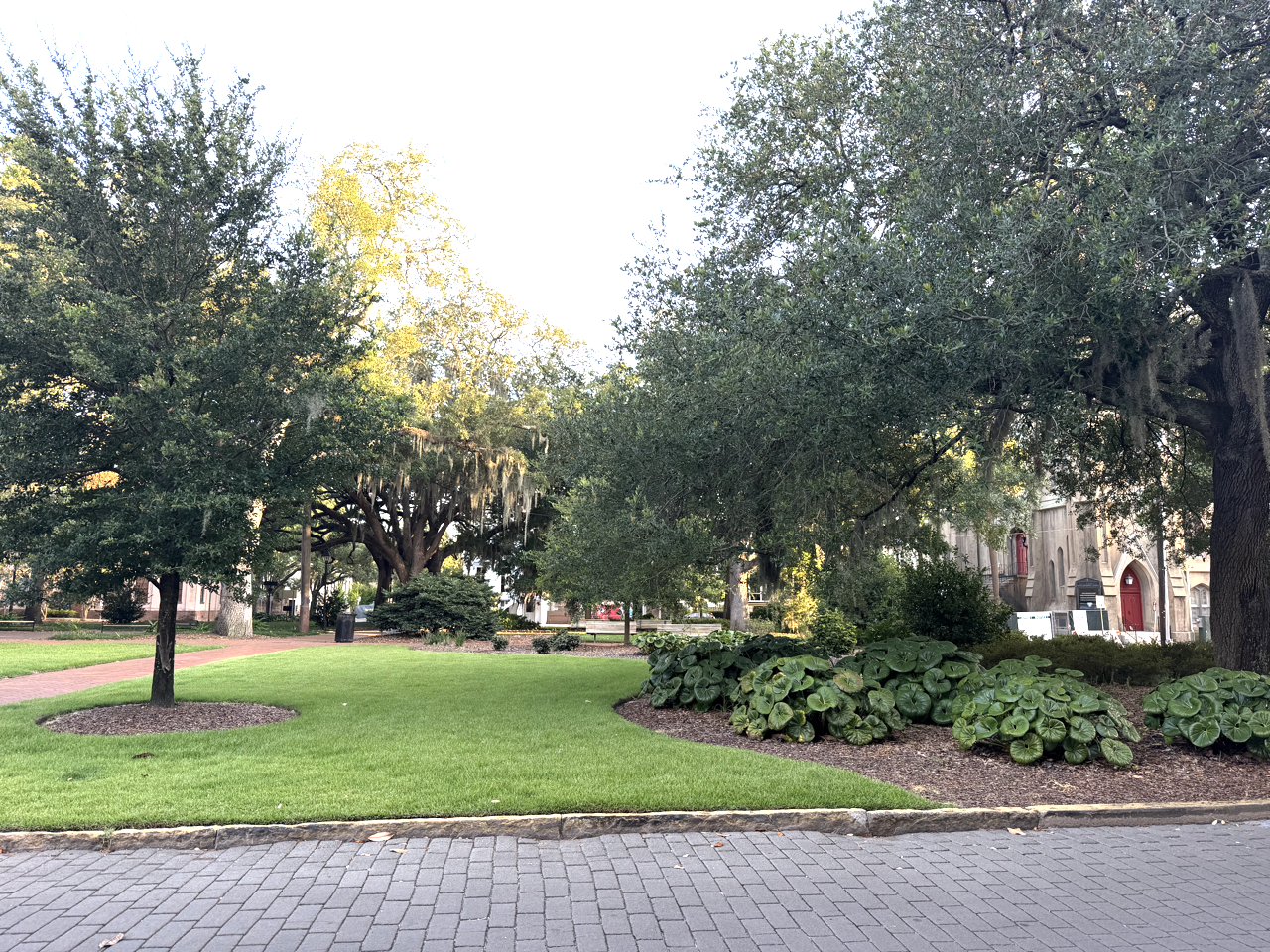
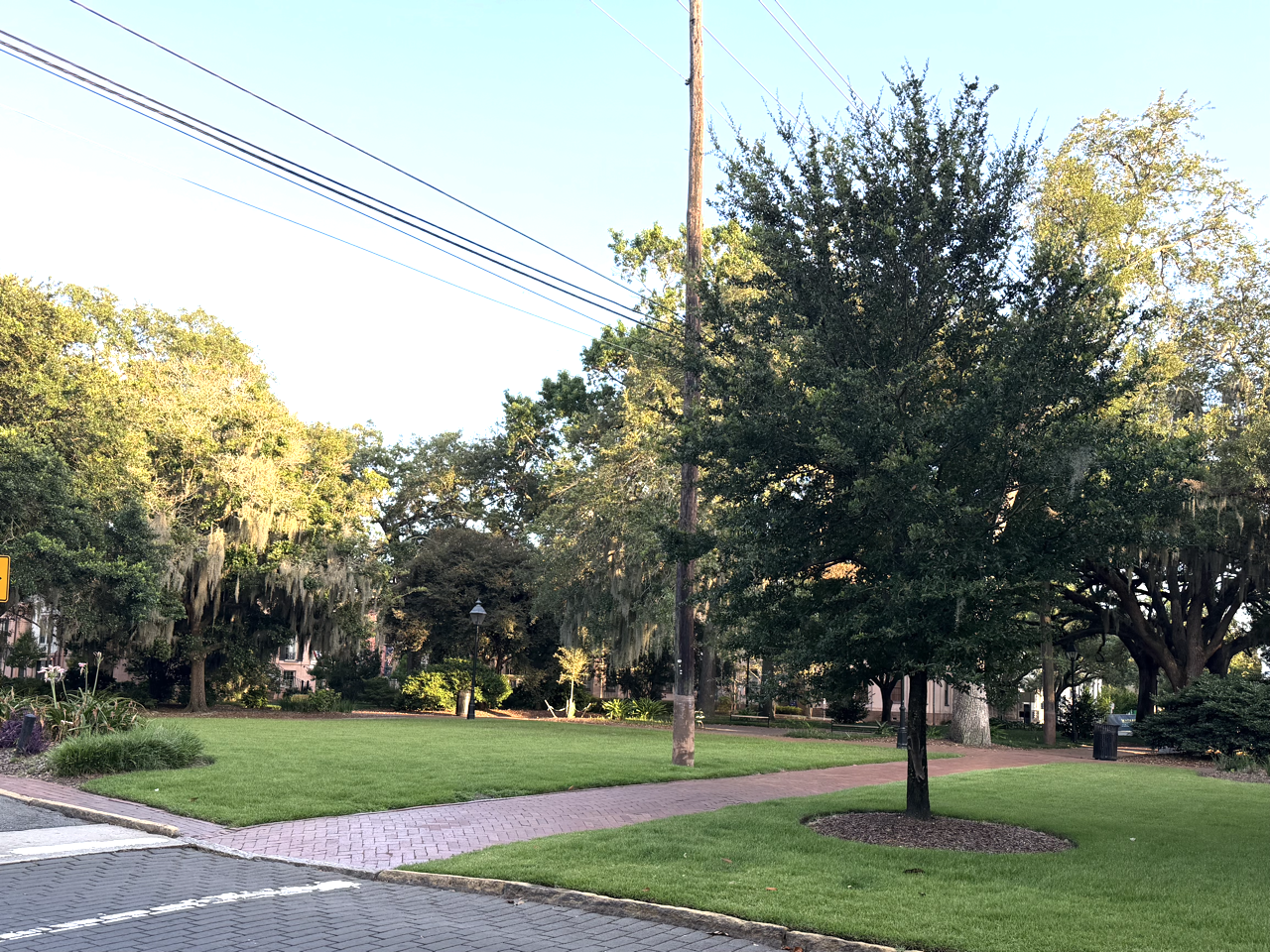
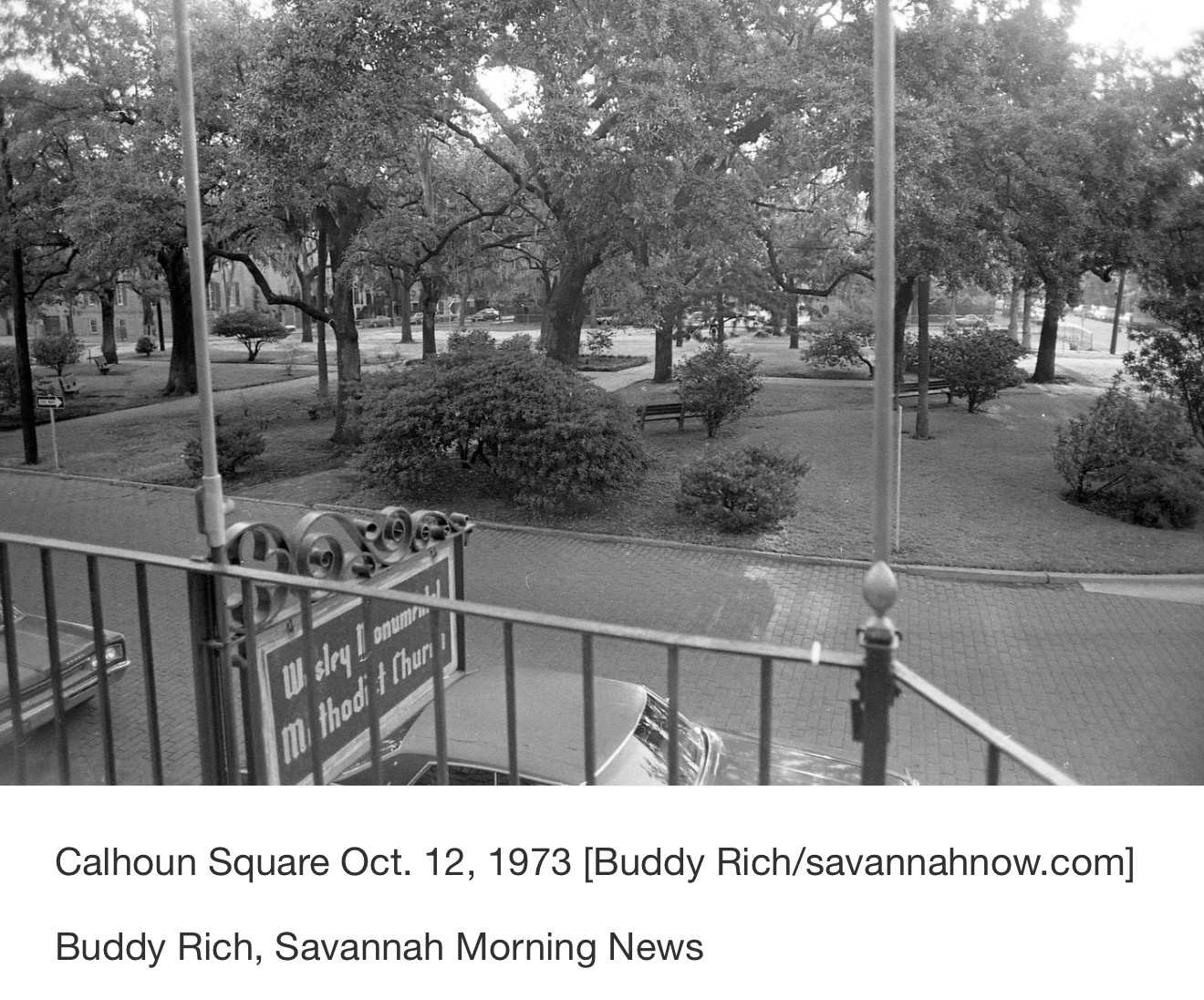
The story did not end with her death. In 2023, in the heart of historic downtown Savannah, at the corner of Abercorn and Wayne streets, a public square was rededicated in her honor. Once called Calhoun Square, it became Susie King Taylor Square — the first and only one of Savannah's twenty-two squares named for both an African American and a woman. In 2018, she was named a nominee for Georgia Women of Achievement.
From a forged pass written by a child in a darkened schoolroom, to a square bearing her name in the open light of the city — Susie King Taylor's whole life was an act of refusing the limits set for her.
___
Sources:
Bartoletti, Susan Campbell. "Teaching in Secret: The Underground Schools of Civil War Savannah." Georgia Historical Quarterly 82, no. 2 (1998): 245–268.
Boisseau, Tracey Jean. "Daughter of Savannah: Susie Baker King Taylor, 1848-1912." In Slavery and Freedom in Savannah, edited by Leslie M. Harris and Daina Ramey Berry, [155-158]. Athens: University of Georgia Press, 2014.
Taylor, Susie King. Reminiscences of My Life in Camp with the 33d United States Colored Troops, Late 1st S.C. Volunteers. Boston: Published by the author, 1902. Reprint, Mineola, NY: Dover Publications, 2014.
Visual Material Photo Credit
Prints and Photographs Division, Library of Congress (LC-DIG-ppmsca-67943)
American Battlefield Trust. "Susie King Taylor." Biographies. Accessed August 2, 2026
The Jaxson. "Susie Taylor: A USCT Story of Civil War Jacksonville." April 19, 2019

5The Whitefield Square Burial Ground
Location: 431 Habersham Street
___
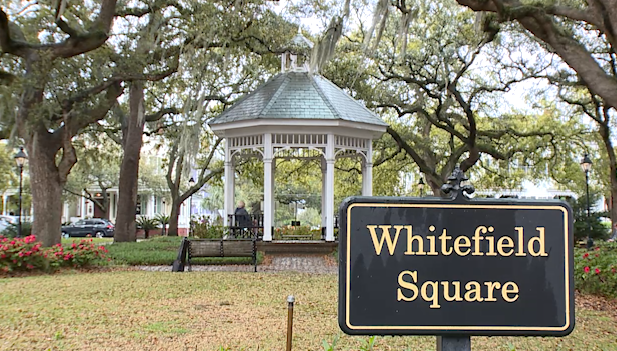
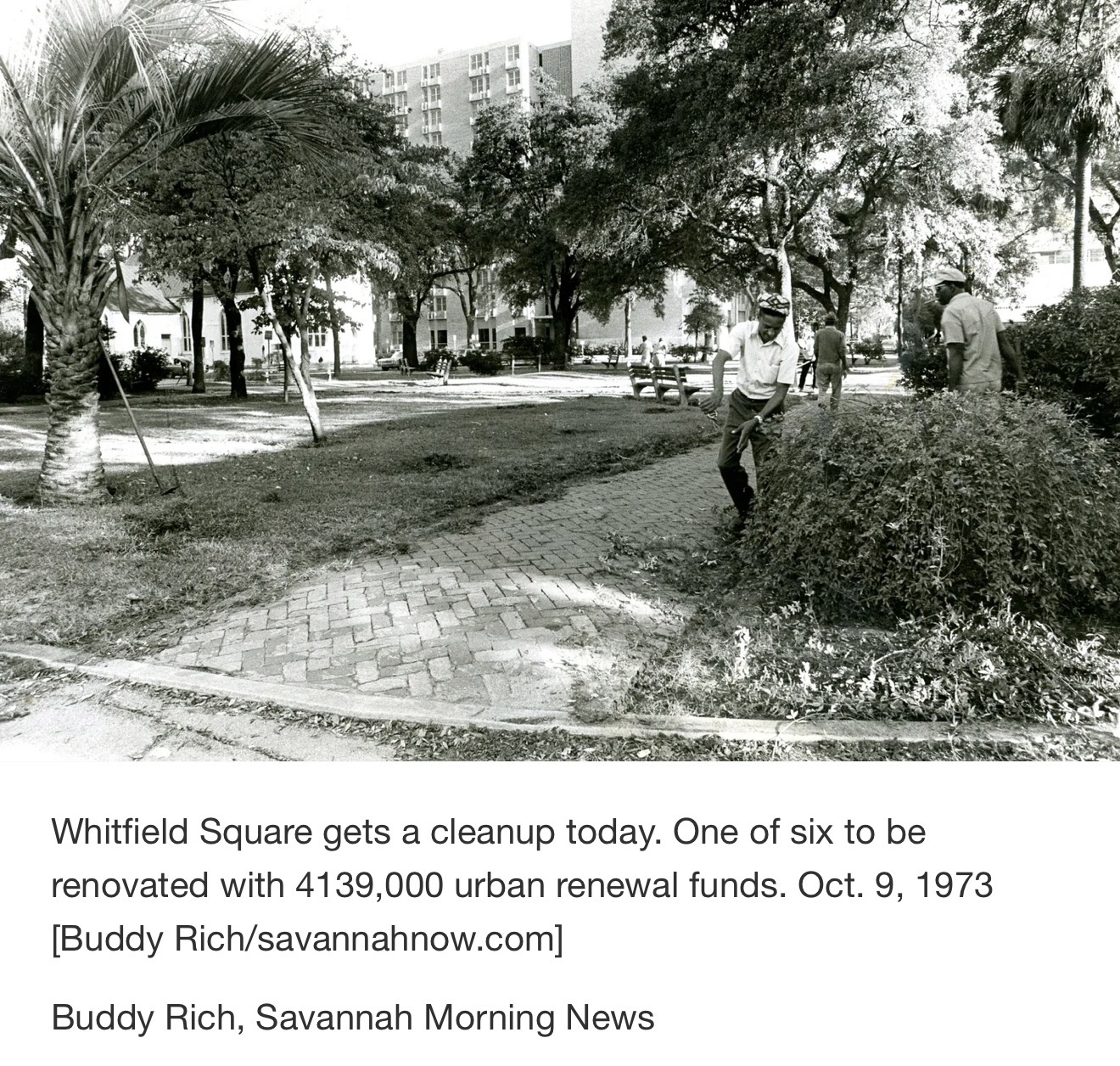
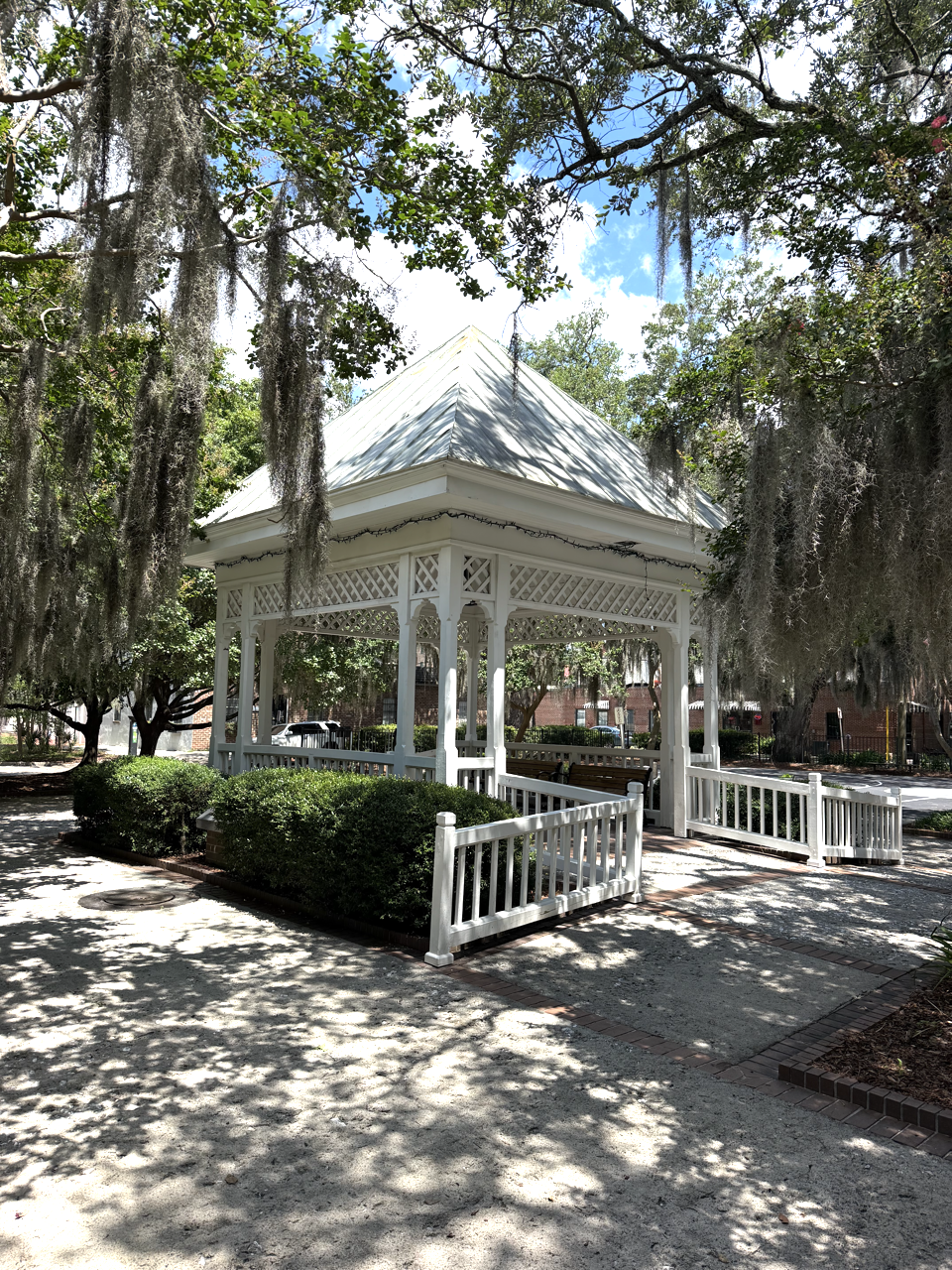
Savannah is a city of squares — twenty-two of them, laid out in green geometric calm, shaded by live oaks and laced with azaleas. Whitefield Square, with its white Victorian gazebo and its springtime blaze of color, looks like all the others. Couples are married beneath that gazebo. Children chase each other across the grass.
But the ground here remembers something the surface does not.
For nearly a century, this exact tract of land was Savannah's primary "Negro Burial Ground." From 1763 until 1844, it was the final resting place for hundreds of the city's enslaved and free people of color — the men and women whose labor built Savannah, buried at its edge. Among them lay foundational figures of the community, including Andrew Bryan, the courageous founding pastor of the First African Baptist Church, a man who had been whipped for preaching and who built a congregation anyway.
In 1844, the cemetery closed, overcrowded after eighty years of burials. And then the city did something that would echo for generations. In 1851, as Savannah expanded its famous grid, planners designed Whitefield Square directly over the central core of the old burial ground. In 1855, an order went out to move the remains to Laurel Grove Cemetery. But the relocation was never finished.
The official record said the dead had been moved. The descendants knew better. For generations, local oral history insisted that the ancestors were still here — still beneath the grass, beneath the paths, beneath the gazebo — a truth passed down through families, even as it was quietly left out of the tourism brochures and the official tours.
Then the science caught up to the memory. The city authorized a non-invasive Ground-Penetrating Radar survey of the square — a way to see beneath the soil without disturbing it. The radar returned an answer that left no room for doubt. More than eighty unmarked graves remain fully intact beneath the turf. The survey mapped a haunting mixture: some burial shafts empty, where remains had been removed — and many others undisturbed, the dead exactly where they had been laid more than a century and a half before. The 19th-century city had built a park on top of a cemetery, and apparently never disclosed the information.
The oral history was right all along.
Today, Whitefield Square is no longer managed as an ordinary recreational park. Following the radar discovery, the city reclassified it as a protected, inactive historic burial ground. When you walk these paths now, you walk on sacred ground. And the city is working with a community advisory committee to raise a permanent memorial — to honor, at last and by name, the early Black Savannahians who laid the foundations of the city that grew up around them.
___
Timeline:
1763 — The site is established as Savannah's primary "Negro Burial Ground."
1844 — The cemetery is closed after eighty years, overcrowded.
1851 — Whitefield Square is developed directly on top of the graves.
1855 — The city orders the remains relocated to Laurel Grove — but the move is left incomplete.
2026 — Modern ground-penetrating radar confirms that 80+ graves remain intact beneath the turf, validating generations of community memory.
___
Sources:
Savannah.com. "Whitefield Square." Historic District Highlights. Accessed June 18, 2026
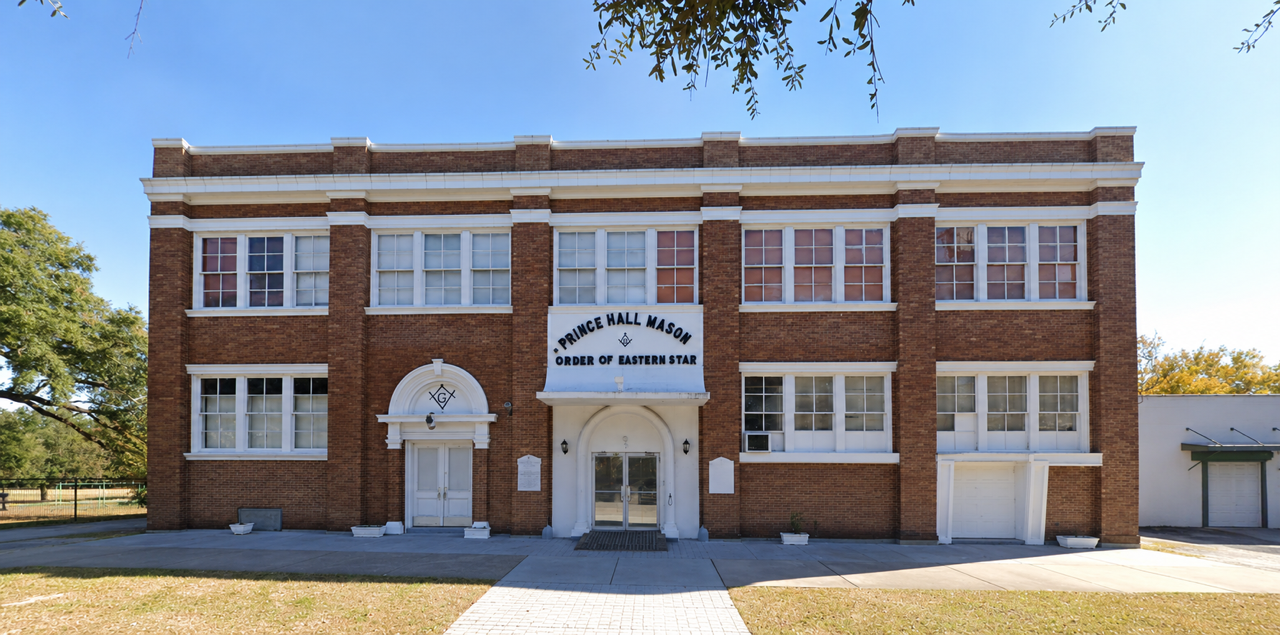
6Eureka Lodge No. 1 Ancient Free and Accepted Masons of Georgia, 1866
Location: 606 East Broad Street
___
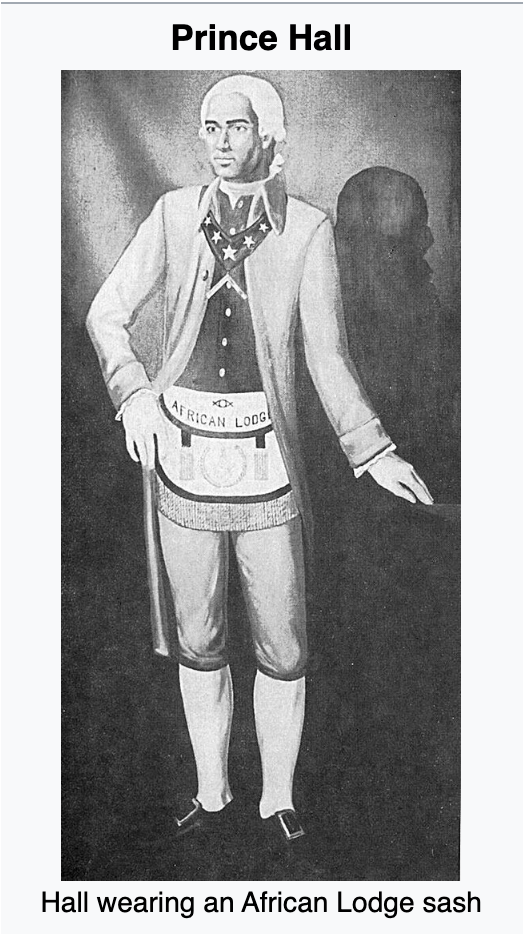
Prince Hall Freemasonry is the oldest and largest predominantly African-American fraternal organization in the world, with over 300,000 members. It aims to foster racial uplift, mutual aid, and social justice.
After the Revolutionary War, Prince Hall and several other free Black men sought admission to Boston’s white Masonic lodge but were rejected because of their race. Instead, they were initiated into a lodge attached to a British Army regiment. When the British evacuated Boston in 1776, the military lodge granted permission for the African Lodge No. 1 to continue meeting.
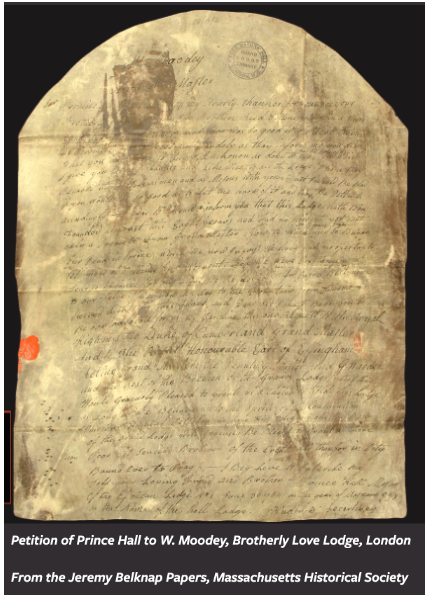
Determined to secure official recognition, Hall petitioned the Grand Lodge of England. On September 29, 1784, it issued a charter establishing African Lodge No. 459—the first officially recognized African American Masonic lodge in the United States. Hall, a successful Boston leather merchant, property owner, abolitionist, and one of America’s earliest Black civil rights leaders, used the fraternity to promote education, mutual aid, and equality. Prince Hall Freemasonry continues today, preserving the same Masonic traditions, principles, and charitable mission as mainstream Freemasonry.
In the uncertain months following the Civil War, Black Savannahians began building institutions of their own. One of the first was Eureka Lodge No. 1 of the Prince Hall Ancient Free and Accepted Masons. The organization was established here on February 4, 1866, by Reverend James M. Simms. Born a free man of color in Savannah, Simms had become a Prince Hall Mason while living in Boston. He returned home carrying more than a Masonic charter—he brought a vision for leadership, education, and mutual support in a society still struggling to accept Black citizenship.
Eureka Lodge quickly became far more than a fraternal organization. It trained community leaders, encouraged civic responsibility, cared for widows and orphans, and created a network of men committed to rebuilding their communities during Reconstruction. Among its earliest members was Reverend Alexander Harris, who would later serve as both Worshipful Master of the lodge and Grand Master of Georgia Prince Hall Masonry.
Just four years later, in 1870, Eureka Lodge joined two other lodges to establish the Prince Hall Grand Lodge of Georgia. For that reason, Eureka is remembered as the “Mother Lodge” of Prince Hall Freemasonry in Georgia—the birthplace of a statewide organization that would eventually charter hundreds of lodges and shape generations of Black civic, religious, and business leadership.
___
Early Savannah leadership
James M. Simms | Savannah | 1866 -1872
Louis B. Toomer | Savannah | 1872 -1874
John H. Deveaux | Savannah | 1874 -1883
Alexander Harris | Savannah | 1883 -1886
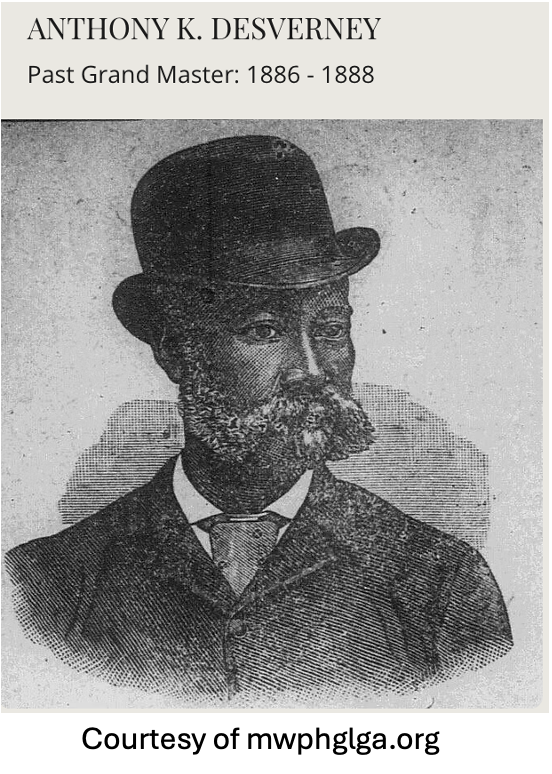
Anthony K. Desverney | Savannah | 1886 -1888
John D. Campbell | Savannah | 1889 -1894
___
Sources:
Lumpkin-White, Arva. Photograph credit.
Most Worshipful Prince Hall Grand Lodge of Georgia. "Team Members." Accessed August 23, 2026
7Matilda Taylor Beasley Park
Location: 500 East Broad Street
___
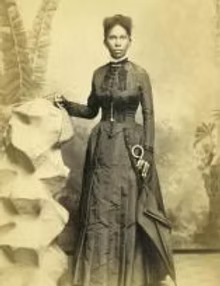
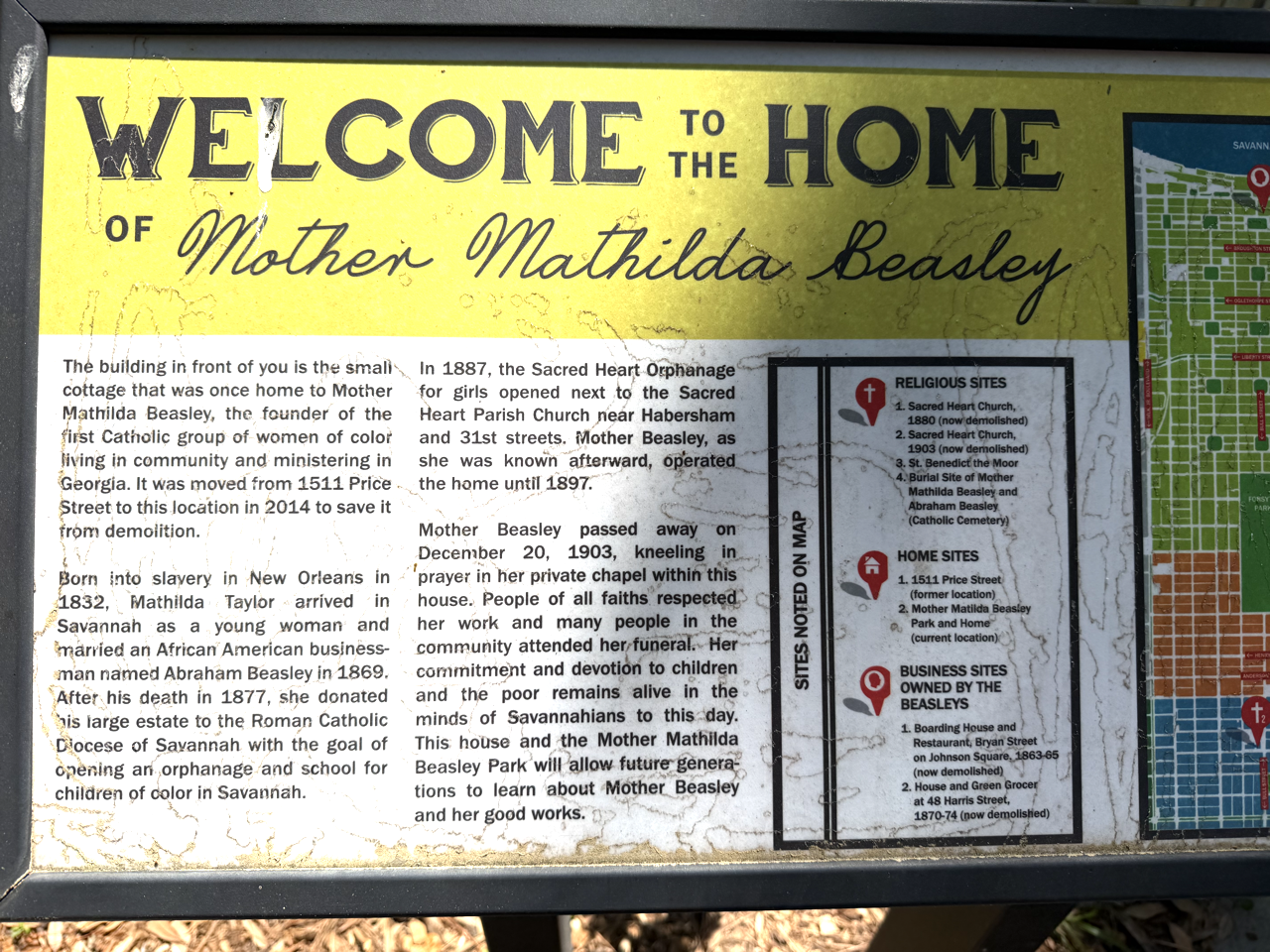
New Orleans, October 1834. In a city where bloodlines crossed and tangled in ways the law tried hard to control, a child was born into slavery. Her name was Matilda Taylor. Her father was a Native American; her mother an enslaved Creole woman. Both were held by James C. Taylor, a devout Catholic who saw to it that the infant Matilda was baptized in the great Saint Louis Cathedral. As a young, orphaned girl, she was cared for by the Sisters of the Holy Family — an order of Black nuns — and what she absorbed in their company would shape every year of the life still ahead of her.
By the time she reached twenty, Matilda had won her freedom and made her way to Savannah. There she supported herself with a needle, working as a seamstress — but she carried a second, secret vocation. She taught Black children in the illegal schools that operated in the shadows of the city. The risk was real and physical: those caught teaching Black children or adults faced fines or public whipping. Matilda taught anyway. She was undeterred.
She met her husband across the counter of a local restaurant and bar where she worked, a place owned by Abraham Beasley. Beasley was a free man of color and a formidable entrepreneur, with substantial land holdings on Skidaway Island and the Isle of Hope. He was also, by reputation, a slave trader — said to be the only Black slaveholder of his kind in the city's history, a complicated and unsettling figure in a complicated time.
The couple married in 1869 and made their home in the 300 block of Habersham Street. When Matilda could not recover the original record of her New Orleans baptism, she received a conditional baptism at the Cathedral of Saint John the Baptist, and married within the faith that had shaped her. Eight years into the marriage, Abraham died — and Matilda inherited everything: his businesses, his land, his possessions. Overnight she became a wealthy woman.
And then she did something extraordinary. Looking back across her own childhood — the slavery, the freedom, the Black sisters who had cared for her — Matilda gave it all away. She donated her entire inheritance to the Catholic Church, with one condition: that it be used to establish an orphanage for girls. A portion of this money was used by Father Oswald Moosmueller, a Benedictine missionary and educator, to start Sacred Heart Catholic Church, along with its school for Black children, in Savannah’s Victorian District in 1880. She would spend the rest of her life sheltering children with attention and care she had once received.
Matilda Beasley became Georgia's first Black nun. She devoted her remaining years to the Church and to the orphanage she founded. And when the end came, it found her exactly where her life pointed. In declining health, dressed in her full habit, Mother Matilda Beasley died in prayer in the small chapel of her own home. Beside her, it is said, were found her burial clothes, her will, and a letter of instructions — every detail of her departure arranged with the same quiet devotion that defined her living.
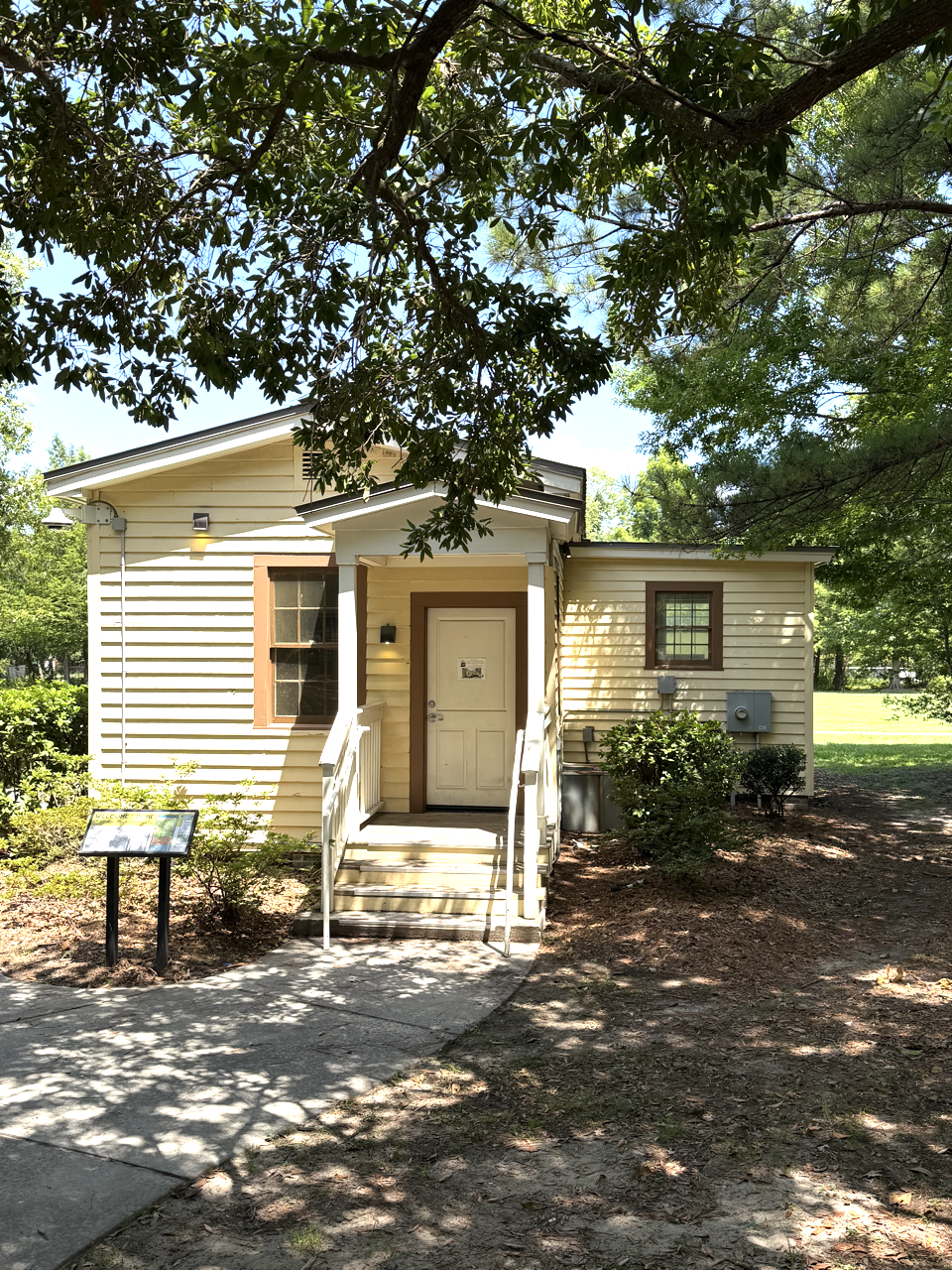
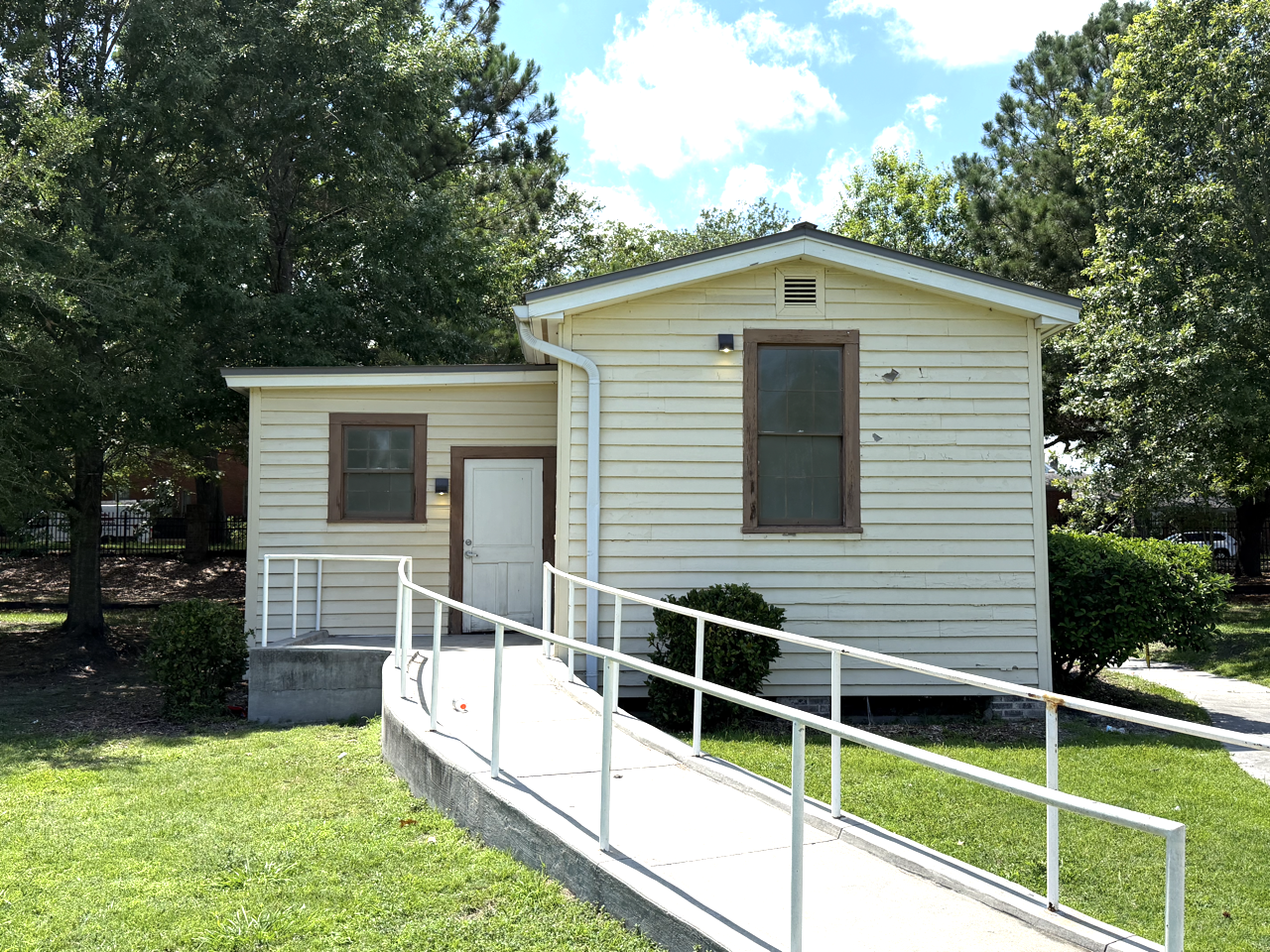
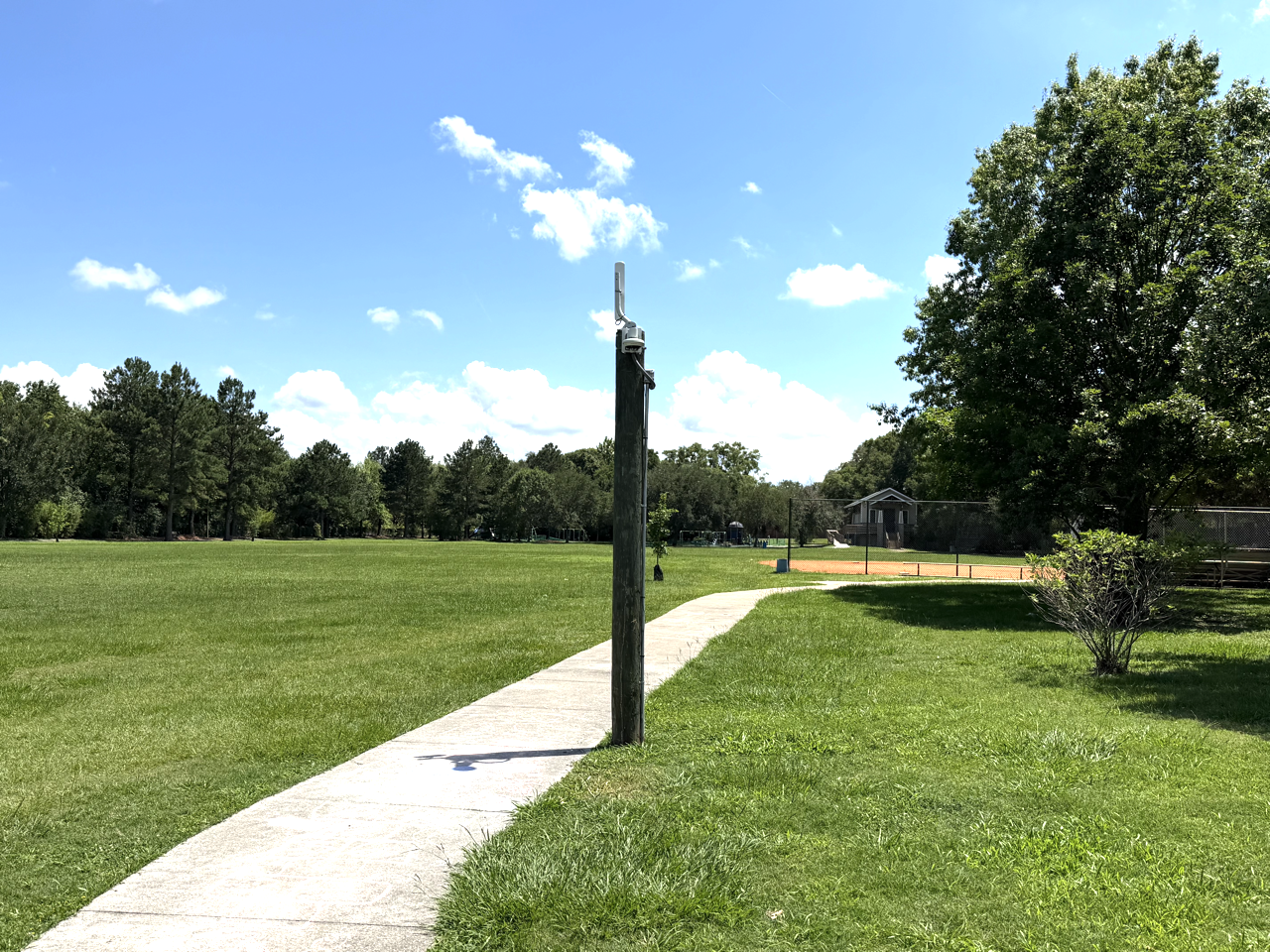
Today her memory rests in an unexpectedly gentle place. In her honor, a neighborhood park bears her name, with walking paths, green space, and shaded woods where families and their dogs gather. But the jewel of the park is smaller and quieter than everything obvious: the tiny, lovingly restored historic cottage that once belonged to Mother Matilda Beasley. Her home is now a museum — a small house holding the memory of a remarkable and dedicated life.
___
Sources:
Berry, Daina Ramey, Leslie M. Harris, and Anne Roise, eds. Slavery and Freedom in Savannah. Athens: University of Georgia Press, 2014.
DeLorme, Rita H. "Mother Matilda Beasley Recalled",The Southern Cross, January 28, 1999
Hoskins, Charles Lwanga. Yet With a Steady Beat: Autobiographies of Early Black Savannah. Savannah: Gullah Press, 2001.
Lumpkin-White, Arva. Photograph credit: and others as noted.
Savannah Tribune."Mother Mathilda Beasley House Project"The Savannah Tribune, February 15, 2023
Savannah Municipal Archives. Savannah Inventory Ward Notes: Troup Ward. City of Savannah Clerk's Office Record Group, Savannah, GA.
Thomas, Sister M. Evangeline. "The Golden Silence: The Story of Mother Mathilda Beasley, Georgia's First Black Nun."Catholic Historical Review65, no. 4 (1979): 540–558.

8Beach Institute
Location: 502 East Harris Street
The Beach Institute conducts public tours
___
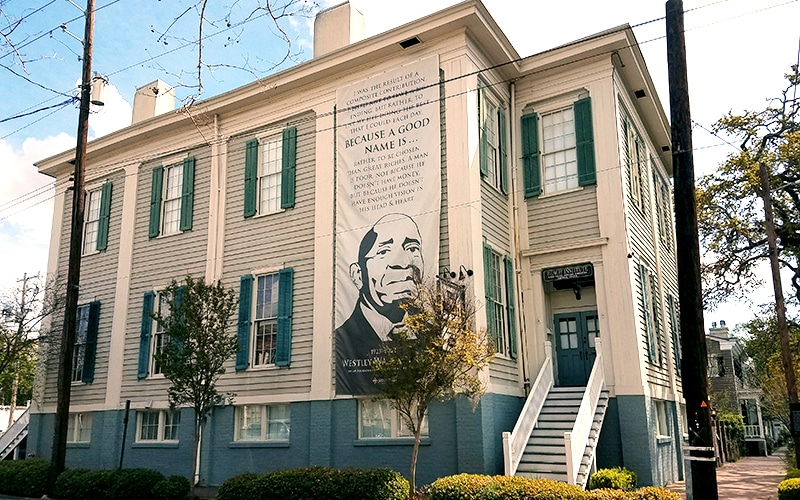
At the corner of Harris and Price Streets, in Savannah's historic Eastside neighborhood, stands a two-story frame building that represents one of the boldest ideas of its age: that freedom and learning were one and the same. The Beach Institute is among the most important surviving landmarks of Reconstruction-era African American education anywhere in Georgia. Established in 1867, it was the first school building in Savannah constructed specifically for the education of African Americans after the Civil War. It rose during those turbulent, electric years just after emancipation, when newly freed African Americans understood education as the essential pathway to everything that had been denied them — citizenship, economic independence, a voice in their own government.
The story begins in 1865. With the war barely over, Savannah's Black community — working alongside northern missionaries and federal officials — set about the urgent work of educating formerly enslaved children. The effort drew support from the Freedmen's Bureau, the American Missionary Association, and the Savannah Educational Association. The land was acquired, and construction planned. And then came the detail that gives the building its deepest meaning: the school was erected by the labor of newly freed African Americans themselves. They built it with their own hands, making the structure at once a place of learning and a monument to the freedom they had just won.
The school took its name from Alfred Ely Beach, an inventor, editor and publisher of Scientific American Magazine, whose financial gift helped fund the construction. The frame building was designed to hold hundreds of students at a time — and that ambition proved necessary. When the doors opened, enrollment swelled almost immediately to roughly 600 students. It was a staggering number, and it said something plainly: Savannah's Black population hungered for literacy and learning, and they came in their hundreds to claim it.
The Institute quickly became more than a school. In 1869, meetings held within its walls led to the formation of the First Congregational Church of Savannah, one of the city's oldest African American congregations. In 1874–75, responsibility for the school passed to the Savannah Board of Education, making it one of the earliest publicly supported schools for Black children in the city. Programs changed with the times, and the original institution eventually closed its doors in 1919 — but the building itself endured, surviving while so many other Reconstruction-era Black schools vanished entirely.
Its second life came in the twentieth century, through the preservation efforts of civil rights leader and historian W. W. Law and the King-Tisdell Cottage Foundation. Since 1989, the structure has operated as the Beach Institute African American Cultural Center, preserving and interpreting Savannah's African American history through exhibitions, educational programs, and collections — including the striking works of noted folk artist Ulysses Davis. Today, the Beach Institute stands as one of the most significant surviving monuments to African American education and self-determination in the Reconstruction South — a building raised by free hands, for free minds, that has refused to disappear.
___
Sources:
Green, Hilary N. "The Beach Institute and the American Missionary Association". In Slavery and Freedom in Savannah, edited by Leslie M. Harris and Daina Ramey Berry, [174-175]. Athens: University of Georgia Press, 2014.
Historical Marker Database.The Beach Institute." HMDB Record no. 15681. Accessed August 2, 2026
9Cisterns of Crawford Square
Location: Crawford Square, Houston Street and East McDonough Street
___
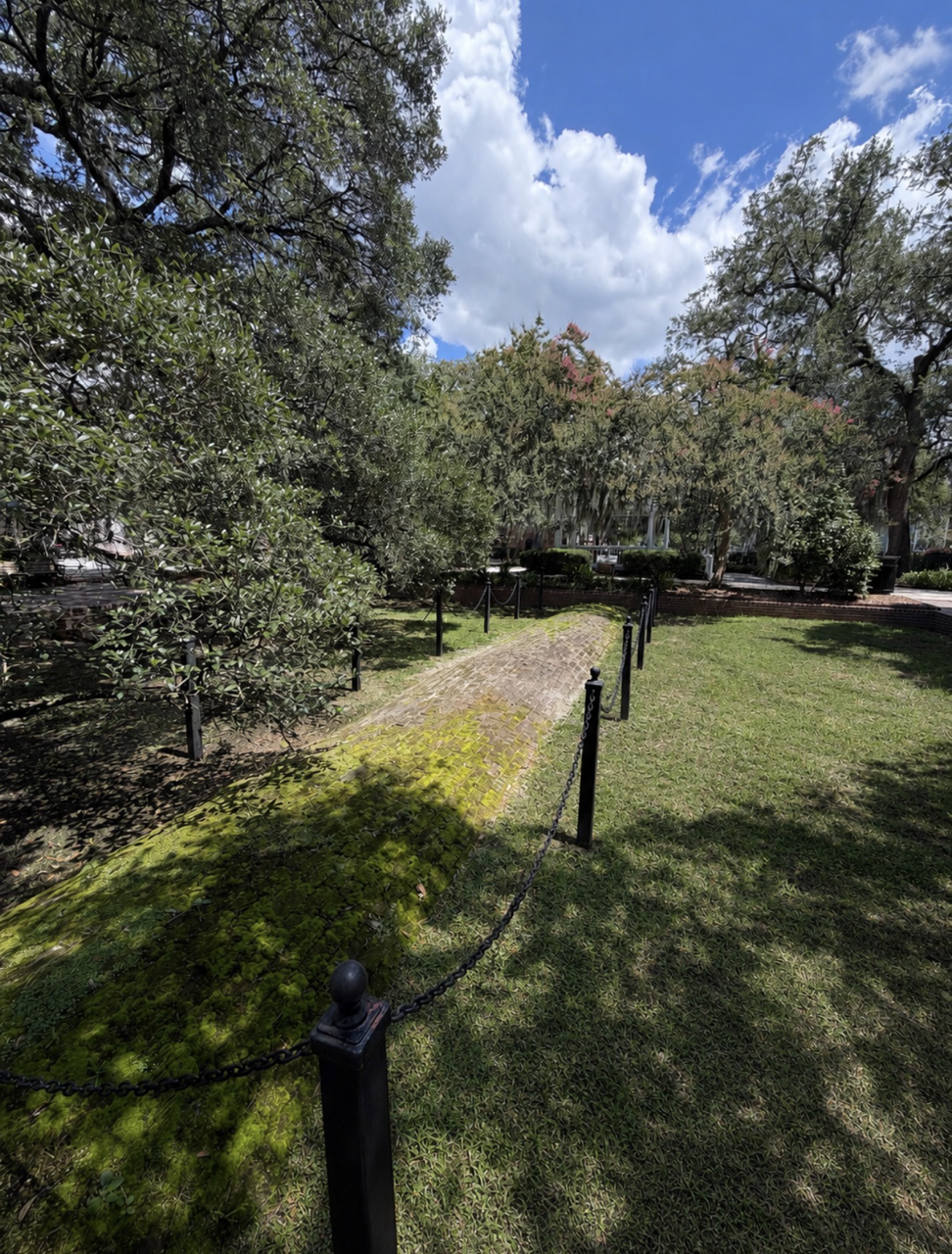
In the aftermath of Savannah’s devastating fire of 1820, city leaders took steps to strengthen the community’s defenses against future disasters. Among the improvements was the construction of a network of deep underground brick cisterns beneath many of the city’s public squares. Designed to store large reserves of water, these cisterns provided newly formed free and enslaved firefighters and their fire companies with an immediate and dependable source of water in an era before modern water systems.
Approximately a dozen of Savannah’s squares were equipped with these underground reservoirs. Their depths varied considerably, ranging from just over nine feet to more than thirteen feet below ground. Kept filled and ready for emergencies, the cisterns became an important component of the city’s early fire protection infrastructure.
Today, most of Savannah’s historic cisterns have disappeared from view, buried beneath pavement or concealed by later improvements. Crawford Square, however, preserves one of the few surviving examples. Here, portions of the original brick structure dating to the 1830s and 1840s remain visible, offering a rare glimpse into the engineering solutions that helped early firefighting efforts, comprised almost entirely of free men of color and enslaved men. Their work helped to safeguard nineteenth-century Savannah from the constant threat of urban fire.
___
About Crawford Square:
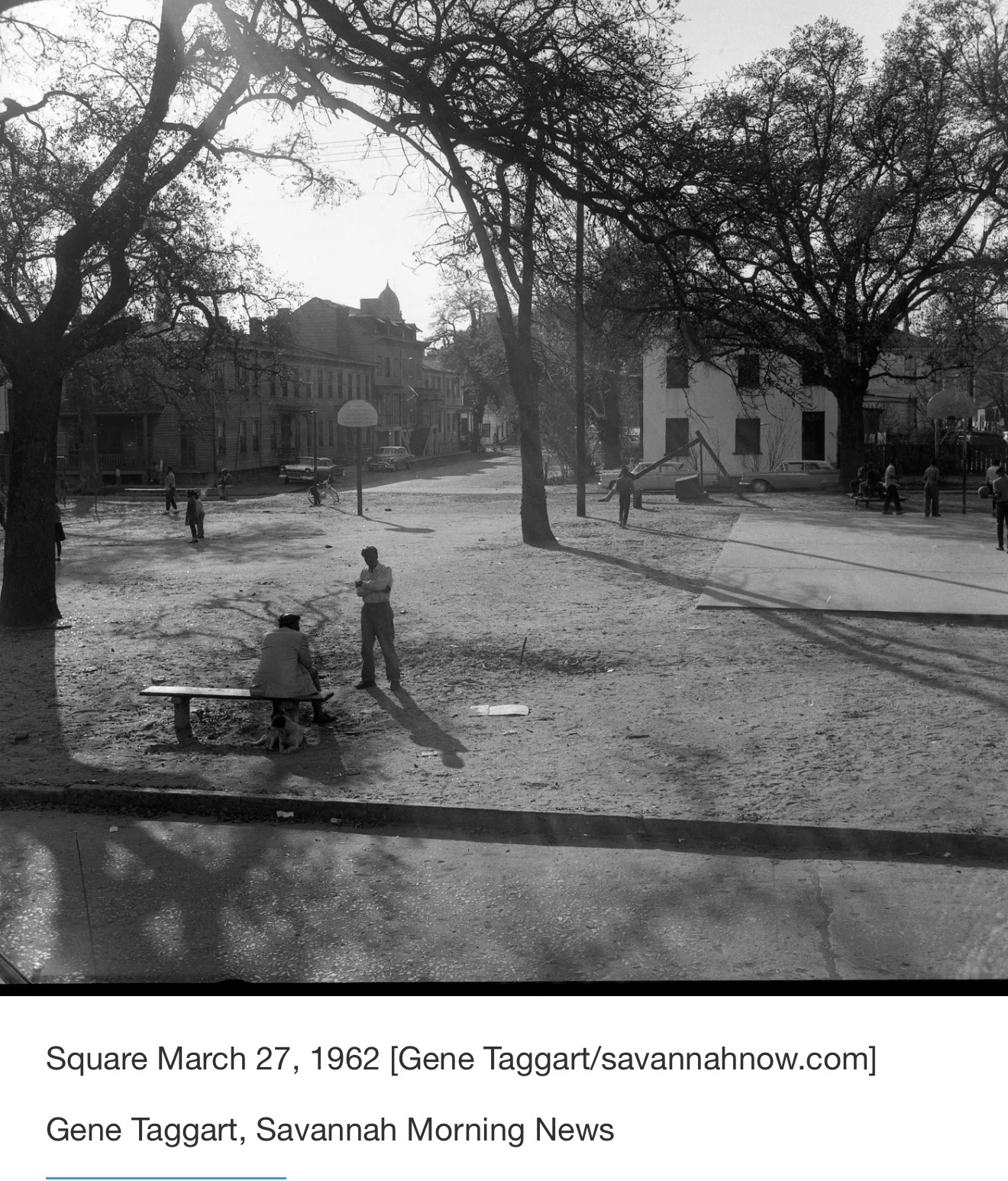
Among Savannah’s historic squares, Crawford Square stands apart. Unlike any other square in the city, it combines the character of a traditional public square with the amenities of a neighborhood park. Within its boundaries are a gazebo that offers a quiet place for reflection and a basketball court that has served generations of local residents.
Crawford Square is also unique for another reason. It is the only one of Savannah’s twenty-four historic squares that still retains its surrounding fence, a reminder of a time when all of the city’s squares were enclosed. Established in 1841, the square was named in honor of William Harris Crawford, the distinguished Georgia statesman who served as governor, United States senator, and secretary of the treasury.
During the era of Jim Crow segregation, Crawford Square occupied a distinctive place in Savannah’s social landscape. It was the only public square through which African Americans were permitted to pass freely and where Black children were allowed to play, making it an important community gathering space during a period of restricted access to public amenities.
The square’s basketball court traces its origins to a citywide competition held in 1946. Savannah organized a basketball tournament with an unusual prize: a newly paved basketball court. The Crawford Square team won the championship, and in 1947, the city fulfilled its promise by constructing the court. The new facility quickly became a focal point for recreation, providing neighborhood youth with a dedicated place to play and compete.
For decades, Crawford Square and its basketball court have served as anchors of community life. Through athletic contests, neighborhood gatherings, and everyday social interaction, these spaces have fostered a strong sense of connection and pride. Today, the square remains one of the few historic squares in Savannah that continues to function as an active recreational space, preserving a legacy of community, resilience, and neighborhood identity.
___
Source:
Lumpkin-White, Arva. Photograph credit.
Wikipedia. "Crawford Square (Savannah, Georgia)." Last modified March 15, 2024

10The Davenport House
Location: 323 East Broughton Street
___
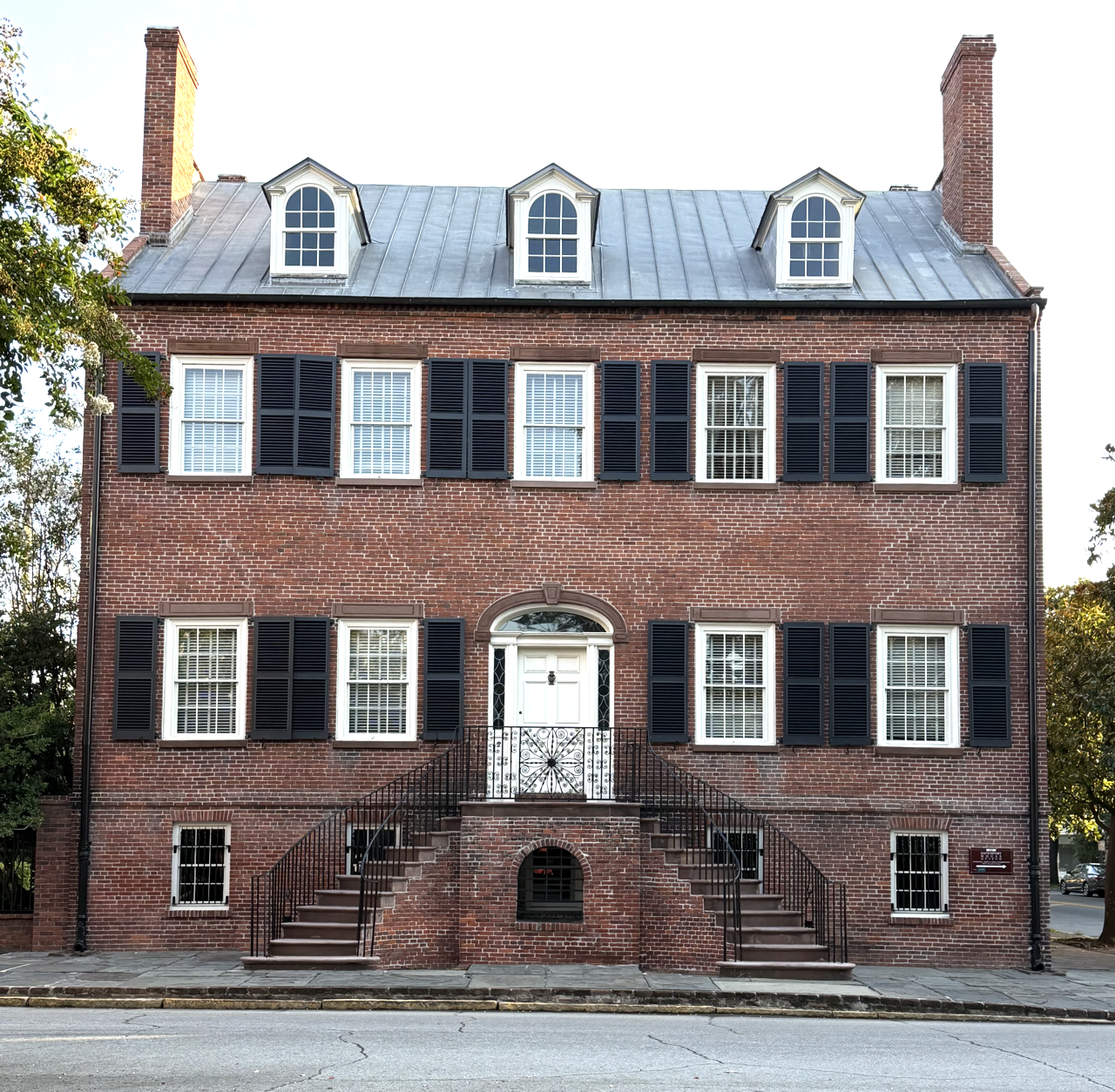
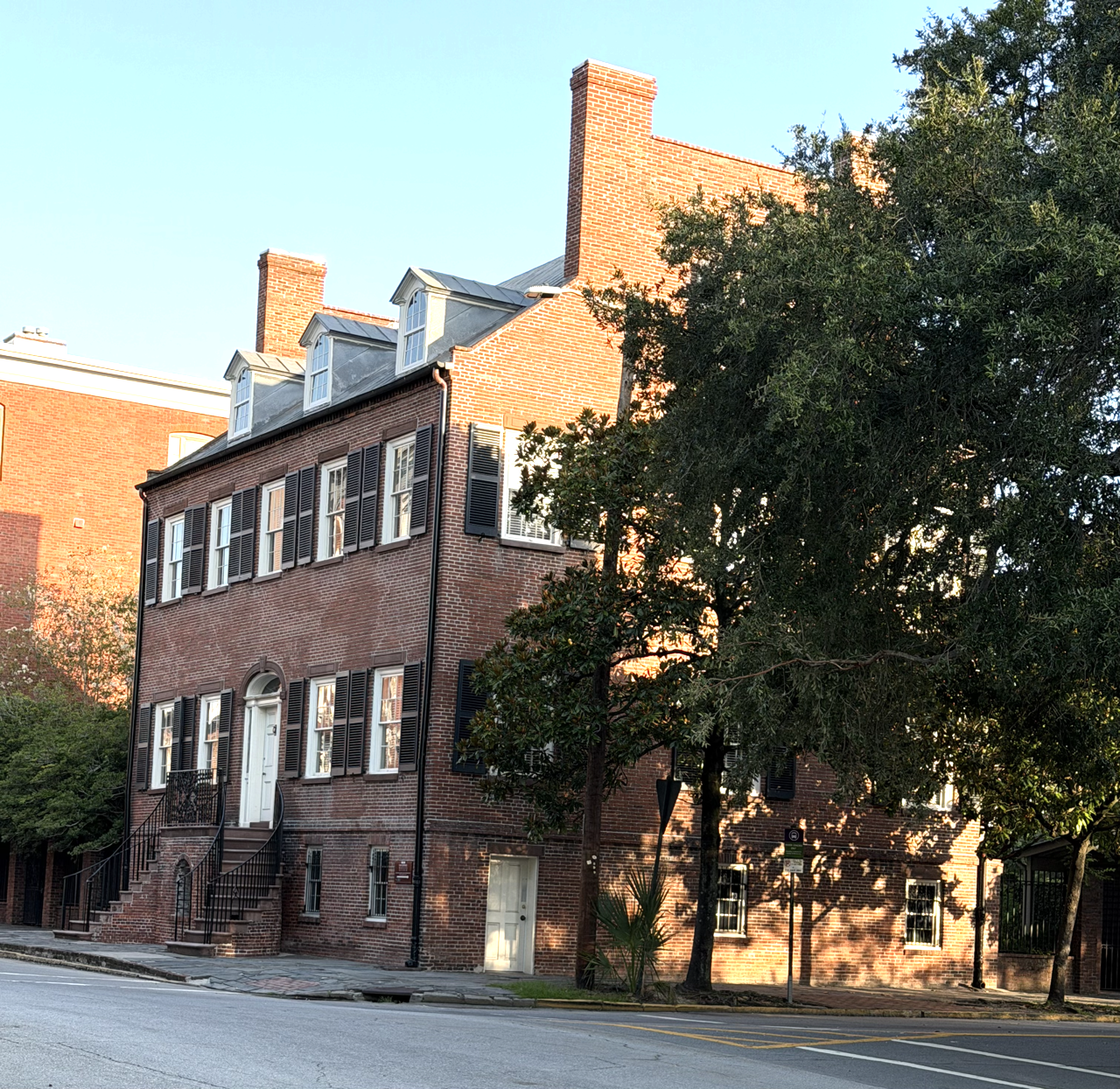
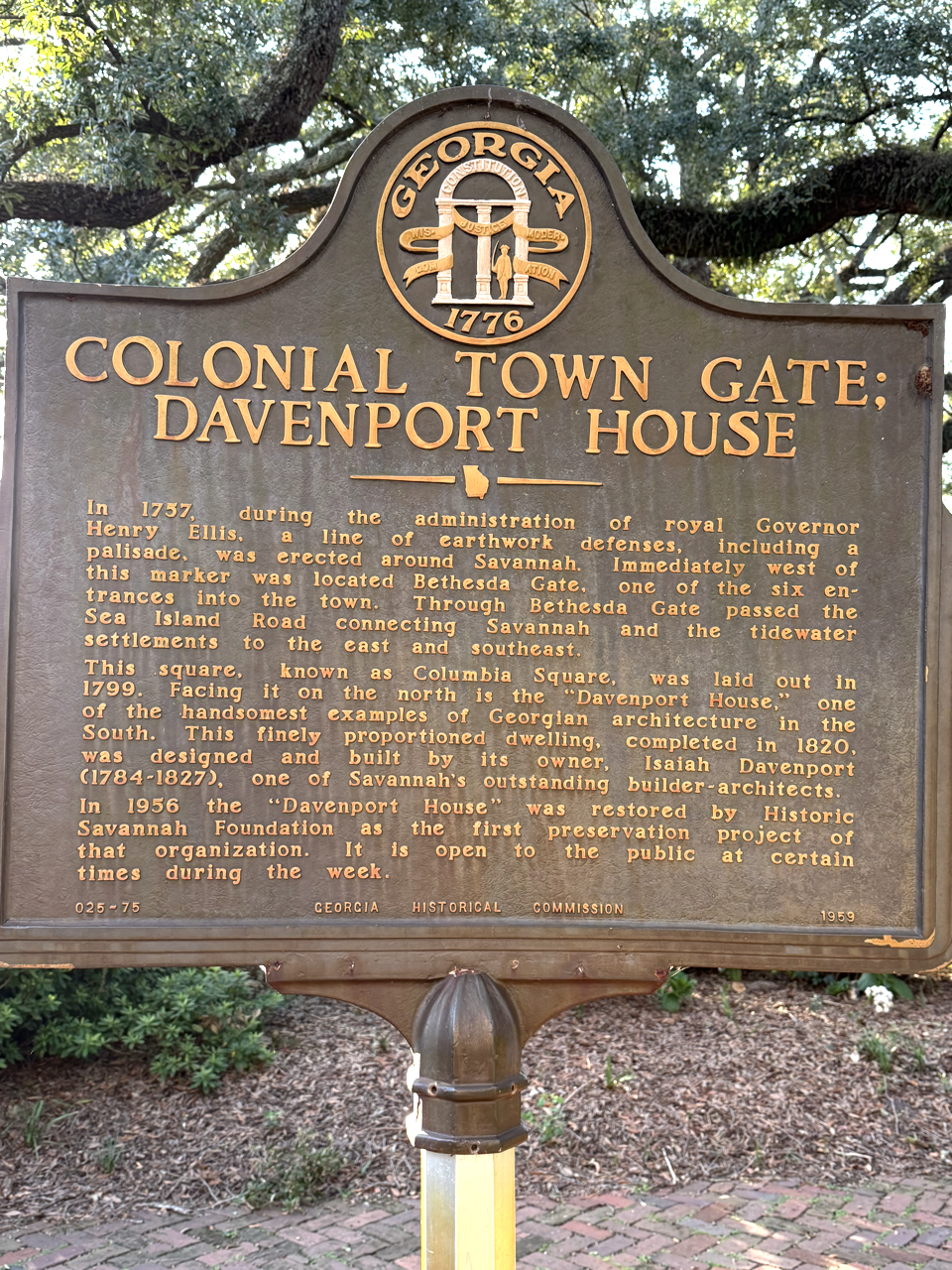
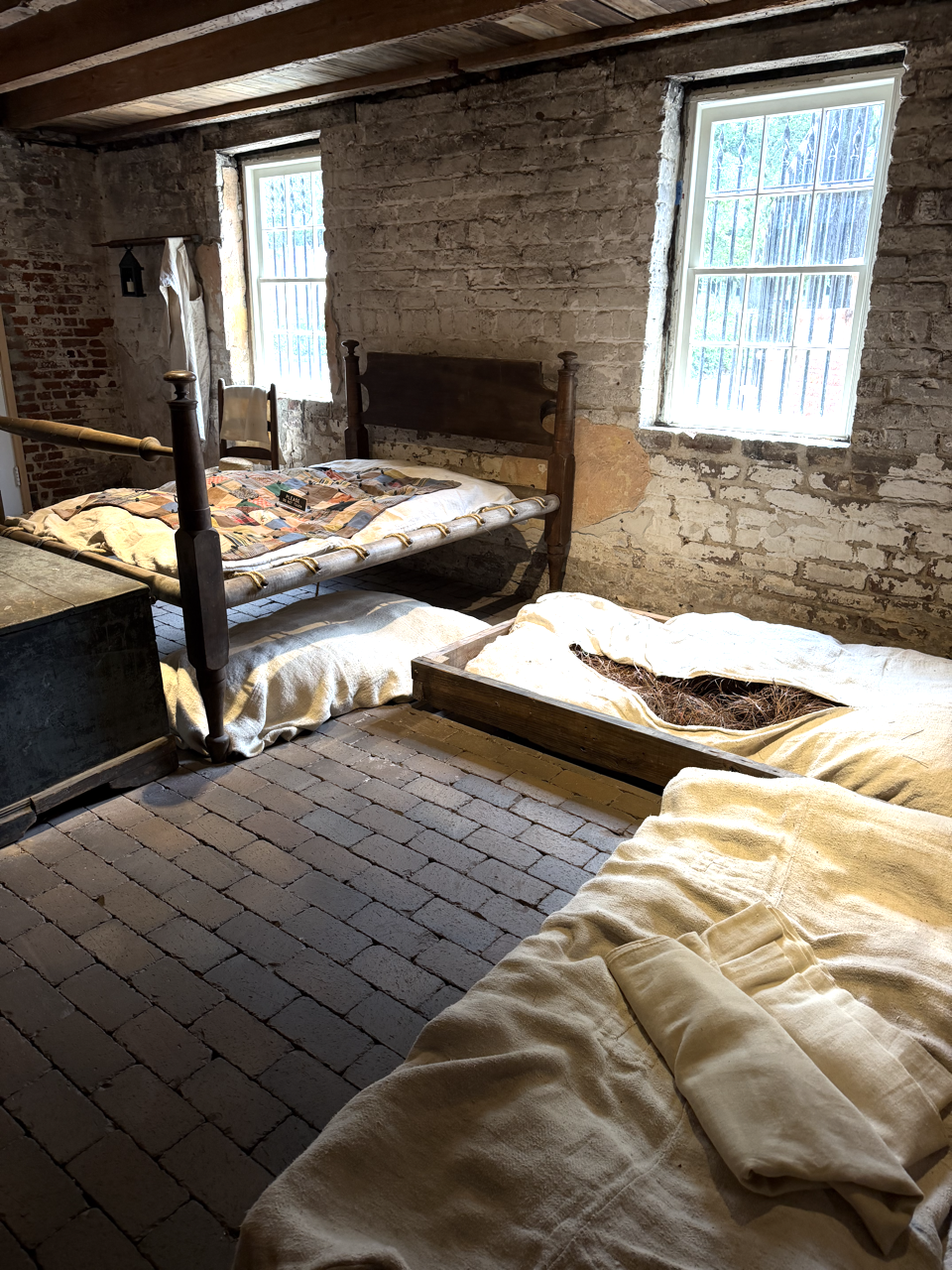
Isaiah Davenport was a master carpenter who came to Savannah around 1807 or 1808. He married Sarah in 1809 and built this house on Columbia Square between approximately 1820 and 1822. The people he enslaved worked in and around the household, performed domestic and skilled labor, traveled, earned money for the family, and were sometimes used as collateral for loans. They were in every sense of the word urban enslaved.
When Isaiah died of yellow fever in 1827, his debts led to the public auction of many of the people he enslaved. Sarah bought some of them back, while others were sold away. Their stories come from deeds, wills, newspapers, census records, ship manifests, jail records, and cemetery records. These sources reveal family relationships and acts of resistance, but they rarely preserve the individuals’ own voices.
Nancy
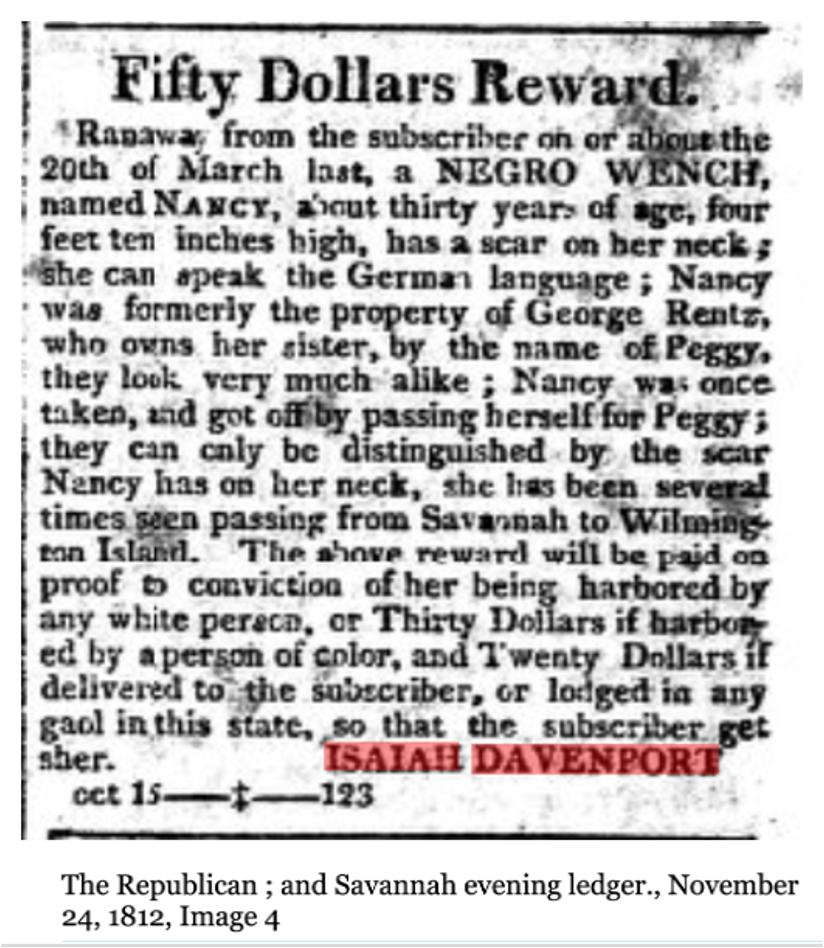
Nancy was born around 1782 and was purchased by Isaiah shortly before 1812. She spoke German and had a sister named Peggy. Because the sisters looked alike, Nancy once avoided capture by pretending to be Peggy. She later ran away from the Davenports, traveling between Savannah and Wilmington Island. Her final fate is unknown.
Bella
Bella was born around 1789 or 1790, probably in the Beaufort area of South Carolina. She was the mother of Polly, Jack, and twins Jacob and Isaac. Bella and her children entered the Davenport household around 1817 and remained connected to the family for decades. Her death and later life are unknown.
Mary
Mary was born around 1790 in Savannah. She was the mother of Ann and worked as a nurse for at least one Davenport child. Mary and Ann were purchased together in 1819, later transferred to Sarah Davenport’s mother, and eventually returned to the Davenport household. Mary traveled by ship to New York several times and remained connected to Sarah into the 1850s.
Ann
Ann, also called Anne, was born around 1815 and was Mary’s daughter. She moved through the same transfers of ownership as her mother and remained closely connected to her. She traveled by ship and visited Charleston in 1856. Her later life is uncertain.
Deeping
Deeping was born around 1795 and is one of the least documented members of the household. He was sold with Mary and Ann in 1825. The report raises the possibility that he and Mary were married, but the evidence cannot prove it. He disappears from the records after the 1830s.
Tom
Tom was born around 1798, probably in South Carolina. Lydia Turner sold him to Isaiah in 1815, when he was seventeen. Almost nothing else is known. He may have died young, sometime before 1820, but this cannot be confirmed.
Ned
Ned was an adult carpenter when he was sold to Isaiah in 1813. He had family connections to Brampton Plantation and the Bryan family, whose estate records name his parents, Ned and Minty, and his brothers Joe and Prince. Ned was jailed for “safekeeping” immediately before his sale. He was later sold at the 1828 auction and was not bought back by Sarah.
Polly
Polly was born around 1816 and was Bella’s youngest child and only daughter. Sarah bought her back at the 1828 auction, and records show that Polly’s labor earned money for Sarah. She disappears from the Davenport records after about 1840. Several later women named Polly Davenport are possible leads, but none can be identified securely.
Jack
Jack was born around 1808 on Hilton Head Island and was Bella’s eldest son. Sarah bought him back in 1828, but he disappears from the records by about 1840. A possible connection to a free carpenter named Jack Gibbons is intriguing but unproven.
Jacob
Jacob was born around 1812, Bella’s son and Isaac’s twin. He worked outside the house and generated income for Sarah. He and Isaac were repeatedly used as collateral for loans. Jacob remained connected to the Davenport family for at least forty-one years, but his later identity and death are unknown.
Isaac
Isaac was Jacob’s twin and Bella’s son. Like Jacob, he worked outside the house and was used as collateral for loans. Isaac died of dysentery in January 1860 and was buried at Laurel Grove South. His is one of the few lives in the group with a documented ending.
Peggy
Peggy was probably born around 1810, though her parentage is unknown. Sarah bought her back at the 1828 auction. A ship manifest records Peggy traveling from Savannah to New York in 1840. She disappears from the records after that journey.
Dave, Davy, or David
Dave was born around 1790 on Liberty Island and was connected to the Readick family and Savannah’s Salzburger community. He worked as a waggoner and ran away from the Davenports in 1822. After Isaiah’s death, Sarah sold him to Aaron Champion. Dave worked for Champion for twenty-eight years and died in 1856; his cemetery record lists “old age” as the cause.
These urban enslaved individuals were all connected to the Davenport House, but their lives extended far beyond it—to plantations, islands, Savannah’s streets, neighboring households, and distant ports. Their stories are incomplete, but the surviving records show that they were members of families and communities, skilled workers, travelers, and people who sometimes resisted the system that claimed ownership over them.
___
Sources
Savannah Republican and Evening Ledger, November 24, 1812, pg. 4, col. 4, GALILEO, Savannah Historic Newspapers

The interactive version adds a street-following map, narration audio and a guided stop-by-stop experience.