Self-Guided Heritage Trail · Savannah, GA
Readin,' Writin', and 'Rithmatic
Historical Context: Black Schools in Antebellum and Reconstruction Savannah

- TEXT READ AND NARRATION ONLY | No Physical Trail Stops
- 14 stops
- Free
For an interactive map and audio narration, press Start this trail.
About This Trail
In a text-only historical atlas, African American education after emancipation shifted from the shadows of a severely restricted, clandestine pursuit to an urgent, massive, community-driven public school movement during Reconstruction.
“Knowledge unfits a child to be a slave”.
– Frederick Douglass, Life and Times of Frederick Douglass
Amid Reconstruction, newly emancipated African Americans in Savannah were laser-focused on the pursuit of education and the establishment of schools as a means of completing the loop of what they thought was a path to the achievement of equality, independence, and future prosperity.
The Route
1Jean Julien Fromantin
Jean Julien Fromantin: The First Known Bearer of the Flame
A carpenter's trade was the cover. What Jean Julien Fromantin was actually building, year after dangerous year, was literacy — in a city where teaching a Black person to read could cost you your freedom, or worse.
Fromantin was born in 1781 in Saint-Domingue, the French colony that would become Haiti. He came to Savannah in the aftermath of the revolution that dismantled that colony — whether as the free-born child of the gens de couleur libres or as a former slave manumitted by his owner, the record doesn't specify. He arrived already able to read and write, a skill acquired somewhere in his life before Georgia. Fromantin owned one enslaved individual.
By 1804 he was settled enough in Savannah to marry. On August 30 of that year, at twenty-three, he wed fourteen-year-old Mary (Marie) Charlotte, another free Black émigré from Saint-Domingue, with her mother Catherine Forveque's consent. Abbé Carles, the French priest whose name fills Saint John the Baptist's early registers, presided. The parish's own marriage record names the witnesses: "Mr. Thomasson, Mr. Ferrier, Mr. John Baptist Dubergier and Joseph Joly."
Three children followed, each baptized at Saint John's. Henriette came first, baptized March 23, 1808, recorded as the "lawful daughter of Jean Fromantin and Charlotte, both mulattoes," with her mother and Pierre Verderie — likely her grandfather — standing as sponsors. Marie Rose was baptized November 13, 1810, with Regis Merville and Rose Caultier Lesquel as godparents. A son, Jean René, followed on December 17, 1818, sponsored by Louis Mirault and Anne Prudence.
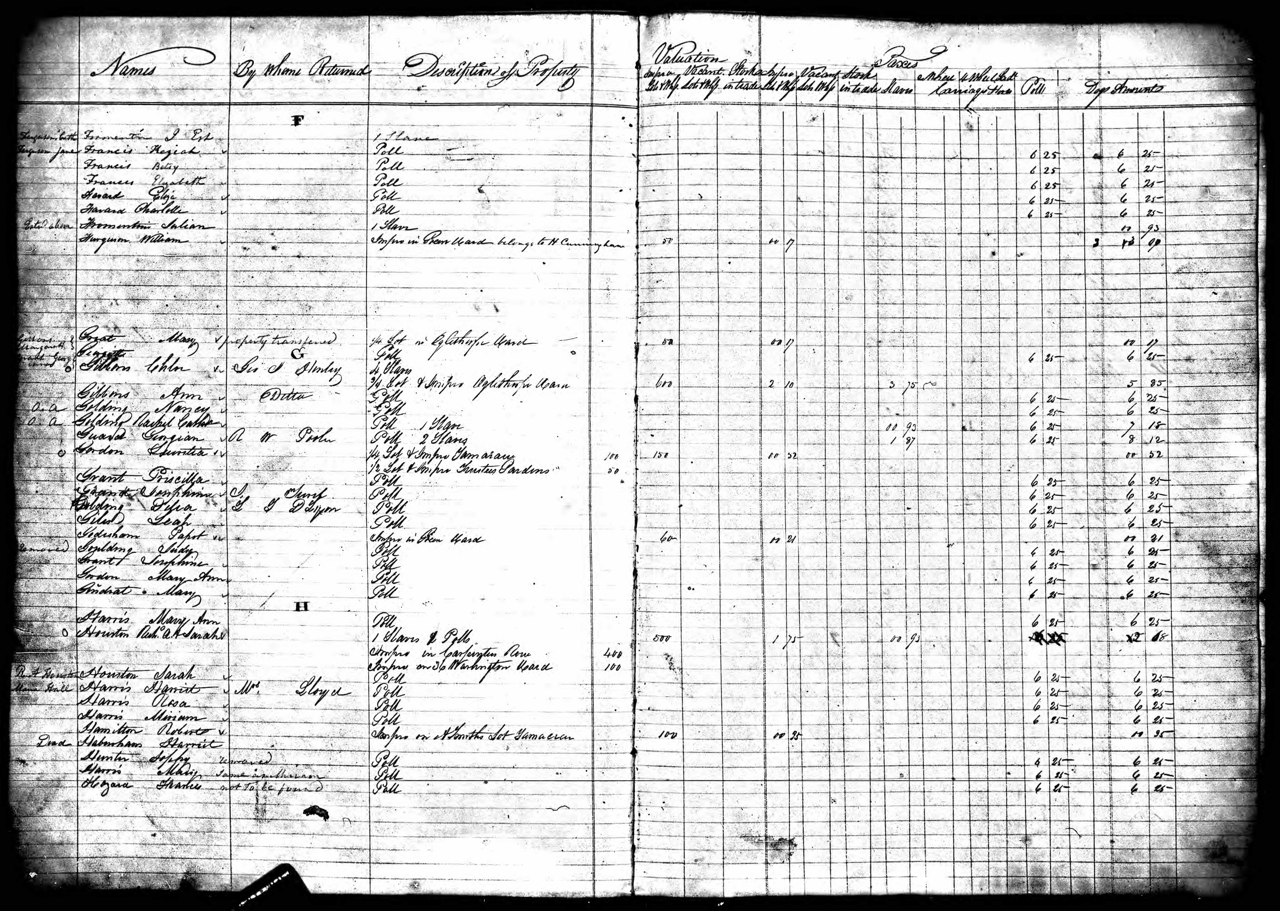
Fromantin worked publicly as a carpenter. He also worked as a free man of color firefighter, and the City recorded a pension of six dollars a month awarded to a "J. Fromantin" for an illness contracted while serving with the Fire Department in 1808. An accounting of city expenses shows Julien Fromantin paid $72 in pension over the preceding fiscal year. His primary job was his trade as a carpenter—that was the trade he advertised steadily and without secrecy. The advertising was the point: it gave him a plausible, respectable reason to move through the city, meet people, and keep his own hours. What it masked was a school. Beginning in 1819, Fromantin taught Black Savannahians — enslaved and free — to read.
The risk was not hypothetical. Savannah's City Council had outlawed instructing free people of color or the enslved as early as 1817, and Georgia's legislature backed the city's law with a state statute in 1829. For a time, though, enforcement lagged behind the letter of the law, and Fromantin taught in the open. That window closed hard.
The root of what followed lay in Charleston. Denmark Vesey's 1822 plot to lead an armed slave uprising there sent a current of fear through neighboring Savannah — proof, in the minds of city authorities, that literate Black people could become organizers of rebellion rather than merely readers. Seven years later, that fear found local confirmation. When David Walker's incendiary abolitionist pamphlet, his Appeal, turned up in Savannah in December 1829, it forced white Savannahians to reckon with an uncomfortable fact: enough Black residents could read that a document like Walker's could actually circulate and be understood. The timing sharpened the alarm — the same period saw fires break out across Savannah, Augusta, and Macon, and city leaders drew a straight line between literacy, insurrection, and arson, however thin the evidence.
Georgia's Assembly answered with a tougher law against teaching the enslaved or free people of color to read, motivated in part by suspicion that free Black residents were the more dangerous teachers — that they might, as officials feared, plant "strange ideas of freedom" among the enslaved. Savannah's mayor moved to choke off another channel of information entirely: a March 20, 1830, proclamation ordered ship captains carrying free people of color to anchor their vessels offshore rather than dock in the city.
The hardest blow came in 1833, when the city criminalized teaching outright:
"Any person who will teach or cause to be taught any slave or free person of color to read or write within the city, or will keep a school for that purpose, will be fined a sum not exceeding one hundred dollars for every offense."
Enslaved or free Black offenders faced up to thirty-nine lashes rather than a fine. The same law reached into the pulpit, barring Black preachers from speaking without a license.
Fromantin adapted rather than stopped. As Savannah's laws tightened around him, he pushed his classroom deeper into hiding. Historian Charles Lwanga Hoskins put it plainly: "Fromantin took his school further behind Savannah's Moss Curtain. He continued teaching until about 1844."
___
Sources:
City of Savannah Municipal Archives / Chatham County Records. "Land Tax and Property Records, 1809–1938." Julien Fromantin, [1837]. Digital images, Ancestry.com.
Hoskins, Charles Lwanga. Yet With a Steady Beat: Biographies of Early Black Savannah. Savannah: Gullah Press, 2001. 163-165.
2Oglethorpe Free School
The Oglethorpe Free School
The Savannah Educational Association (SEA) opened the Oglethorpe Free School on January 15, 1865, its second school for Black children in the city. Contemporary sources place it in the former Styles House on Fahm Street, near the corner of Joachim and Fahm. The location is now known as Bay Street. The building itself carried a layered history: it had served earlier as a medical college and, during the war, as a Confederate hospital. A Savannah newspaper cast its conversion into a freedmen's school as an act of providence, framing the space as now dedicated to teaching formerly enslaved children to exercise the liberty they had just gained.
Louis B. Toomer served as principal, leading a student body reported at 450, with A. Delamotta, a native of Macon, as his assistant. The paper praised Toomer as tireless in his work, and reported that during a public examination the students conducted themselves with notable order and attentiveness. Book prizes went to the top performers: William Marshall took first, Elizabeth Hill second.
The school also drew outside recognition. The Loyal Georgian, published in Augusta, called it the best organized school its correspondent had visited in Savannah, and singled out Toomer's administrative skill. The Savannah Republican framed Toomer and his teachers as persisting against considerable prejudice and opposition to advance what the paper termed the education and elevation of a "despised race." Black Savannahians backed the effort: local reporting said the broader campaign to educate the city's Black population was showing strong results, and voiced hope that government support would continue given that success. By October 1865, upward of 700 Black children were attending schools run by the SEA under the joint superintendence of James Porter and Louis B. Toomer.
The Oglethorpe School operated within a wider, and increasingly contested, landscape of freedmen's education. Northern white teachers affiliated with the American Missionary Association (AMA) reportedly found it striking that local Black residents wanted to retain full control of their own schools — in some cases preferring no white teachers at all. General Rufus Saxton appointed the Reverend S. W. McGill of the AMA as superintendent of freedmen's schools; McGill reported responsibility for roughly 700 students (200 women and 500 children) and eight White female teachers sent from the North. That same spring, Congress created the Freedmen's Bureau, later empowered to sell or lease confiscated Confederate property and apply the proceeds toward Black education. Funding for the SEA's schools was a patchwork: the association paid its roughly 38 teachers monthly salaries of $15 to $35 in 1865, charged students $1 to $2 in monthly tuition, and depended on more than $1,000 raised directly from the Black community to cover the gap between outside donations and actual operating costs. The Loyal Georgian reported that teachers sometimes went months without pay and kept working anyway.
That strain eventually caught up with the association. Seven Black schools closed for the winter of 1866 after holding examinations: the Yonker School in the basement of First African Baptist Church, a school at the former hospital site east of the park, the Lamar and Andrew schools at Andrew's Chapel on New Street, the Bethlehem High School on New Street, the Bryan Free School west of the market, and the Oglethorpe School, still housed at the old Oglethorpe College building. Postwar economic hardship compounded the pressure: a surge of Black migration into the city, entrenched white racism, high mortality among Black residents, and general wartime dislocation all worked against the sustained, community-funded effort to educate Black children.
By 1867 the AMA had taken a larger role in running the city's Black schools. Founded in 1846 out of earlier antislavery and missionary efforts—including the Amistad Committee—the AMA began as a non-sectarian body before coming under Congregational Church influence, while still working closely with federal authorities. The Freedmen's Bureau, the American Tract Society, the Freedmen's Aid Society, and the AMA together had initially supported seven Black schools in the city. Historian Jacqueline Jones, in Saving Savannah, traced how this arrangement set the stage for the AMA to consolidate control over Black schooling in Savannah. The showdown came when the SEA, unable to raise enough money to keep its schools running, was forced to seek AMA aid—aid the AMA extended only on the condition that it would direct spending and take the lead in running the schools. The SEA met every criterion the AMA required, but the underlying tension was structural: Black community control, embodied in the SEA, set against white paternalism, embodied in the AMA. The result was that the AMA absorbed the Savannah Educational Association outright — ending, after roughly two years, an effort that historian W. E. B. Du Bois characterized (in a different context) as one front of what he called the "Ninth Crusade" of Northern teachers moving south.
The Oglethorpe Free School was the SEA's institution; the Beach Institute was the AMA's. It was the Beach Institute faction — that is, the AMA — that absorbed the Oglethorpe Free School faction, the SEA, bringing the two-year run of Black-controlled schooling in Savannah to a close. By August 1867, one local paper credited the city, despite its own reduced resources, with cooperating to improve conditions for Black residents, and singled out the Beach Institute as a marked success story — reporting that its original low, one-story schoolhouse was being demolished to make way for a larger building, expected to be dedicated that October.
___
Source:
Hoskins, Charles Lwanga. Yet with a Steady Beat: Biographies of Early Black Savannah. Savannah: Gullah Press, 2001, 170–172.
3Catherine and Jane Deveaux School
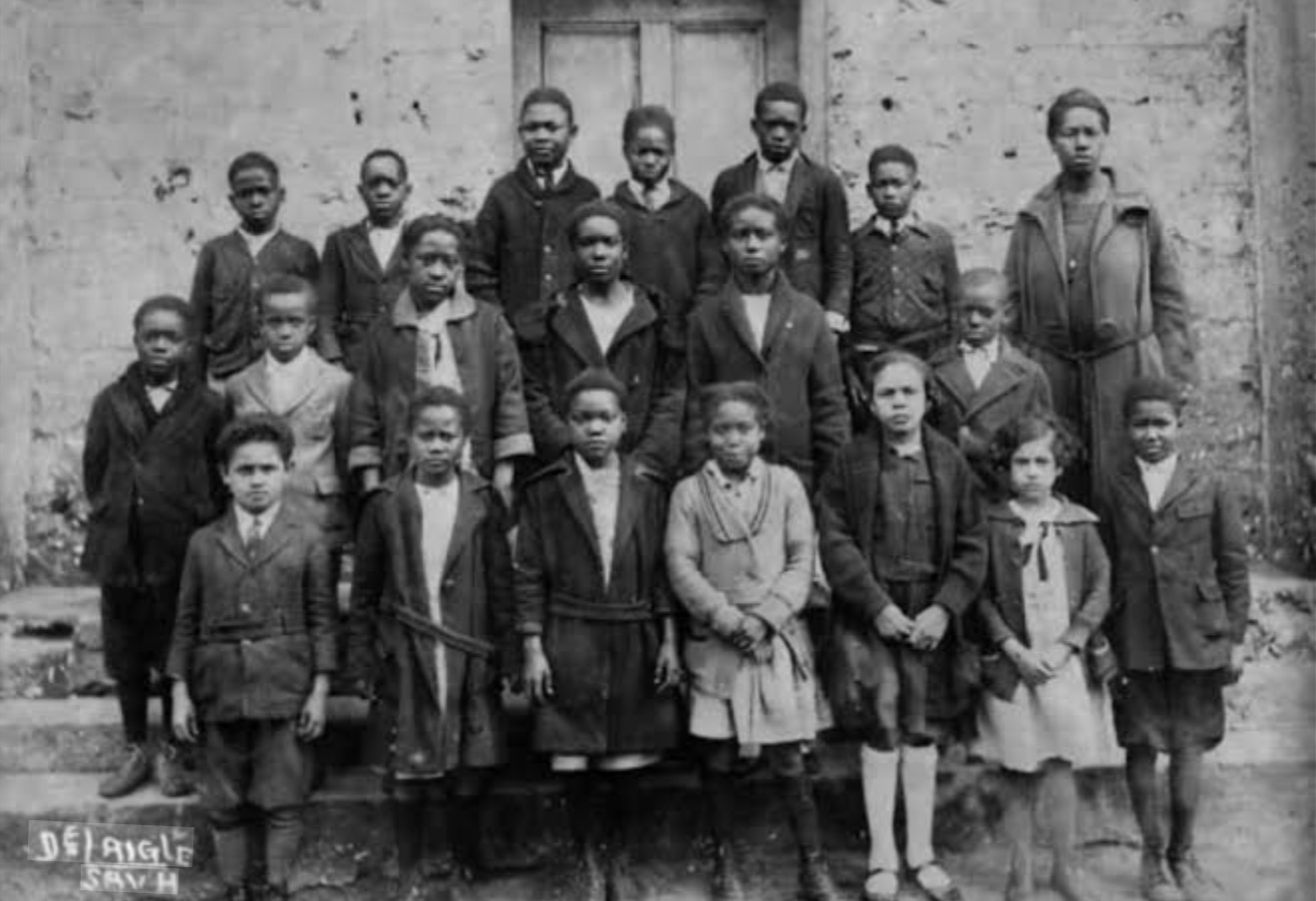
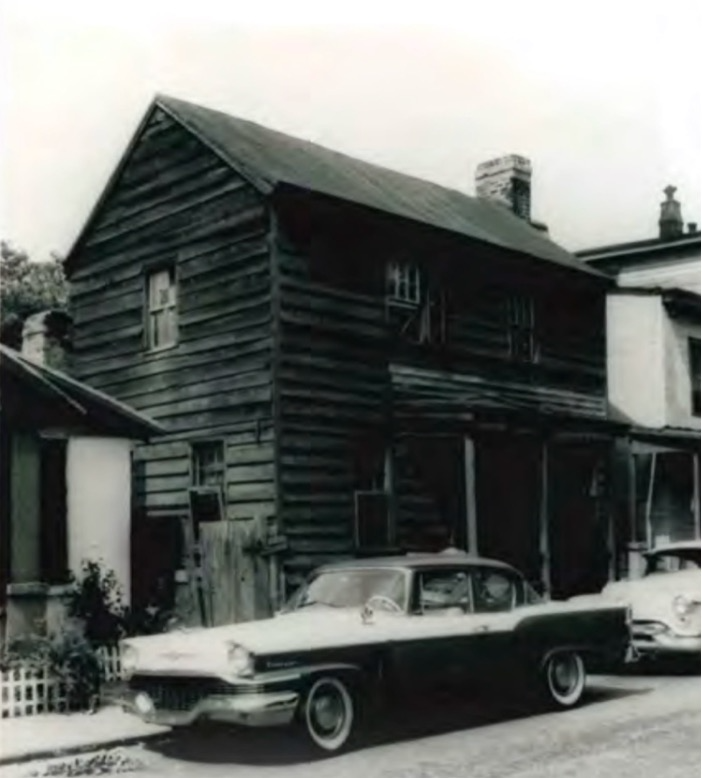
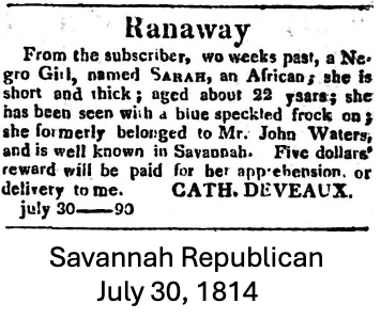
Catherine Deveaux (c. 1785–1834) was af Free Woman of Color born in Antigua who established herself as a successful entrepreneur in early nineteenth-century Savannah. Long before she became known for her role in education, she earned her living as a skilled cook, pastry maker, seamstress, and proprietor of a boarding house. Between 1814 and 1820, Savannah newspapers regularly carried her advertisements offering meals, lodging, and culinary services, making her one of the earliest documented Black businesswomen in the city. enabled Catherine to purchase property and establish a permanent home on East York Street.
The constant activity of boarders, customers, and domestic work also created an ideal cover for another enterprise operating quietly within the household. Together with her daughter, Jane Deveaux, Catherine transformed her home into one of Savannah’s longest-running clandestine schools for free and enslaved Black children. While publicly known as a cook and boarding house proprietor, she secretly taught reading, writing, and religious instruction in defiance of Georgia law. The household’s legitimate business activities helped conceal the movement of children and visitors, allowing the school to operate for decades when many similar schools were discovered and closed. Since it is established that she owned several houses, it is not known exactly how many houses she had and what businesses she operated out of each. Local historian, Jefferson Hall has put a magnifying glass on her property records and hypothesizes that Catherine Deveaux may have owned not three properties in three wards, but possibly five properties in four wards
Catherine Deveaux died in 1834, leaving behind a thriving household, valuable real estate, and a business that had sustained both her family and her educational mission. Jane Deveaux continued the school after her mother’s death, preserving the foundation Catherine had built. Little is known about Jane Deveaux’s personal life. Some historical accounts identify her as the wife of Isaac Deveaux and the mother of John H. Deveaux, who co-founded The Colored Tribune in Savannah in 1875, a newspaper later renamed The Savannah Tribune in 1876. However, surviving documentary evidence does not conclusively establish this relationship. Current research suggests that Jane Deveaux was more likely John Deveaux's aunt than his mother. Jane Deveaux died in 1885 of acute diarrhea and was buried in Laurel Grove South Cemetery.
Today, Catherine Deveaux is remembered not only as one of Savannah’s earliest Black educators, but also as a successful cook, boarding house proprietor, and businesswoman whose enterprise made possible one of the city’s most enduring acts of quiet resistance.
___
Sources:
City of Savannah Municipal Archives. Historical photograph credit. Courtesy of the City of Savannah Municipal Archives, Savannah, GA.
Hoskins, Charles Lwanga. Yet with a Steady Beat: Biographies of Early Black Savannah. Savannah: Gullah Press, 2001, 163-164.
Lumpkin-White, Arva. Photograph credit.
Sumler-Edmond, Janice L. "Free Black Life in Savannah: Jane Deveaux and Her Secret School." In Slavery and Freedom in Savannah, edited by Leslie M. Harris and Daina Ramey Berry, 122–138. Athens: University of Georgia Press, 2014.

4 Mary Woodhouse School
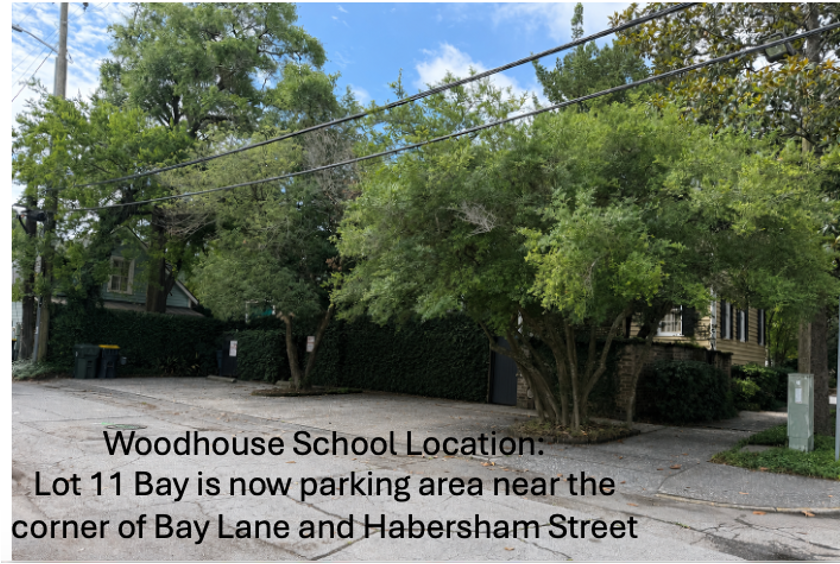
Location: Bay Lane near Habersham Street
___
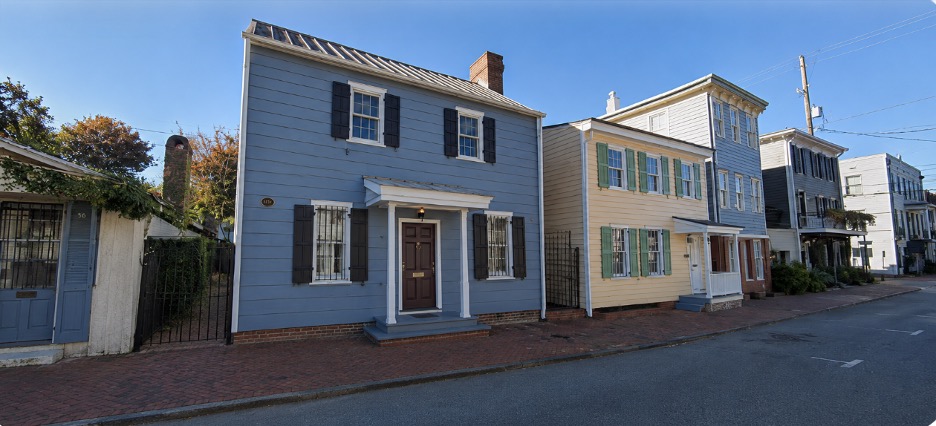
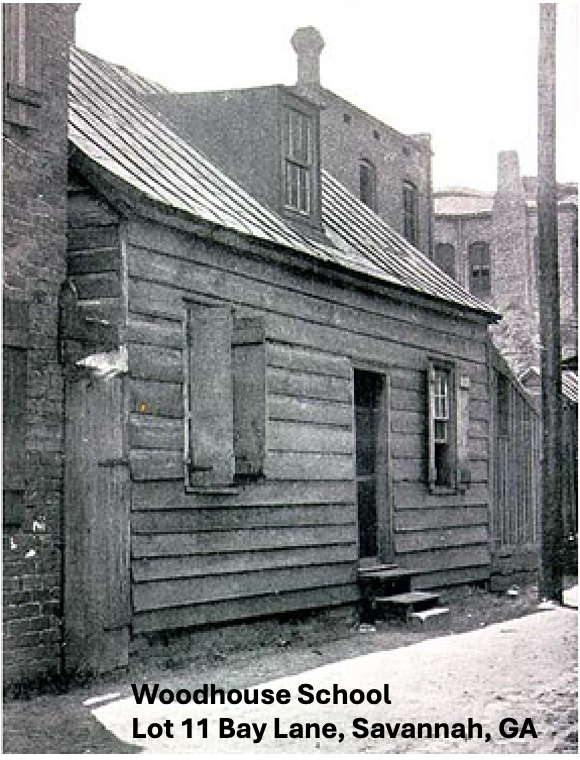
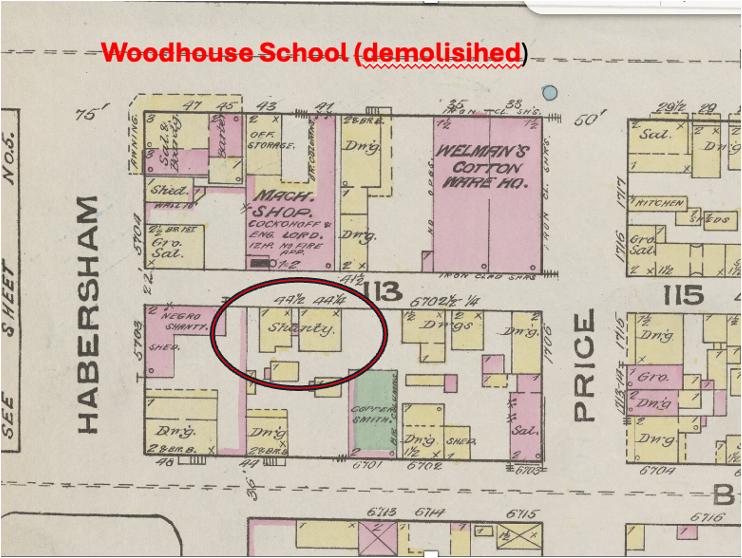
Location Demolished: Gone but not forgotten: On Bay Lane, behind Lot 11 at Warren Square, three women owned a piece of property that would become one of the most quietly defiant places in antebellum Savannah. Mary Woodhouse, a seamstress; Priscilla Moodie, a beer parlor owner; and Catherine Deveaux, a restaurateur and teacher — three free women of color, each with a trade of her own — together held the ground that came to be known as the Woodhouse School. Mary Woodhouse herself is believed to have lived from 1804 to 1886. She had a daughter who helped with the school. Her husband was a cooper by trade and owned two enslaved individuals in 1830. Mary Woodhouse was a member of Saint Stephen's Episcopal Church.
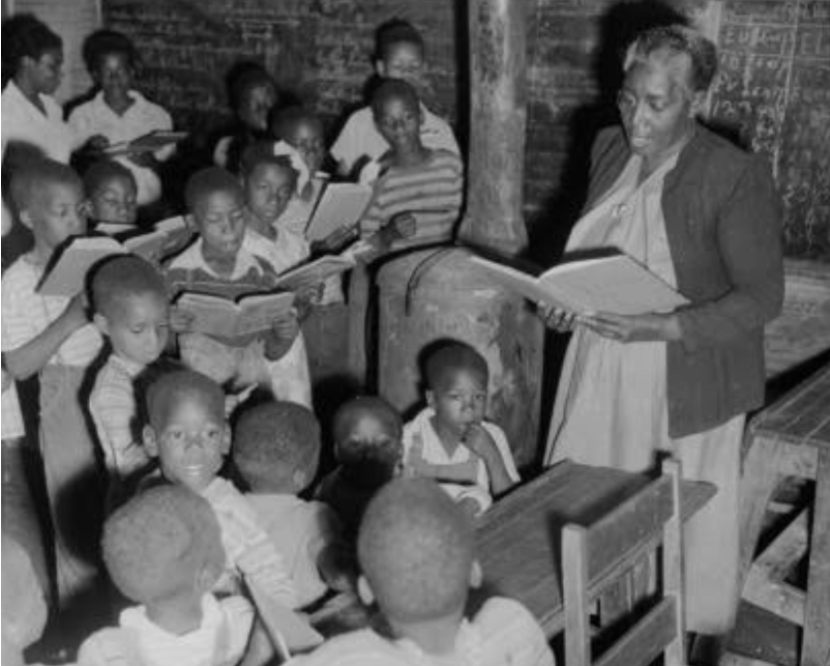
What happened there was a crime under Georgia law. Behind those walls operated a clandestine school, where Black children were taught the forbidden skills of reading and writing. To reach it, students learned to disguise their purpose: they concealed their books in buckets and bundles, so that anyone watching would assume they were merely running errands for their masters or guardians. A child carrying a pail looked like a child at work — not a child on the way to learn.
One of those children left a record of it. Susie King Taylor, in her later memoirs, remembered the school on Bay Lane as the place where she sat alongside twenty-five or thirty other Black children, all of them secretly learning to read and write. It was an ordinary-seeming room concealing an extraordinary act of resistance.
And the stakes could not have been higher. The laws against literacy among enslaved people and free people of color were severe and deliberately punishing. Anyone caught educating Black pupils faced a fine of $20 — and the penalties climbed from there to as much as $500, along with the threat of a public whipping. Every lesson taught in that room was a risk taken in open defiance of a society determined to keep its knowledge locked away.
___
Sources:
Davis, Ennis. "Susie Taylor: A USCT Story of Civil War Jacksonville." The Jaxson / Modern Cities, January 14, 2020
Hoskins, Charles Lwanga. Yet with a Steady Beat: Biographies of Early Black Savannah. Savannah: Gullah Press, 2001, 165-166.
Library of Congress. Historic photograph credit.
Lumpkin-White, Arva. Photograph credit.
Sanborn Map Company. Savannah, Chatham County, Georgia, 1884. Digital Library of Georgia.
Taylor, Susie King. Reminiscences of My Life in Camp with the 33rd United States Colored Troops Late 1st S.C. Volunteers. Boston: Published by the Author, 1902.

5Beach Institute
Location: 502 East Harris Street
___
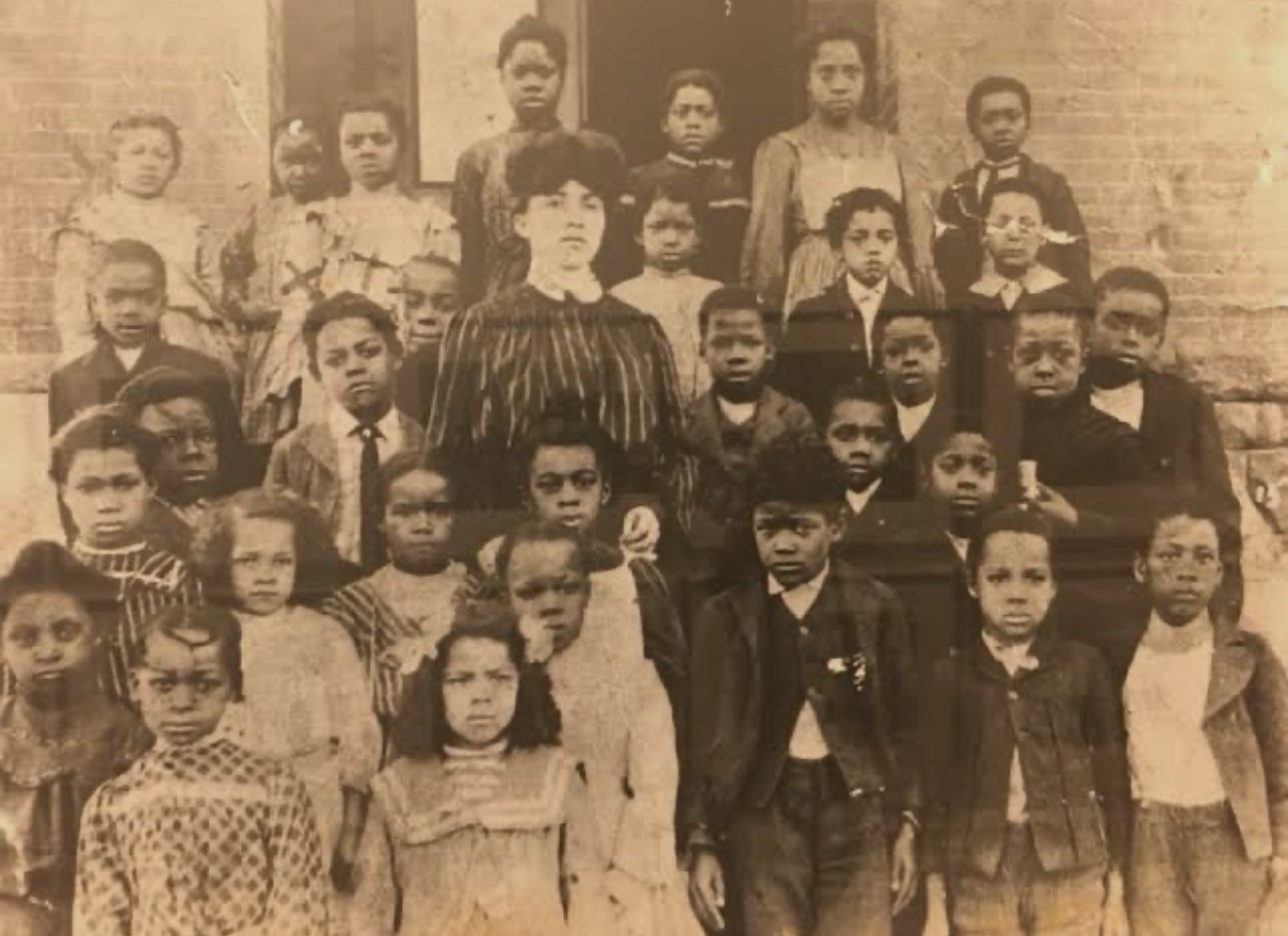
At the corner of Harris and Price Streets, in Savannah's historic Eastside neighborhood, stands a two-story frame building that represents one of the boldest ideas of its age: that freedom and learning were one and the same. The Beach Institute is among the most important surviving landmarks of Reconstruction-era African American education anywhere in Georgia. Established in 1867, it was the first school building in Savannah constructed specifically for the education of African Americans after the Civil War. It rose during those turbulent, electric years just after emancipation, when newly freed African Americans understood education as the essential pathway to everything that had been denied them — citizenship, economic independence, a voice in their own government.
The story begins in 1865. With the war barely over, Savannah's Black community — working alongside northern missionaries and federal officials — set about the urgent work of educating formerly enslaved children. The effort drew support from the Freedmen's Bureau, the American Missionary Association, and the Savannah Educational Association. The land was acquired, and construction planned. And then came the detail that gives the building its deepest meaning: the school was erected by the labor of newly freed African Americans themselves. They built it with their own hands, making the structure at once a place of learning and a monument to the freedom they had just won.
The school took its name from Alfred Ely Beach, an inventor, editor and publisher of Scientific American Magazine, whose financial gift helped fund the construction. The frame building was designed to hold hundreds of students at a time — and that ambition proved necessary. When the doors opened, enrollment swelled almost immediately to roughly 600 students. It was a staggering number, and it said something plainly: Savannah's Black population hungered for literacy and learning, and they came in their hundreds to claim it.
The Institute quickly became more than a school. In 1869, meetings held within its walls led to the formation of the First Congregational Church of Savannah, one of the city's oldest African American congregations. In 1874–75, responsibility for the school passed to the Savannah Board of Education, making it one of the earliest publicly supported schools for Black children in the city. Programs changed with the times, and the original institution eventually closed its doors in 1919 — but the building itself endured, surviving while so many other Reconstruction-era Black schools vanished entirely.
Its second life came in the twentieth century, through the preservation efforts of civil rights leader and historian W. W. Law and the King-Tisdell Cottage Foundation. Since 1989, the structure has operated as the Beach Institute African American Cultural Center, preserving and interpreting Savannah's African American history through exhibitions, educational programs, and collections — including the striking works of noted folk artist Ulysses Davis. Today, the Beach Institute stands as one of the most significant surviving monuments to African American education and self-determination in the Reconstruction South — a building raised by free hands, for free minds, that has refused to disappear.
___
Sources:
Green, Hilary N. "The Beach Institute and the American Missionary Association". In Slavery and Freedom in Savannah, edited by Leslie M. Harris and Daina Ramey Berry, [174-175]. Athens: University of Georgia Press, 2014.
Historical Marker Database.The Beach Institute." HMDB Record no. 15681. Accessed August 2, 2026
The Colored Tribune (Savannah, GA). "Beach School" May 6, 1876. Georgia Historic Newspapers, GALILEO

6Mother Matilda Taylor Beasley
Location: 500 East Broad Street
___
New Orleans, October 1834. In a city where bloodlines crossed and tangled in ways the law tried hard to control, a child was born into slavery. Her name was Matilda Taylor. Her father was a Native American; her mother an enslaved Creole woman. Both were held by James C. Taylor, a devout Catholic who saw to it that the infant Matilda was baptized in the great Saint Louis Cathedral. As a young, orphaned girl, she was cared for by the Sisters of the Holy Family — an order of Black nuns — and what she absorbed in their company would shape every year of the life still ahead of her.
By the time she reached twenty, Matilda had won her freedom and made her way to Savannah. There she supported herself with a needle, working as a seamstress — but she carried a second, secret vocation. She taught Black children in the illegal schools that operated in the shadows of the city. The risk was real and physical: those caught teaching Black children or adults faced fines or public whipping. Matilda taught anyway. She was undeterred.
She met her husband across the counter of a local restaurant and bar where she worked, a place owned by Abraham Beasley. Beasley was a free man of color and a formidable entrepreneur, with substantial land holdings on Skidaway Island and the Isle of Hope. He was also, by reputation, a slave trader — said to be the only Black slaveholder of his kind in the city's history, a complicated and unsettling figure in a complicated time.
The couple married in 1869 and made their home in the 300 block of Habersham Street. When Matilda could not recover the original record of her New Orleans baptism, she received a conditional baptism at the Cathedral of Saint John the Baptist, and married within the faith that had shaped her. Eight years into the marriage, Abraham died — and Matilda inherited everything: his businesses, his land, his possessions. Overnight she became a wealthy woman.
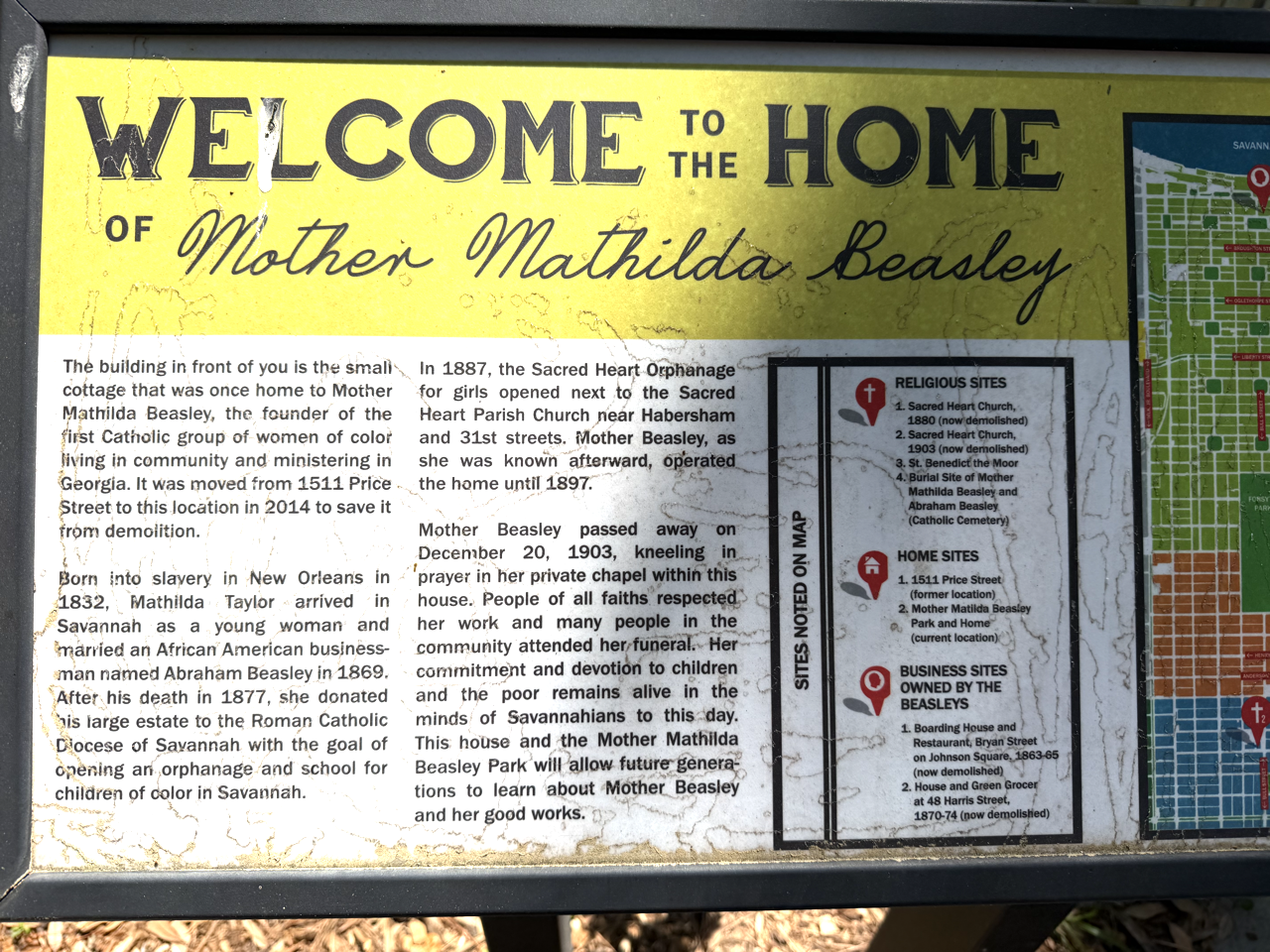
And then she did something extraordinary. Looking back across her own childhood — the slavery, the freedom, the Black sisters who had cared for her — Matilda gave it all away. She donated her entire inheritance to the Catholic Church, with one condition: that it be used to establish an orphanage for girls. A portion of this money was used by Father Oswald Moosmueller, a Benedictine missionary and educator, to start Sacred Heart Catholic Church, along with its school for Black children, in Savannah’s Victorian District in 1880. She would spend the rest of her life sheltering children with attention and care she had once received.
Matilda Beasley became Georgia's first Black nun. She devoted her remaining years to the Church and to the orphanage she founded. And when the end came, it found her exactly where her life pointed. In declining health, dressed in her full habit, Mother Matilda Beasley died in prayer in the small chapel of her own home. Beside her, it is said, were found her burial clothes, her will, and a letter of instructions — every detail of her departure arranged with the same quiet devotion that defined her living.
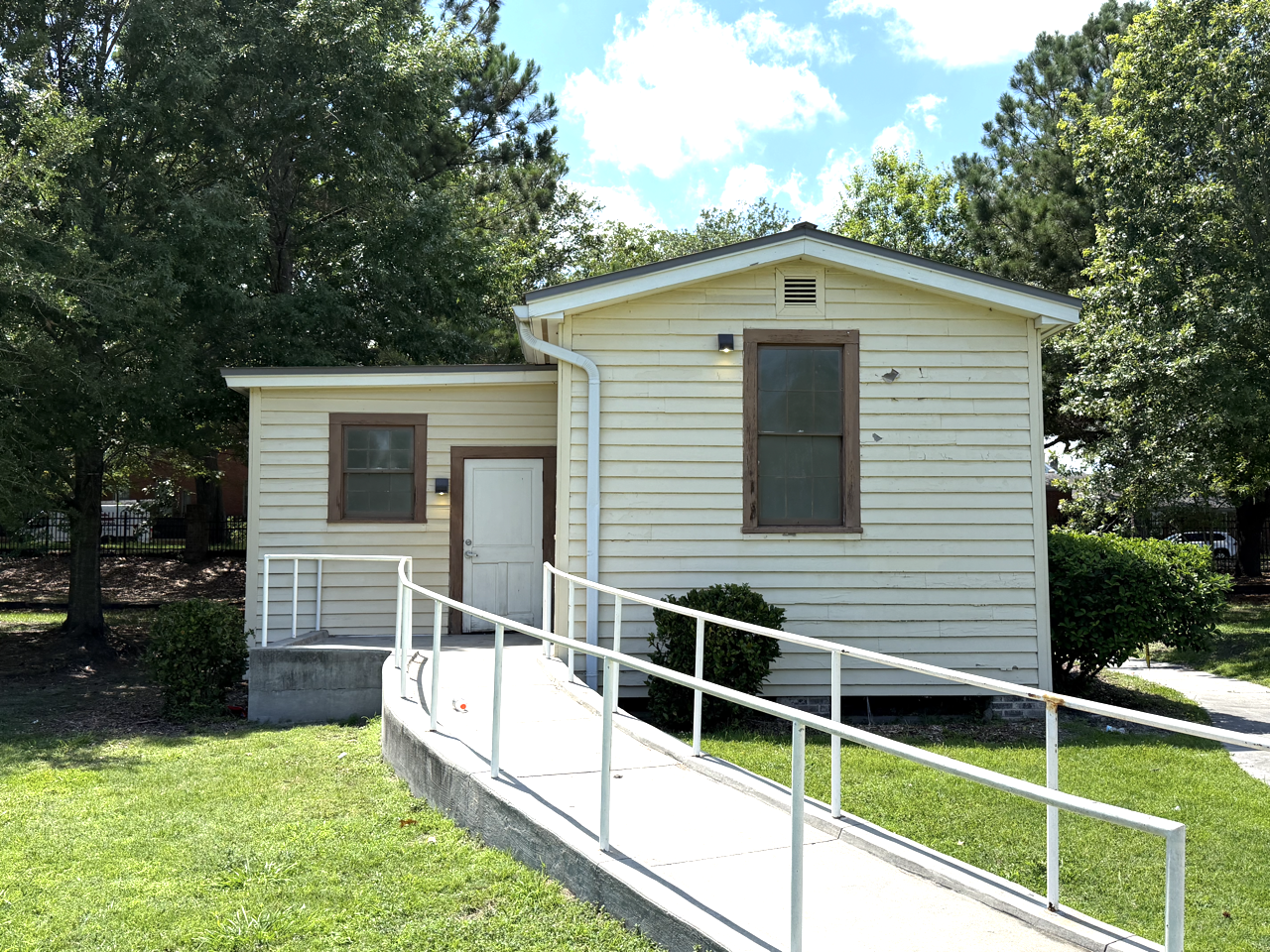
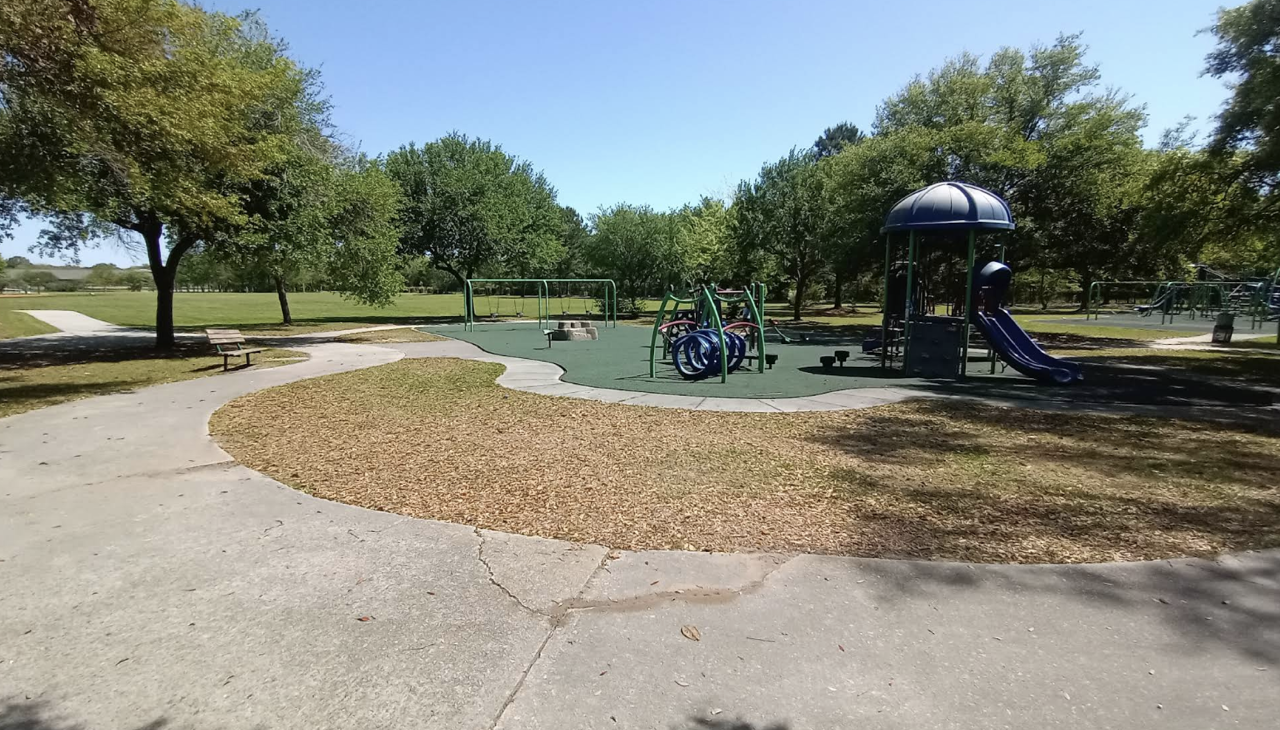
Today her memory rests in an unexpectedly gentle place. In her honor, a neighborhood park bears her name, with walking paths, green space, and shaded woods where families and their dogs gather. But the jewel of the park is smaller and quieter than everything obvious: the tiny, lovingly restored historic cottage that once belonged to Mother Matilda Beasley. Her home is now a museum — a small house holding the memory of a remarkable and dedicated life.
___
Sources:
Berry, Daina Ramey, Leslie M. Harris, and Anne Roise, eds. Slavery and Freedom in Savannah. Athens: University of Georgia Press, 2014.
DeLorme, Rita H. "Mother Matilda Beasley Recalled",The Southern Cross, January 28, 1999
Hoskins, Charles Lwanga. Yet With a Steady Beat: Autobiographies of Early Black Savannah. Savannah: Gullah Press, 2001.
Lumpkin-White, Arva. Photograph credit: and others as noted.
Savannah Tribune."Mother Mathilda Beasley House Project"The Savannah Tribune, February 15, 2023
Savannah Municipal Archives. Savannah Inventory Ward Notes: Troup Ward. City of Savannah Clerk's Office Record Group, Savannah, GA.
Thomas, Sister M. Evangeline. "The Golden Silence: The Story of Mother Mathilda Beasley, Georgia's First Black Nun."Catholic Historical Review65, no. 4 (1979): 540–558.
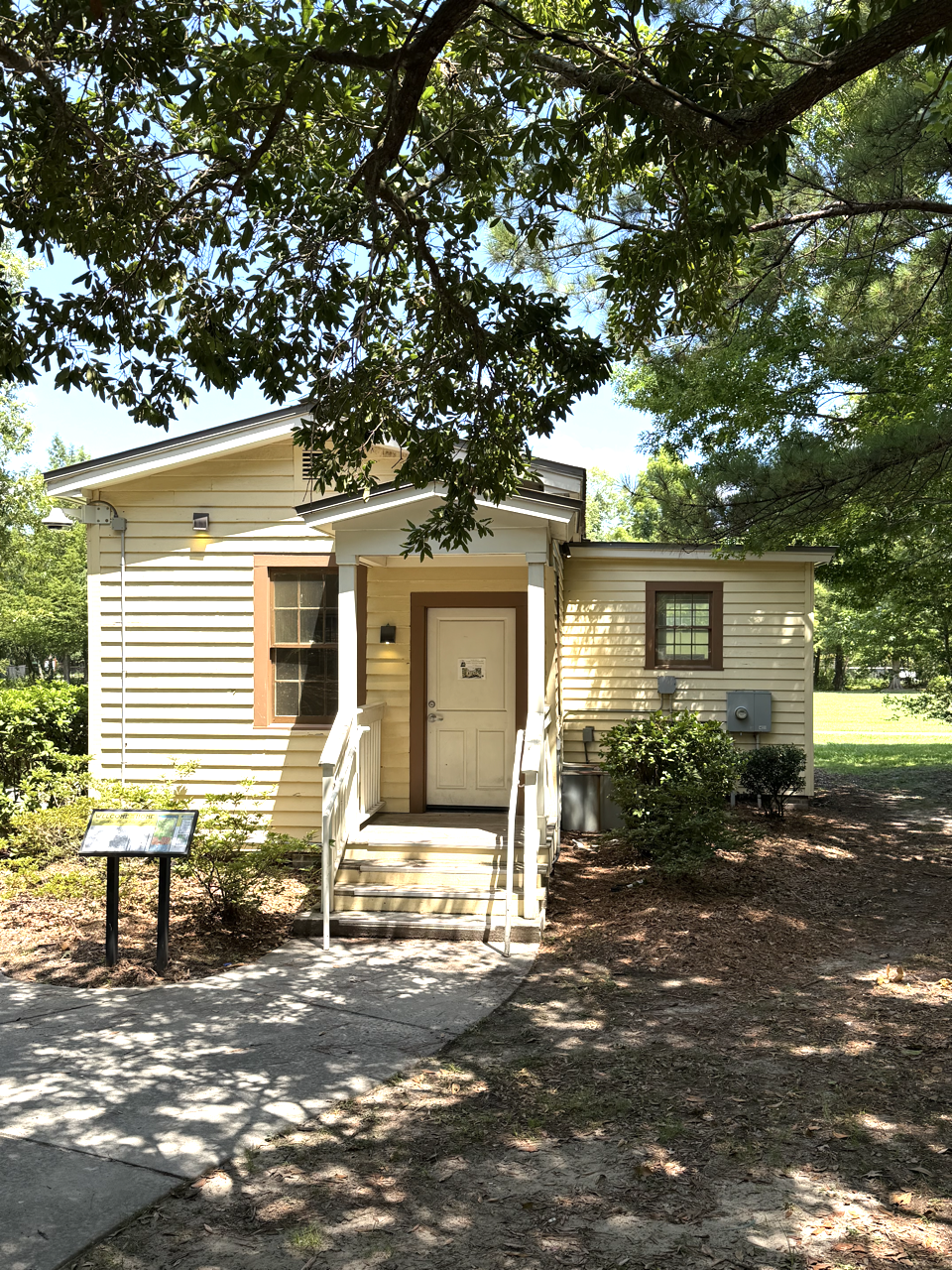

7West Broad Street School / Scarborough House
Location: 41 Martin Luther King Jr. Boulevard
___
West Broad Street School
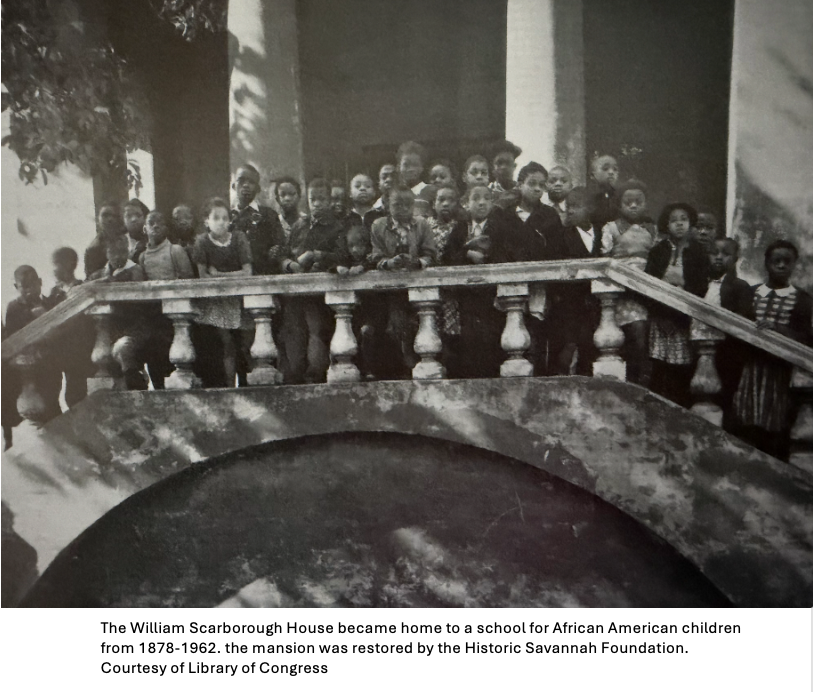
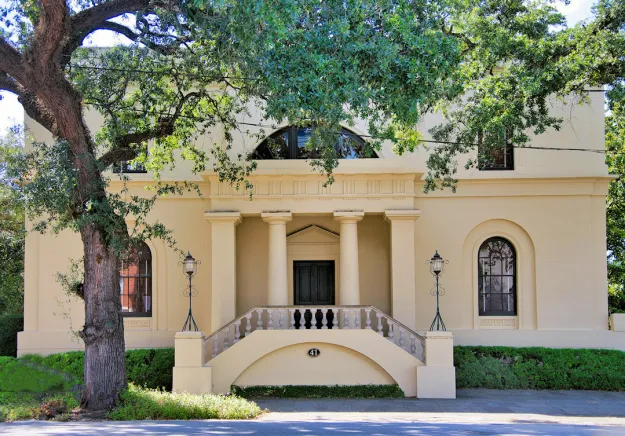
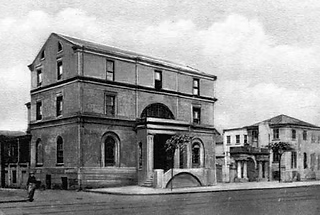
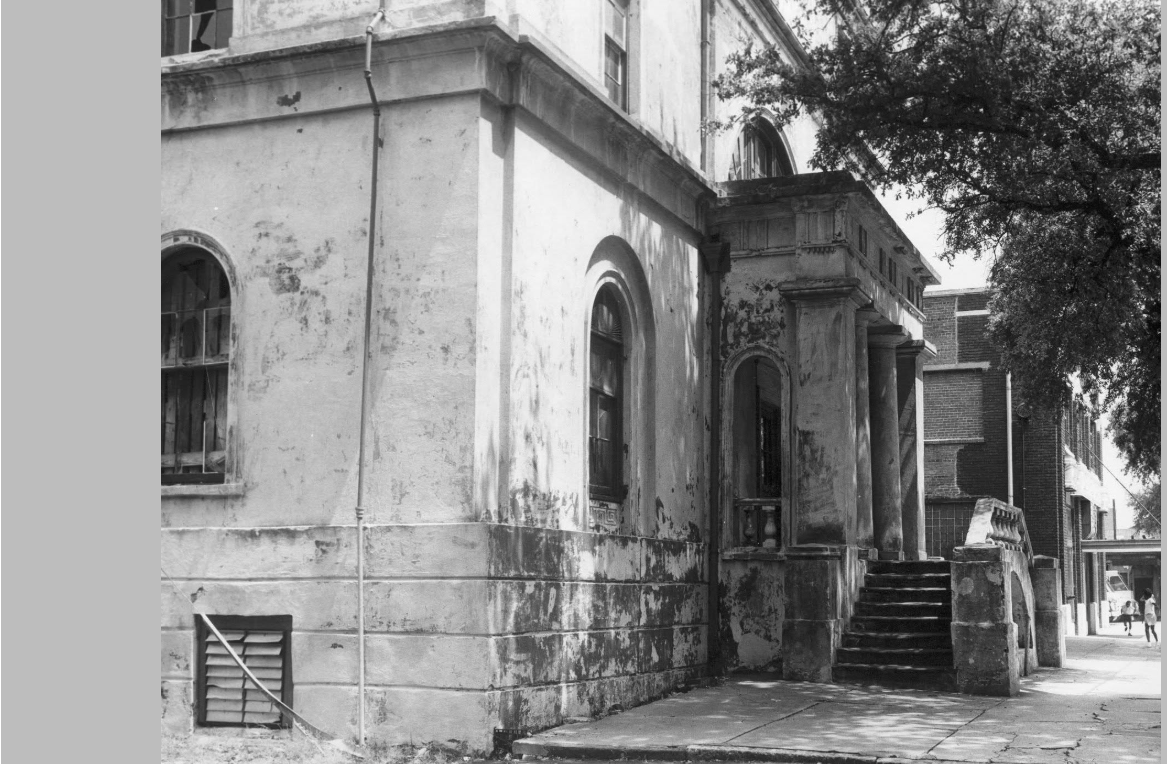
The mansion at 41 Martin Luther King Jr. Boulevard began its life as a monument to wealth. Completed in 1819 for Savannah merchant and steamship investor William Scarbrough, it was designed by the English architect William Jay and remains one of the finest surviving examples of his work anywhere in the United States. The house introduced the elegant Regency and early Greek Revival styles to Savannah and, in its day, was counted among the city's grandest residences. Its importance was recognized almost immediately: during President James Monroe’s 1819 visit to Savannah, Scarbrough hosted him at the house while Monroe inspected the steamship Savannah. But the most remarkable chapter in this building's life was not its first.
Scarbrough's fortune did not last. After his financial collapse in the 1820s, the house passed through several owners. By the early 1870s, the building’s history had begun to take an entirely different turn.
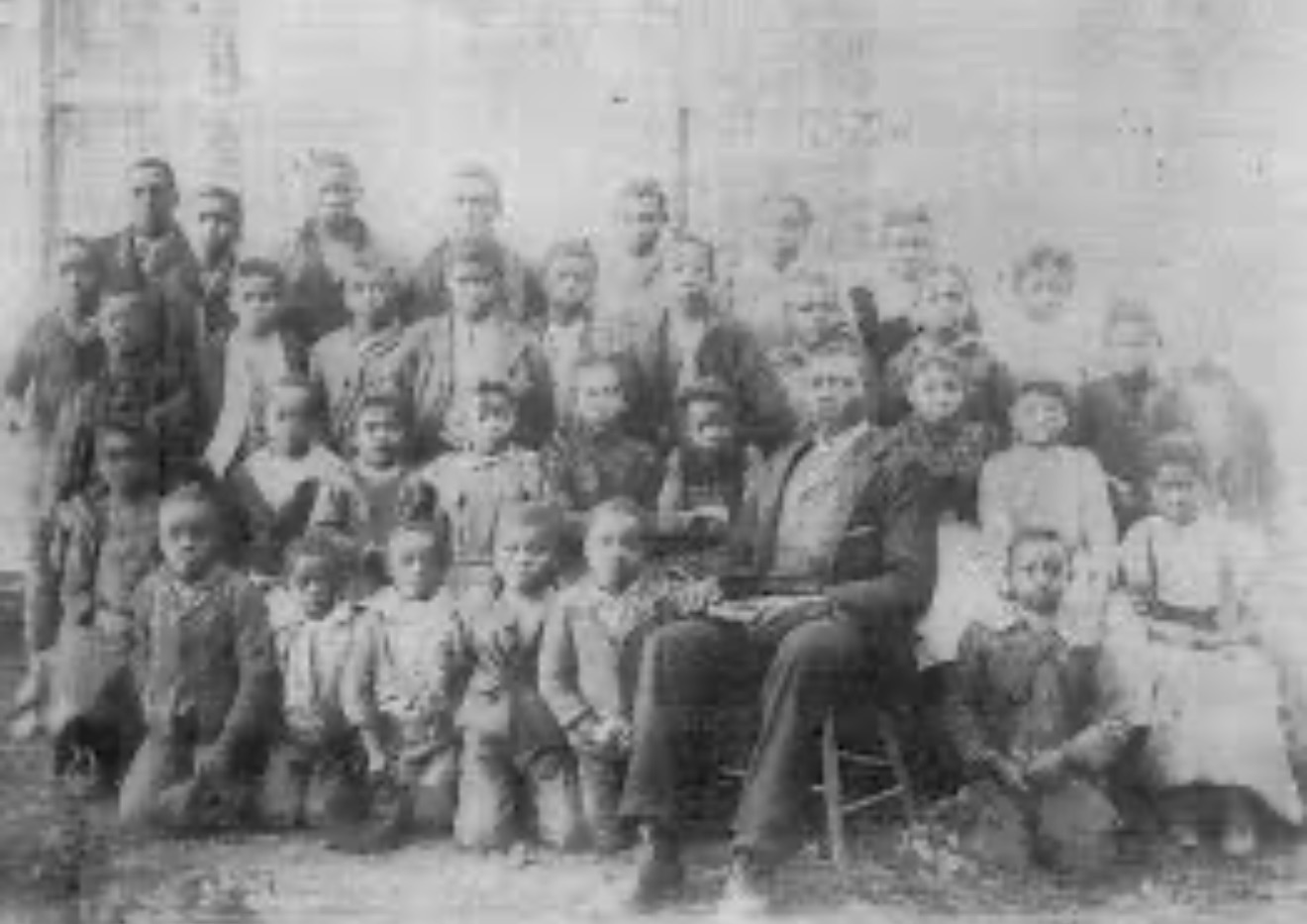
The school came to the mansion almost by accident, born of disaster. The predecessor school to West Broad Street School operated inside St. Stephen's Episcopal Church until a fire destroyed it on November 22, 1873. In 1878, classes moved into the former Scarbrough mansion — and stayed there. For the next eighty-four years, from 1878 until 1962, this opulent Regency residence served as a public school for African American children.
The school’s presence in the mansion reflected Savannah’s growing demand for educational opportunities for Black children. Its faculty included Eliza Pollard, Emma Simpson, Laura Porter, Elias Yulee, Emma Higgins, Mary Inglis, and Cornelia Atwell, whose husband had recently become rector of St. Stephen’s Episcopal Church. Dr. Arnold, president of the Board of Education, interpreted the school’s development as evidence that Savannah’s Black community increasingly understood the importance of educating its children.
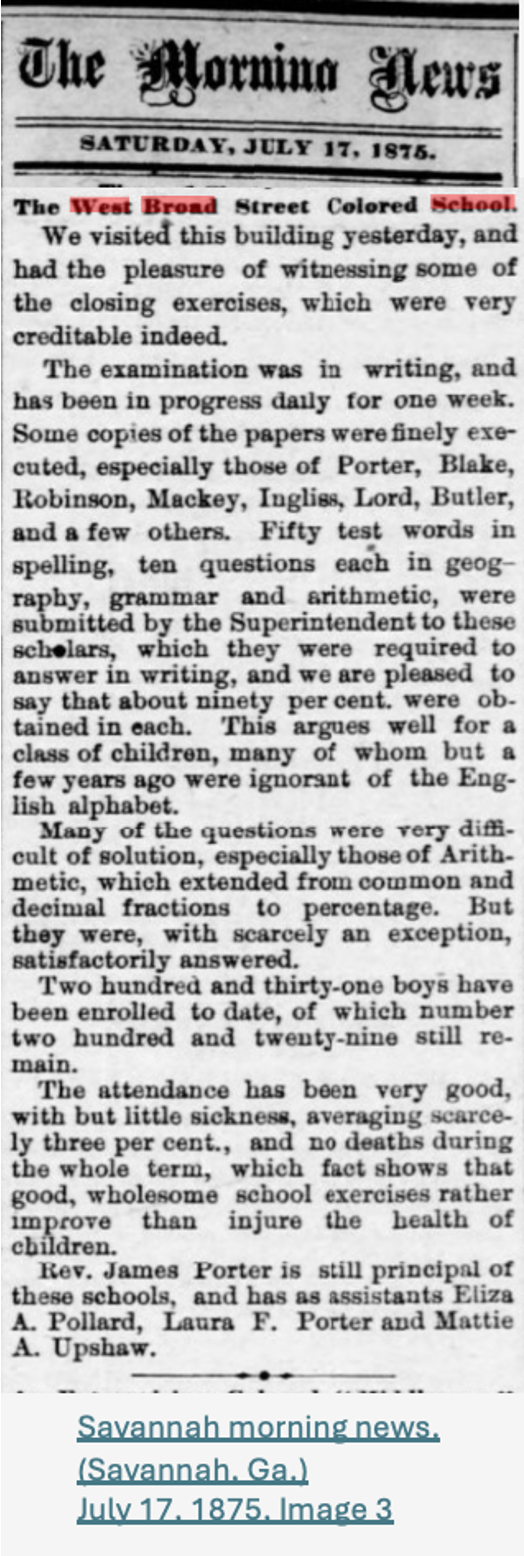
The students’ work also attracted public attention. In July 1875, a reporter for the Savannah Morning News attended the school’s closing exercises and praised the quality of the students’ written compositions. The reporter identified work by Porter, Blake, Robinson, Mackey, Inglis, Lord, Butler, and others. Such accomplishments were especially notable because many of the students had only recently begun learning the alphabet.
That year, 231 boys were enrolled. Eliza A. Pollard, Laura F. Porter, and Maddy A. Upshaw assisted Principal James Porter. The Board of Education rented the mansion for $300 a year while the school operated there. In 1876, the Board sold the property to Bernard McKenna. Two years later, George W. DeRenne set the building on its extraordinary second course. He purchased the mansion for $ 4,500 and donated it to the Board of Education on April 30, 1878, directing that the property be used for the education of Black children. DeRenne’s gift established a legal foundation for the school’s continued use of the property. The deed prohibited religious instruction in the building and required that the property remain dedicated to the prescribed educational purpose. If those conditions were not maintained, the property could revert to DeRenne’s heirs. At the time, Savannah’s public-school system served approximately 2,070 Black students. In 1876, the property was sold to Bernard McKenna. Two years later, George W. DeRenne set the building on its extraordinary second course. He purchased the mansion for $ 4,500 and donated it to the Board of Education on April 30, 1878, directing that the property be used for the education of Black children. DeRenne’s gift established a legal foundation for the school’s continued use of the property. The deed prohibited religious instruction in the building and required that the property remain dedicated to the prescribed educational purpose. If those conditions were not maintained, the property could revert to DeRenne’s heirs. At the time, Savannah’s public-school system served approximately 2,070 Black students. James Porter resigned as principal in 1878, and J. H. C. Butler succeeded him.
As enrollment increased, the original mansion gradually became an educational complex rather than a private residence. In 1889, the Board of Education added a four-room annex for $2,000. The refined rooms of the former Scarbrough residence were thus adapted to the practical demands of public education and filled with generations of African American students.
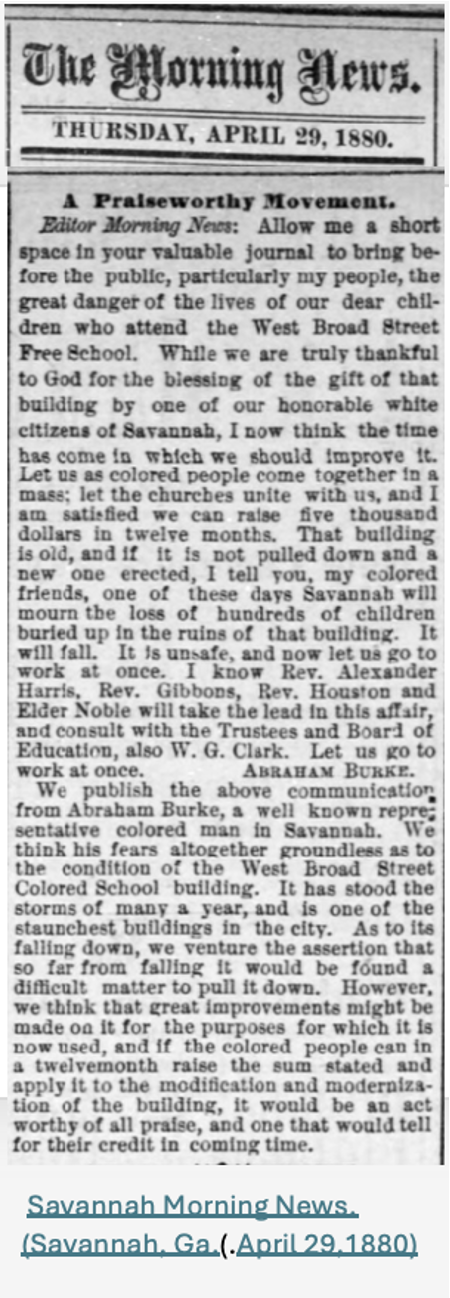
The building’s condition later became a matter of public debate. In 1880, Abraham Burke appealed to Savannah’s Black community through the White press, warning that the West Broad Street School needed repairs. He proposed a campaign to raise approximately $5,000 within twelve months. The newspaper described Burke as a well-known Black representative of Savannah; however, its editor considered his concerns about the structure excessive, arguing that the building had withstood many years of severe weather and remained one of the city’s strongest. The editor recommended using the funds for modernization and improvements.
By 1914, West Broad Street School contained fourteen classrooms and served approximately 750 children, many of whom came from Yamacraw, a predominantly African American section of the city. Professor J. H. C. Butler supervised fourteen teachers. The school became an important institution on Savannah’s west side, giving generations of Black children access to formal education.
West Broad Street School closed in 1962 after nearly nine decades in the Scarbrough House. Its closure reflected both the building’s deteriorating condition and the pressures created by school desegregation. The property later became associated with the Historic Savannah Foundation, which helped preserve and restore the building. The house served as the Foundation’s headquarters from 1976 to 1991 before the Ships of the Sea Maritime Museum acquired it in 1996.
Today, the William Scarbrough House preserves several layers of Savannah’s history. It began as the home of a wealthy merchant, became a place of learning for African American children, and now houses a museum devoted to the city’s maritime past. Its story is therefore not only architectural; it is also a record of educational struggle, community persistence, and historic preservation.
___
Sources
Board of Education of the City of Savannah and Chatham County. Minutes of the Board of Education. Savannah, GA, April 8, 1895, 211.
Board of Education of the City of Savannah and Chatham County. Sixteenth Annual Report of the Public Schools of the City of Savannah and County of Chatham. Savannah, GA, April 30, 1878, 30.
Fuller, Rita Yates. "West Broad Street School History." Savannah Black History Page (Facebook), June 27, 2026. #savannahblackhistory.URL.
Hoskins, Charles Lwanga. "The Struggle Begins." Chapter 3 in Yet With a Steady Beat: Autobiographies of Early Black Savannah. Savannah: Gullah Press, 2001, 157, 188-189
8Bryan Free School
Location: 219 W Bryan Street
___
There may be no more powerful image in all of Savannah's history than the one that unfolded on a cold January morning in 1865: hundreds of formerly enslaved children walking through the streets to take their seats inside a building where, just weeks before, human beings had been bought and sold.
The building was the old Montmollin building — a slave mart. In December 1864, after Union General William T. Sherman captured Savannah, the federal government confiscated the property, and in 1865 gifted it to Savannah's Black community for a purpose that turned its history violently on its head: education. There it became the new Bryan Free School. The transformation was almost unthinkable, because before emancipation, teaching a Black person to read had been a crime. Georgia's slave code banned educating the enslaved, with punishment that could reach a $500 fine and a public whipping.
And yet it had been done anyway — quietly, bravely, in makeshift schools and private homes. A roll call of Savannahians risked everything to teach Black youth: James Porter, Catherine and Jane Deveaux, Julien Fromantin, Matilda Taylor Beasley, Mary Woodhouse, and James Simms. Their students became experts in disguise, hiding books in baskets and bags and pretending to run errands, so that no one would catch them carrying the forbidden cargo of a primer.
Some of these clandestine teachers grew ingenious in their cover. According to the late Frank Bynes, a local Black business leader, James Porter used his trade as a tailor to mask his secret school. Porter is said to have built a trap door into his tailor shop, so that — in his own apparent design — when his classes were about to be surprised or apprehended, his pupils might save themselves through it.
In 2024, the City of Savannah and the Georgia Historical Society dedicated a historical marker on Barnard Street, formally acknowledging the building's role in the dark history of slavery. As one sentiment of the era declared, the building would surely never again serve as a slave trader's office — it should instead be kept for the purpose of educating the Black race, and not for selling them.
The historian Jacqueline Jones, in her book,Saving Savannah: the City and the Civil War, captured the extraordinary scene of the school's opening day. "On the morning of January 10th, she writes, some 500 Black children — ragged, shoeless, and shivering in the cold — gathered in the sanctuary of Savannah's First African Baptist Church. Spilling into the streets, they marched in a mass through Franklin Square, past the edge of the city market at Ellis Square, and on to an imposing three-story brick building on Saint Julian Street: their new school, the old Bryan slave mart. Residents leaned from windows and doorways along the route to watch them pass, and to one observer this army of colored children stirred feeling and interest second only to the arrival of General Sherman's army itself."
"Then came the moment that no one who saw it could forget. Inside the building where traders had bought and sold human beings only weeks earlier, the pupils took their seats on wooden benches, their feet dangling above the floor. They were surrounded by the remnants of the old regime — handcuffs, whips, paddles, and the sales receipts that had once priced people like cargo. And seated at the front, at the very auctioneer's desk now occupied by their teacher, freed girls and boys began their lessons." As Jones observes, the African American community leaders who choreographed that grand opening understood exactly what they were doing — they possessed a keen sense of the dramatic and the symbolic. Black children would seize the streets, and they would transform the trappings of slavery into the instruments of their own liberation.
___
Sources:
Hoskins, Charles Lwanga.Yet With a Steady Beat: Autobiographies of Early Black Savannah. Savannah: Gullah Press, 2001, 169–181.
Jones, Jacqueline. Saving Savannah: The City and the Civil War. New York: Vintage Books, 2008, 213–232.
Library of Congress. Historical Photograph of Antebellum / Civil War Savannah Structure. Prints and Photographs Division, Library of Congress, Washington, D.C.
Lumpkin-White, Arva. Photograph credit: others as noted.
Savannah Daily Herald. "Local News and School Reports." March 20, 1865.
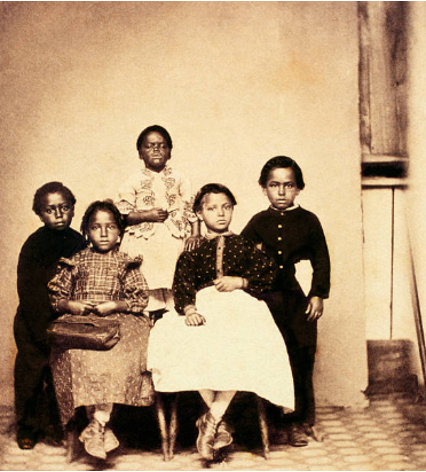

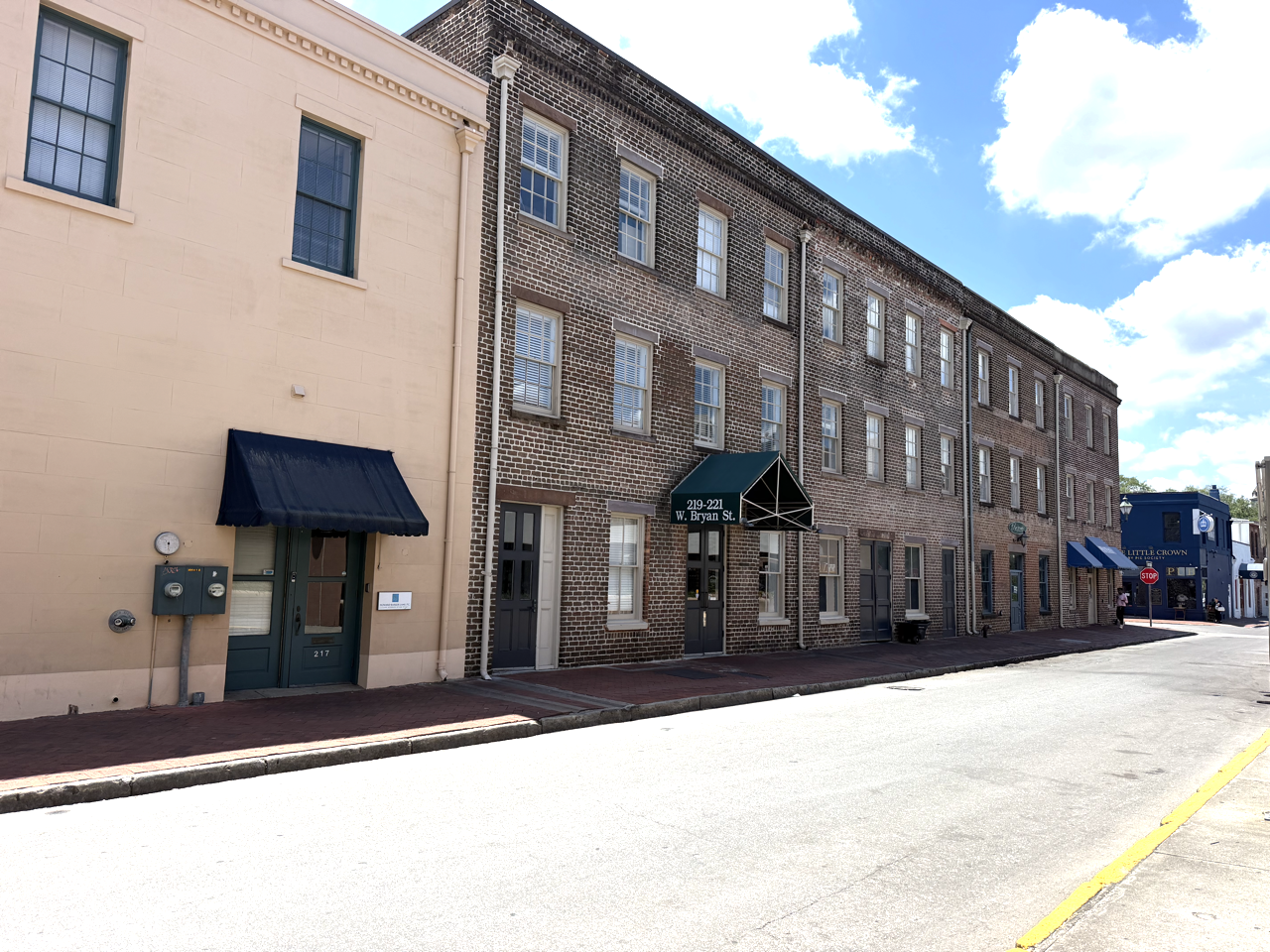
9St. Stephens Episcopal Church School
Location: 311 E Harris Street
Born Above a Bakery: St. Stephen's Episcopal Church School
St. Stephen's Episcopal Church began in the winter of 1855 when William Claghorn and his family, devout Episcopalians, worshiped at the Savannah River Mission. When the mission closed its doors to the enslaved, Claghorn sought another location for worship. In 1856, Bishop Stephen Elliott, the first bishop of Georgia, placed Reverend Sherod Kennerly in charge of establishing the new congregation. This would become St. Stephen's Episcopal Church. Claghorn opened the upper floor of his bakery as a makeshift sanctuary and worked tirelessly with Kennerly to establish the new congregation. Reverend Kennerly was excited to organize a new congregation in the workshop above William J. Claghorn's bakery, at Liberty and Habersham Streets — Savannah's first urban Episcopal mission built expressly for free Black worshippers. Education was part of the parish's mission from early on: St. Stephen's went on to organize Savannah's first kindergarten for Black children, groundwork that would lead, within two decades, to something far more consequential for the city.
By the early 1870s, St. Stephen's was running its own parish school. The Reverend Joseph Robert Love — the first Black clergyman to serve in the Diocese of Georgia — told the 1871 diocesan convention that the school had 106 names on its books, though on a typical day only around eighty children actually showed up, under a teacher he praised as capable and devoted.
Savannah's Board of Education, established six years earlier to educate white children, had built nothing comparable for Black students. Community pressure from Savannah's Black population helped push the Board to act in 1872, and St. Stephen's own vestry members, several of whom sat on the Board's education committee, were well placed to encourage the takeover of their parish school.
The mechanics of the takeover are well documented. The Board settled on its teaching staff after a round of examinations on November 13, 1872: Julia Maynard and Elias Yulee would run the girls' classroom, while the Reverend Samuel Sims and Eliza Pollard were assigned the boys. Pay followed the era's gendered scale — $750 a year for the men, $450 for the women. The following month, the Board signed a formal agreement to lease St. Stephen's unused parsonage, at the corner of Macon and Lincoln Streets, for $300 a year. Rather than build a school from scratch, the Board simply absorbed the one the church already ran — and in doing so created Savannah's first free public school for Black children, six years after the Board itself had been established to serve white students. Crews converted the two-story rectory into four separate classrooms, with room enough for four teachers and a combined 178 pupils.
Sims did not hold the post long: he died within months, and the Board turned to James Porter to replace him. A later report from Savannah's mayor put enrollment at 220 — real growth from the opening year — still under four teachers, and he had only positive things to say about how the children were conducting themselves and how their studies were coming along. The public, secular character of the new school also became a point of civic argument: at least one contemporary newspaper correspondent pushed back publicly against suggestions that Black Savannahians themselves had organized the school, insisting the credit — and the responsibility — belonged to the Board of Education.
That first chapter ended abruptly. On November 22, 1873, fire damaged the rectory building housing the school, under circumstances contemporaries considered suspicious. All 178 of the school's students found a temporary home at Scarbrough House, the West Broad and Pine Streets mansion the Catholic Diocese of Savannah had operated since 1870 as a school for Black children under the Sisters of St. Joseph of LePuy. The Board of Education leased the building for $600 a year, and under continuing principal James Porter, the relocated school took on a new name: West Broad Street School.
The arrangement was made permanent five years later. In 1878, Savannah philanthropist George W. J. DeRenne purchased Scarbrough House outright and immediately deeded it to the City of Savannah's Board of Public Education, specifying that the property be used "to educate the children of African descent." The deed had teeth: a codicil barred religious instruction in the building, and the property would revert to DeRenne's heirs if the Board ever failed to use it as intended. Under that guarantee, West Broad Street School — the direct successor to the school first housed at St. Stephen's — grew into one of Savannah's central Black educational institutions, eventually enrolling several hundred students a year before finally closing in 1962, amid the pressures of school desegregation and the chronic disrepair of its aging building.
Standing at St. Stephen's today means standing at a literal starting point. The rectory that once stood behind this church is where Savannah first put public money behind educating Black children — a commitment forged under community pressure, carried out by a handful of named teachers working for wages set down in the Board's own minutes, tested by fire within a year, and carried forward for nearly a century at what became West Broad Street School.
___
Sources:
Atwell, Joseph S. A Brief Historical Sketch of St. Stephen's Parish. Savannah: Church Book and Job Printing Establishment, 1857.
Hoskins, Charles Lwanga. Yet With a Steady Beat: Autobiographies of Early Black Savannah. Savannah: Gullah Press, 2001, 55–56, 177-178.
Lumpkin-White, Arva. Photograph credit, others as noted.
Savannah City Directory, "Bakers," 1871
"Bakers." In Savannah City Directory, 1871
Georgia Historic Newspapers. June 22, 1850
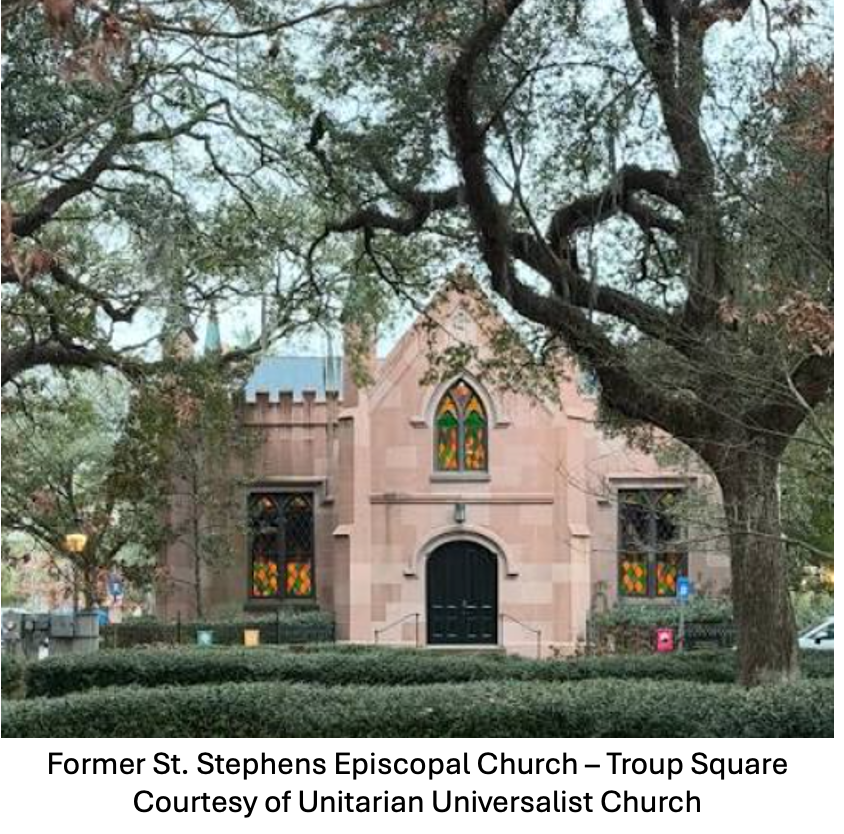
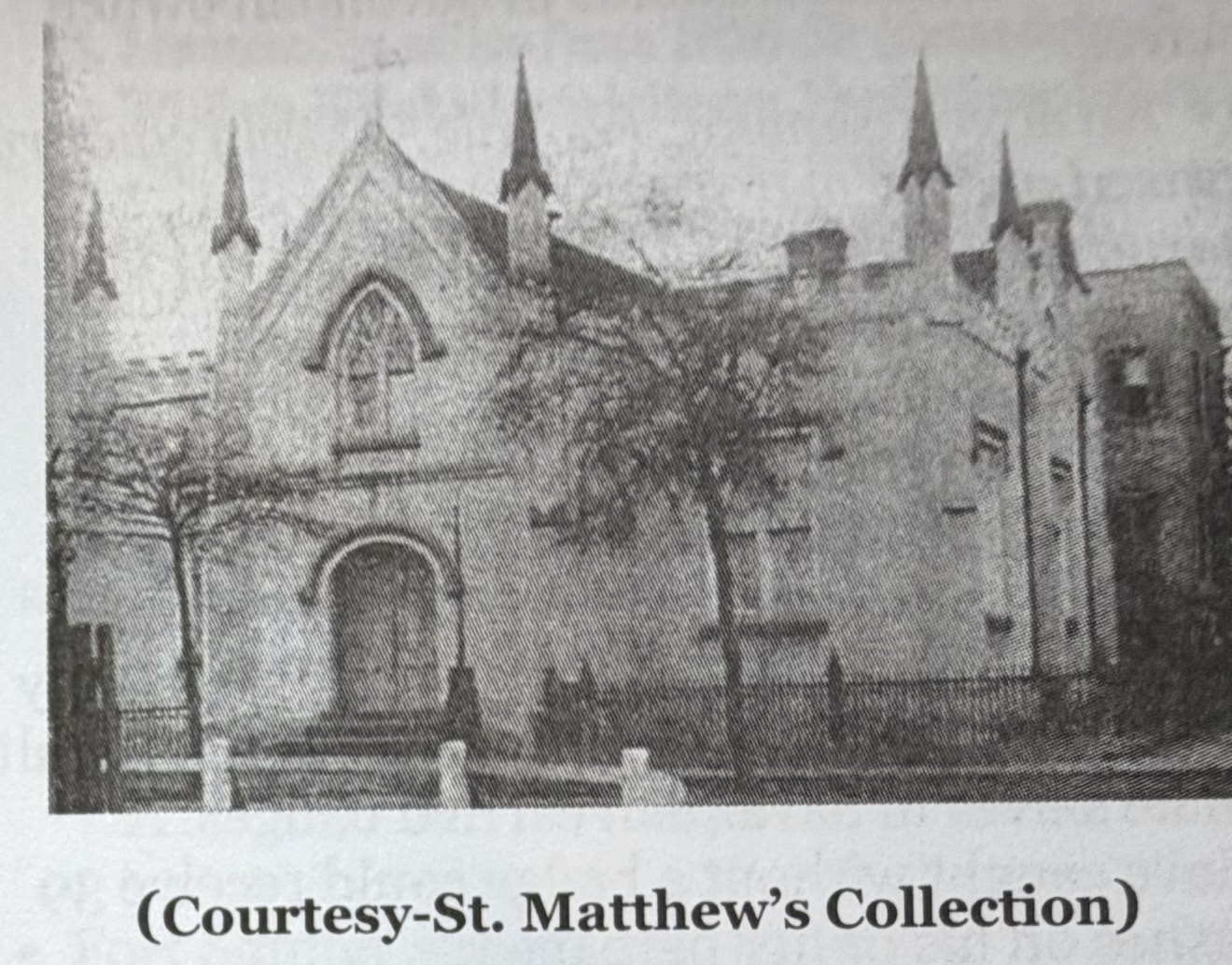
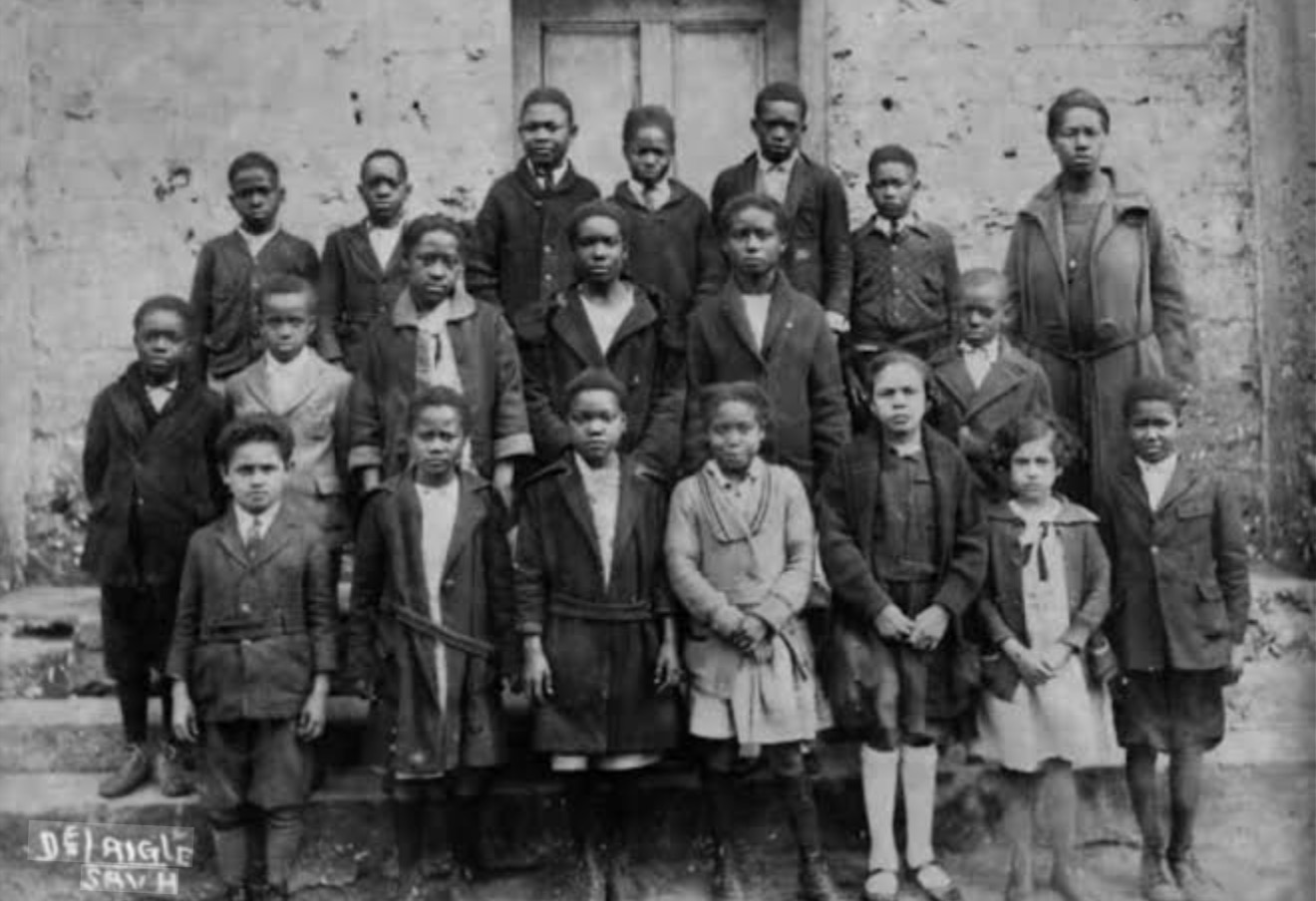
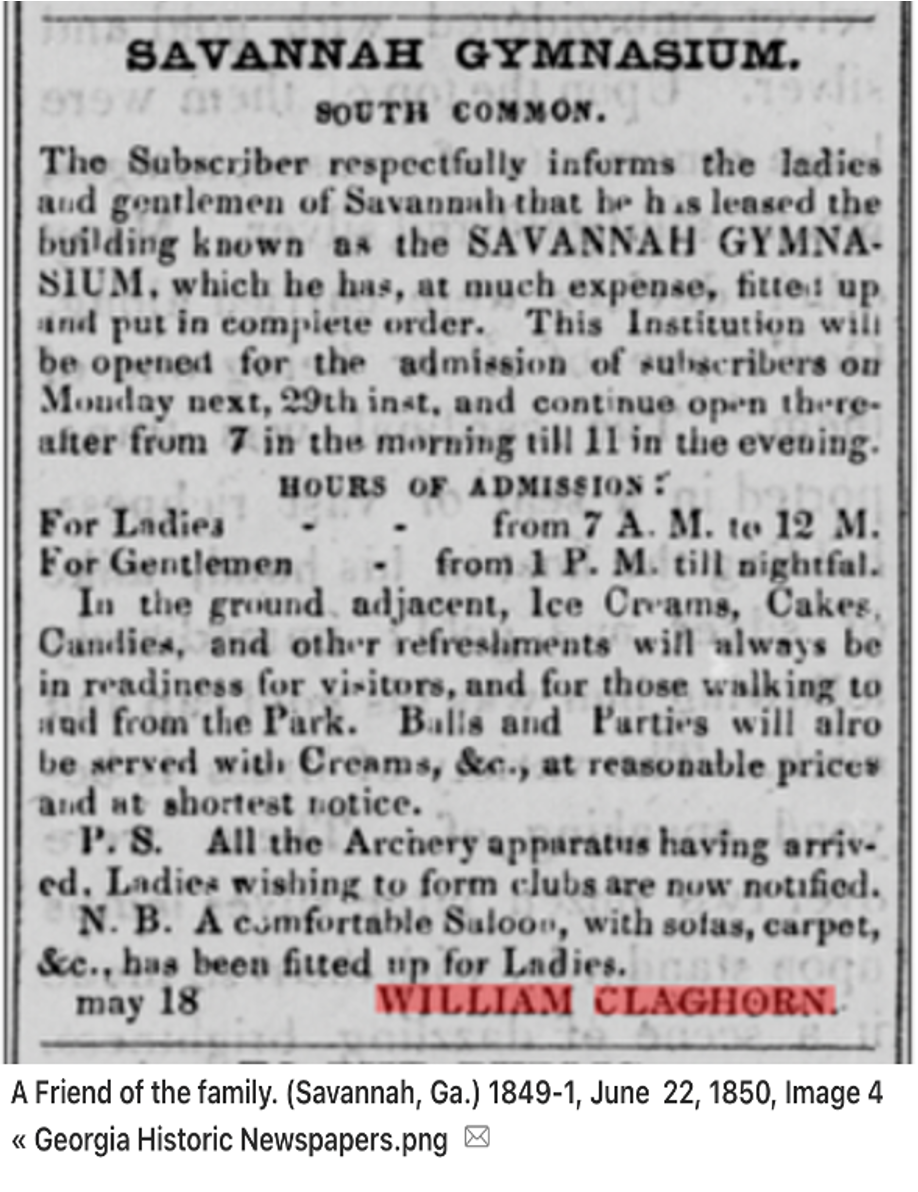

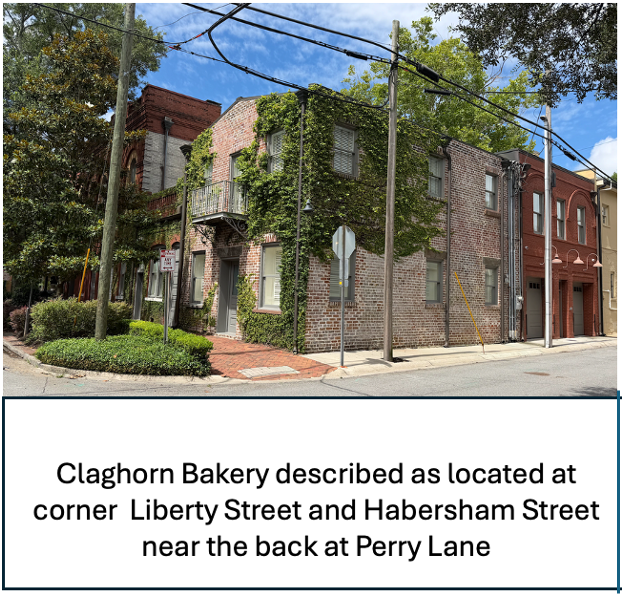
10The Reverend Richard Bright
Location: 311 East Harris Street
St. Stephen’s Church was more than a place of worship. For Savannah’s Black community, it became part of a larger effort to build institutions that could serve families, cultivate leadership, and open doors that segregation kept closed.
Richard Bright, whose daughter, Nellie Rathbone Bright, also a decorated educator, is pictured in the main trail description. He arrived in Savannah after studying at St. Augustine Collegiate Institute in Raleigh and the General Theological Seminary in New York. Born in the Dutch West Indies, he brought with him experience as a teacher and the preparation for a life in the Episcopal Church. In 1892, Bishop Cleland K. Nelson ordained him at St. Stephen’s.
Bright and his wife, Nellie Jones Bright, soon turned their attention to the education of young children. They opened a school connected to St. Stephen’s that included the first Black privately operated kindergarten with primary instruction. Nellie, who had pursued her own education in Europe after being excluded from American colleges, taught in the school. Her experience made education not an abstract ideal, but a personal and urgent concern.
The school grew at a moment when Savannah’s public education system could not serve all of the city’s Black children. Bright’s school offered room for roughly one hundred pupils, and contemporary descriptions emphasized the care given to its facilities and supplies. For Black families, the school represented another chance to secure instruction through an institution directed by people who understood their community’s needs.
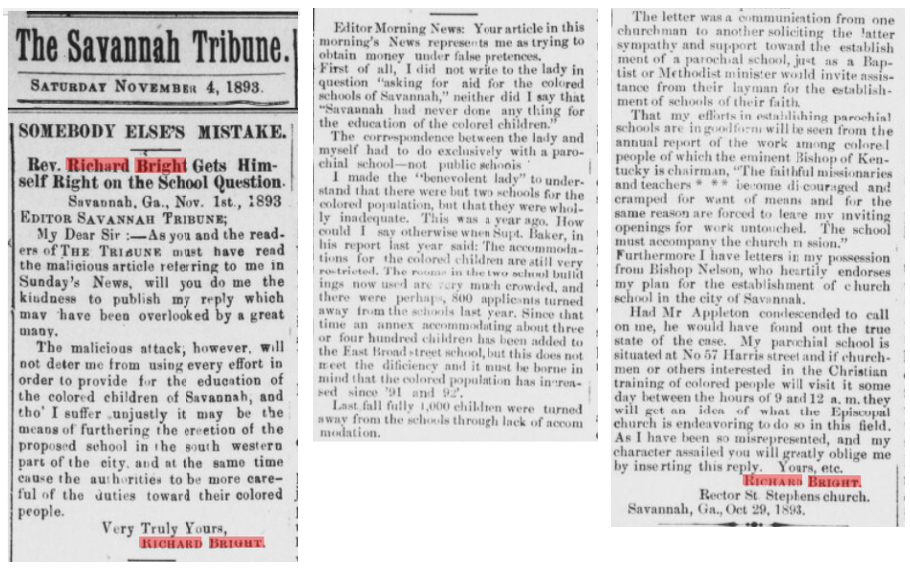
That work soon drew public attention. In 1895, Bright sought contributions from supporters in the northern cities. A Savannah Morning News article then questioned his motives, suggesting that he had used the shortage of places in the public schools to promote his private school. Bright responded publicly, challenging the accusation and pointing to the overcrowding that left many Black children without access to a classroom.
The controversy did not remain only a Savannah matter. On September 25, 1895, the Washington Post carried the item “Small Aid for the Negro.” Its appearance in a Washington newspaper placed Bright’s local fundraising effort within a national conversation about Black education. The notice also shows the difficult position occupied by small Black private schools: they were expected to meet an urgent public need while depending on private donations to do so.
Bishop Nelson later spoke in Bright’s defense during his visit to St. Stephen’s. Members of the congregation and the surrounding community urged Bright to remain in Savannah, and he continued his work there. He also produced a catechism for Sunday-school use, challenged the financial burden of pew rents, and helped strengthen the parish’s financial independence.
Bright eventually left Savannah in 1913 for Philadelphia. In a letter published in the Savannah Tribune, he explained that he was leaving to take on a broader field of service. Yet the institution he and Nellie Bright created in Savannah remains the clearest expression of their educational vision: a school shaped by Black leadership, sustained through community effort, and built in response to children who had too often been left without a place to learn.
Hoskins, Charles Lwanga. "The Struggle Begins." Chapter 3 in Yet With a Steady Beat: Autobiographies of Early Black Savannah. Savannah: Gullah Press, 2001, 178-181
Savannah Tribune "Somebody Else's Mistake", November 4, 1893
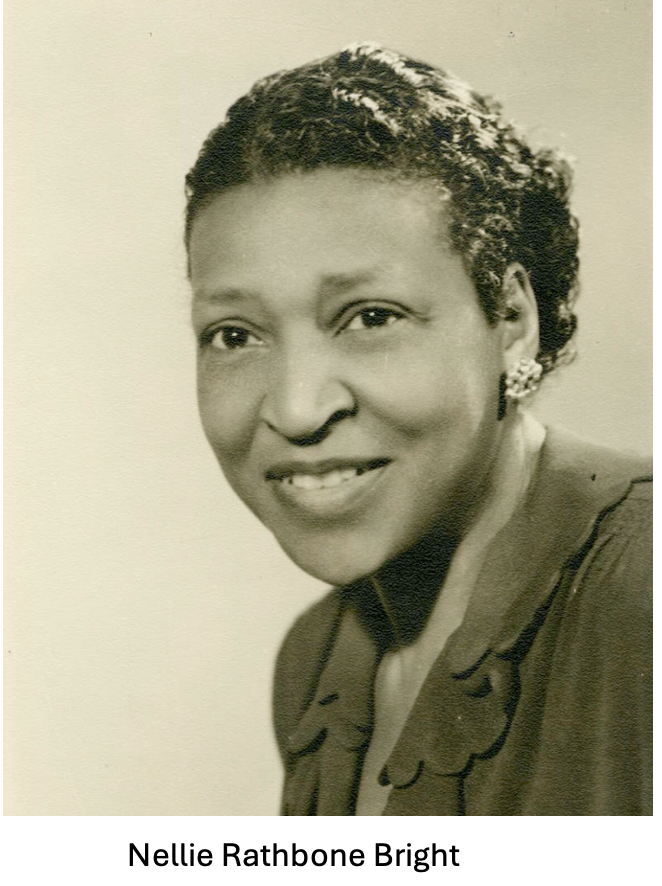
11 Southern Educational Association (S.E.A)
Location: 219 West Bryan Street
___
In the weeks after Union forces captured Savannah, Black residents transformed the city’s changing political landscape into an opportunity for education. In a meeting at First African Baptist Church, they organized the Savannah Educational Association, also known as the Colored Educational Association. Cotton shipper Abraham Burke helped call the meeting, which brought together Black religious and civic leaders determined to create schools for their community.
The association’s purpose was direct: to establish schools “for the improvement of its people” and to raise the funds needed to maintain them. Its leadership emerged from Savannah’s Black institutions. Reverend John Cox became chairman. Born in Savannah in 1807, Cox had purchased his freedom in 1849 for $1,100 and was serving as pastor of Second African Baptist Church in 1865. James Porter of St. Stephen’s Church became secretary, and Reverend Ulysses L. Houston, pastor of First Bryan Baptist Church, became treasurer. Reverend Alexander W. Wayman later recalled attending the organizing meeting with Reverend James Lynch and Elisha Weaver.
The association’s work quickly moved from organization to construction. After General Sherman’s capture of Savannah, the federal government made two buildings available to the city’s Black community. One was the Montmollin Building, a building previously owned by a slave brokerage dedicated to the buying and selling of enslaved people. SEA converted that former site of slavery into the Bryan Free School, one of Savannah’s first legal schools for Black children. As recounted in Saving Savannah, Jacqueline Jones paints the picture: “On the morning of January 10th, 1865, five hundred black children, ragged, shoeless, and shivering from the cold, assembled in the sanctuary of Savannah's First African Baptist Church. Spilling out into the street, they marched en masse through Franklin Square, to the edge of the City Market on Ellis Square, and on to an imposing three-story brick structure on St. Julian Street, their new school, the old Bryan slave mart. For residents along the way, leaning out windows and peering from doorways, this, quotation, army of colored children, …, seemed to excite feeling and interest, second only to that of General Sherman's army, In the words of one observer, then in the building where traders had bought and sold slaves just a few weeks before, pupils took their seats on wooden benches, their feet dangling above the floor, surrounded by remnants of the old regime: cuffs, handcuffs, whips, paddles, sale receipts of slaves, positioned in front of the auctioneer's desk, now occupied by their teacher. Freed girls and boys commenced their classes".
The transformation was both physical and symbolic. A building connected to the traffic in enslaved people became a place where Black children studied grammar, history, geography, and arithmetic. In July 1865, students from the SEA schools publicly demonstrated what they had learned. The school thus represented more than access to a classroom. It showed how Savannah’s Black community could claim, reorganize, and repurpose existing spaces in the service of freedom.
The SEA also established the Oglethorpe Free School in the Stiles house. Together, the two schools enrolled approximately 500 students during their early operation. The association relied first on local Black support: Savannah’s Black residents contributed approximately $900 toward the schools, while local leaders worked to prepare Black teachers. John Alvord, James Lynch, and John French examined and certified ten Black teachers. The community rallied in support of the organization's efforts, with reportedly at least 1,000 in attendance at a mass meeting in Greene Square at the Second African Baptist Church. The meeting was to organize efforts to raise funds for operations. Among the group of distinguished guests were some Black soldiers of the Union Army, as well as Chaplain Waring, Sergeants Jones and Burket, who were there to represent the Black soldiers of the 54th Massachusetts Volunteers. Charles Bradwell, James Porter, and Ulysses Houston represented the SEA leadership. The schools were therefore not simply imposed from outside; they were organized, financed, staffed, and sustained through Black community initiative.
This independence existed alongside severe obstacles. Black residents faced white indifference toward Black education and possessed very limited economic resources. The association’s fundraising and teacher-certification efforts reveal how much labor was required to establish schools at a moment when educational access was uncertain. They also challenge interpretations that treat formerly enslaved people only as recipients of missionary or federal assistance. Before larger educational organizations consolidated their work in Savannah, SEA had already created a functioning community-based school system.
By 1867, the American Missionary Association (AMA) absorbed SEA’s work and founded the Beach Institute, consolidating several schools, including the Bryan Free School. That transition brought additional institutional support, but it also marked a shift in control. The history of SEA should therefore be understood as both a beginning and a turning point: a Black-led educational movement that established schools through local leadership and sacrifice before its work was incorporated into a larger missionary system.
The trail begins at First African Baptist Church, where the association was organized, and leads to the former Montmollin Building and Bryan Free School site, where the meaning of the effort becomes visible. Along the route are the people who made the association possible—John Cox, Abraham Burke, James Porter, Ulysses L. Houston, Alexander W. Wayman, James Lynch, Elisha Weaver, John Alvord, John French, the ten certified teachers, and the Savannah residents whose contributions supported the schools. Together, their actions turned the desire for education into an institution.
The Savannah Educational Association’s story is ultimately one of community power. In the immediate aftermath of emancipation, Black Savannah did not wait for a complete educational system to be provided. Its residents organized, raised money, prepared teachers, repaired buildings, and opened schools. The trail preserves that achievement: a story of education as freedom made practical.
___
Sources:
City of Savannah, “The Montmollin Building: From Slave Mart to Free School”, June 26, 2023
Hoskins, Charles Lwanga. Yet with a Steady Beat: Biographies of Early Black Savannah Savannah: Gullah Press, 2001, 168–69.
Georgia Historical Society, “The Montmollin Building and Bryan School,” historical marker text, 2024
Jones, Jacqueline. Saving Savannah: The City and the Civil War. New York: Vintage Books, 2008, 213.
12Reverend James Porter 1826-1895
James Ward Porter was born in Charleston, South Carolina, to Martha Givens Porter, a free woman of color who had purchased her own freedom as a dressmaker in the early 1820s. Family genealogical records place his birth around 1822, though some sources say 1826.
Charleston gave Porter an unusually broad education for a free Black child in the Antebellum South, including ancient and modern languages and vocal and instrumental music under teacher George O. Robinson. By his late twenties, he worked as a "professor of music" alongside his trade as a tailor. He had hoped to become a missionary, but a youth injury closed that path—a religious calling that resurfaced decades later in his AME ordination.
He married three times, reflecting the era's high mortality. His first wife, Christine Lazarus, married him around 1849 and died young. He married Elizabeth Paroley around 1852; she accompanied him to Savannah. After her death, he married a third time, to Harriet R., whose maiden name and marriage date are unknown.
At Bishop Elliott's invitation, Porter and Elizabeth arrived in Savannah in 1856 to serve as organist and choirmaster at the diocese's first Black congregation, which became St. Stephen's Episcopal Church (today St. Matthew's Episcopal Church, after a merger). Savannah already had strong Black vocal leaders—William T. Rose and Josh Burke—but lacked instrumental training, a gap Porter filled.
In Savannah, Porter worked as a tailor and ran a music school teaching violin, piano, organ, and voice to Black and White students. Quietly, he used both the tailor shop and music lessons as cover for teaching Black residents—many enslaved—to read and write, which was illegal under Georgia law. Historian Jean Fagan Yellin identifies this as a deliberate front. Businessman Frank Bynes placed Porter's shop at 177 Bryan Street, between two slave brokerages; Bynes said Porter kept a trapdoor there so pupils could escape and "might save themselves" during raids. Historians regard Porter as the father of Savannah's later generation of Black musicians.
At St. Stephen's, Porter became senior warden and lay reader—rare authority for a Black congregant then—and effectively ran the church through the Civil War. In 1867 he reported eighty-seven members, forty in Sunday School, with several baptisms and confirmations that year, and described reading services twice every Sabbath.
The diocese's White leadership regarded him warmly but with limits. Bishop Stephen Elliott called him "a very intelligent and well-educated colored man" but never formally licensed him as a lay reader. American Missionary Association agent Edwin Cooley judged him well-educated "for a colored person" but somewhat opinionated. After Elliott's death, the standing committee approved Porter to seek deacon's orders, but successor Bishop John W. Beckwith never acted on it, and Porter was never ordained a deacon. One account speculates his presence at the 1865 Sherman-Stanton meeting cost him support—an unresolved matter that eventually pushed him from the denomination he'd served over two decades.
On January 12, 1865, weeks after Savannah fell, Secretary of War Stanton and General Sherman met with twenty Black leaders about what emancipation might look like for them. Porter attended as St. Stephen's lay reader and board president, representing a congregation of about two hundred. Spokesman Garrison Frazier's answer to the question—that freed families needed land—led directly to Sherman's Special Field Order No. 15.
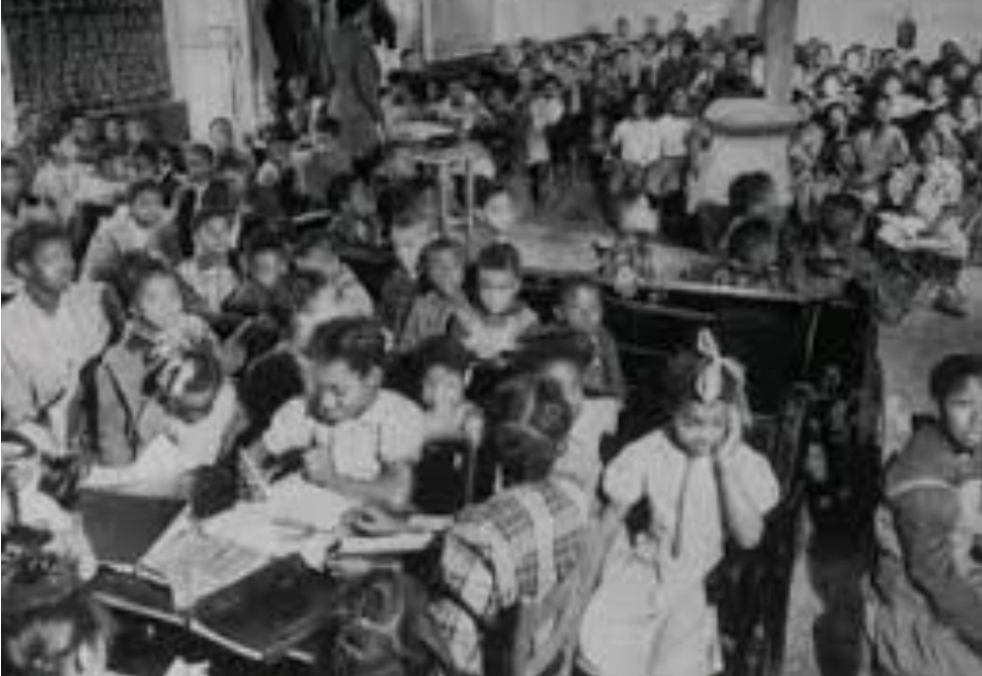
Savannah's Black community quickly built schools. The federal government confiscated a Barnard Street building that had been a slave-trading office for John S. Montmollin (later Alexander Bryan). The community's Savannah Educational Association (SEA) reopened it on January 10, 1865, as the Bryan Free School, the city's first legal school for Black children, with hundreds of children marching from First African Baptist Church for its opening. Porter became the first principal and eventually oversaw 450 students. The Savannah Republican covered a July 1865 exhibition there, noting the former slave-auction room now rang with children reciting grammar and geography.
The Bryan Free School was distinct from the Oglethorpe Free School, which the SEA opened five days later under principal Louis B. Toomer.
When the American Missionary Association absorbed SEA's schools in 1867 and consolidated several schools into the Beach Institute, it also folded in the Bryan Free School. Porter's path eventually led to the West Broad Street School, housed in the former Scarbrough mansion (now on Martin Luther King Jr. Boulevard). He led Bryan Free School after the war, moved to other work, then returned to lead West Broad Street from 1872-73 until leaving Savannah in 1878.
Porter's work in education made him a natural Reconstruction-era political leader. In 1867 he urged a Chippewa Square crowd to register and vote, saying God was on their side. That year he was elected president of a statewide Political Association meeting in Augusta and served as a delegate to the Republican state convention in Atlanta.
In 1868 Porter won election to the Georgia General Assembly representing Chatham County, one of three Black Savannahians elected alongside Ulysses Houston and James Merilus Simms. White legislators expelled all Black members in September 1868; Porter and colleagues appealed to federal authorities and were reinstated in 1870, though most then lost reelection. Porter pushed for free public education and legislative chaplains, questioned whether $1,400 raised for Black education in 1869 had been properly used, and warned that poor Black Savannahians risked being shot for voting while Black schools withered from neglect.
A columnist writing as "Georgian" mocked Porter and Simms in the October 14, 1870, Savannah Morning News, punning that enthusiasm for education had "Sim-mered down" while money "was Porter-ed away"—racialized scorn with no evidence of wrongdoing.
Afterward, Porter held other public roles: justice of the peace, and in December 1871 a temporary customs inspector post, which the Morning News reported as going to the "ex-tailor and law maker." He was reportedly the wealthiest Black political figure in the state; the 1870 census recorded $3,000 in real estate and $400 in personal property, and listed him with Elizabeth and four children—John A. (15), Laura F. (13), James R. (11), and Elizabeth M. (7). In the 1870s, he campaigned against streetcar segregation in Savannah. In 1876, he became the first president of the newly founded Mutual Benevolent Association. While principal at West Broad Street, he unsuccessfully sought appointment as U.S. minister to Liberia.
In 1879, Porter left the Episcopal Church for the African Methodist Episcopal Church, ordained in Thomasville, Georgia, around age fifty-seven—after years of frustration running St. Stephen's for much of the 1860s, being approved for deacon's orders, yet never being ordained. St. Stephen's was later served by Black deacon-in-charge Reverend Dr. J. Robert Love, who arrived already ordained elsewhere—unlike Porter.
In Thomasville, Porter became principal of the town's first public school for Black residents and wrote English Grammar for Beginners. His ministry then carried him to Yazoo, Mississippi (again as school principal), and to churches in Florida, Alabama, Bermuda, and Hamilton, Canada. In 1882, Bishop Alexander W. Wayman described him as a man of extensive information.
At seventy-three, returning from a service in Canada, Porter fell ill with influenza and was removed from a train in New York, where he died in late September 1895. They brought him home to Savannah and buried him at Laurel Grove Cemetery (South)—where he had buried his mother in 1877 —not far from St. Matthew's Episcopal Church, the modern continuation of the congregation he led for decades without ever being fully ordained into its ministry.
___
Sources:
Archives of the Diocese of Georgia. "James Ward Porter."Accessed September 5, 2026
Hoskins, Charles Lwanga. W.W. Law and His People: A Timeline and Biographies. Savannah, GA: Gullah Press, 2013, 42.
Hoskins, Charles Lwanga. Yet With a Steady Beat: Biographies of Early Black Savannah. Savannah, GA: Gullah Press, 2001, 164–65.
Jennings, Cynthia Ann. "James Ward Porter–Chatham County." The Original 33 (blog), September 5, 2022
Ships of the Sea Maritime Museum. "Secret Schools." Accessed September 5, 2026
WikiTree. "James Ward Porter (abt. 1822–1895)." Accessed September 5, 2026
13Louis B. Toomer, Sr.
In the first years after emancipation, Savannah's Black community moved with striking speed to build the institutions freedom had denied it: schools, churches, a free press, benevolent societies, fraternal lodges, and — a political voice. Louis Burke Toomer had a hand in nearly all of them. Over roughly four decades he was a schoolteacher and school principal, a fourteen-year employee of the U.S. Post Office, a co-founder of the newspaper that is today the Savannah Tribune, an officer in two of Savannah's Black fraternal lodges, an organizer of the city's Black relief effort during a yellow fever epidemic, a Republican Party organizer and occasional candidate, and a founding member of St. Stephen's Episcopal Church.
Toomer was born a free man of color in Charleston, South Carolina, and varying accounts give his birth sometime between 1830 and 1840. He came to Savannah as a young man, trained as a blacksmith, and in 1861 married Elizabeth Claghorn, who at the time owned an enslaved person.
Education is where Toomer's mark on Savannah runs deepest. When Union forces occupied the city in December 1864, its Black community organized to build schools for itself almost immediately, forming the Savannah Educational Association (SEA). The first school was opened within weeks, at the old Bryan Slave Mart, under James Porter, a tailor who also led the choir at St. Stephen's Episcopal Church. A second SEA school followed close behind, at the Stiles house near Fahm and West Bay Streets: the Oglethorpe Free School. Toomer was its founding principal — a role recorded in the Savannah Republican by March 1865.
The SEA struggled financially in the years that followed and, in 1867, merged its schools into those run by the American Missionary Association; Toomer went on to serve as principal of an AMA-affiliated school. His commitment to education didn't stop there. In November 1872, a group calling itself the Educational Association of the First District organized to offer free evening instruction to Black adults at Lyceum Hall (located at Bull and Broughton Streets), and Toomer volunteered to run the program —the Savannah Morning News, the White press, called him "a law-abiding, worthy colored man in every respect.” He was, by one account, "well read and at a time quite a student of Shakespeare.” Years later, during the 1884–85 school year, he returned to education once more as principal of the Georgia Military and Cadet School, at the corner of East Broad and Harris Streets, organized to educate Black youths.
Looking for broader opportunities for his talents, from 1869 to 1883 he worked for the U.S. Post Office in Savannah, rising in 1872 to superintendent of general delivery — a post that came with the duty of filing monthly delivery reports directly to the Savannah Morning News. That fourteen-year run ended badly. In 1883, Toomer was arrested and accused of tampering with the mail and stealing $198; a fellow member of his congregation, Albert Jackson, posted his bond. The shock the accusation caused among the community was real enough that the Morning News took note of it directly, describing Toomer as a man who had "occupied a prominent position among the colored people" for the preceding fourteen years — adjutant in the Georgia Battalion (Colored), a leading member of St. Stephen's Episcopal Church, and an influential figure in several Black fraternal societies. Toomer was found guilty in April 1884 and fined $25 plus costs.
Toomer entered politics in 1870, serving as an election manager and later a registrar in Chatham County, and he became one of Savannah's more prominent Republican organizers; in 1880 he was counted among the "Memorable 306" who stayed loyal to Ulysses S. Grant's bid for the presidency. His activism also had an economic side. In 1874, alongside the Reverend Henry McNeal Turner, he held a mass meeting at St. Philip's Church to weigh the collapsing Freedman's Savings Bank and the possibility of starting a Black-owned bank in its place — not his first attempt at such a project, having tried something similar with the Reverend James M. Simms back in 1870. That same year, Toomer, Turner, and a man named Isaac Seeley led a march of some four hundred Black residents through Liberty County demanding the right to vote in that fall's congressional elections. Toomer ran for office himself more than once: for school commissioner in 1871, losing by a single vote; for the Georgia House of Representatives in 1874, without success; and for magistrate of the First District in 1876, backed by First District Republicans and the local Workingmen's Labor Association, with a torchlight parade held in his honor that November before he lost the race to Bernard Smith. When he was offered the same nomination again in 1880, he turned it down. The Savannah Tribune, describing him around this time, called him an "earnest and untiring worker on behalf of our people."
That newspaper was, in fact, one Toomer had helped build himself. He was a founder and one of the publishers of the Colored Tribune, first issued on December 4, 1875 — a date confirmed independently through the paper's own Library of Congress catalog record — and he later edited the Savannah Echo for a few years as well. The Library of Congress's records list the paper's original publisher as "Toomer, White, Pleasant & Co.," tying his name formally to the business alongside Richard W. White and Louis M. Pleasant, whom other histories of the paper also credit as co-founders alongside John H. Deveaux. Renamed the Savannah Tribune in 1876, the paper has run — with two long interruptions, from 1878 to 1886 and again from 1960 to 1973 — ever since and successfully continues today under its current owner and publisher, Shirley B. James.
Toomer's civic life extended well beyond the newspaper and the ballot box. He rose through the ranks of the Grand Lodge of Free and Accepted Masons (Colored) of Georgia, and as Grand Master he personally performed the cornerstone rites at First African Baptist Church on October 14, 1873, tying his name directly to one of Savannah's oldest Black congregations. He worked for years alongside John H. Deveaux—his friend and fellow civic leader—organizing subordinate Masonic lodges and installing their officers. He also co-founded Savannah's Myrtle Lodge of the Odd Fellows, whose members honored him in 1876 with ceremonial regalia for his role in establishing the order in the city. When yellow fever struck Savannah that same year, Toomer helped organize the Black community's relief effort, forming the Forest City Benevolent Association that September and serving as its secretary, working in tandem with the existing Savannah Benevolent Association, of which he was likewise secretary; by November the epidemic had claimed more than 1,300 lives in the city. In 1890 he became a notary public, a role he held for the rest of his working life. Through it all, he remained a founder of St. Stephen's Episcopal Church, which he had helped build in its earliest and hardest years.
Louis Burke Toomer died in 1904. The obituary that October remembered him as survived by a wife, a daughter, and several sons, and credited him with helping establish the Republican Party in Savannah; he was buried at St. Augustine's Episcopal Church. His name and legacy outlived him. His grandson and namesake, also Louis B. Toomer, went on to become a banker, realtor, and politician, and in the early 1950s was appointed Register of the U.S. Treasury — a national post that, as the Savannah Tribune wryly noted at the time, paid considerably more than the local customs house job local officials had denied him.
___
Sources:
The Savannah Tribune. Obituary. October 22, 1904, page 5
Hoskins, Charles Lwanga. Yet with a Steady Beat: Biographies of Early Black Savannah. Savannah, GA: Gullah Press, 2001. Pp. 166–167.
The morning news. (Savannah, Ga)” Toomer Under a Cloud”, January 16, 1895, Page 8, Image 8
The morning news. (Savannah, Ga), Robert Bourke Acquitted”, January 16, 1895, Page 8, Image 8
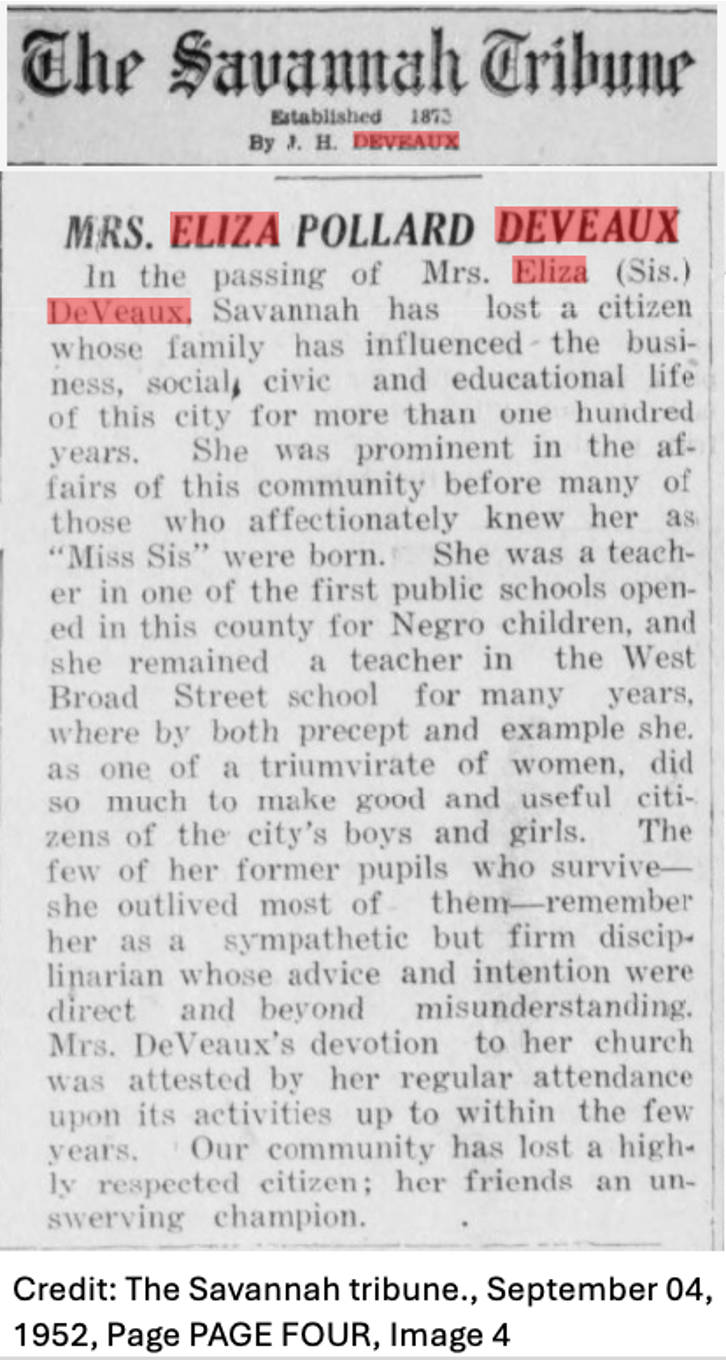
14Mrs. Eliza (Miss Sis) Pollard Deveaux
Eliza Pollard Deveaux, affectionately known as “Miss Sis,” was born in Savannah on February 15, 1855, and lived until 1952. She was the daughter of Dr. William Pollard, a local veterinarian who was born a free man of color in Savannah on July 18, 1824. In addition to operating a veterinary practice, Dr. Pollard owned a drayage company. He was likely educated in one of the clandestine schools available to Black children before earning a veterinary degree from Ohio State University.
The Pollard family strongly supported education, so Miss Sis’s decision to become a teacher was a natural one. Her father, Dr. Pollard, was a fierce advocate for public education in Savannah. He, along with Albert Jackson, Louis B. Toomer, Reverend Alexander Harris, Simon Mirault, and other local businessmen, formed a committee to petition the Chatham County Board of Education on behalf of educational advancement for black children. Education was also part of her extended family’s legacy. Through marriage, she was related to Jane Deveaux, an educator who taught for approximately thirty years during slavery through Savannah’s underground school network.
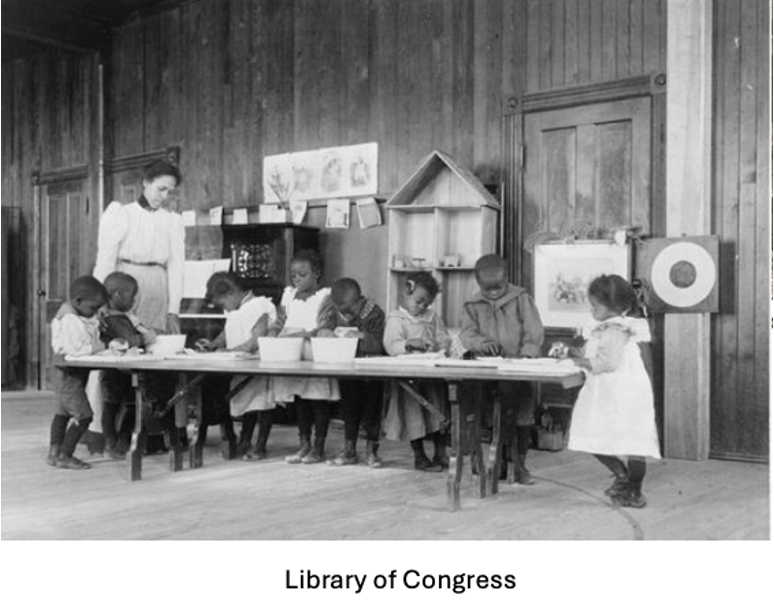
Miss Sis may also have received her early education in one of Savannah’s secret schools for Black children. She began her teaching career at St. Stephen’s Episcopal Church, where classes were held in the church’s unused rectory. In 1872, the Board of Education assumed responsibility for the school. James Porter became principal, while Miss Sis continued teaching there. Both became members of the school’s first faculty appointed by the Board.
In 1873, Miss Sis joined the faculty at West Broad Street School, where she taught until her retirement in 1898. During her twenty-six-year career, the Savannah Tribune praised her experience, dedication, and firm but effective discipline. The newspaper observed that order consistently prevailed in her classroom and that she had earned the respect of her colleagues and the affection of the hundreds of students she taught.
After retiring from teaching, Miss Sis remained in Savannah. She died at her home at 306 Park Street in 1952, at the age of ninety-seven. Following her death, Sol C. Johnson published an editorial honoring her in the Savannah Tribune.
___
Sources:
Hoskins, Charles Lwanga. W.W. Law and His People: A Timeline and Biographies. Savannah, GA. Gullah Press, 2013, 5
Hoskins, Charles Lwanga. Yet With a Steady Beat: Biographies of Early Black Savannah. Savannah, GA. Gullah
Press, 2001, 181, 313.
[Johnson, Ronald Angelo. "Africans and Immigrants: Haitian Contributions
to the African Protestant Movement in Early America".Revue française d’études américaines 2020/3 N° 164 , pages 38 à 57](https://shs.cairn.info › article › RFEA1640038 › pdf)
The interactive version adds a street-following map, narration audio and a guided stop-by-stop experience.