Self-Guided Heritage Trail · Savannah, GA
Shops and Trades | Trail 1
Owning Businesses In Layers Of Freedom
- 1 hr 14 min
- 0.7 miles
- 12 stops
- Free
For an interactive map and audio narration, press Start this trail.
About This Trail
This self-guided African American heritage trail traces the businesses built by Savannah's free people of color and urban enslaved — people who forged a community despite a society defined by slavery and racial hierarchy. Free Black Savannahians worked across a wide range of trades: artisans, barbers, draymen, tailors, seamstresses, pastry cooks, washerwomen. Despite legal restrictions and racial customs, many earned stable, independent livelihoods.
The scale is easy to miss. In 1860, Savannah's population of just over 22,000 included roughly 7,700 enslaved people, and of that, there were 700 free people of color. Buying, selling, and hiring out enslaved labor was so routine that about a third of the city took part in the business of slavery — and some free people of color, and even a rare few enslaved individuals, were themselves among the owners. At the same time, nearly half of Savannah's urban enslaved lived apart from their enslavers, negotiating their own work and paying a fixed fee for the privilege of a little independence.
Unlike the enslaved, free people of color kept their wages, bought and inherited real estate, and built lasting households. Yet this was not freedom. For free and enslaved alike, it was an existence of independence without security and freedom without autonomy.
They could direct their labor, build their households, and shape their communities — but never fully claim the one thing that should have been theirs by right: their own lives.
The Route
1Priscilla Moodie's Beer Shop
Location: Jefferson Street and a Lane, near the Market
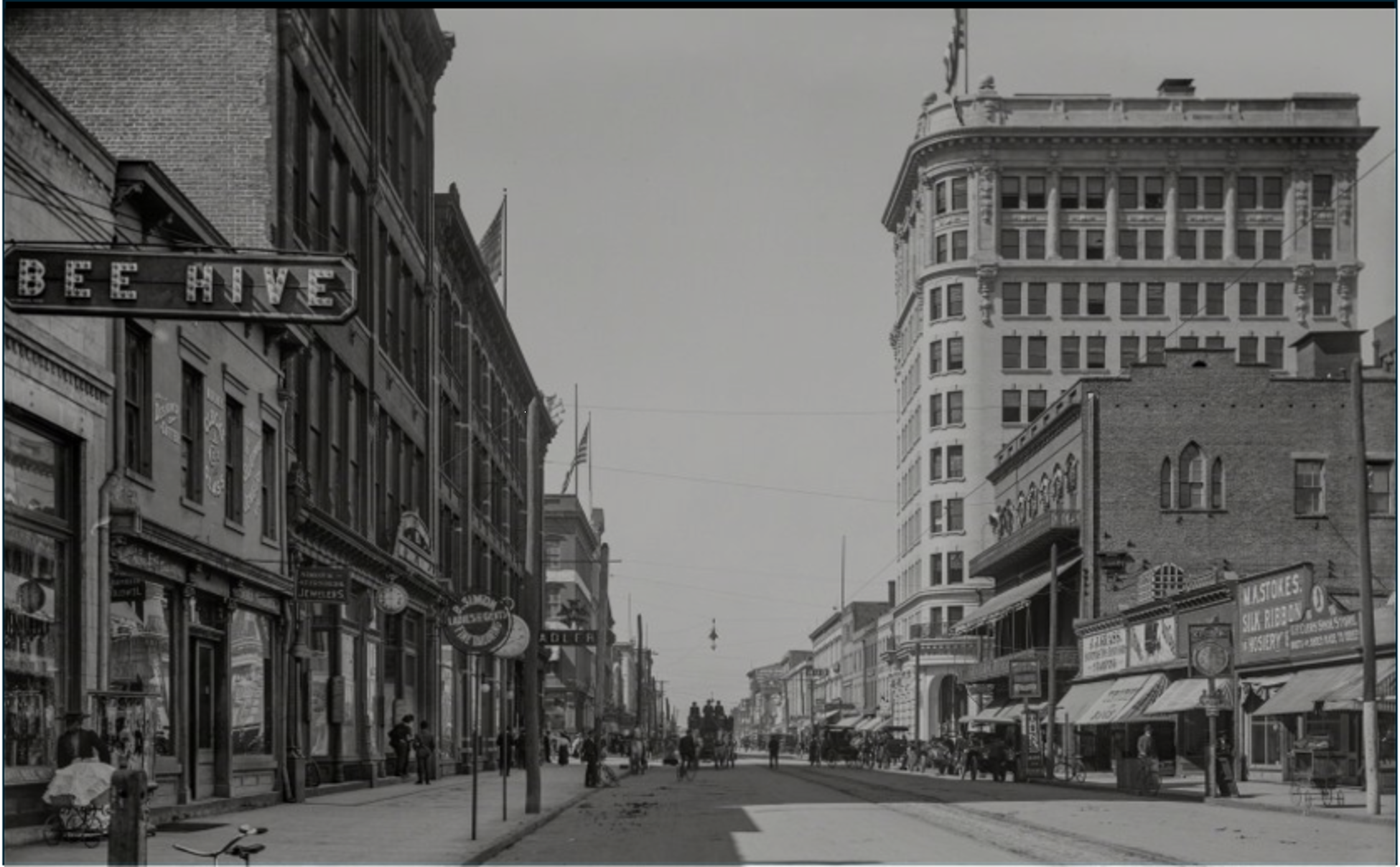
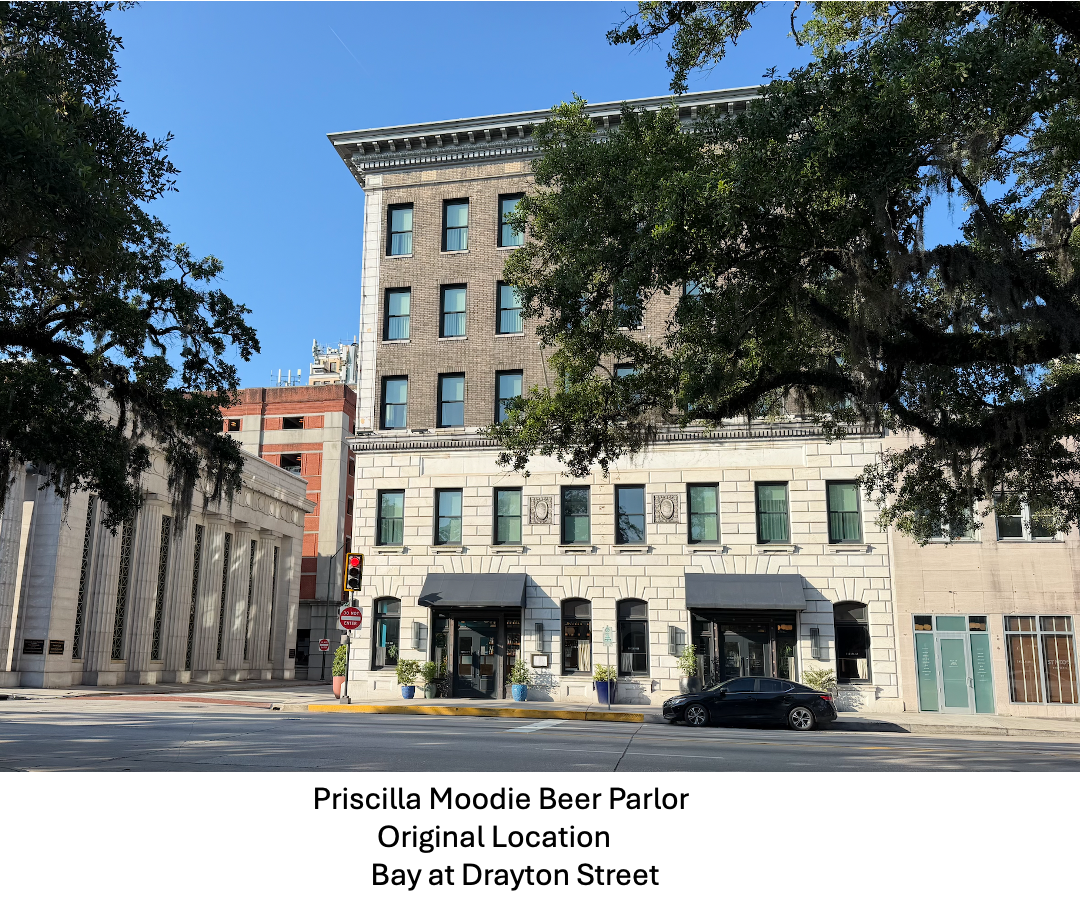
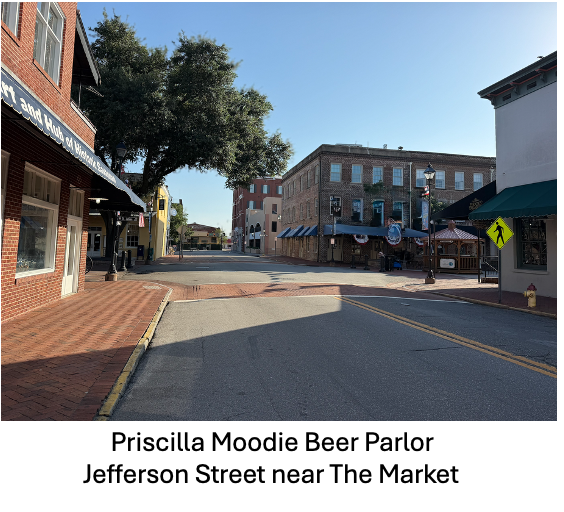
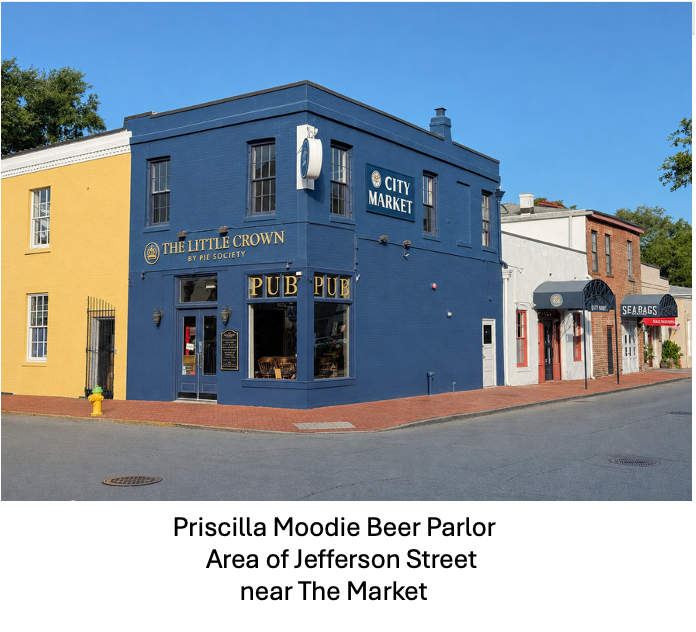
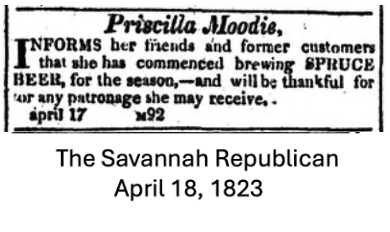
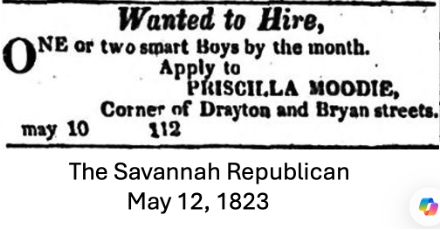
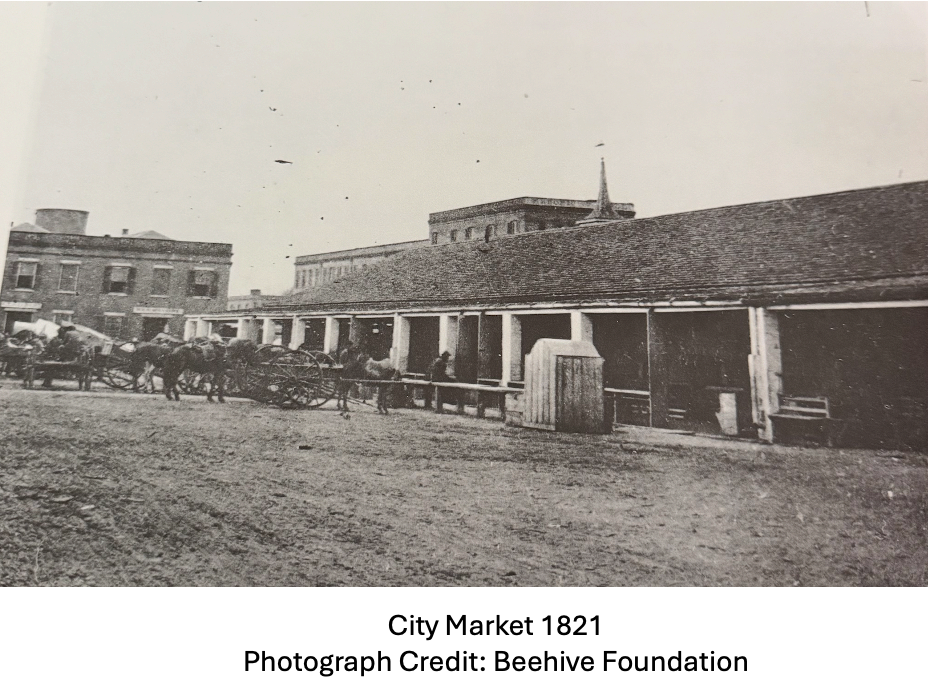
Priscilla Moodie moved her beer parlor to "Jefferson Street and a Lane, near the Market" from the original location of Bryan at Drayton Street.
___
In 1825, Priscilla Moodie moved her beer parlor to this location from the original location of Bryan Street at Drayton Street.
Priscilla Moody was born in 1773 and described as 56 years of age in the 1829 Register of Free Persons, where her occupation was listed as “shopkeeper.” Her place of business was in the vicinity of Jefferson Street and the old City Market, where she advertised “Spruce Beer” and other ciders. She was a regular advertiser in the local papers. The beer and cider shop was apparently very successful, as she placed "help wanted" ads in the Savannah Republican, May 12, 1823.
___
Sources:
Johnson, Whittington B. "Free Blacks in Antebellum Savannah: An Economic Profile." The Georgia Historical Quarterly 64, no. 4 (Winter 1980): 418–431.
Lumpkin-White, Arva. Photograph credit.
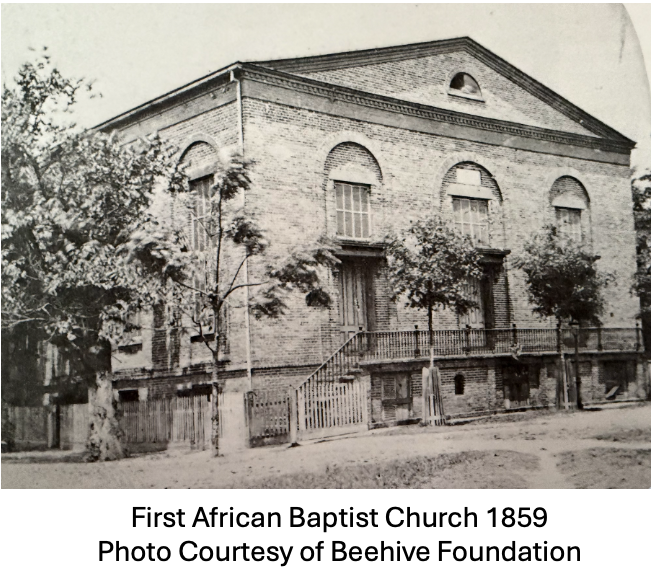
2Andrew Cox Marshall, Drayman and Third Pastor of First African Baptist Church)
Location: 23 Montgomery St
___
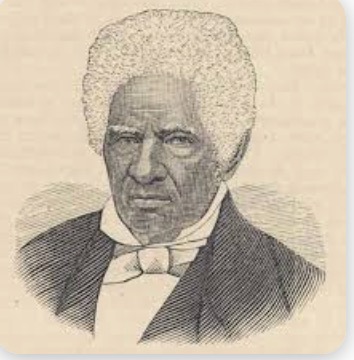
Andrew Cox Marshall, the third minister of First African Baptist Church.
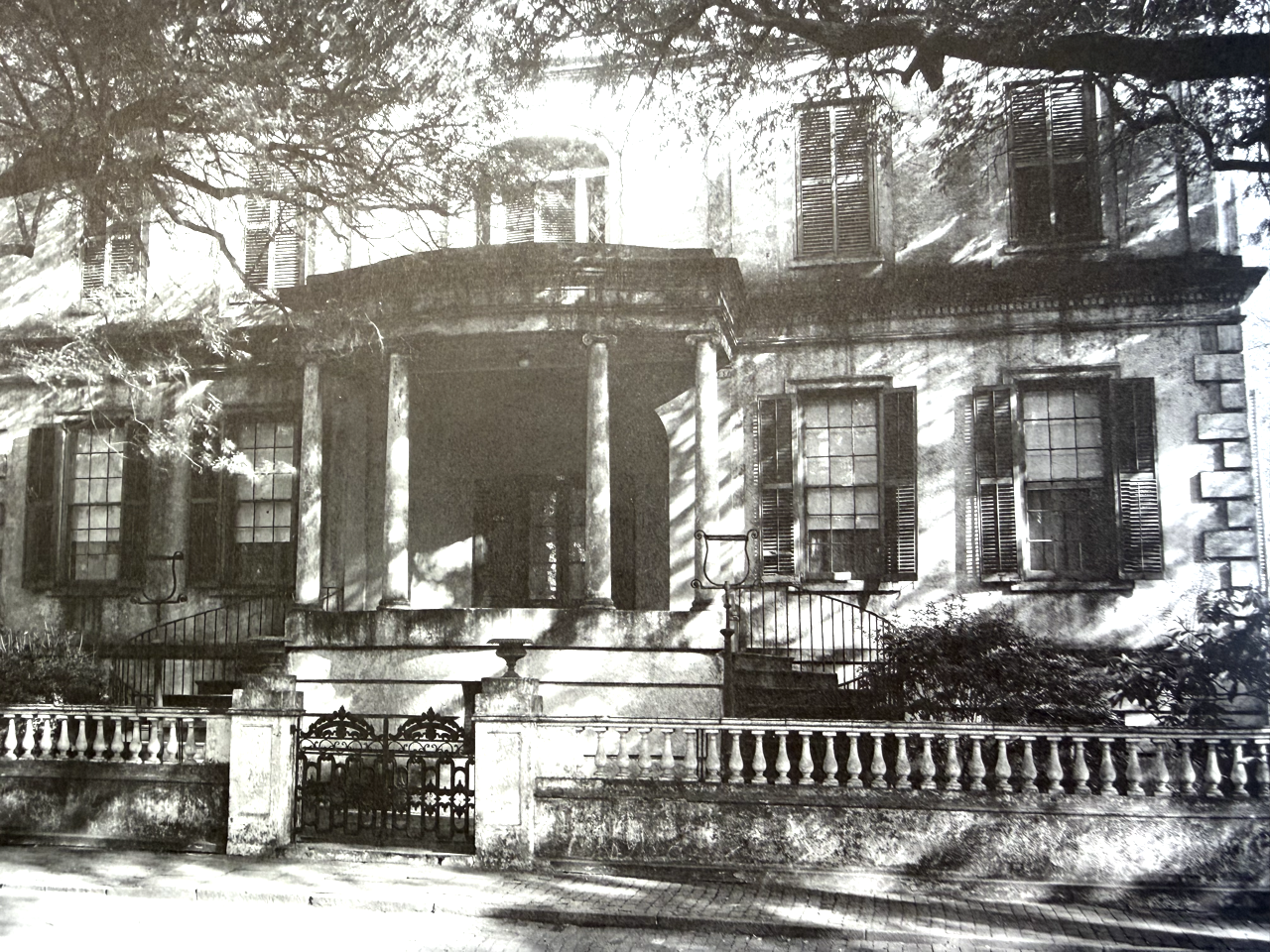
He was born into slavery in 1755 in South Carolina to an enslaved woman and a White plantation overseer. Before he obtained freedom, he had two failed promises of freedom and was owned by five prominent slaveholders. They included the governor of Georgia in 1778 and 1784, John Houstoun, and Joseph Clay, a local businessman and judge. He was surrounded by men of great power and had the opportunity to serve as the personal servant to President George Washington when Washington visited Savannah in 1791. In 1812, Savannah businessman Richard Richardson purchased Marshall and lent him the money to buy his freedom. Richardson was a banker, slave trader, slaveowner, merchant, and the first owner of the now locally famous museum, The Owens-Thomas House and Slave Quarters.
As required by law, all free Blacks or people of color had to have a White guardian, and Richardson became Marshall’s guardian. Andrew Bryan, Marshall’s uncle and an influential pastor of First African Baptist Church, helped Marshall’s wife, Rachel, and three daughters gain their freedom with the help of Richardson and other well-known White businessmen in Savannah.
Marshall went on to operate a successful drayage (hauling) business and owned several homes, including lots 11, 12, and 19 in Yamacraw, assessed at more than $8400. He owned one enslaved individual. In the 1824 census, he is listed as owning 8 enslaved people, but they are not listed in the tax digest. While it is unclear, he may have owned the property where the enslaved men were living and renting rooms, and he maintained a landlord status. His will also listed fine clothes, several buildings, and a silver watch.
Attaining social and business status in both the White and Black communities, however, did not shield him from the fact that he was still a Black man in 1820, before emancipation. He suffered a huge indignity by being sentenced to a public whipping for illegally purchasing some bricks from enslaved men working on his home. Even though Richardson and others spoke of his character, it did not stop the indignity of being a public spectacle. The example of his whipping was meant to send a strong message to both the free and enslaved communities.
Andrew Marshall served as pastor of First African Baptist Church for more than thirty years, lived to be just over one hundred years old, and fathered twenty children, of whom he outlived all but one. His last surviving son, Joseph Andrew Marshall, died at age 32. At a young age, he exhibited keen business acumen and, at his death, owned stock in Marine and Fire Insurance Bank, $240; Central Railroad and Banking Company of Georgia, $230; and Savannah Gas Light Company, $150. He also had a horse and wagon, a buggy, jewelry, and real estate valued at $3,000, plus $200 in cash.
Even though Andrew Cox Marshall lived to be over one hundred, he did not live to see emancipation. He lived an extraordinary life and died in 1856 while working on raising money for the church. He is buried in a family vault in Laurel Grove South Cemetery.
___
Sources:
Georgia Historical Society. “Richard Richardson House.” Photograph. Courtesy of the Georgia Historical Society.
Johnson, Whittington B. Black Savannah, 1788–1864. Fayetteville: University of Arkansas Press, 1996.
Johnson, Whittington B. “Free Blacks in Antebellum Savannah: An Economic Profile.” The Georgia Historical Quarterly, vol. 64, no. 4, 1980, pp. 418–31.
Lumpkin-White, Arva. Photograph credit: First African Baptist Church
Sammons, Tania. “Andrew Cox Marshall.” In Slavery and Freedom in Savannah, edited by Leslie M. Harris and Daina Ramey Berry, 120–123. Athens: University of Georgia Press, 2014.
Photograph Courtesy of University of North Carolina at Chapel Hill Libraries. “Andrew Marshall.” Photograph. Documenting the American South.

3Ulysses Houston, Butcher and Pastor
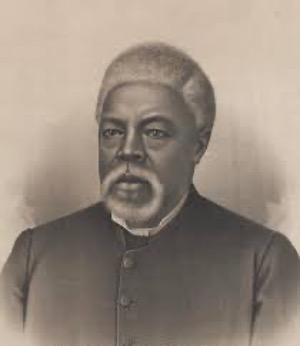
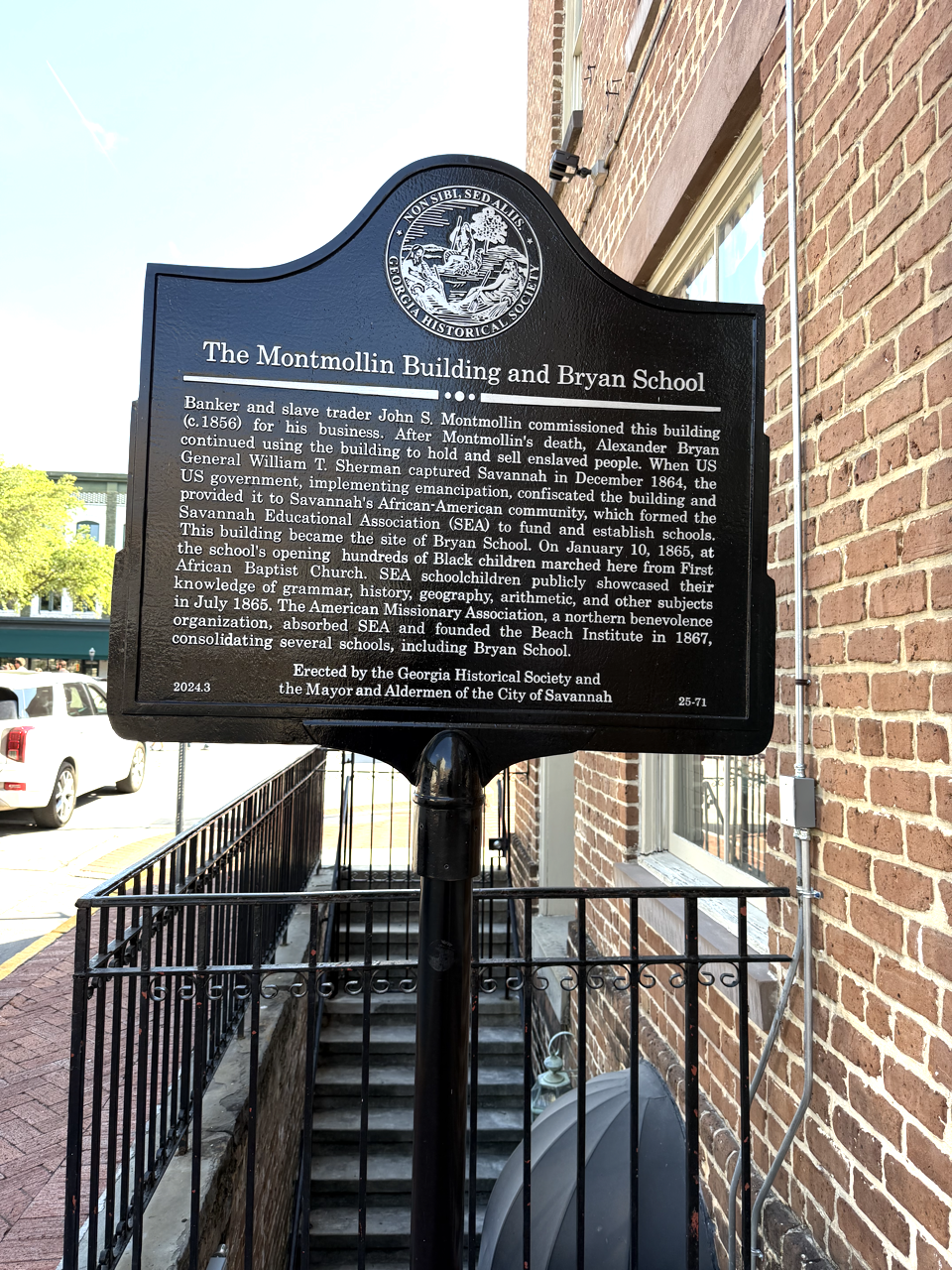
Location: Lower Level of the Old Slave Mart in the Montmollen Building
___
Ulysses Houston was born enslaved, the property of Moses Henderson in Grahamville, South Carolina. He was a house servant and remained enslaved until Sherman and the Union Army entered Savannah. While working at a city hospital, he was taught to read by sailors who were there. He became one of three African-American men from Savannah elected to the Georgia House of Representatives during the Reconstruction era from 1868 to 1870. Houston represented Bryan County.
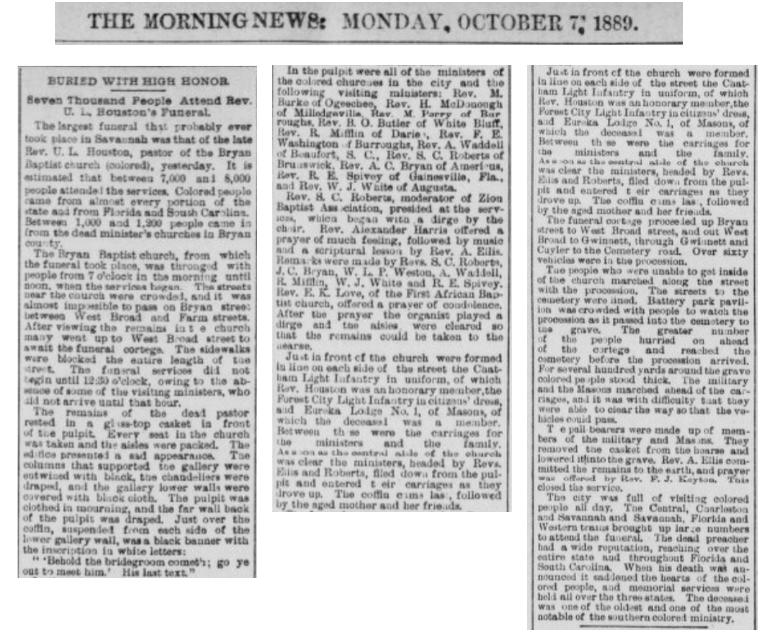
He is best known as the ninth pastor of The First Bryan Baptist Church from 1861 to 1880. His popularity as a pastor was widely known. Five thousand to eight thousand Blacks gathered on the banks of the Ogeechee River to witness him baptize one hundred thirty-eight new members. When he died, a similarly large crowd attended his funeral. It is estimated that 3,000 to 8,000 people assembled to pay their last respects. Houston, along with John DeVeaux, James M. Simms, Alexander Harris, Charles DeLamotta, Louis B. Toomer, and others, was a charter member of Eureka Lodge No. 1 Ancient Free and Accepted Masons on February 4, 1866.
When he was enslaved, he was able to hire out his time by paying his master $50 per month and was eventually able to purchase his freedom. A remarkable story in Houston's life is that, in addition to his storied pastoral career, he was a butcher and carpenter by trade. He established and operated a wholesale meat business (butcher shop) in the lower-level rooms beneath the Old Slave Mart, while the slave mart operated on the top floors. He described the emotional burden of operating his business beneath the Slave Mart, where the cries, moans, and pleas of enslaved people awaiting sale echoed from the floor above.
When the Civil War ended, Union General William T. Sherman proclaimed on January 16, 1865, Special Field Order No. 15. The order set aside a 30-mile-wide strip of coastal land from Charleston to Jacksonville for the exclusive settlement of formerly enslaved Black families. Black leaders viewed Special Field Order No. 15 as recognition of their claim to the land where they and their ancestors had lived and labored in slavery. It redistributed 400,000 acres, giving rise to the promise of "forty acres and a mule". As the prospects of the Special Order No. 15 coming to fruition evaporated, the community sought other solutions for their collective future.
Houston eventually emerged as a highly influential leader in the African American community. The Rev. Ulysses L. Houston, having been enslaved himself, became one of the first Black leaders to establish an independent coastal settlement. On February 2, 1865, General Rufus Saxton addressed a large gathering at Second African Baptist Church, encouraging Black families to settle along the coast and sea islands. Soon afterward, Houston led 362 settlers, representing 99 households, to Skidaway Island, land abandoned by planter Joseph F. Waring. A butcher by trade, Houston brought 400 animal hides, stating that he intended to sell them to purchase a portable sawmill to produce lumber for homes. The settlers divided the 5,000 available acres of the island’s most fertile land into numbered parcels, assigned by lottery. They also reserved land for a church and school. Contemporary observers likened the settlement’s organization to the founding of Plymouth Colony, describing it as a hopeful new beginning on the South Atlantic coast. The plan was hopefully ambitious but quickly proved not viable.
___
Sources:
Chatham County Historic Preservation Commission. Regular Meeting Minutes. February 4, 2009
Hoskins, Charles Lwanga. Yet with a Steady Beat: Biographies of Early Black Savannah. Savannah: Gullah Press, 2001.
Jones, Jacqueline. Saving Savannah: The City and the Civil War. New York: Vintage Books, 2008.
Okona, Nneka M. “Savannah’s Black Maestros of Meat.” Southern Foodways Alliance
Perdue, Robert E. The Negro in Savannah, 1865–1900. New York: Exposition Press, 1973.
Lumpkin-White, Arva. Photograph credit. Montmollin Building.
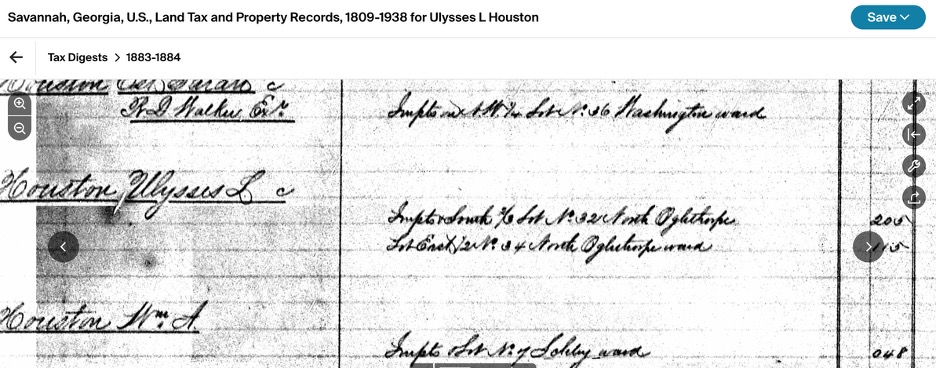
City of Savannah Municipal Archives / Chatham County Records. "Land Tax and Property Records, 1809–1938." Ulysses Houston, Lot 32 and Lot 34, North Oglethorpe Ward, [1884]. Digital images, Ancestry.com.
4 Jackson B. Sheftall, Butcher and Grocer at City Market
Location: Jefferson Street and W. Bryan Street - City Market
___
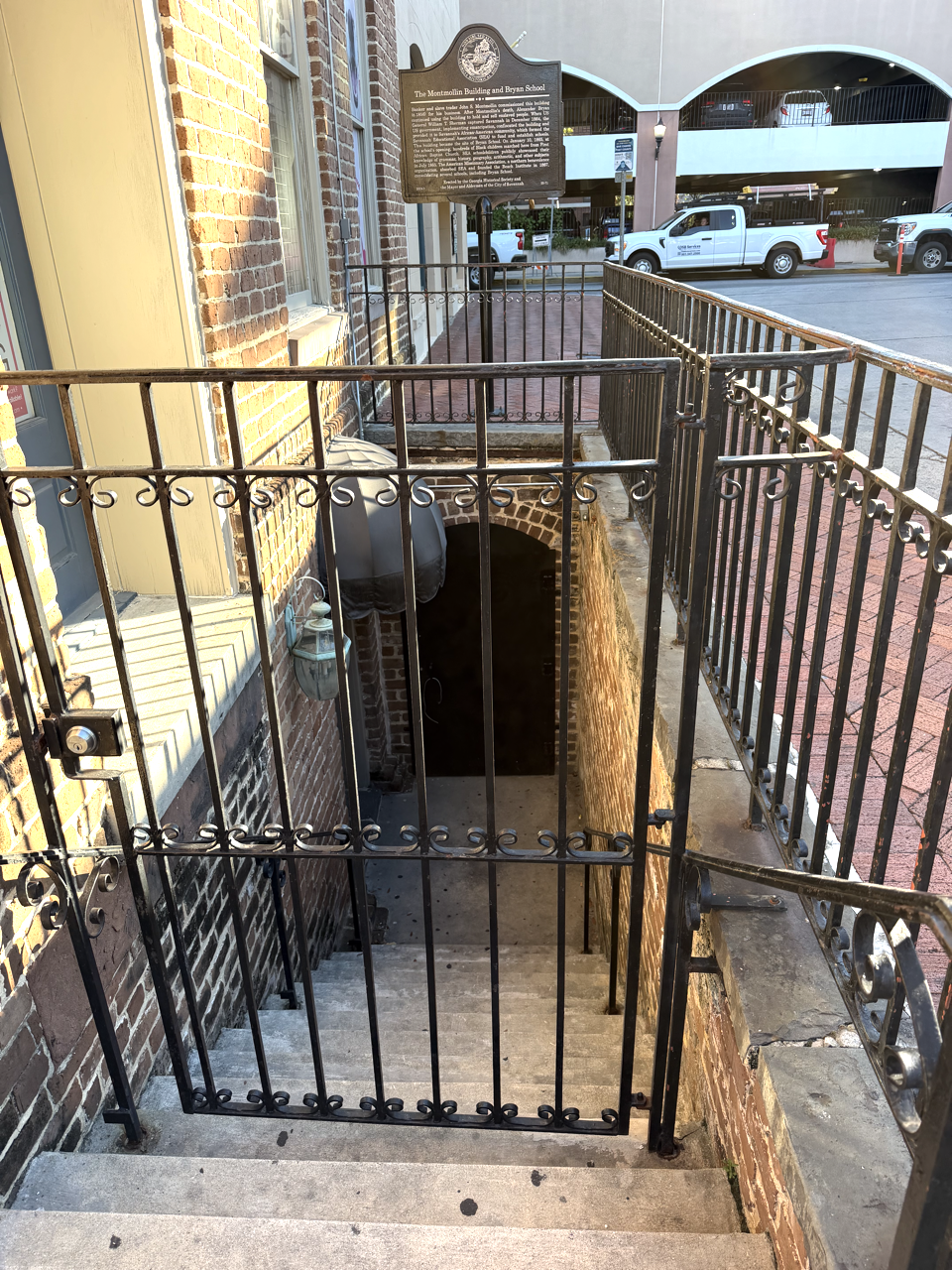
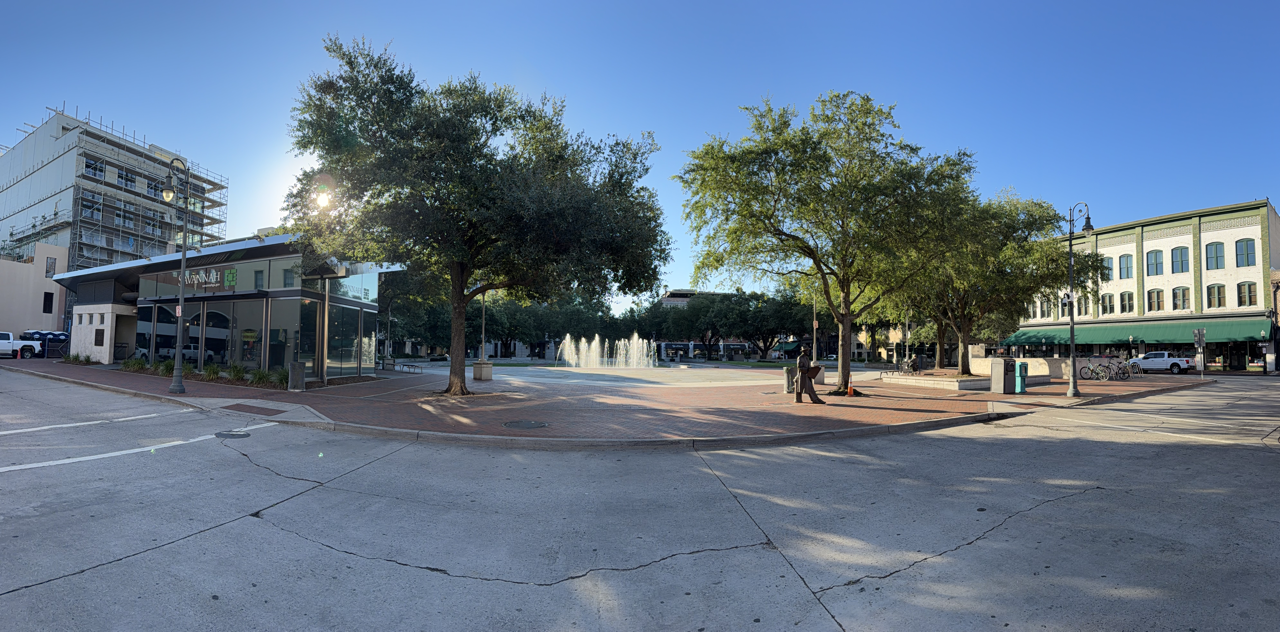
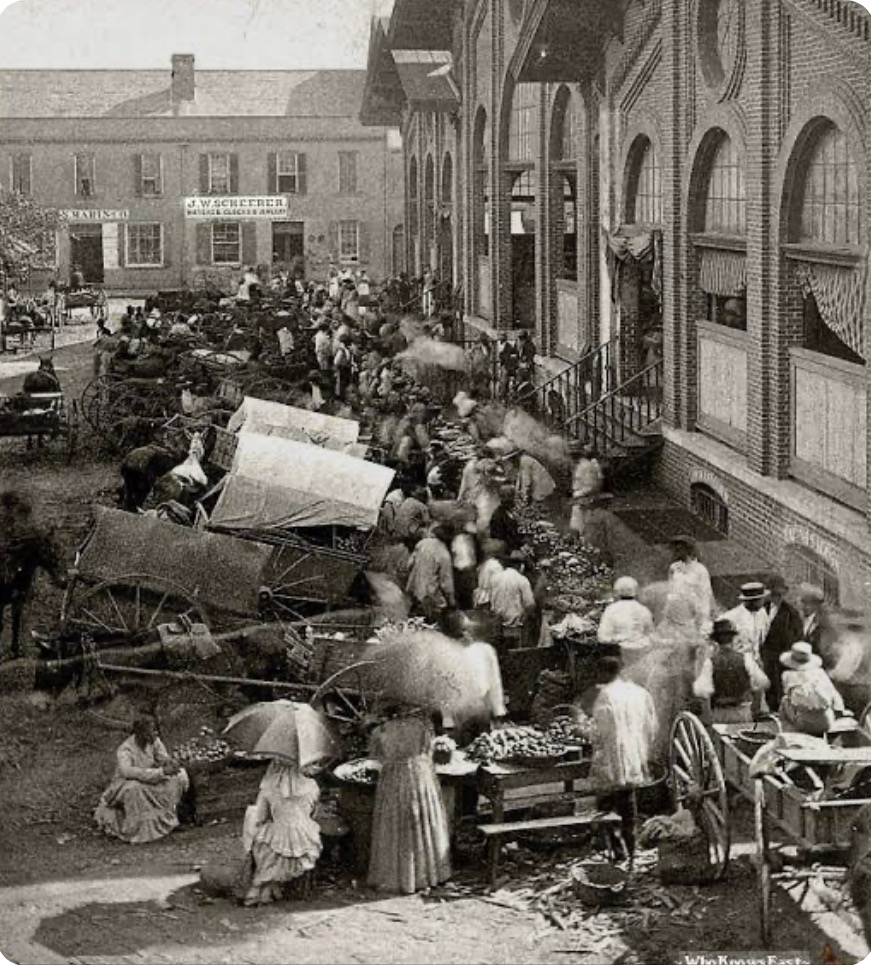
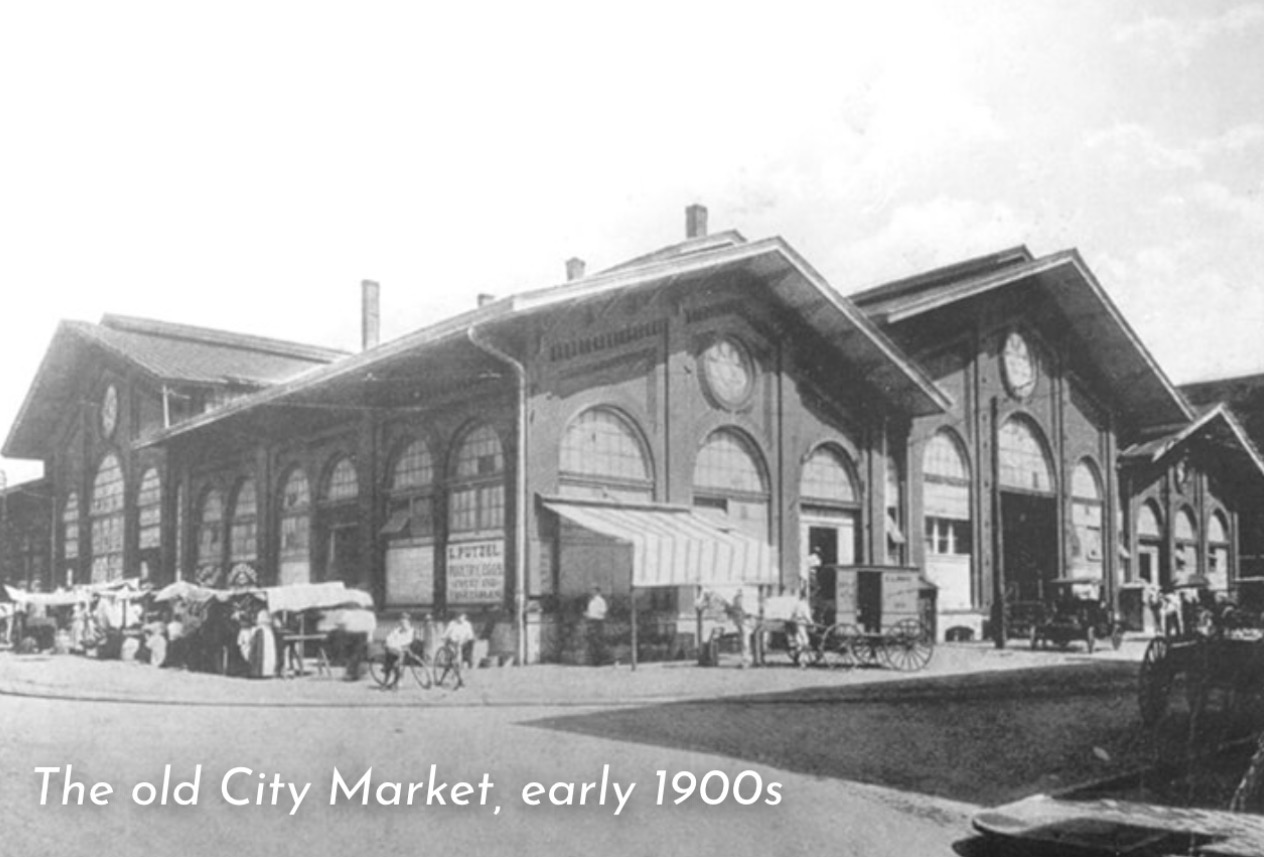
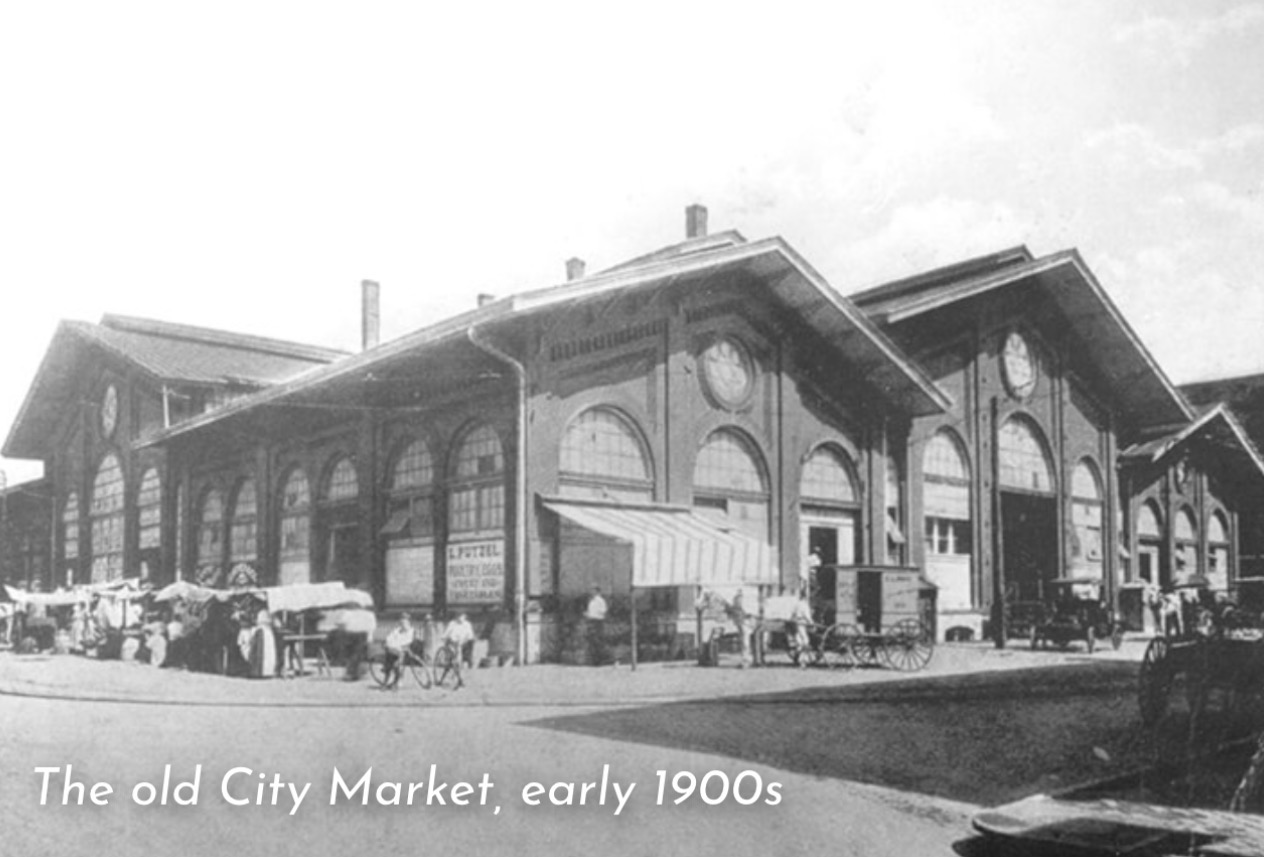
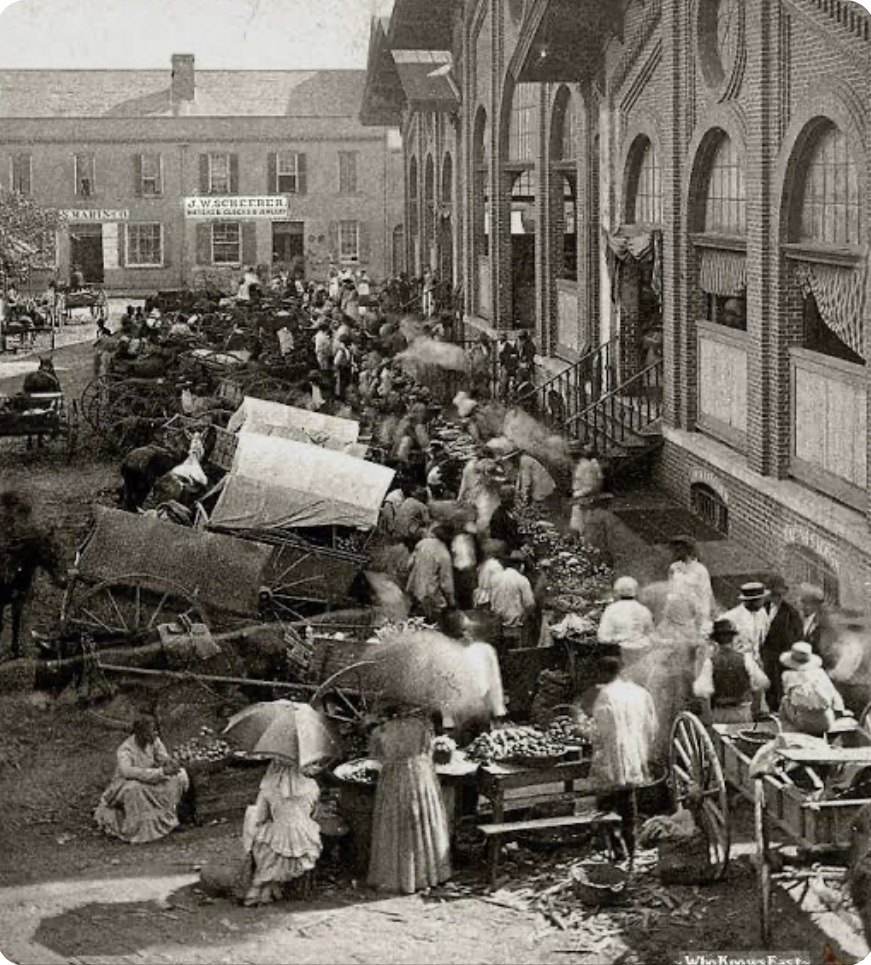
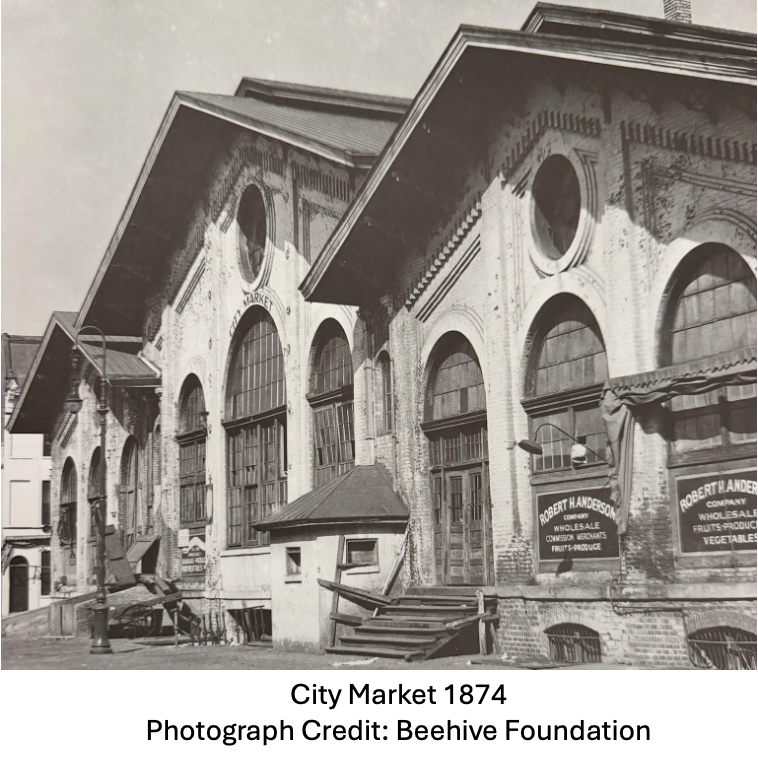
DEMOLISHED: The historic Old City Market in Savannah was demolished in spring 1954. The city tore down the beloved 1870s brick structure to build an above-ground parking garage on Ellis Square.
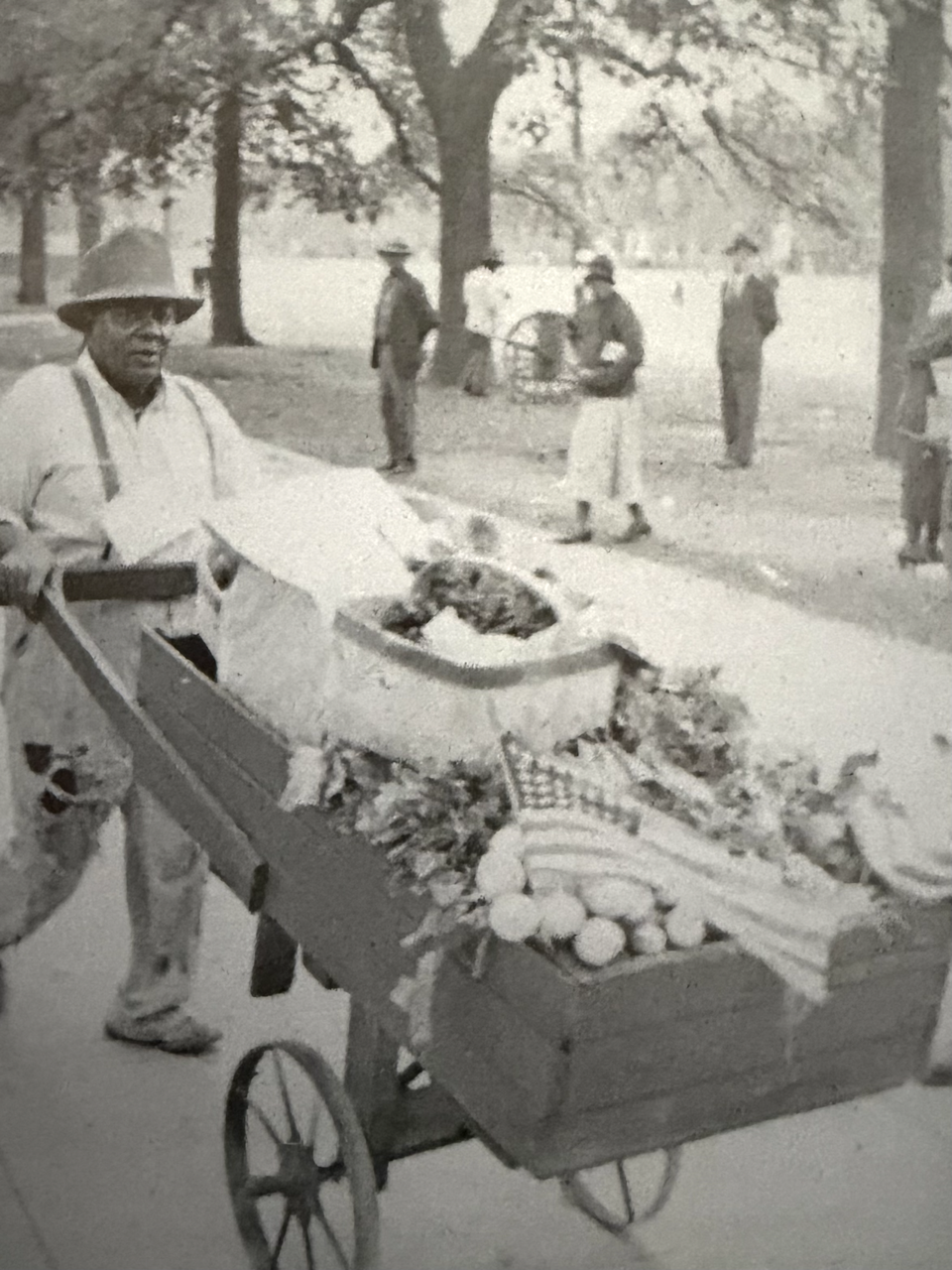
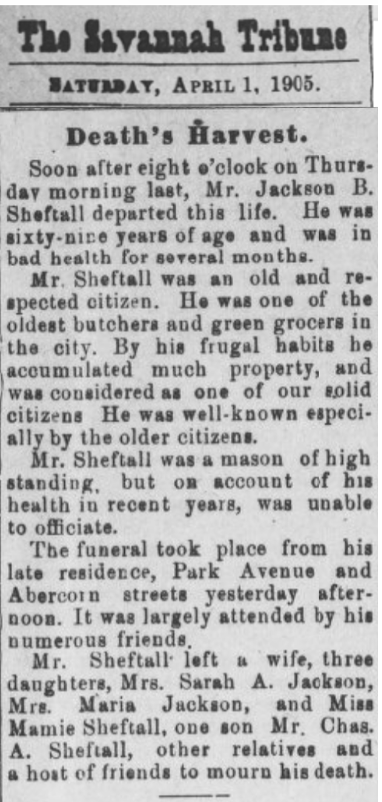
Jackson B. Sheftall was born free in 1836, the son of a prominent Jewish businessman and an enslaved woman named Maria. The Sheftall family is one of the oldest families in Savannah. He was a free man of color, having been given freedom at birth. The law required that all free people of color have a guardian to oversee their financial and legal affairs; Jackson had his half-brother Mordecai Sheftall serve in that role. That was a profitable alliance. At age eighteen, he took up butchery and, over the next ten years, built a business empire founded on meat sales. He sold some meat products at City Market and eventually opened a butcher shop and grocery store at the corner of West Broad Street (now Martin Luther King, Jr. Dr.) and Anderson Streets. He also worked at Fort Pulaski.
Sheftall had forty Black men, enslaved and free, working for him. He had four fine horses, a new buggy, an extensive array of butchering tools, and three houses. His residence was on Jefferson Street at West Taylor Street.
When Jackson lived just east of Laurel Grove Cemetery, he managed and drove his livestock from town to his home. He was a shrewd businessman and during the war, negotiated with General W.H. Davis to supply the Confederate army with meat. He took no pay, but in return he was given the tallow, hides, and other parts of the animal, and he sold them at market. Union forces confiscated a significant amount of livestock, meat, and supplies from Sheftall's butchery operations. Following the war, Sheftall petitioned the Southern Claims Commission for substantial financial reimbursement for what he believed were war-related losses. His case was met with much scrutiny and systemic obstacles. Jackson met and married an enslaved woman in 1855 and purchased the freedom of his wife and daughter in 1862 for $2600 cash.
Very active in the community, he was one of the founding members of the Savannah Union Colored Clubs. Charles Hoskins recounted an article in the Savannah Tribune that cited a local business publication, the Mercantile Review, which reported that Jackson had been in business for 45 years, gotten rich, and owned several pieces of property. He died in 1905. His funeral took place at his home on the corner of Abercorn Street and Park Avenue (now Houston Street).
___
Sources:
Hoskins, Charles Lwanga. W. W. Law and His People: A Timeline and Biographies.
Savannah: Gullah Press, 2012, 110–111.
Hoskins, Charles Lwanga. Yet with a Steady Beat: Biographies of Early Black Savannah. Savannah: Gullah Press, 2001, 16
Johnson, Whittington B. Black Savannah, 1788–1864. Fayetteville: University of Arkansas Press, 1996.
Jones, Jacqueline. "The Capitalist Counterrevolution." In Saving Savannah: The City and the Civil War.156–198.New York: Vintage Books, 2008.
Jones, Jacqueline. "Wartime workers, Moneymakers: Black Labor in CivilWar-Era Savannah". In Slavery and Freedom in Savannah, edited by Leslie M. Harris and Daina Ramey Berry, [140-143]. Athens: University of Georgia Press, 2014.
Lumpkin-White, Arva. Photograph credit. (Ellis Square).
Morgan, David T. "The Sheftalls of Savannah." American Jewish Historical Quarterly 62, no. 4 (June 1973): 348–361
Ports, Michael A. Georgia Free Persons of Color. Volume IV: Chatham County, 1817–1863. Baltimore: Clearfield Company, (2016). 308
5 Captain Franklin F. Jones, Butcher at City Market, Stall#31
Location: City Market: Stall #31 (now demolished)
___
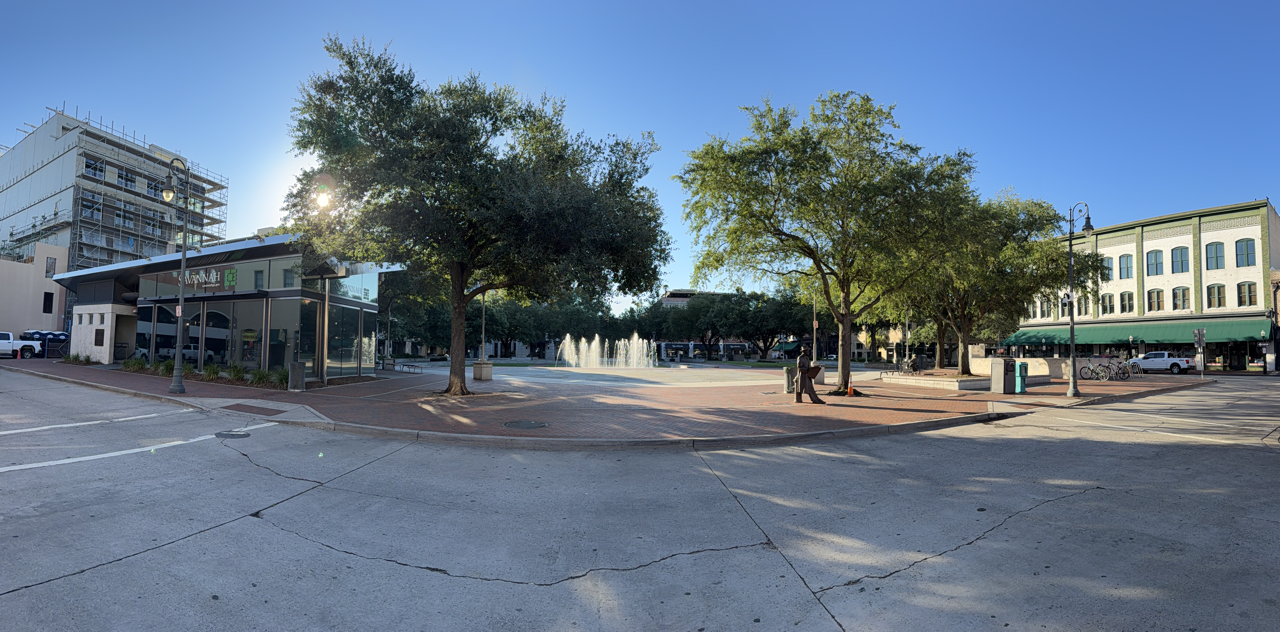
The historic Old City Market in Savannah was demolished in spring 1954. The city tore down the beloved 1870s brick structure to build an above-ground parking garage on Ellis Square.
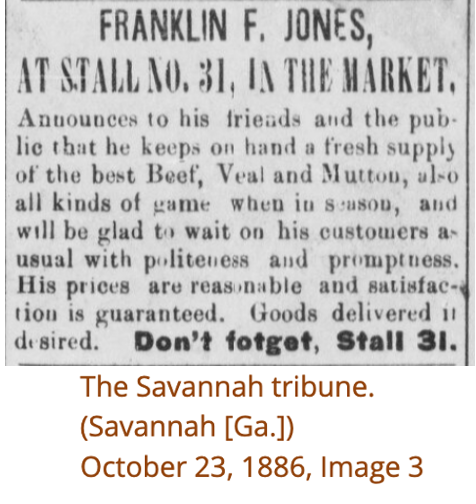
Captain Franklin F. Jones was born in Savannah during the era of slavery and later became a well-known businessman in the city. He operated Stall No. 31 in the Savannah City Market, where he established a successful butcher business. Contemporary accounts noted that many of Savannah’s prominent families were among his customers and that he consistently maintained a supply of high-quality beef. His reputation was built on dependable service, careful attention to business, and a longstanding presence in the market.
In 1887, Jones received a commission as captain of the Savannah Hussars, one of the city’s most prominent military organizations. Throughout his life, he was active in civic affairs and encouraged African Americans to pursue business opportunities and economic independence. He was also a strong supporter of the Savannah Tribune, regularly advertising in the newspaper and contributing to its growth and influence within the African American community.
During the Civil War, Jones enlisted in the Union Army while still in his teens. His abilities were quickly recognized, and he was promoted to the rank of sergeant within his company. Following the war, he returned to Savannah, where he combined military service, business success, and civic involvement to become a recognized figure in the city’s African American community during the late nineteenth century.
___
Sources:
Hoskins, Charles Lwanga. Yet With a Steady Beat: Autobiographies of Early Black Savannah. Savannah: Gullah Press, 2001, 18.
Lumpkin-White, Arva. Photograph credit. (Ellis Square).
Savannah Tribune. October 23, 1885.
6The Old Slave Mart
Location: On the corner of Barnard Street and St. Julian Streets, facing Ellis Square
___
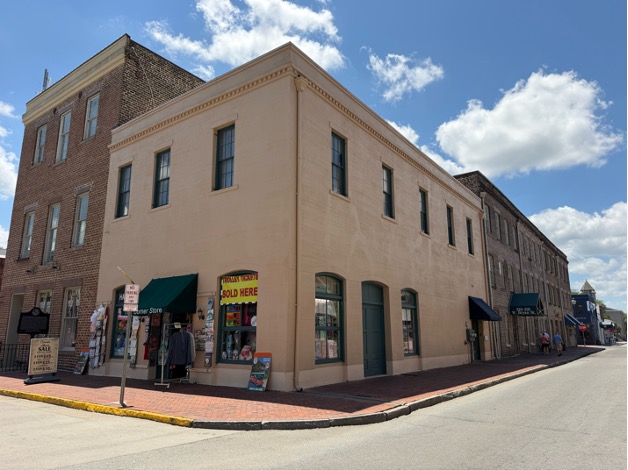
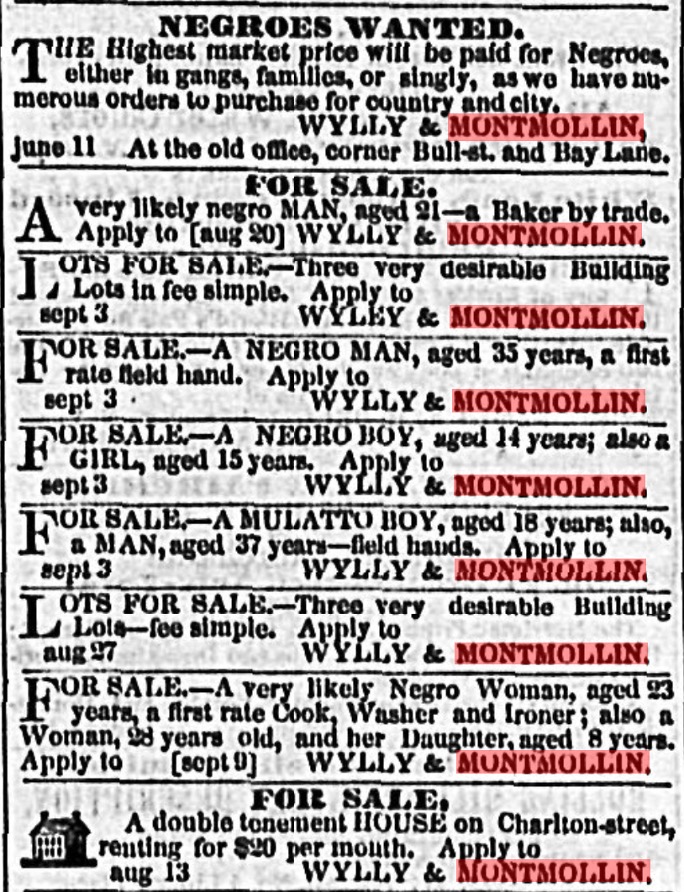
The Old Slave Mart, on the corner of Barnard Street and St. Julian Streets, facing Ellis Square, was built for banker John S. Montmollin in 1855. The three-story brick building was initially used as a slave mart and general brokerage house for Montmollin. He and his partner, Andrew Bryan, specialized in selling slaves, as well as bank stock and general merchandise. The upper floors were used to hold, buy, and sell enslaved people.
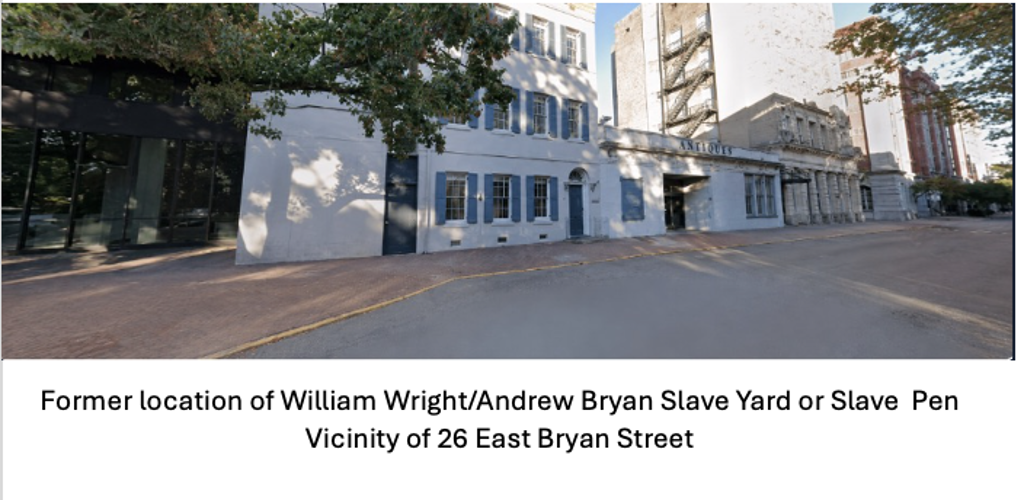
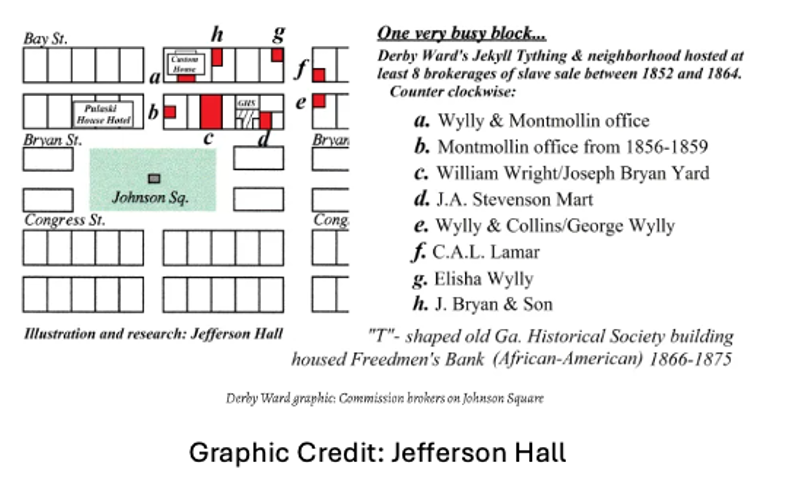
Montmollin and Bryan’s slave brokerage business was one of a community of several slave brokers in the block near City Market. There was also a lot on Bryan Street, adjacent to the brokerage firm, that was used as a “slave yard” or “slave pen “ as it was called, used for the purpose of corralling human cargo and warehousing the enslaved.
Slave Pens:
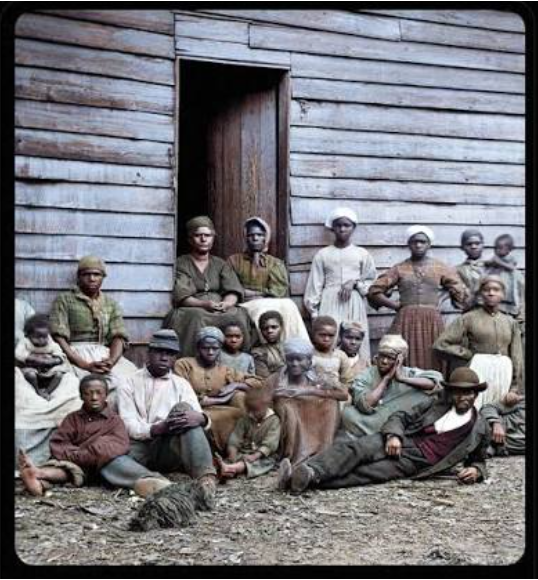
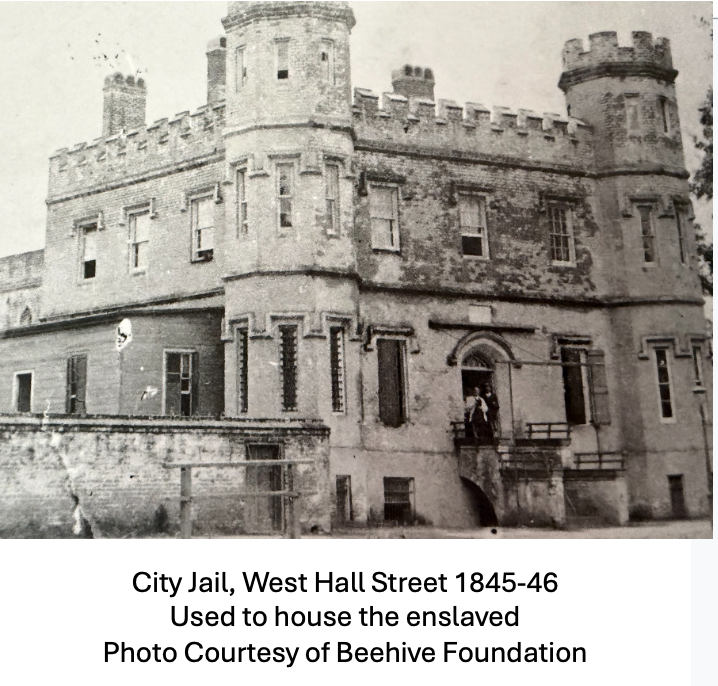
Private “pens” catering to slaveholders offered a more secure option than the dark, dank, and unventilated city jail. The city jail, while it was a taxpayer-supported institution, was used as if it were a private facility catering to the conveniences of local slaveowners. It was used to house Savannah's enslaved as a means of punishment and as a "keeping facility" while slavemasters were not in the city. City employees were also relied upon to administer punishment and "whippings" to manage the enslaved in their care. As the enslaved population grew, so did the management problems. Montmollin seized the opportunity to offer an alternative to over-burdened city facilities. In an advertisement in the Savannah Republican on February 24, 1858, William Wright boasted that his jail and yard were the largest, safest, and most comfortable in the city, if not the state. He charged 25 cents per day for accommodations he fashioned as if it were a vacation rental for the enslaved.
Montmollin operated continuously from 1856 until December 1864—about eight years. He died in 1859 at age 51, following a catastrophic boiler explosion. According to historian Barry Sheehy, "Montmollin was taking a trip from Savannah to Augusta on a steamer called the Lawton. The steam engine blew up, killed a number of people, and blew Mr. Montmollin off the boat with such force and velocity that he was buried in the mud. It took two or three people to dig him out of the mud". After his untimely death, Alexander Bryan continued operating the Slave Mart until Union forces occupied Savannah in December 1864.
___
Sources:
Chatham County Historic Preservation Commission. Regular Meeting Minutes. February 4, 2009
Hall, Jefferson. "Posts Tagged 'John Montmollin'." Fact-Checking Savannah's History (blog)
Hall, Jefferson. Graphic illustrations and site diagrams credit.
Jones, Jacqueline. "In the Shadow of the Slave Market." In Saving Savannah: The City and the Civil War, 56–99. New York: Vintage Books, 2008.
Library of Congress, Washington, D.C. Photographs of Enslaved Persons collection credit.
Lumpkin-White, Arva. Photograph credit.


7 Leah Simpson's Pastry Shop, 1810
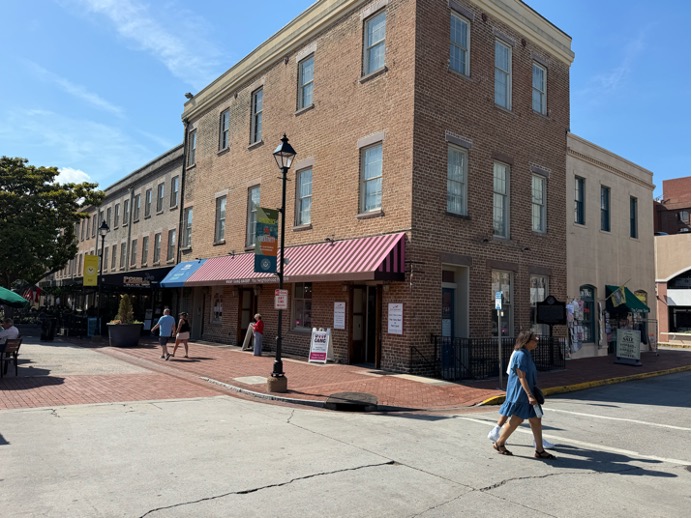
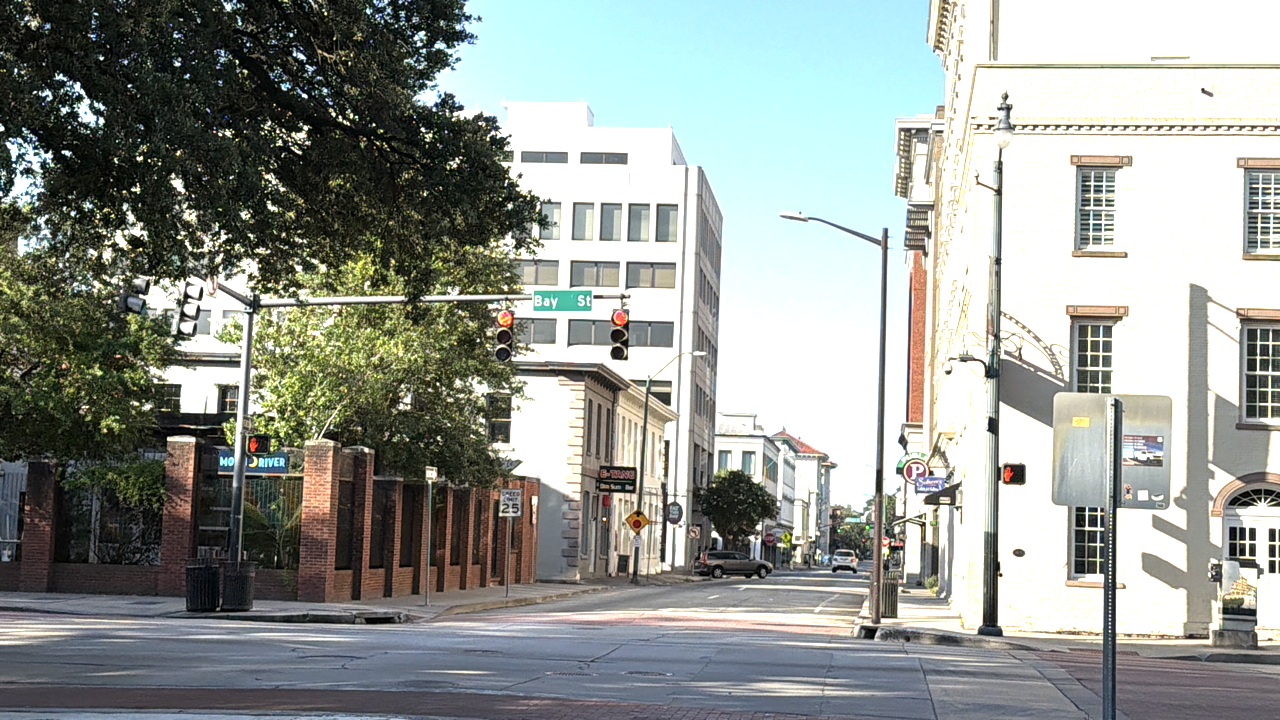
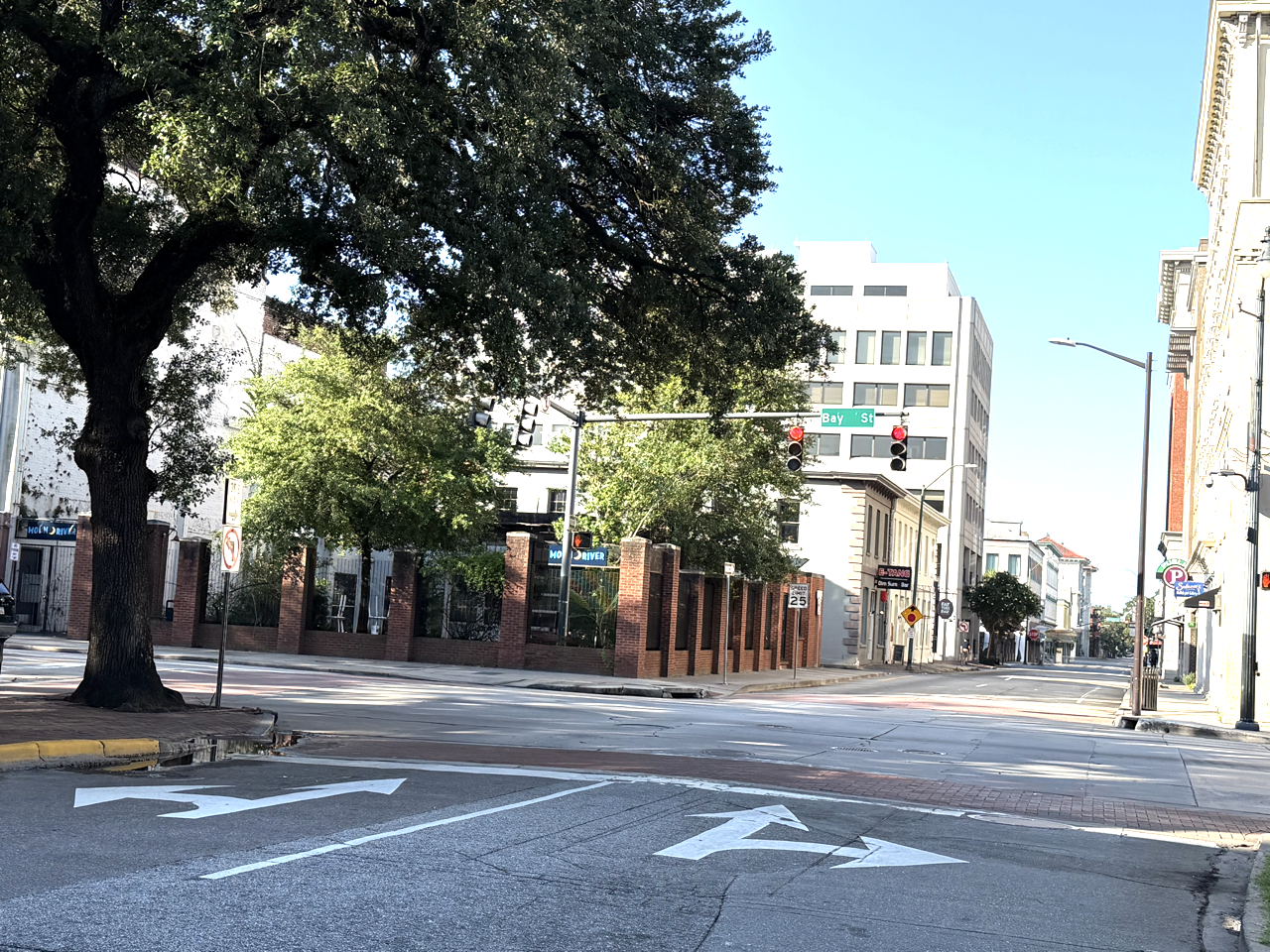
Location: Bay and Whitaker Streets
___
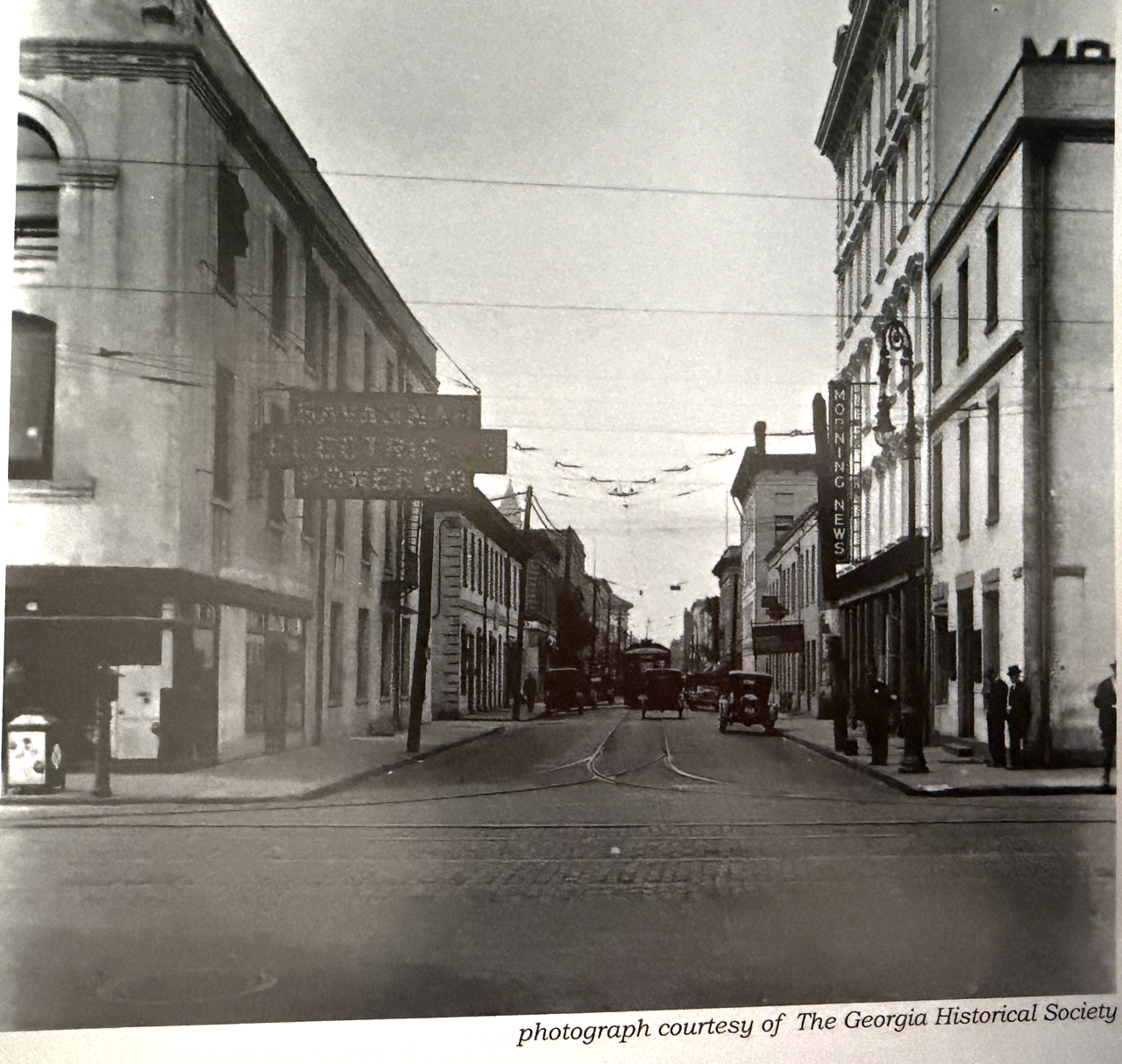
Leah Simpson’s story challenges many assumptions about the lives of free women of color in early Savannah. As with many free and enslaved Black women, she supported herself as a seamstress.
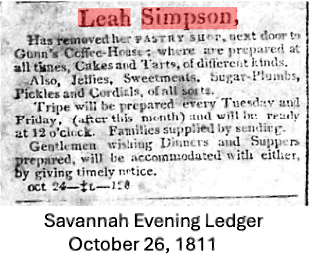
She was continually looking for opportunities in addition to her work as a seamstress. She discovered a far more profitable opportunity in the city’s growing food trade. By 1810, she had opened a pastry shop and restaurant on Bay Street known as “The White House”, located at that time near Gunn’s Coffee House and Eagle Tavern. This location is thought to be near Bay and Whitaker Streets.
Simpson was more than a successful business owner. She owned a home in the Yamacraw neighborhood on what was Fahm Street—the now-demolished neighborhood encompassed the area where the Savannah Welcome Center is located. She advertised pastry and food sales from her home as well as commercial spaces. Tax records indicate that she owned six enslaved people.
Some free people of color owned enslaved individuals to work in their growing businesses. She also jointly owned a city lot with the enslaved individual Quayle Duebell, illustrating the often complex and surprising realities of Savannah’s free Black community.
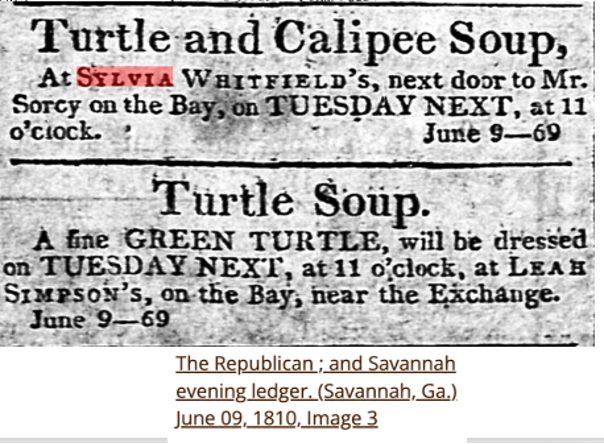
Her restaurant quickly became known for one particular specialty: Green Turtle Soup, a prized Caribbean delicacy highly sought after by Savannah’s diners. Her clientele was both Black and White patrons. Simpson frequently advertised her establishment in The Savannah Republican, one of the city’s leading newspapers, promoting both her pastries and her famous soup.
After relocating her business in 1811 next to Gunn’s Tavern, she capitalized on her growing reputation. To emphasize the dish that had made her successful, she rebranded her establishment, highlighting her renowned Green Turtle Soup while continuing to offer the pastries that had first attracted customers. Through determination and business acumen, Leah Simpson became one of Savannah’s successful early female entrepreneurs.
___
Sources:
City of Savannah Municipal Archives. Historical photograph credit. Courtesy of the City of Savannah Municipal Archives, Savannah, GA.
Lumpkin-White, Arva. Photograph credit.
8Lewis (Louis) Mirault, Tailor
Location: Bull Street, across from Johnson Square at Bryan Street
___
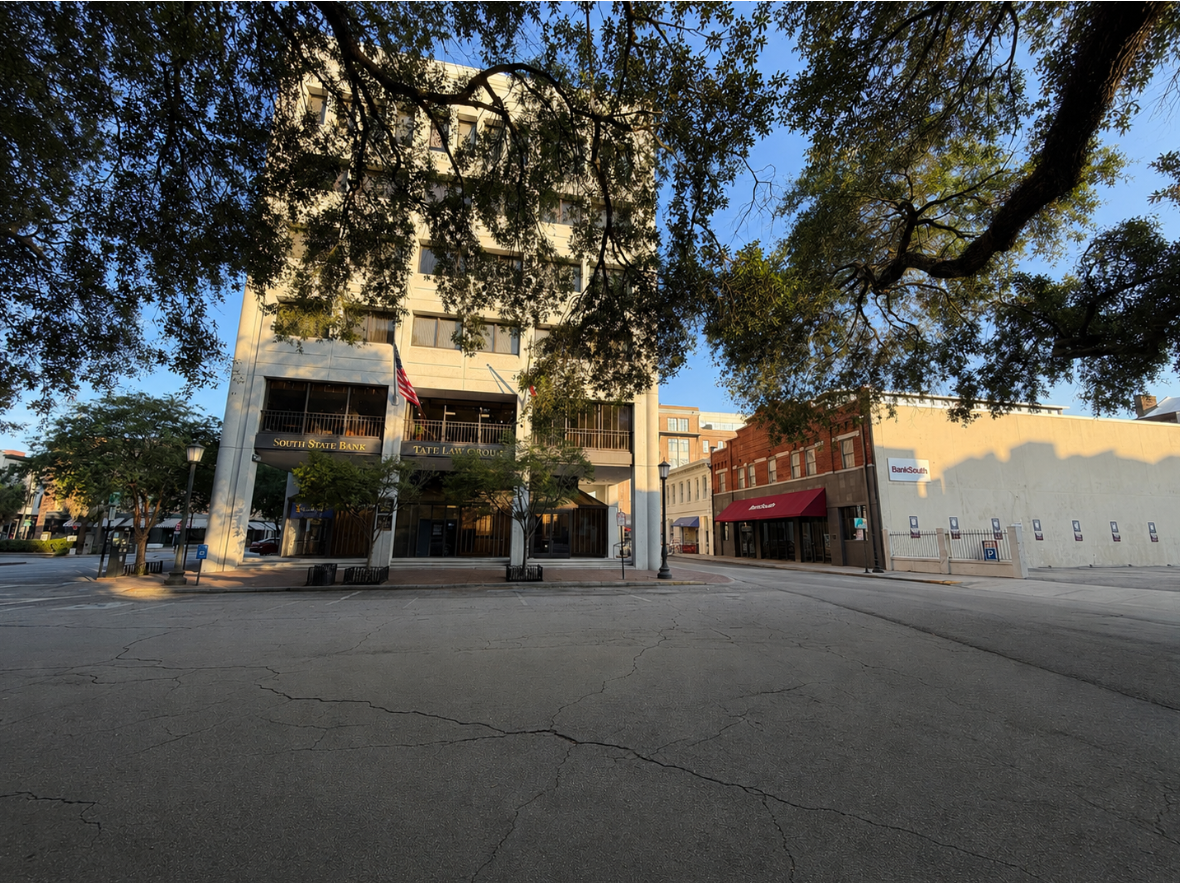
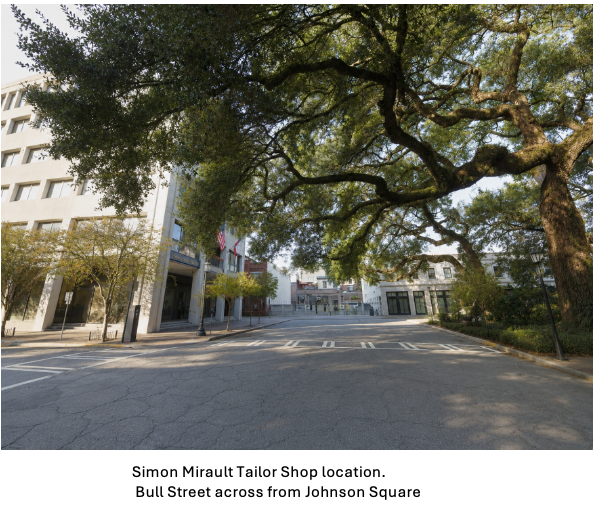
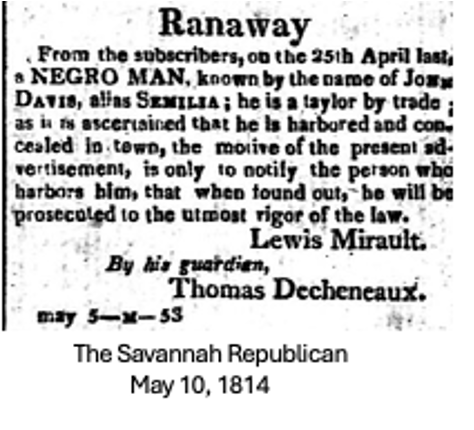
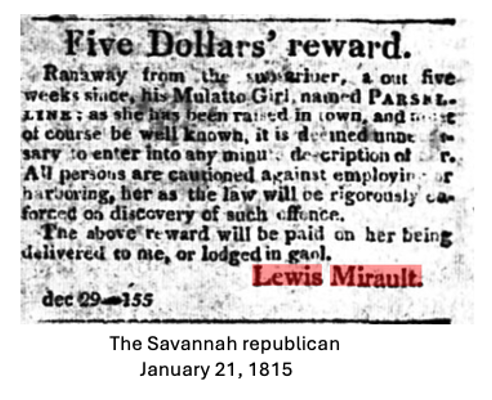
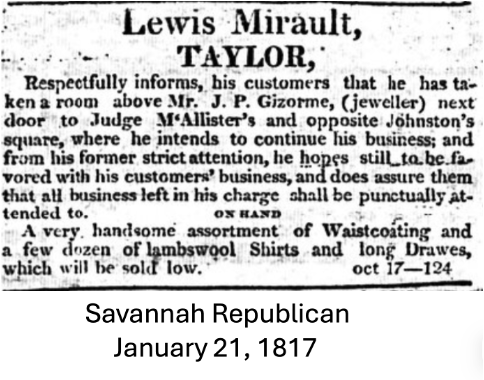
Lewis, or Louis, Mirault was born in the 1770's as a free man of color. He was a master tailor and businessman who emigrated from Saint-Domingue (present-day Haiti). Mirault was first documented in Savannah by 1802. On April 18, 1803, the Georgia Republican and State Intelligencer listed him in the Chatham County tax records, confirming his residence and business activity in the city. He was the owner of six enslaved people. Once established in Savannah, he married Teresa Mirault. After her untimely death, likely between 1812 and 1813, Louis Mirault remarried. His second wife, Nicole Moreau, was also a free woman of color from Saint-Domingue. Together, they had two children, Josephine and Simon Mirault, the latter born in 1815.
By 1810, Mirault had established a tailor shop at the top of Johnson Square, facing Bryan Street, one of Savannah’s principal commercial blocks adjoining Johnson Square. Newspaper advertisements published between 1810 and 1827 promoted his tailoring business, making him one of the earliest documented free Black businessmen to advertise regularly in Savannah newspapers.
In 1818, Mirault entered into a "secret trust" agreement brokered by Richard Richardson, a local businessman and owner of the Owens-Thomas House and Slave Quarters. Richardson sold an enslaved woman and child for $800 to Alex Hunter, White guardian of Lewis Mirault, who transferred and placed them in trust for Mirault.
The arrangement placed legal title in the hands of a White intermediary while recognizing Mirault as the beneficial party. It may have enabled Mirault to protect relatives or dependents, or simply to exercise a form of property control that Georgia law made difficult for a free man of color. It is not clear what the exact relationship Mirault had to the enslaved woman and child.
Mirault and his family belonged to Savannah’s early Catholic congregation, where parish records document numerous baptisms and other family events. He is the patriarch of a large family of entrepreneurs in Savannah.
Lewis and Teresa Mirault had one son, Simon Mirault (1812–1875), who became a successful brick mason, property owner, and confectioner. Simon later operated a confectionery at the corner of Whitaker and Broughton Streets and built the house that now stands at 21 Houston Street after its relocation from its original site in Troup Ward.
Lewis Mirault died in 1827. Newspaper advertisements, tax records, Catholic parish registers, and city records document his career and establish the Mirault family as one of Savannah’s earliest free Black Creole families of skilled craftsmen and business owners.
___
Sources:
Hall, Jefferson. "Mirault Family." Fact-Checking Savannah's History (blog)
Hoskins, Charles Lwanga. W.W. Law and His People: A Timeline and Biographies. Savannah: Gullah Press, 2012, 27.
Lumpkin-White, Arva. Photograph credit.
Phillips, Ulrich Bonnell. American Negro Slavery: A Survey of the Supply, Employment and Control of Negro Labor as Determined by the Plantation Régime. New York: D. Appleton and Company, 1918, 435, n. 39.
Ports, Michael A. Georgia Free Persons of Color. Volume IV: Chatham County, 1817–1863. 83. Baltimore: Clearfield Company, 2016.
Sumler-Edmond, Janice L. "Free Black Life in Savannah." In Slavery and Freedom in Savannah, edited by Leslie M. Harris and Daina Ramey Berry, 124–133. Athens: University of Georgia Press, 2014.
Sumler-Edmond, Janice. The Secret Trust of Aspasia Cruvellier Mirault: The Life and Trials of a Free Woman of Color in Antebellum Georgia. Fayetteville: University of Arkansas Press, 2008.
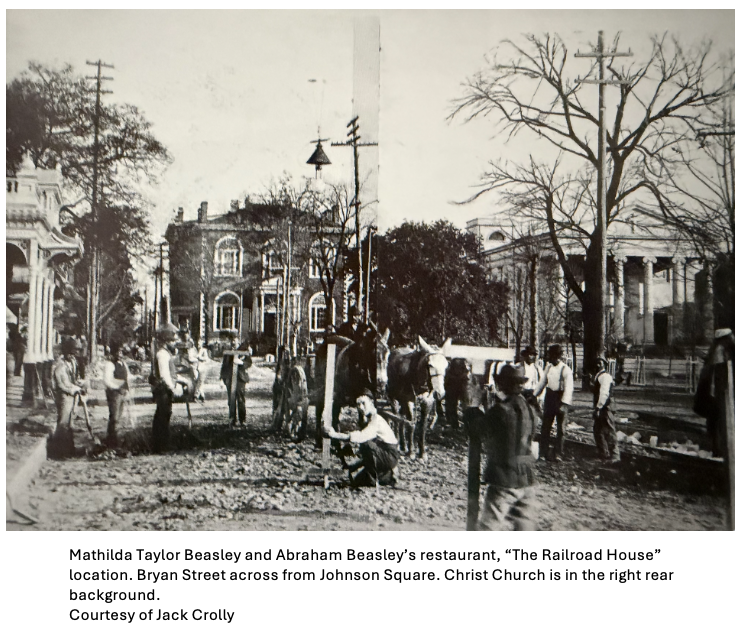
9Matilda Taylor Beasley "Railroad House" Restaurant
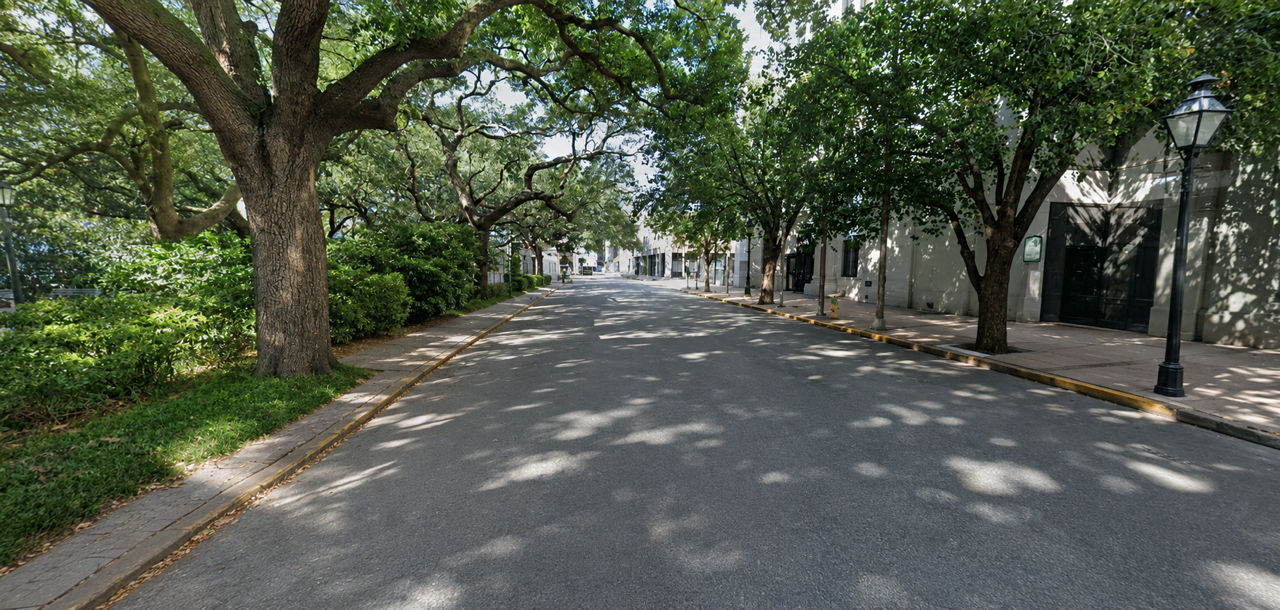
Location: Bryan Street at Johnson Square
___
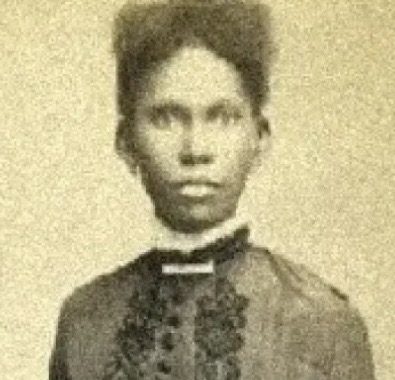
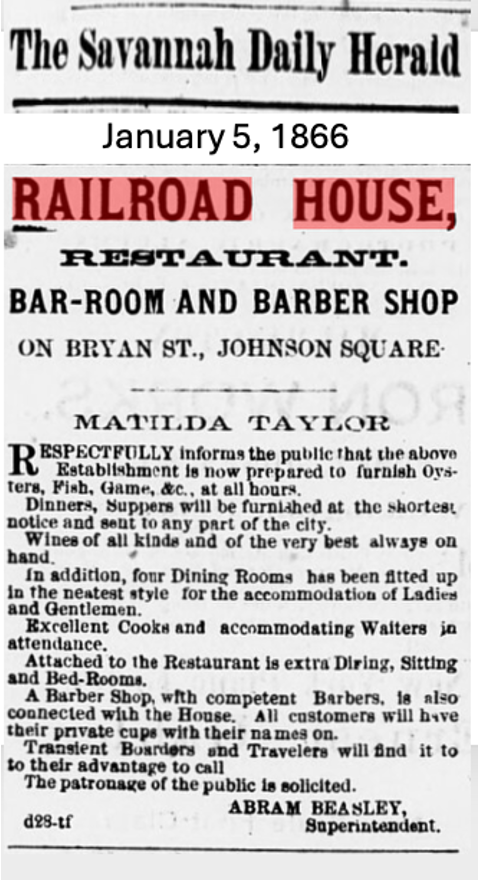
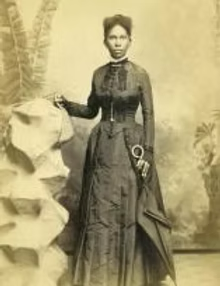
During the Civil War and early Reconstruction, Matilda Taylor (also spelled Mathilda) managed the Railroad House, one of the best-known Black-owned businesses in Savannah. Newspaper advertisements beginning in December 1865 identified the establishment as the “Railroad House, Restaurant, Bar-Room and Barber Shop,” located on Bryan Street at Johnson Square, with Matilda Taylor named as proprietor and Abram (Abraham) Beasley serving as superintendent.
The advertisements promoted meals, refreshments, and attentive service, reflecting a diversified business that combined a restaurant, saloon, barber shop, and boarding accommodations under one roof.
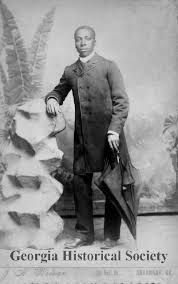
The Railroad House formed part of the extensive business interests of Abraham Beasley, a prosperous free man of color who also owned a produce market, boarding house, saloon, and substantial real estate in Savannah.
Later newspaper notices advertising the lease of the property described it as “the best stand in the city for a restaurant and bar room or boarding house,” located on Bryan Street next to T. J. McNish & Co., confirming its prominent commercial location adjacent to Johnson Square.
Matilda Taylor worked at the Railroad House throughout the 1860s and married Abraham Beasley on February 9, 1869. Upon Beasley’s death in 1877, she inherited his estate, including his business and property holdings, before later devoting her life and fortune to charitable and religious work as Mother Matilda Beasley, Georgia’s first African American catholic nun.
___
Sources:
DeLorme, Rita H. "Mathilda Beasley Recalled." The Southern Cross, January 28, 1999, 3.
Hoskins, Charles Lwanga. Out of Yamacraw and Beyond: Discovering Black Savannah. Savannah: Gullah Press, 2002.
Hoskins, Charles Lwanga. Yet With a Steady Beat: Autobiographies of Early Black Savannah. Savannah: Gullah Press, 2001, 167–168.
Lumpkin-White, Arva. Photograph credit: others as noted.
Savannah Evening Press. December 21, 1903.
Savannah Morning News. September 4, 1877.
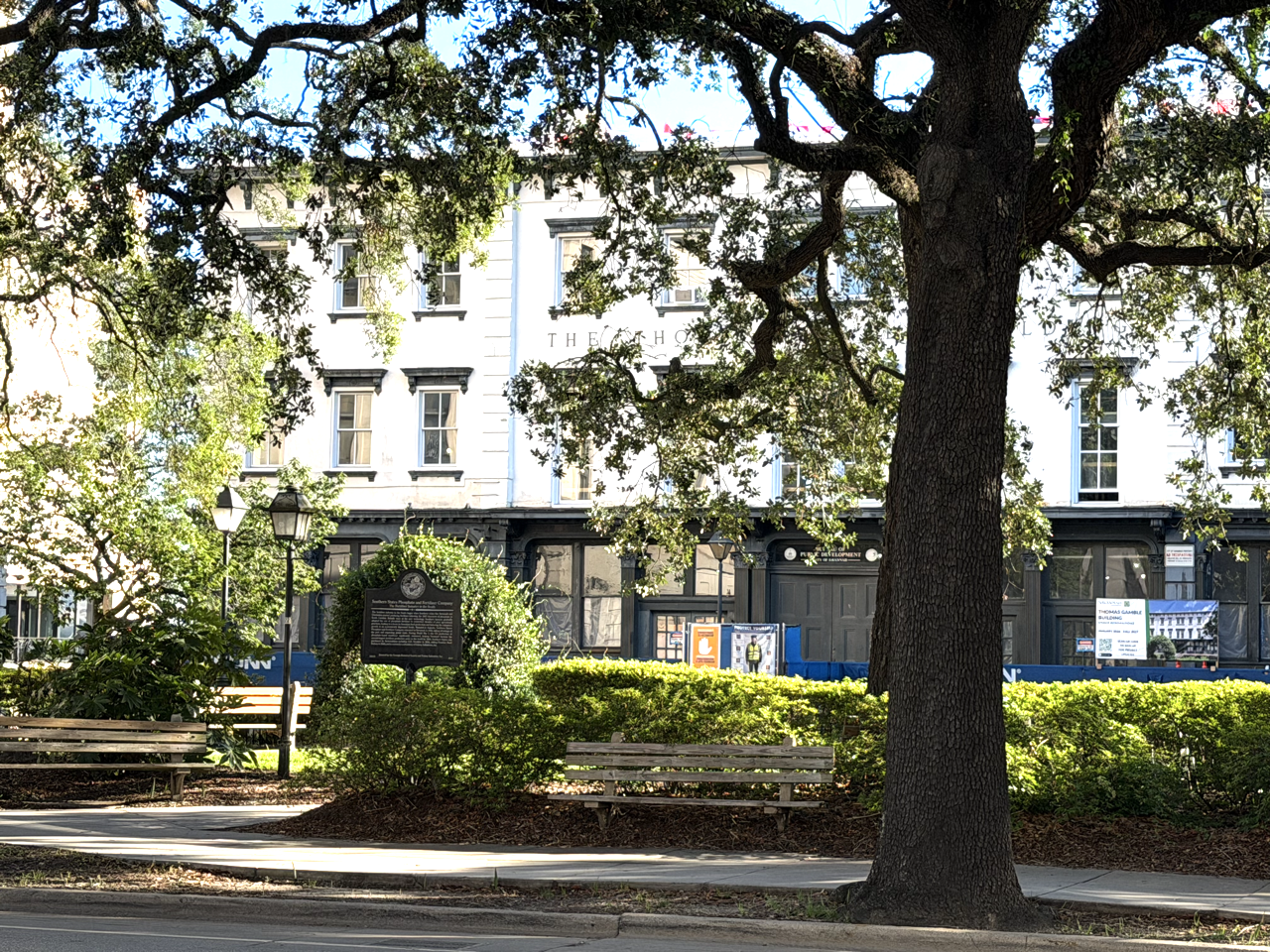
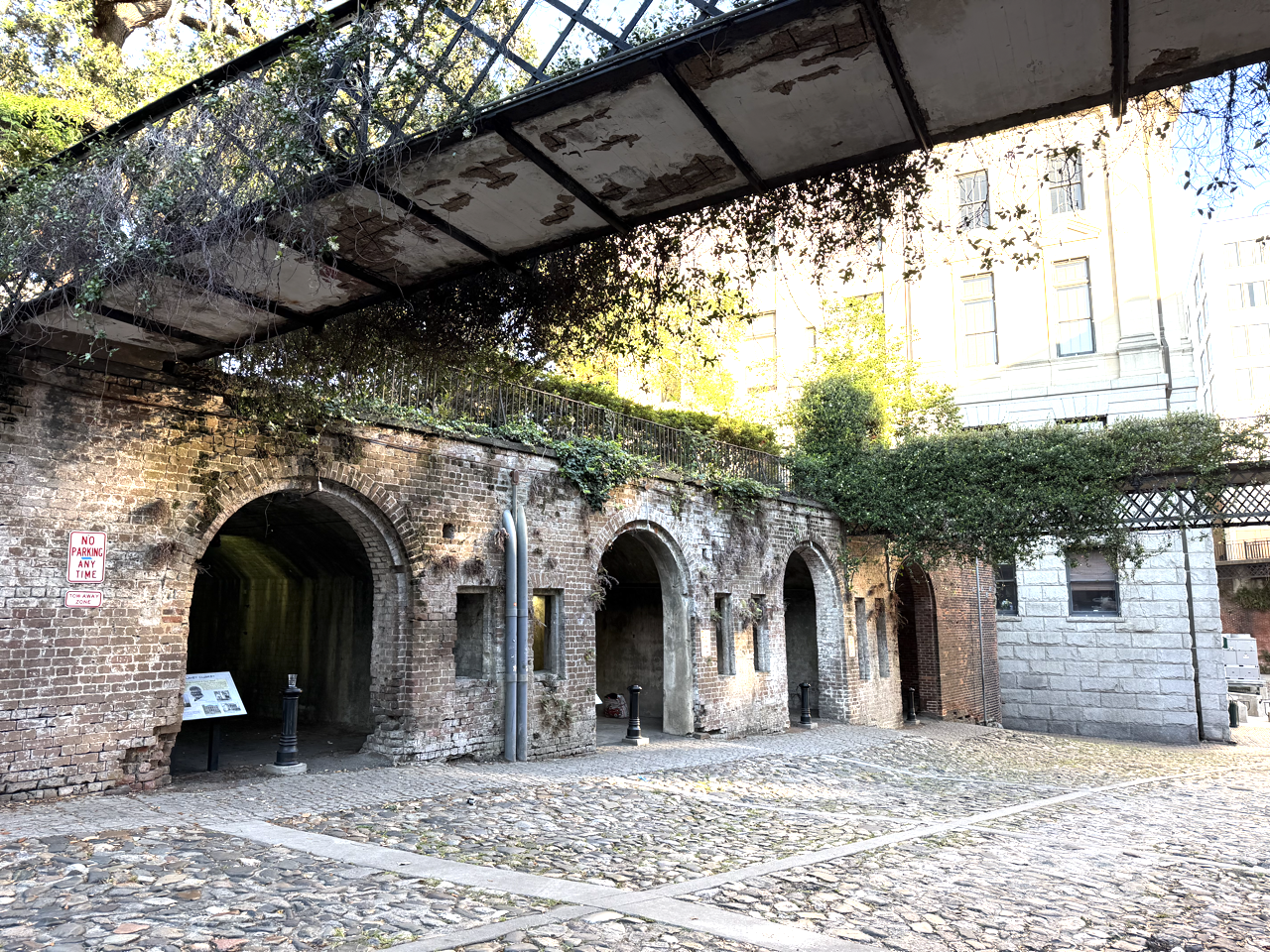
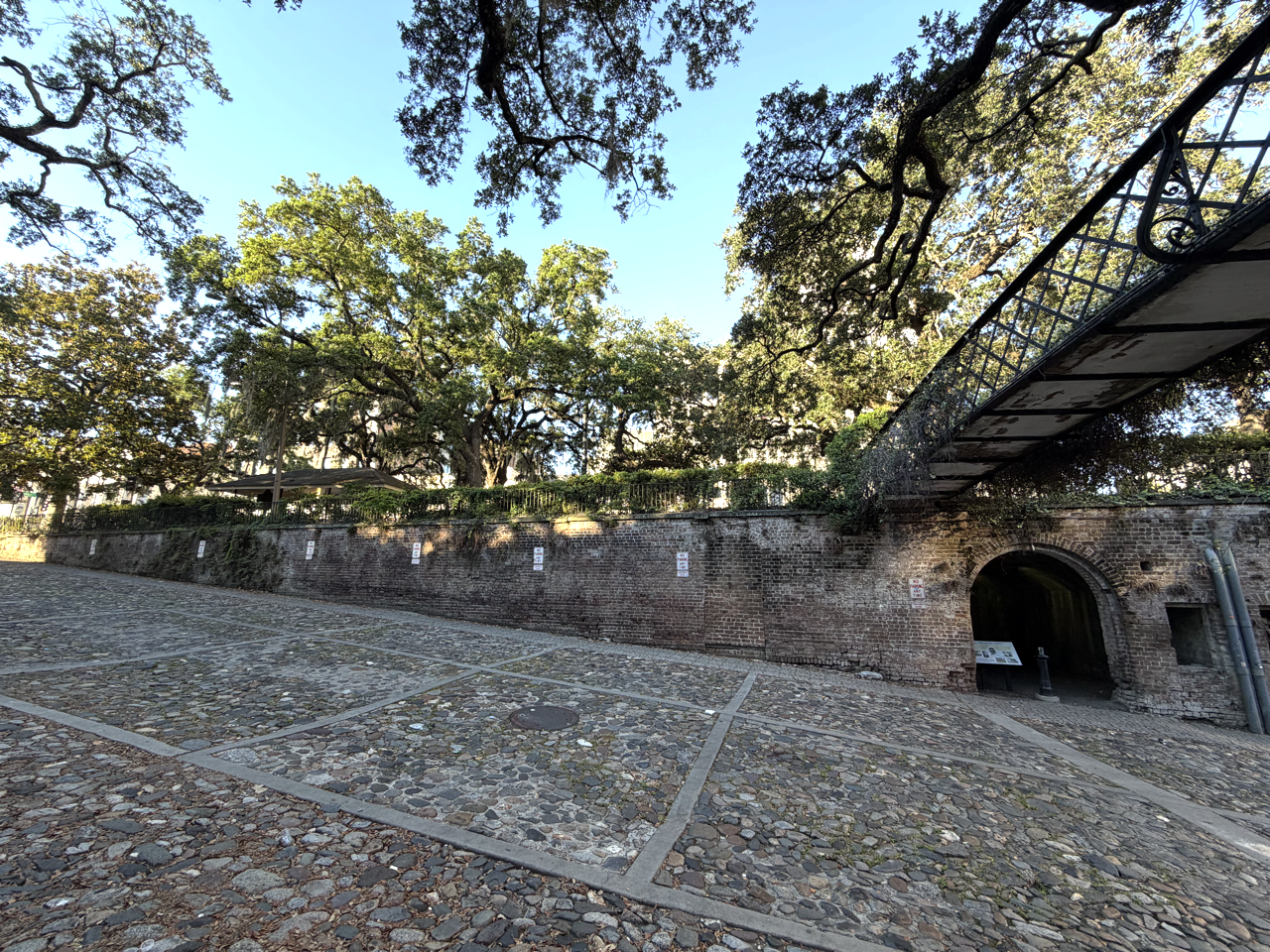
10 Deas, Johnson & Jackson, Cotton Merchants, 1870
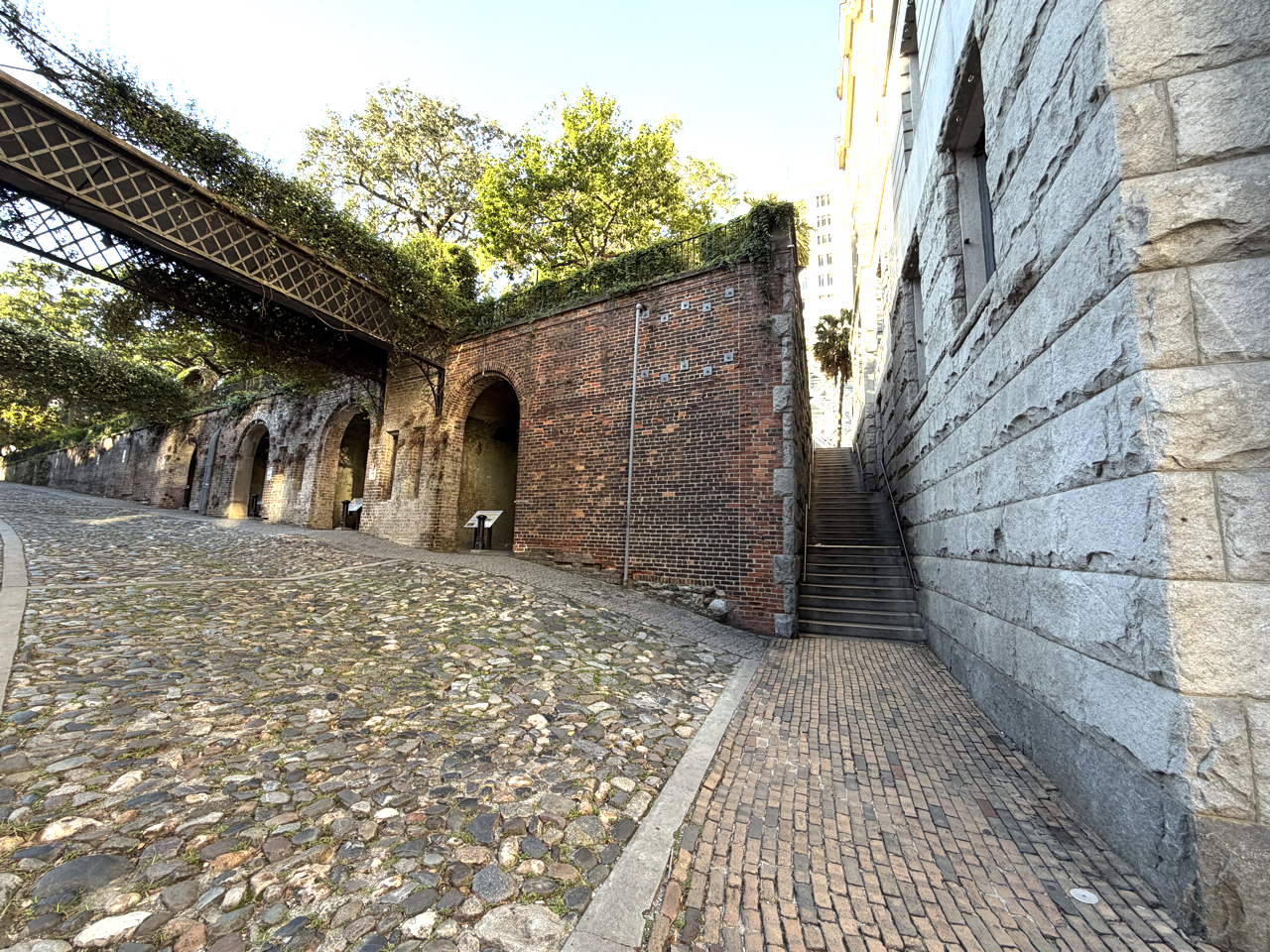
Location: Factors Walk, behind City Hall
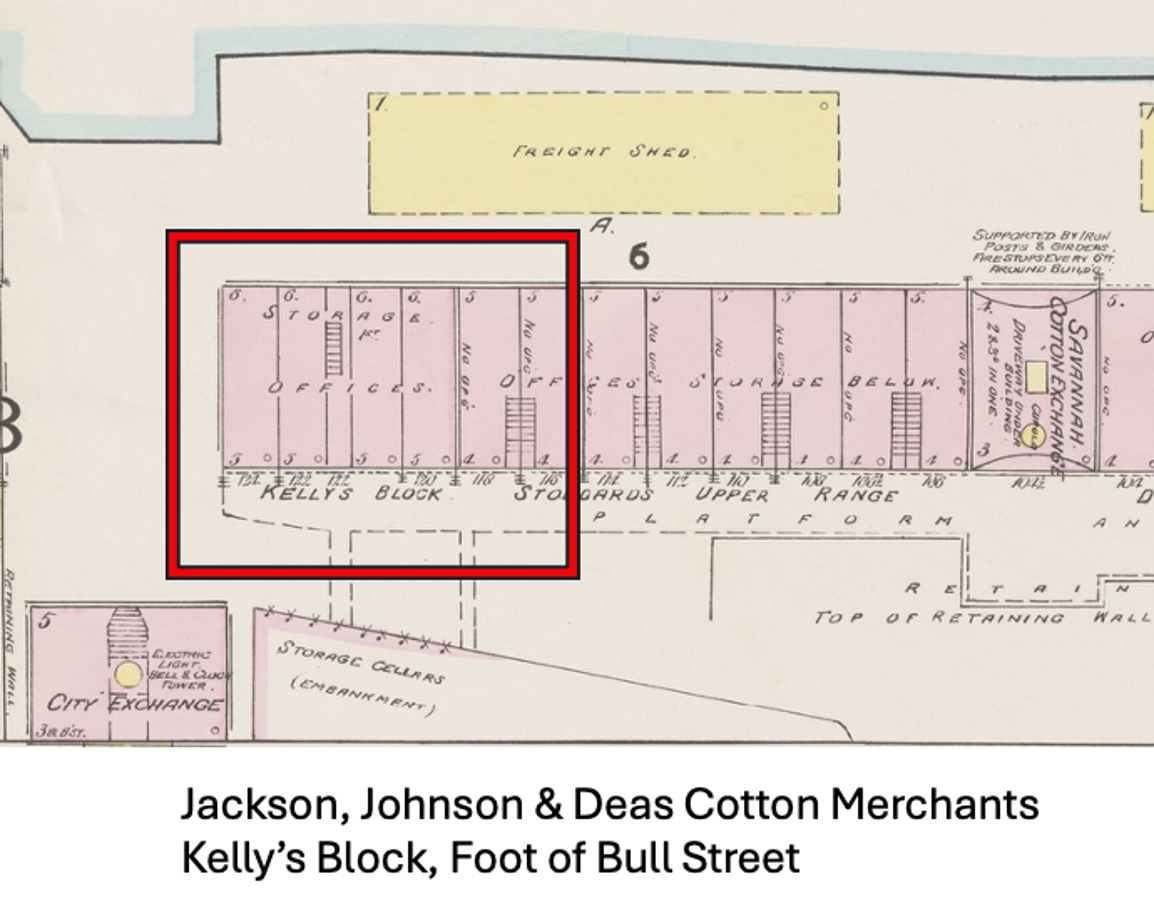
Johnson and Deas advertised as "Foot of Bull Street"
___
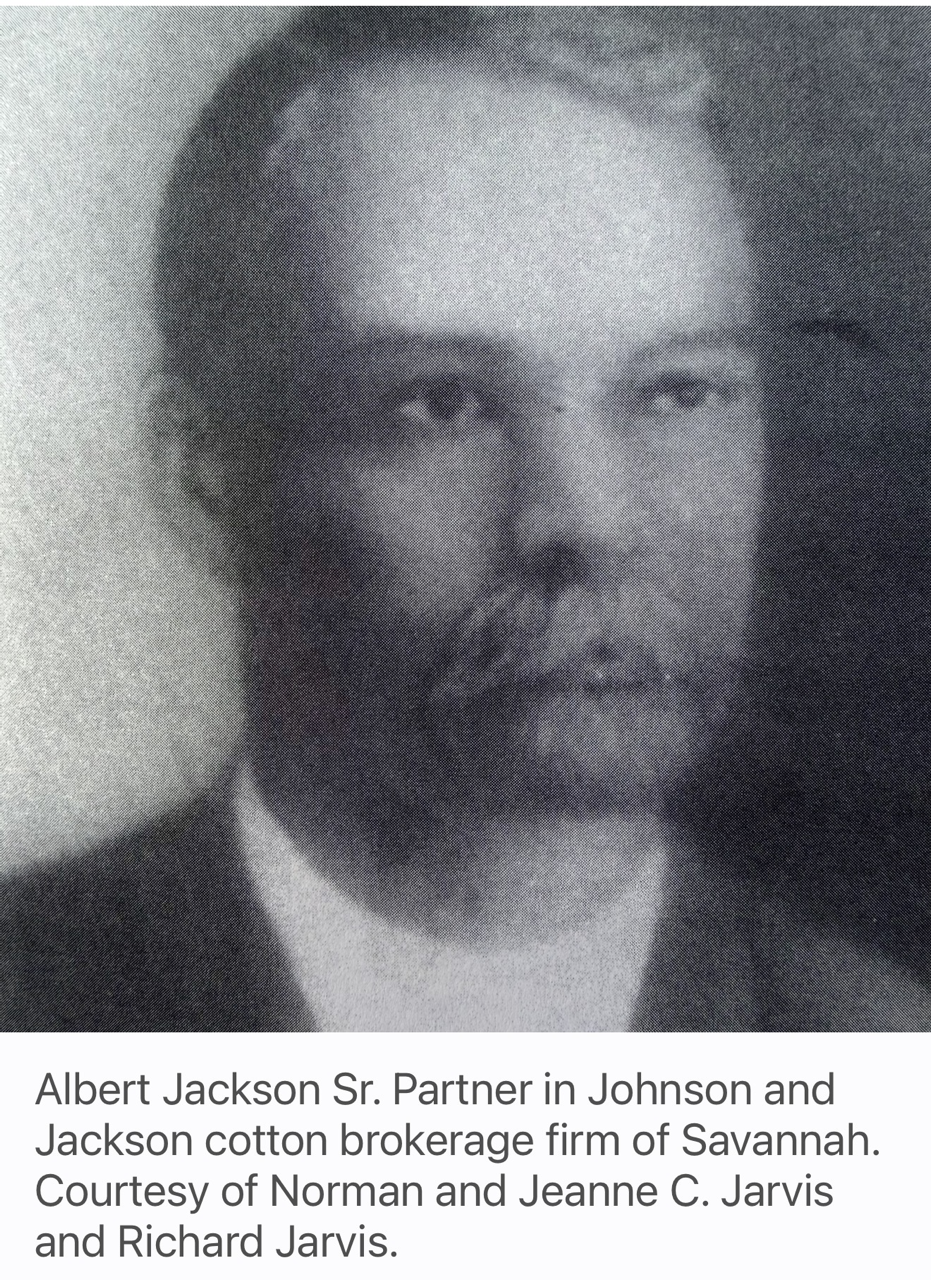
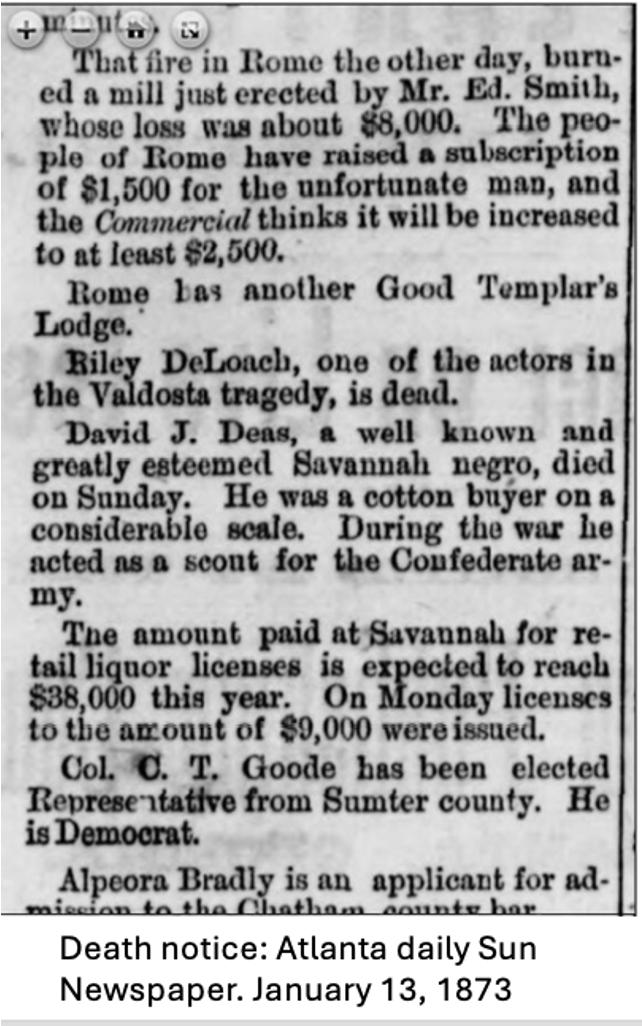
Albert Jackson was an accountant with a Harvard Institute education. He was born in Savannah and lived as a Free Man of Color. John M. Johnson, thought to have been a formerly enslaved man who was looking for opportunities beyond his previous jobs as a laborer and porter at W.W. Lincoln’s Drug Store. He had a wife and eight children and had a savings account at Freedmen’s Bank. David J. Deas was a cotton merchant who by some accounts, was white, but was likely a mulatto, however, in his death notice, he was remembered as a “well known and greatly esteemed negro. He was a cotton buyer on a considerable scale.” He was also remembered for his service as a scout for the Confederate army.
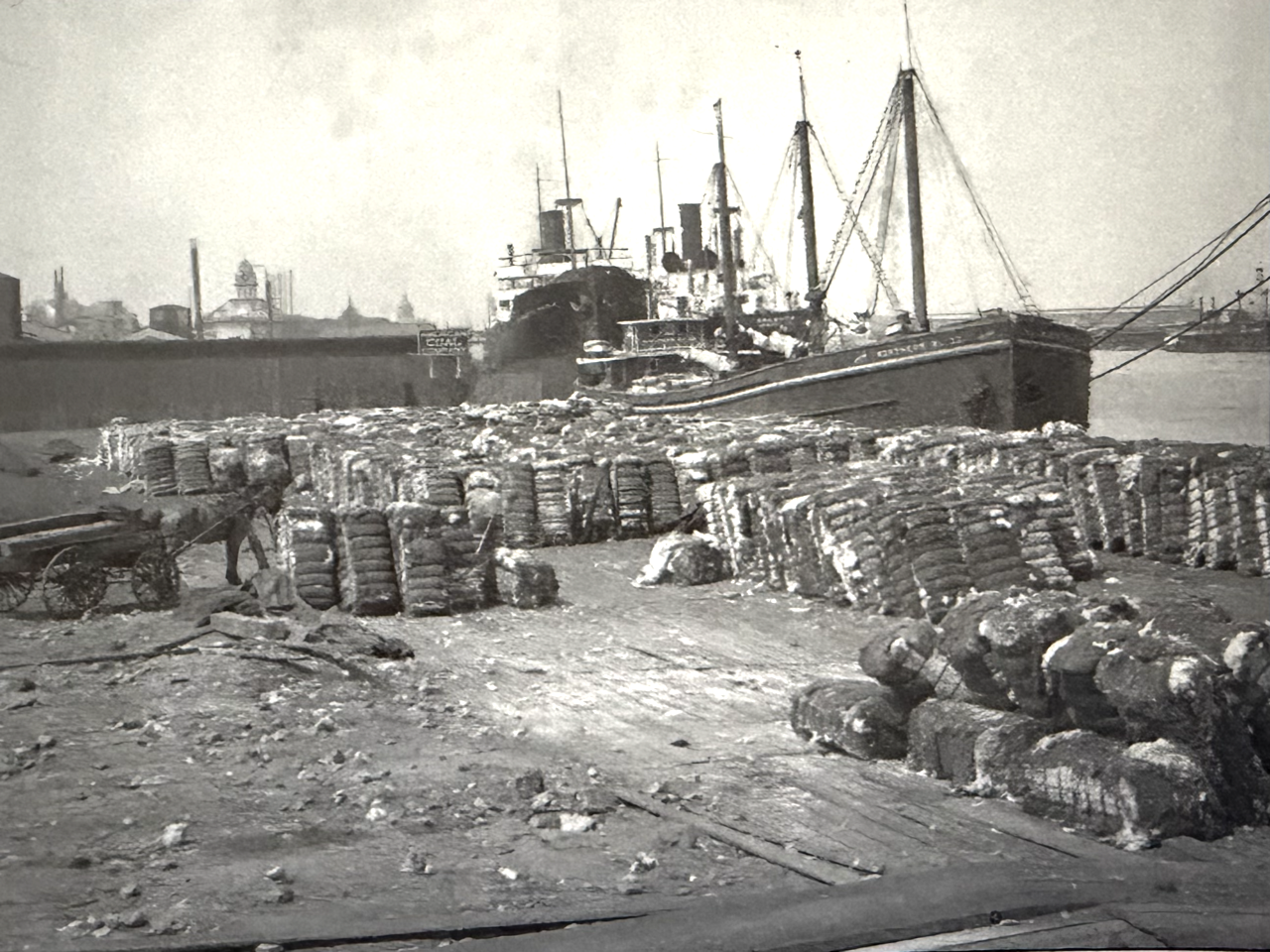
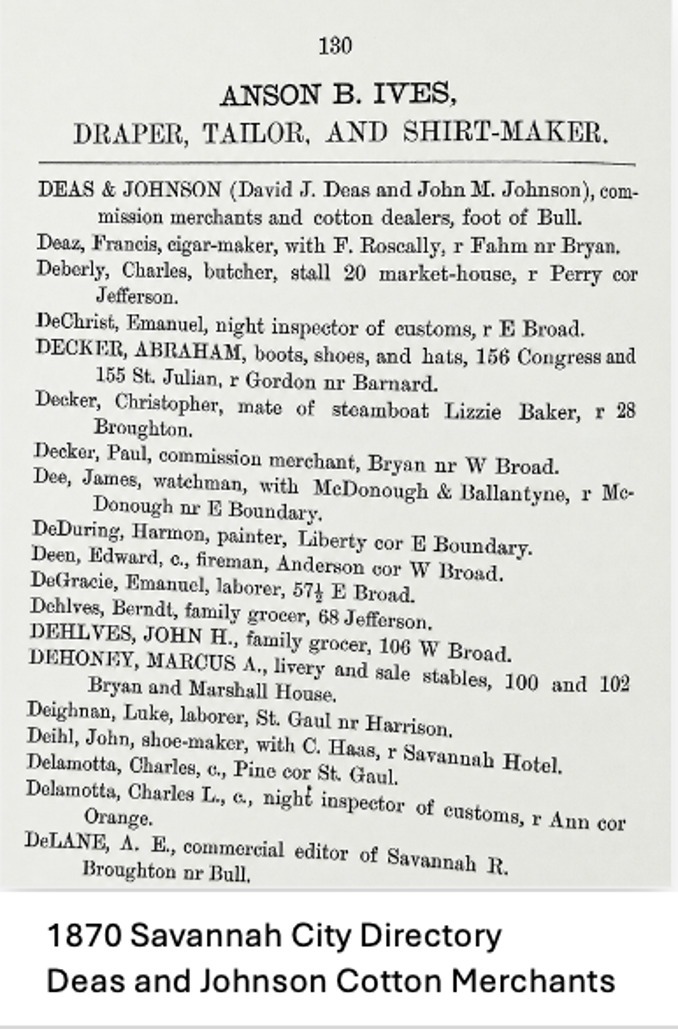
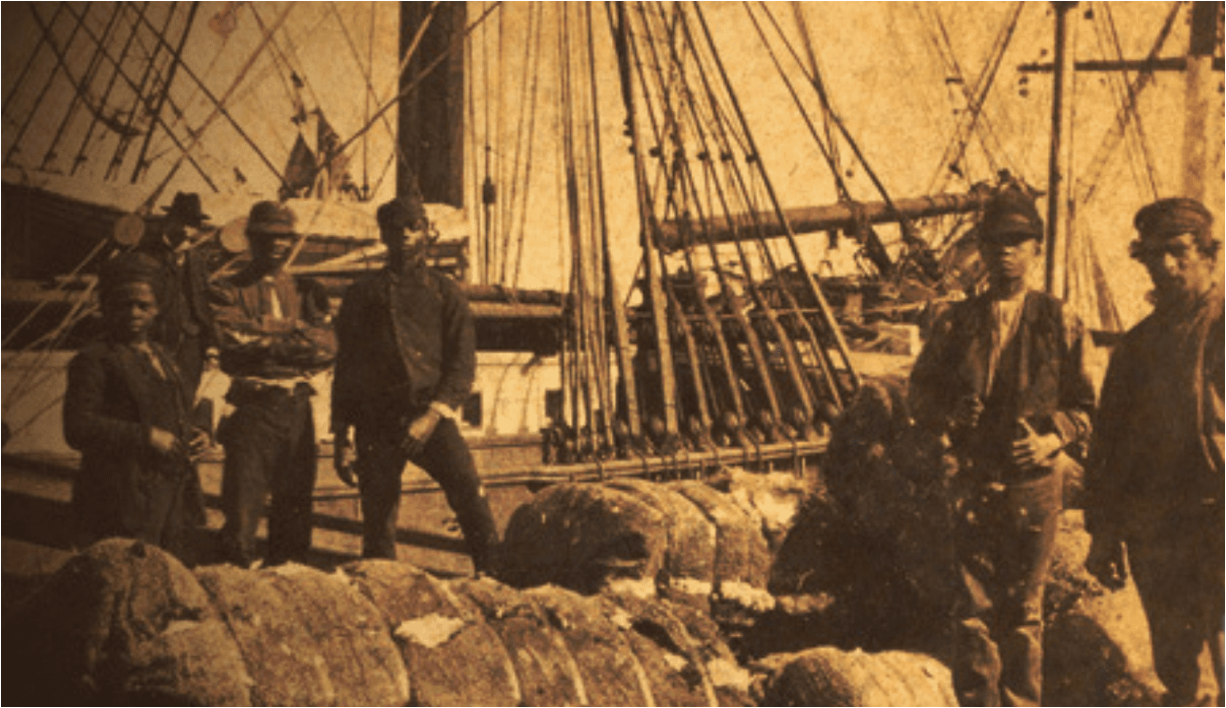
In 1870, John Johnson and David Deas formed a cotton merchant firm located at Kelly's Block, in an area called Factors Walk. Factors Walk was built in 1817 adjacent to the ports on the Savannah River. The Savannah Port was the largest in Georgia, and Kelly's Block was positioned above the docks on River Street, adjacent to the Cotton Exchanges. They were frequent advertisers in the newspapers and the City Directory.
As the business grew, Johnson and Deas brought Albert Jackson into the business to utilize his accounting and entrepreneurial skills. The firm advertised, "Liberal advances made on cotton and other produce consigned to them". The business trio would not be long-lived. David Deas died in January of 1873, leaving Johnson and Jackson in a partnership as cotton merchants.
John Johnson died in 1884, leaving Albert Jackson as the last remaining partner of the firm. He continued the business on his own. He announced to existing and prospective customers that the business would continue after Deas’s death solely in his name.
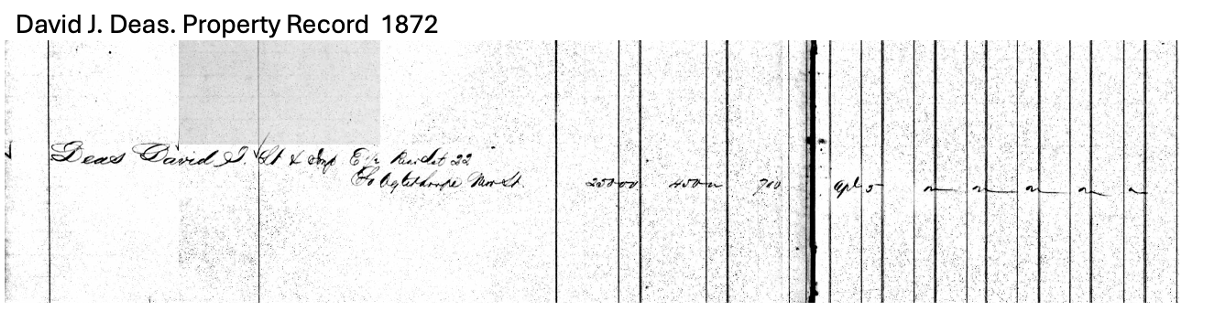
Albert Jackson owned property in two locations, one of which was 322 Price Street (still standing) and David Deas owned a home in the Yamacraw neighborhood at West Broad and Fahm Streets which has been demolished.
___
Sources:
Atlanta Daily Sun. January 13, 1873.
City of Savannah Municipal Archives / Chatham County Records. "Land Tax and Property Records, 1809–1938." Albert Jackson, Lot 20, Bartow Ward, [1875]. Digital images, Ancestry.com.
City of Savannah Municipal Archives / Chatham County Records. "Land Tax and Property Records, 1809–1938." Albert Jackson, Lot 26, Troup Ward, [1884]. Digital images, Ancestry.com.
Hoskins, Charles Lwanga. "President Albert Jackson." In Yet With a Steady Beat: Autobiographies of Early Black Savannah, 267–269. Savannah: Gullah Press, 2001.
Lumpkin-White, Arva. Photograph credit.
Sanborn Map Company. Insurance Maps of Savannah, Georgia. New York: Sanborn Map & Publishing Co., 1888.
Savannah City Directory. Savannah, GA, 1871.
Sumler-Edmond, Janice. The Secret Trust of Aspasia Cruvellier Mirault: The Life and Trials of a Free Woman of Color. Fayetteville: University of Arkansas Press, 2008, 74–76.
11Anthony Kirk Desverney, Cotton Merchant
Location: 84 Bay Street
___
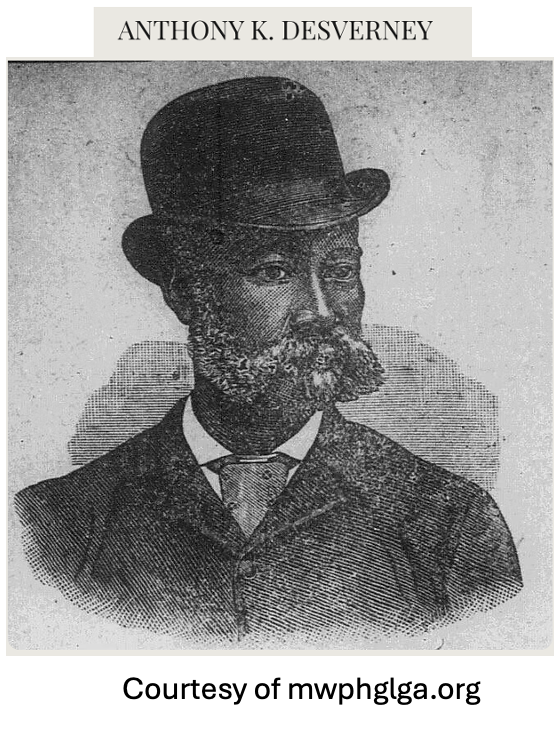
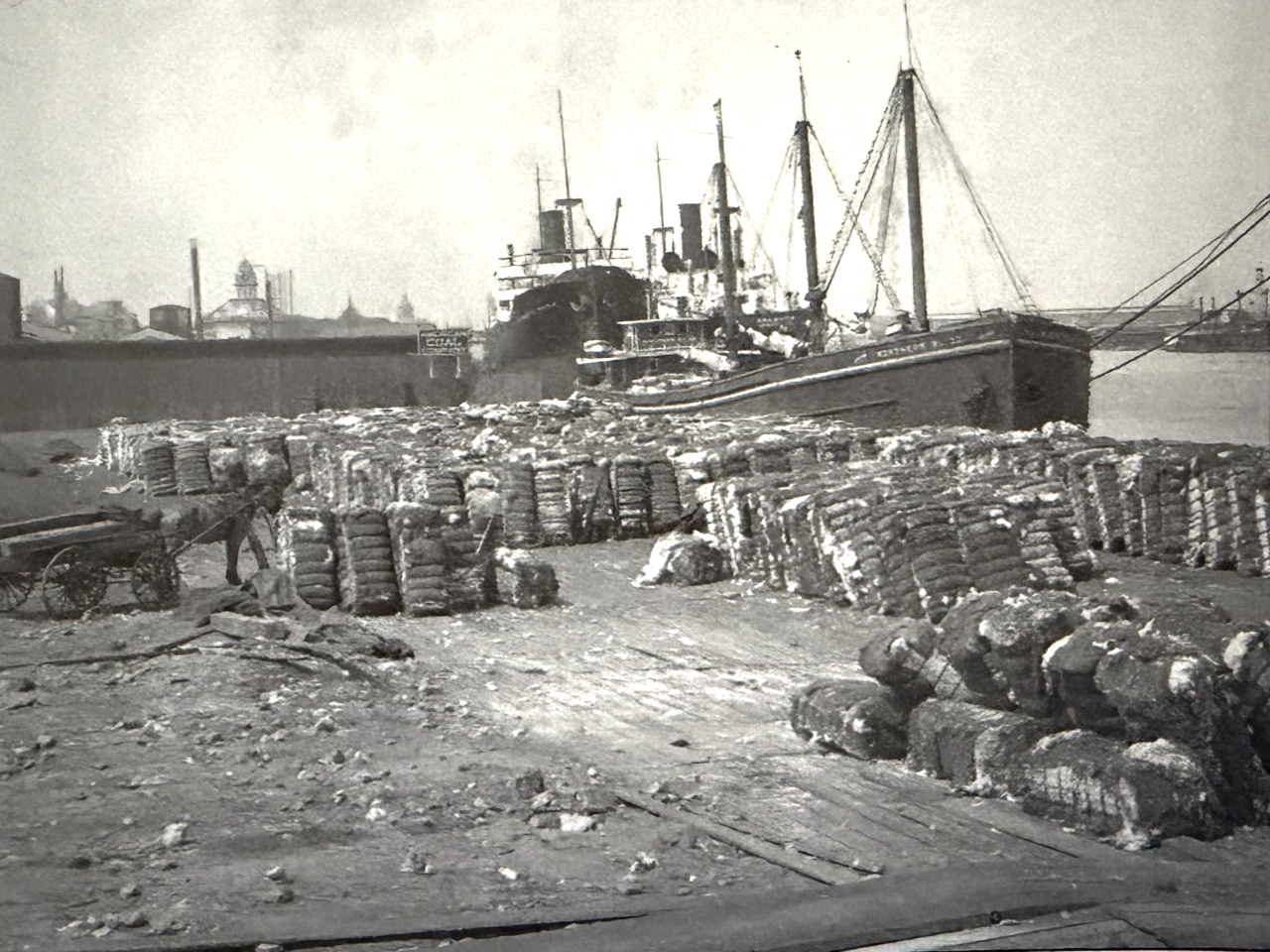
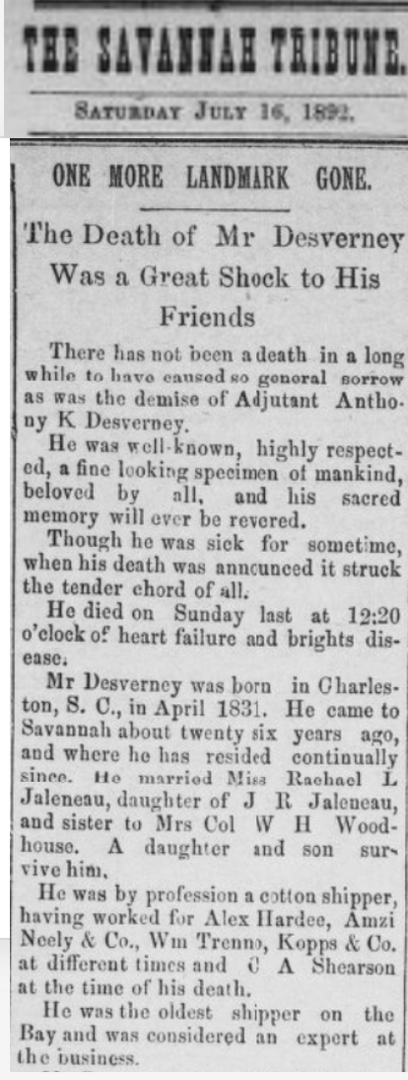
Anthony K. Desverney was born in Charleston, South Carolina, sometimes listed as Edisto Island, in April 1831, although some contemporary sources, including historian Charles Elmore, give his birth date as December 11, 1830. He was the son of a French father and an African mother.
Desverney relocated to Savannah during the mid-1860s, where he established himself as one of the city’s most respected cotton shippers. He married Rachel Jaleneau, daughter of J. R. Jaleneau and sister-in-law of Colonel William H. Woodhouse. Together they raised two children, Edward and Rachel.
Over the course of his career, Desverney worked with several prominent cotton firms, including Alex Hardee, Amzi Neely & Company, William Trenno, and Kopp & Company. Through decades of experience on Savannah’s waterfront, he developed a reputation as one of the city’s foremost authorities on cotton shipping. At the time of his death in 1892, he was widely regarded as the oldest active cotton shipper on Bay Street and was recognized throughout the port community for his expertise in the trade.
Beyond his business pursuits, Desverney was deeply involved in Savannah’s civic, military, and fraternal institutions. He attained the rank of Adjutant in the First Battalion, Georgia Volunteers (Colored), one of the state’s most prominent African American military organizations during the Reconstruction era. His participation reflected the important role Black militia units played in Savannah’s public and political life during the late nineteenth century.
Desverney was also a leading figure in Prince Hall Freemasonry in Georgia. He served as Past Grand Master of the Most Worshipful Grand Lodge, Free and Accepted Masons, and was the organization’s second Grand Treasurer. Within Eureka Lodge No. 1, he served as Past Master and later held offices as Treasurer and Secretary. His long service made him one of the most influential Masonic leaders among African Americans in Georgia during the nineteenth century.
His leadership extended into Savannah’s mutual aid and social organizations. At the time of his death, he was President of the Mutual Benevolent Society and a former president of the Social Club, both important institutions within Savannah’s Black community.
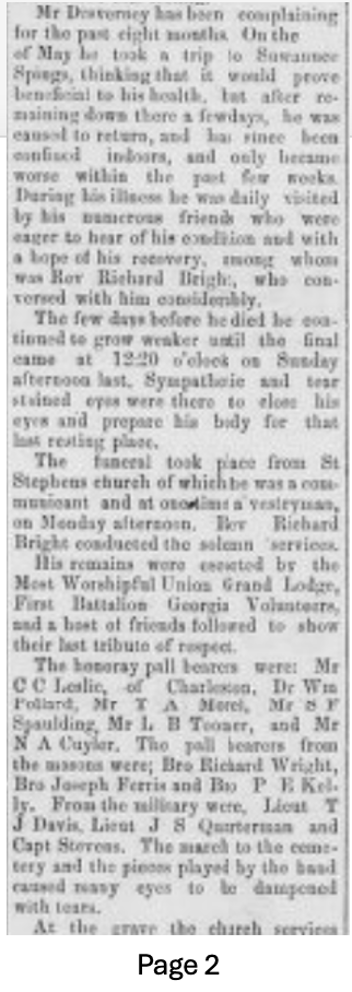
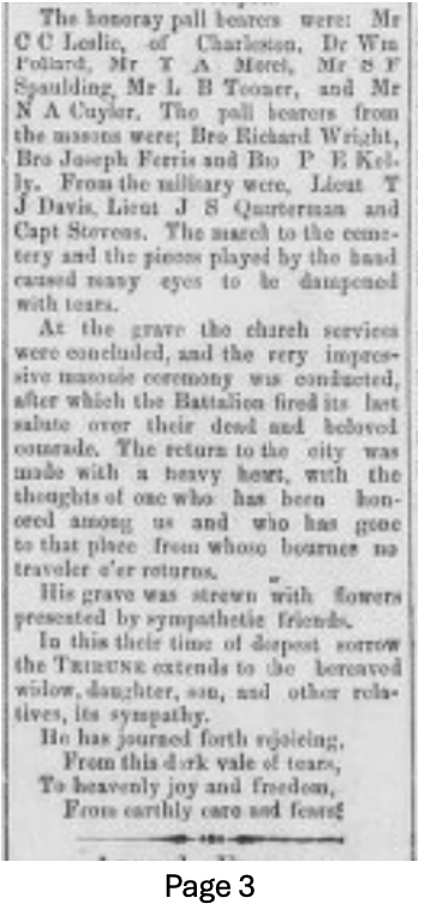
His death in 1892 was widely noted throughout the city. The Savannah Tribune marked his passing with the words, “One more landmark gone,” a reflection of his prominence and longstanding presence in Savannah’s Black community. Funeral services were held at St. Stephen’s Episcopal Church and were conducted by the Reverend Richard Bright. At the cemetery, members of the First Battalion rendered a final military salute, honoring a man whose life had been closely intertwined with Savannah’s commercial, military, fraternal, and civic history for nearly three decades.
___
Sources:
Hoskins, Charles Lwanga. Yet With a Steady Beat: Autobiographies of Early Black Savannah. Savannah: Gullah Press, 2001, 295.
Library of Congress. Historical photograph credit.
Lumpkin-White, Arva. Photograph credit.
Savannah Tribune, July 16, 1892
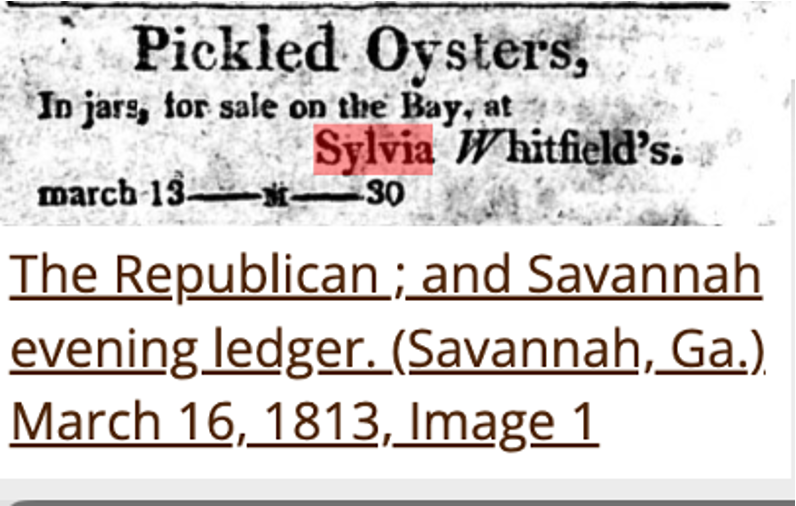
12 Sylvia Whitfield, Cookhouse and Catering, 1810
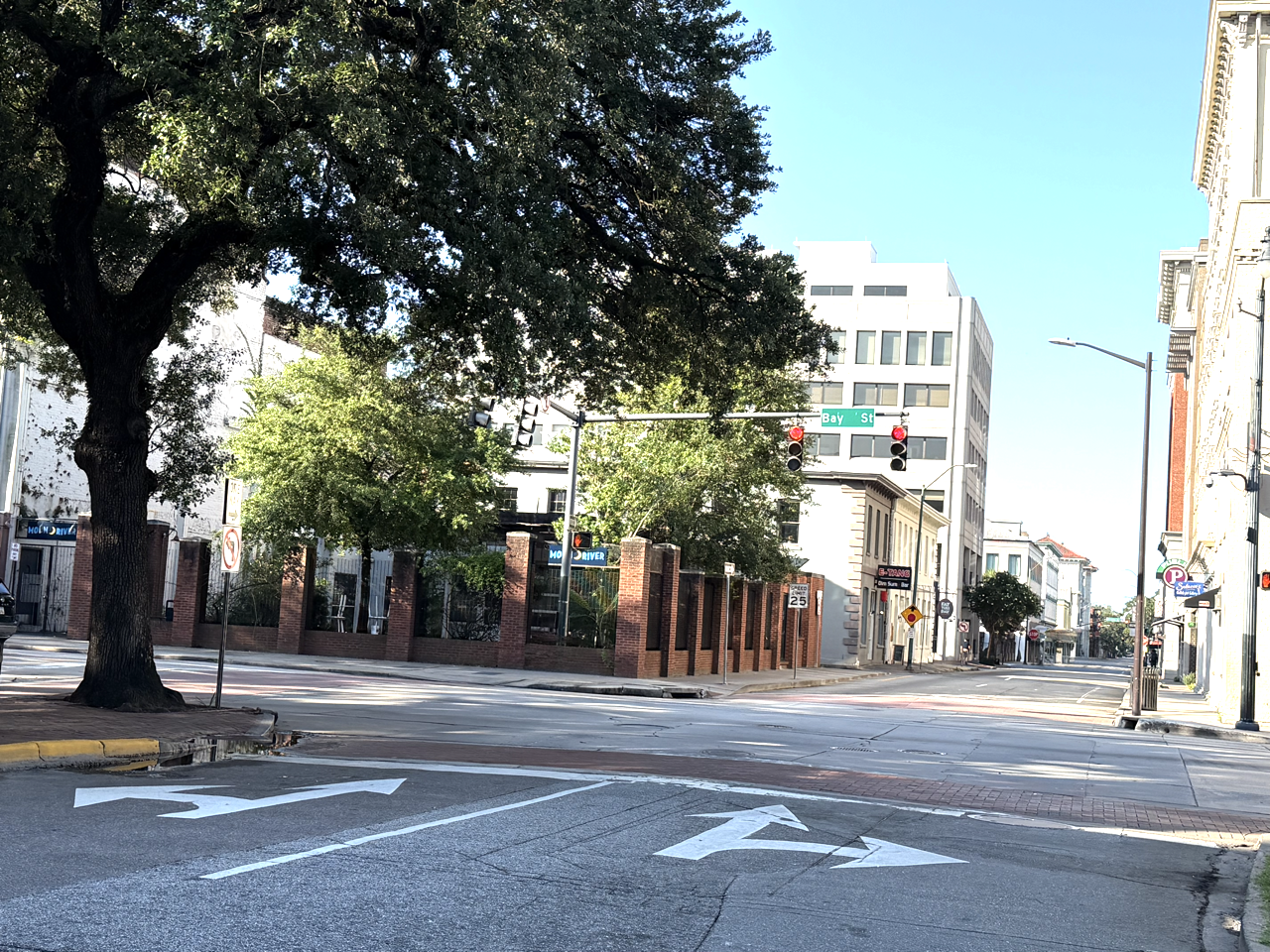
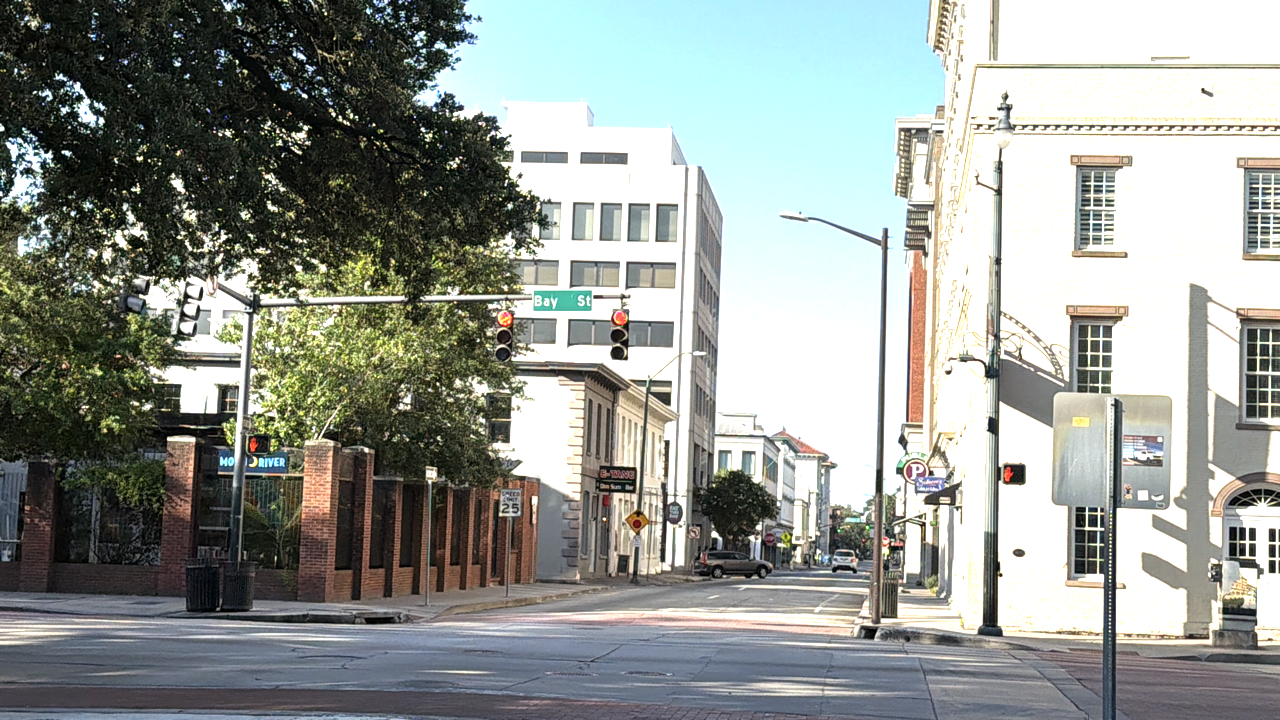
Location: Near the corner of Drayton and Bay Street
___
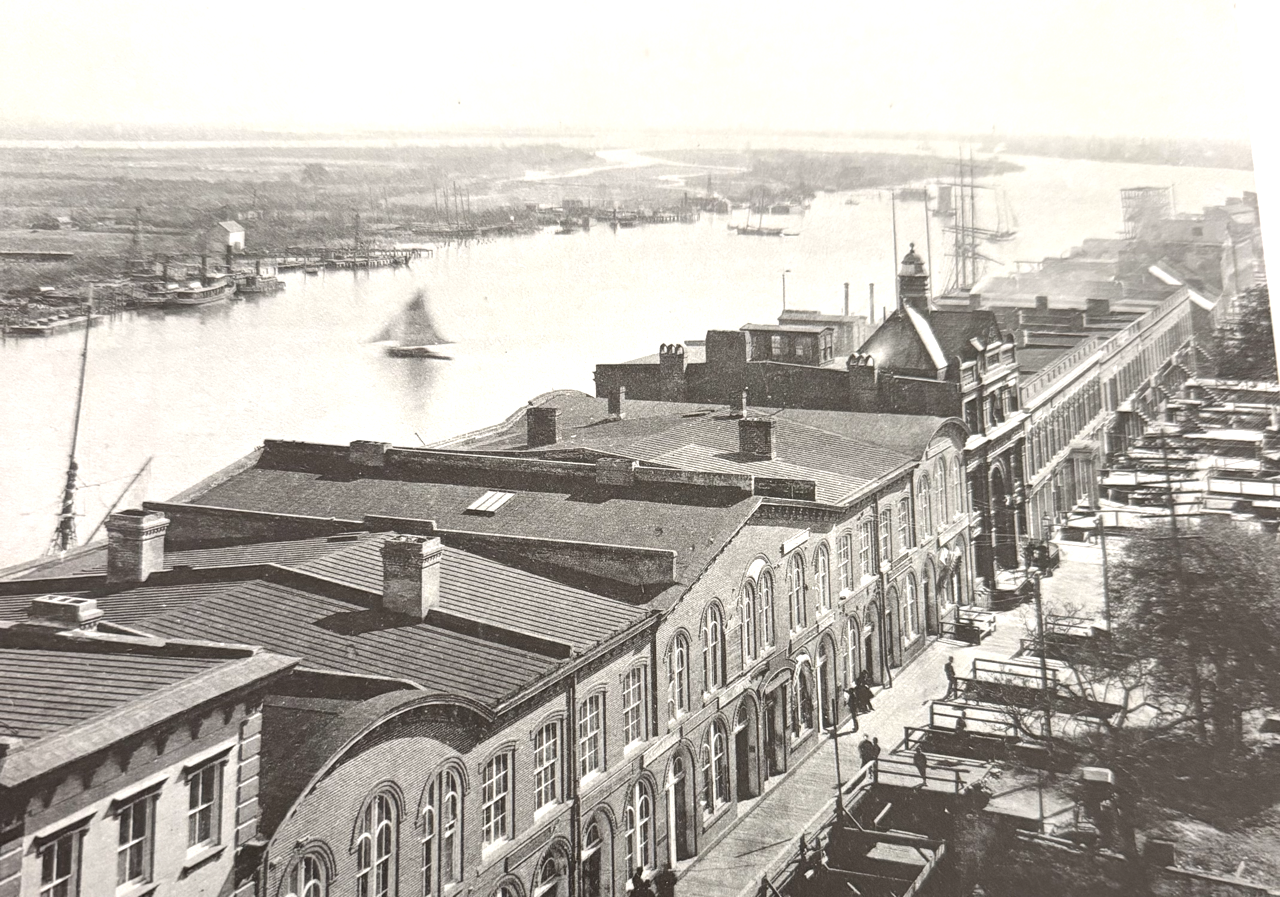
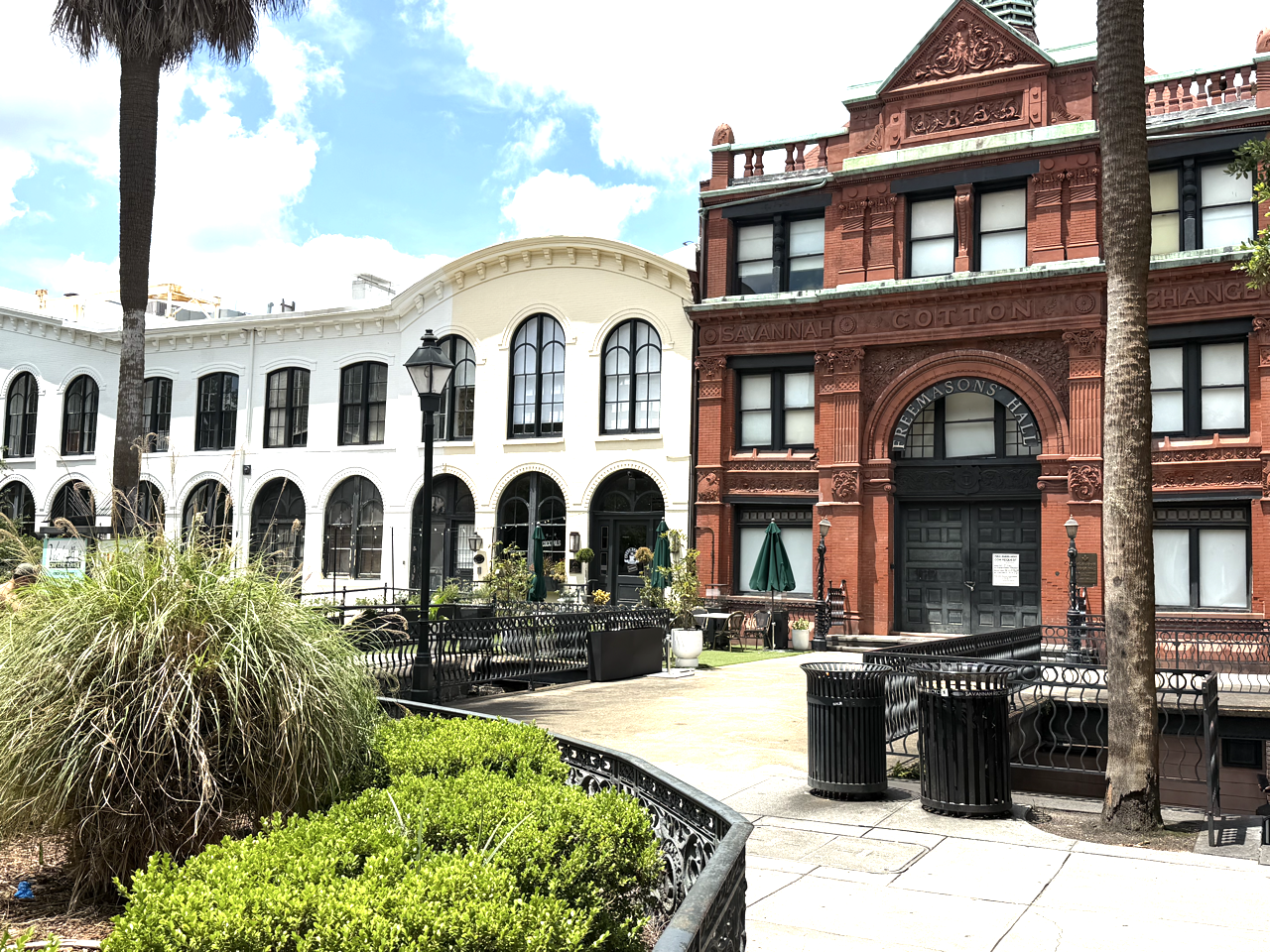
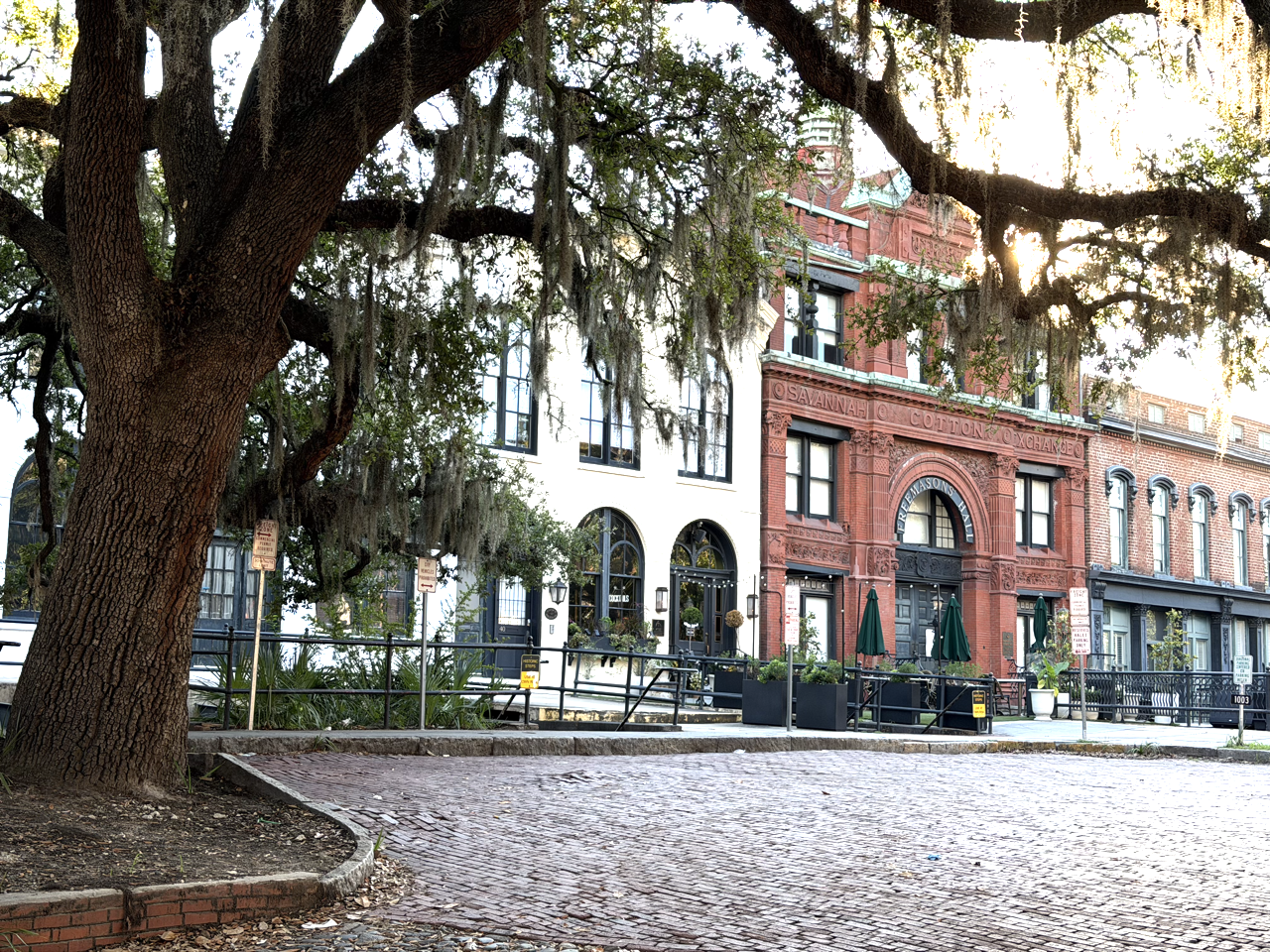
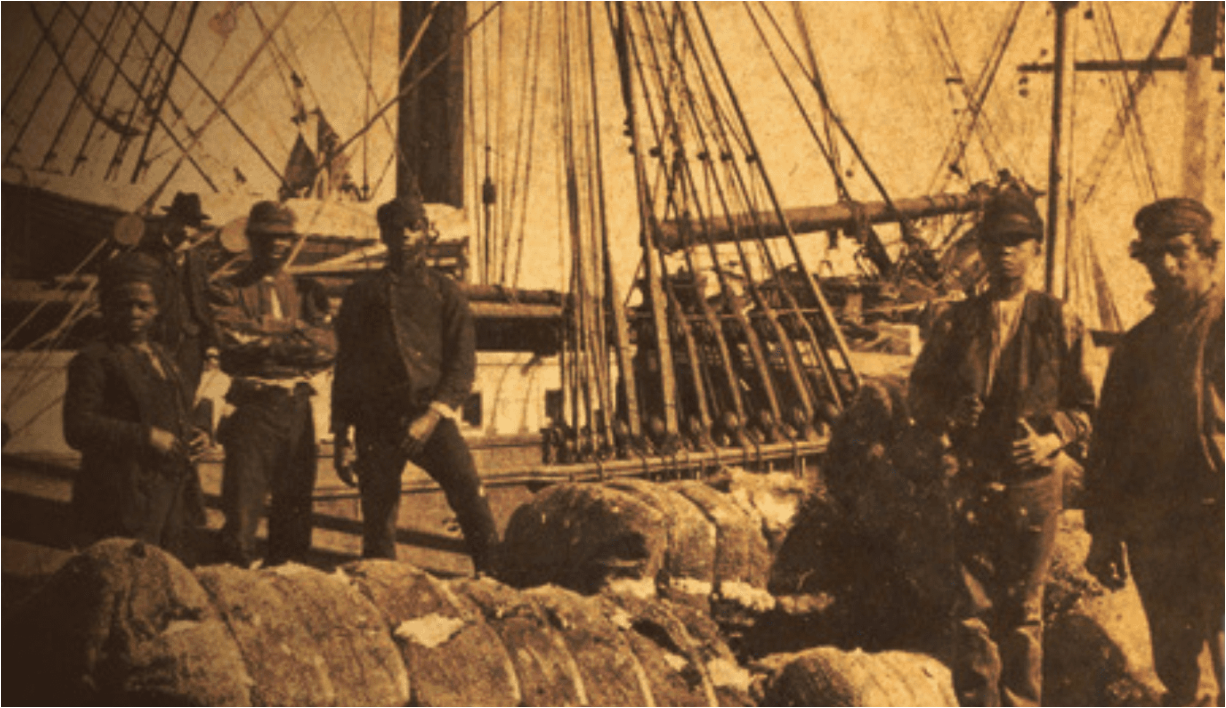
Sylvia Whitfield was a very successful owner of a cookhouse that specialized in Green turtle soup and seafood. She was a frequent advertiser and was well known for her culinary delicacies. Her business was in a prime location near the Savannah River corridor, well known for its many cookhouses, taverns, and bakeries.
___
Sources:
Beehive Foundation. Historical photograph credit. Courtesy of the Beehive Foundation, Savannah, GA.
Lumpkin-White, Arva. Photograph credit: others as noted.


The interactive version adds a street-following map, narration audio and a guided stop-by-stop experience.