Self-Guided Heritage Trail · Savannah, GA
Stones and Squares | Trail 1
Discover the more hidden stories behind Historic Savannah’s landmarks
- 1 hr 37 min
- 1.4 miles
- 14 stops
- Free
For an interactive map and audio narration, press Start this trail.
About This Trail
Savannah's most powerful stories aren't found on tourist plaques — they're hidden among the stones of her cathedrals, landmarks, squares, and city hall.
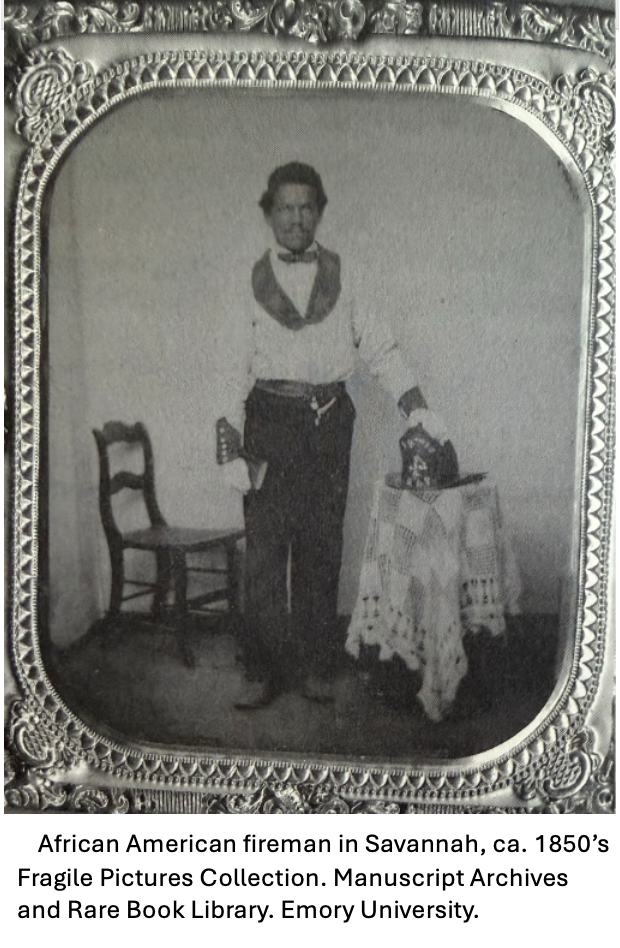
This African American heritage trail peels back the layers of popular history. Discover the first and largest square in Savannah, which was the regular site for slave auctions, where enslaved men, women, and children were bought and sold under the canopies of sprawling oak trees; stand in front of the building that housed a school for emancipated Black children that was once the site of a slave brokerage; and Savannah's early fire departments--- comprised almost entirely of free and enslaved Black firefighters.
These aren't obscure footnotes. This is Savannah's real history, present at every corner you've ever walked past.
You've seen the places. Now learn what they mean.
The Route
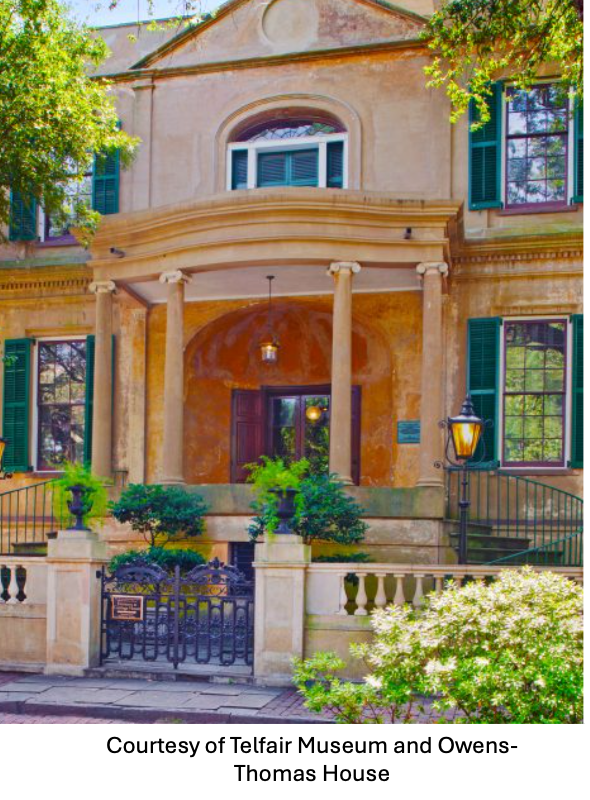
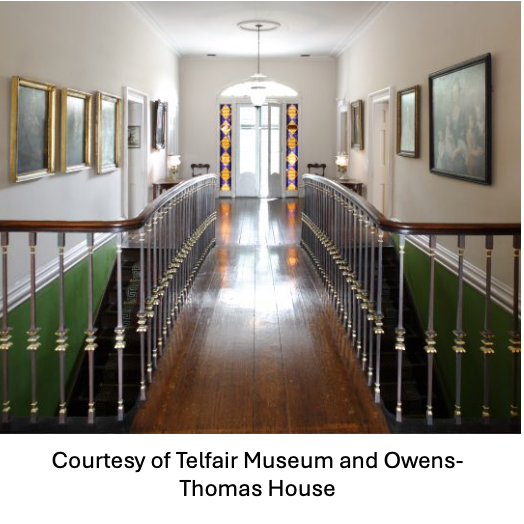
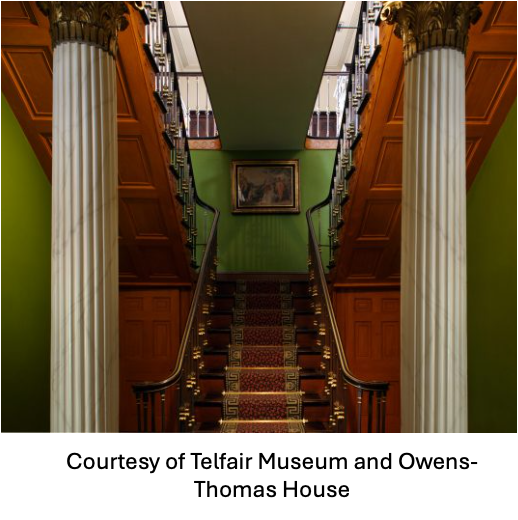
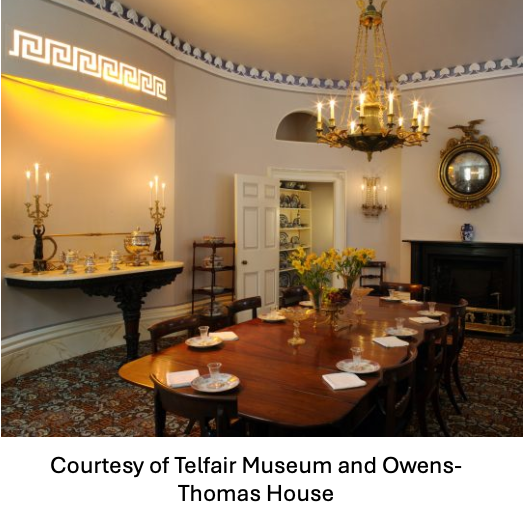
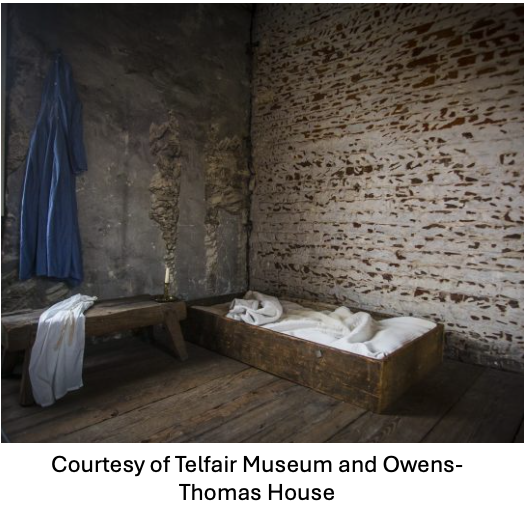
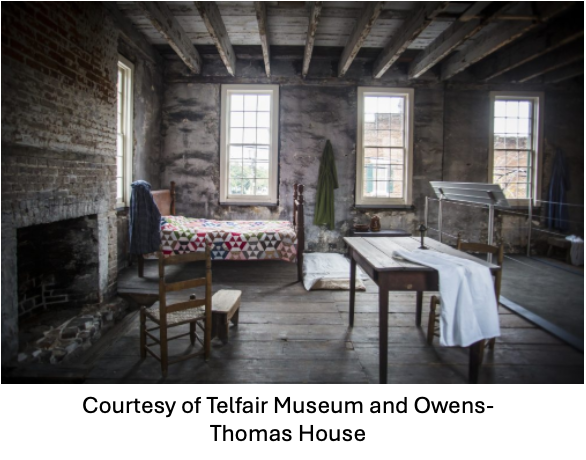
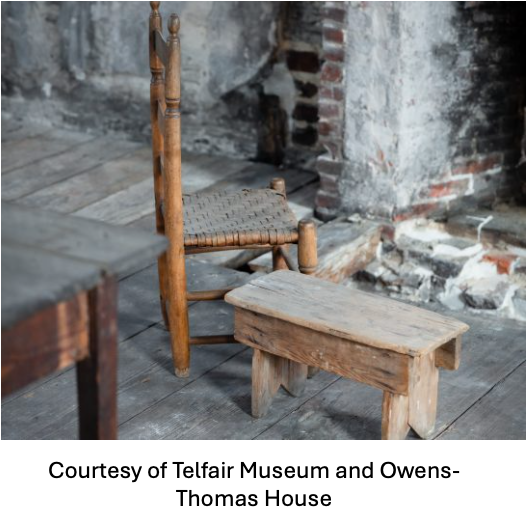
1Owens-Thomas House and Slave Quarters
Location: 124 Abercorn Street
Richardson-Owens-Thomas House
___
Richard Richardson commissioned this house around 1816, and his family moved in upon its completion in 1819. He was a Bermuda-born businessman who stood near the summit of Savannah’s power: shipping magnate, bank president, mansion owner, slaveholder—and trafficker of enslaved people, including children sent through Savannah to markets as far as New Orleans.
Then comes the history few people know.
Savannah 1807. Richardson quietly used the same wealth, influence, and legal system that sustained slavery to help secure freedom for the family of Andrew Cox Marshall, an enslaved drayman and rising Black preacher. As a well-connected local power broker, Richardson used his influence to orchestrate legal navigations and pass-thru transactions for Marshall’s wife, Rachel, and her daughters, Amy and Peggy—helping them navigate Georgia laws deliberately designed to make emancipation nearly impossible. In 1812, Richardson purchased Marshall himself—but with freedom as the intended outcome. He advanced Marshall $200 toward buying himself and members of his family out of bondage. Once Marshall was free, Richardson became his court-recognized guardian, standing between him and a legal system that refused Black citizens full control of their property. Richardson signed documents, represented Marshall in transactions, and held real estate in trust for him.
Their connection became strikingly personal. While building his home, Marshall was arrested for illegally purchasing bricks from enslaved workers. To ensure his public humiliation and send a message to the Black community, Savannah authorities sentenced Marshall to a public whipping. Richardson reportedly stood beside him during the whipping to ensure and prevent the blows from breaking his skin or drawing blood.
Then, in 1818, Richardson entered another remarkable transaction. He transferred an enslaved woman and child into a trust for Lewis Mirault, a prosperous Haitian tailor and free man of color. The law required a White guardian to hold and oversee business transactions for Blacks, as they were forbidden to control their affairs directly. Who the woman and child were—and whether Mirault was protecting family members—remains one of the story’s unanswered questions.
Richardson was no abolitionist. He was a slave owner and profited from slavery, while at the same time helping selected Black families maneuver through—and sometimes escape—its machinery. Marshall and Mirault then turned those narrow openings into property, enterprise, influence, and lasting family legacies within the Black community. That contradiction is what makes Richardson’s story so remarkable—and so unforgettable. It is a story hidden in plain sight.
___
Bell, Karen Cook. "Richard Richardson, the Owens-Thomas House", in Slavery and Freedom in Savannah, edited by Leslie M. Harris and Daina Ramey Berry, 59–60. Athens: University of Georgia Press, 2014.
Johnson, Whittington B. Black Savannah, 1788–1864. Fayetteville: University of Arkansas Press, 1996.
Phillips, Ulrich Bonnell. American Negro Slavery: A Survey of the Supply, Employment and Control of Negro Labor as Determined by the Plantation Régime. New York: D. Appleton and Company, 1918, 435, n. 39.
Sammons, Tania. "Andrew Cox Marshall." In Slavery and Freedom in Savannah, edited by Leslie M. Harris and Daina Ramey Berry, 120–121. Athens: University of Georgia Press, 2014.
Telfair Museums. "The History of the Owens-Thomas House." Accessed August 2, 2026
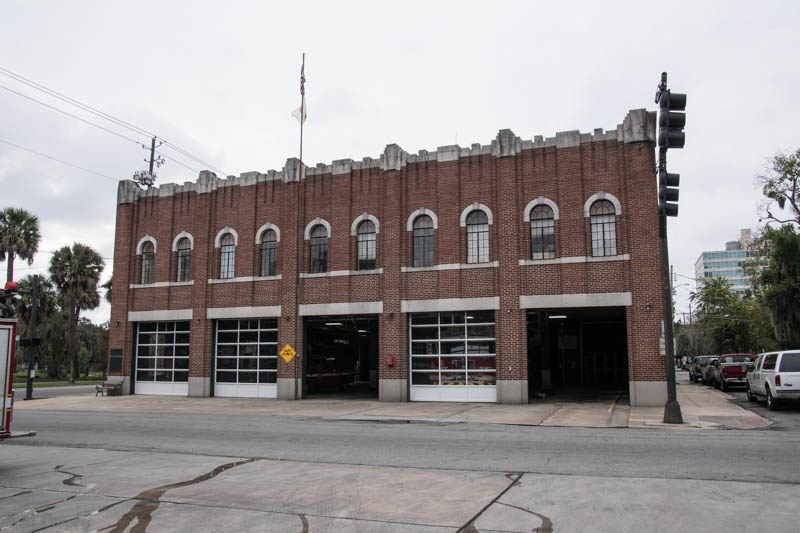
2Savannah Fire Department
Location: 121 East Oglethorpe Avenue
___
In 1820, Savannah endured a catastrophic fire. Flames raged for nearly eight hours, destroying 463 structures between Broughton and Bay streets, from Jefferson to Abercorn—the largest recorded fire in the United States at the time. In its aftermath, city officials were forced to rethink fire safety from the ground up. What rose from the ashes became one of the least-told stories in American history: for half a century, Savannah’s fire department was built on the courage and labor of Black men.
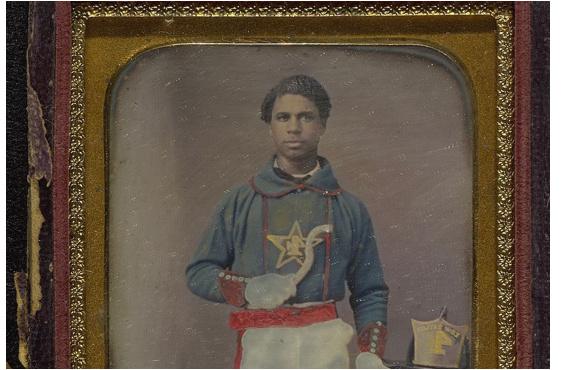
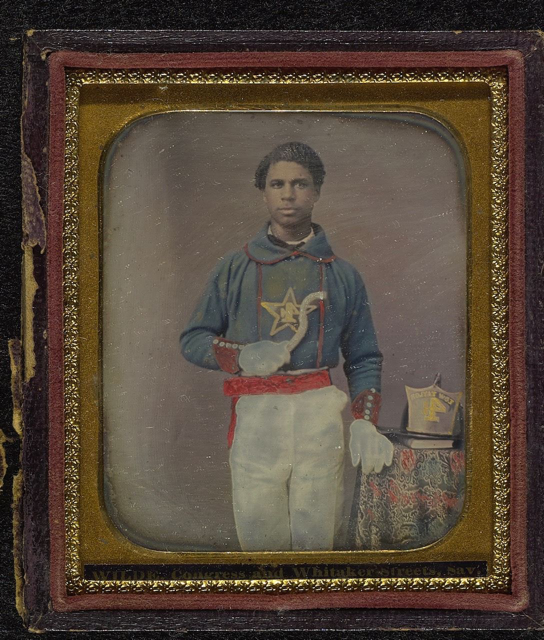
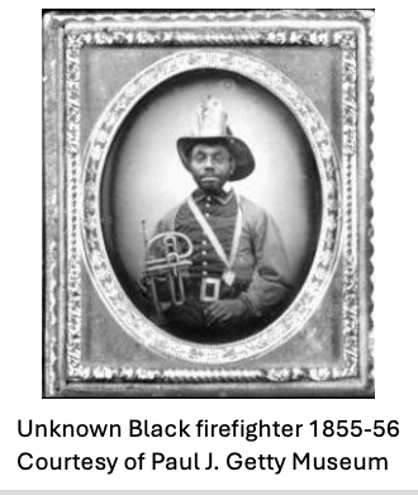
In 1821, free people of color organized the Franklin Fire Engine and Hose Company and the Union Axe and Fire Company—two of the earliest documented Black firefighting organizations in the United States. Franklin operated the engines and hoses; Union handled demolition, ladder work, and cutting firebreaks. Over the decades that followed, Savannah relied on free and enslaved Black firefighters more heavily than almost any other city in the Antebellum South.
Free men of color and many enslaved men were required to serve and attend monthly drills in exchange for exemption from the $6.25 annual city head tax imposed on Black citizens. Enslaved firefighters were granted, in the city’s own words, “all the immunities and privileges of a fireman”—including pay. An 1826 ordinance provided 12.5 cents an hour for fighting fires and attending drills. Missing a required drill could mean a $10 fine or up to 15 days in jail. The first man to reach an engine house after an alarm earned $1; the second and third each received 50 cents. Savannah Fire was granting enslaved Black men wages, opportunity, and a measure of freedom—38 years before the Emancipation Proclamation.
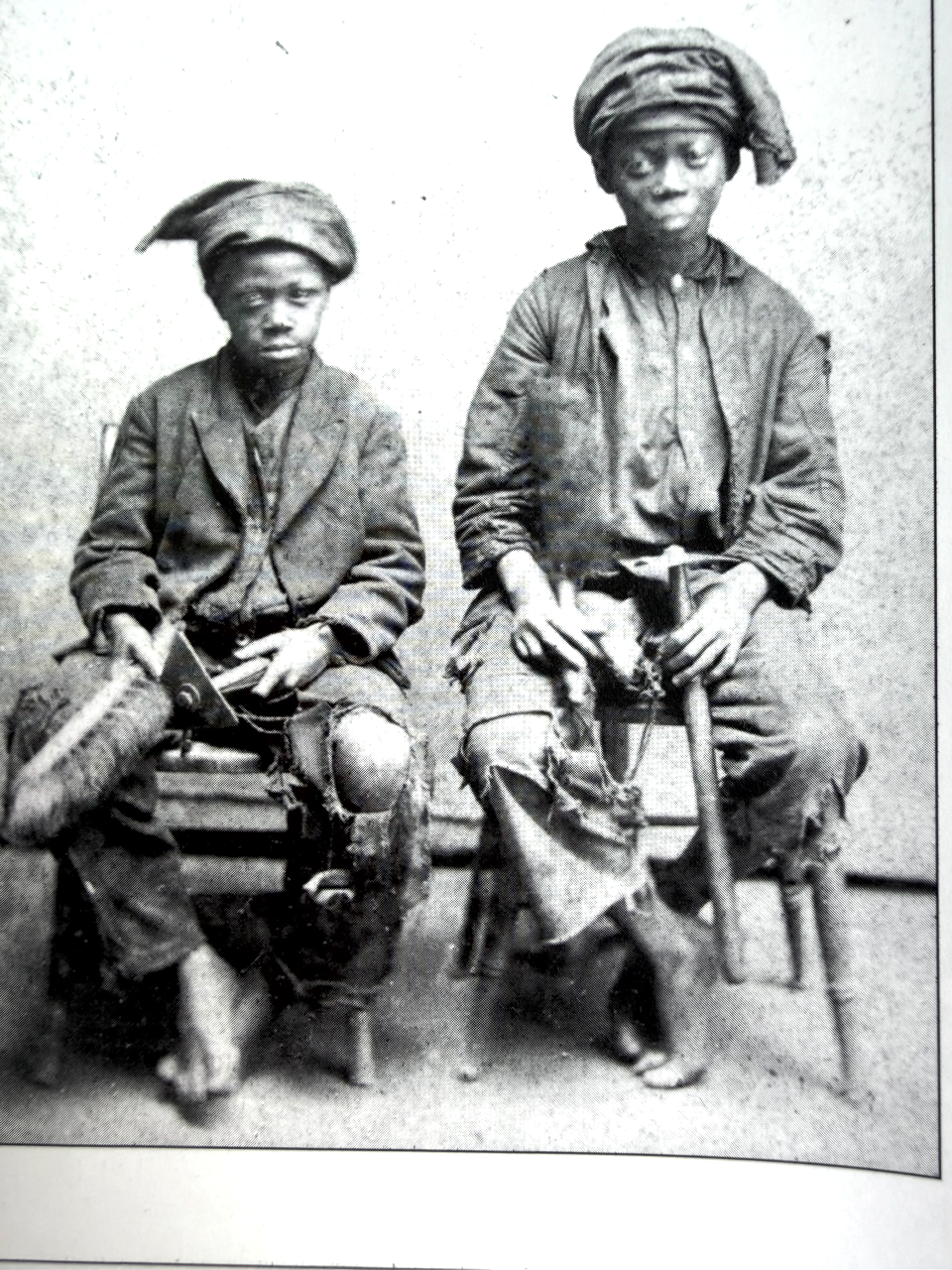
The numbers tell the story. By 1828, the department included 178 enslaved firefighters, 96 free men of color, and only 17 white firefighters. By the mid-1850s, 487 enslaved and 140 free men of color served in the Savannah Fire Department. Black men were not merely part of the force—they were its overwhelming majority. Black men and boys also became chimney sweeps, work that grew into a source of pride within Savannah’s African American community.
Spilling onto what is now Oglethorpe Street, that pride was on full display on July 5, 1865, when the Savannah Republican recorded one of the era’s largest fire department parades. These men paid in blood as well as pride. James Houston, a free man of color, died fighting a fire in 1825. Black firefighters protected Savannah through the Civil War, including during a major ammunition fire after Union forces occupied the city in January 1865.
Then came betrayal. After the war, organized White volunteer companies increasingly competed for Savannah’s money, equipment, and authority. Through the late 1860s, Black firefighters were pushed out position by position. By 1871, African Americans had been effectively excluded from the department, ending roughly 50 years in which free men of color and enslaved men formed the core of Savannah’s defense against fire. The door remained closed for nearly a century. Not until 1963 did the Savannah Fire Department hire six African American firefighters—breaking a 92-year exclusion and reopening a story that began in the ashes of 1820.
___
Sources:
City of Savannah Municipal Archives. "Savannah Fire History." City of Savannah
Hoskins, Charles Lwanga. Yet With a Steady Beat: Autobiographies of Early Black Savannah. Savannah: Gullah Press, 2001, 110–115.
J. Paul Getty Museum, Los Angeles, CA. Historic photograph collection credit.
Jones, Jacqueline. "In the Shadow of the Slave Market." In Saving Savannah: The City and the Civil War, 56–99. New York: Vintage Books, 2008.
Library of Congress, Washington, D.C. Historic photographs and visual media collection credit.
Library of Congress, Washington, D.C. Occupational Portrait of Two African American Chimney Sweeps. Between 1860 and 1870. Daguerreotype/Tintype Collection, Prints and Photographs Division, Library of Congress, Washington, D.C.
Lumpkin-White, Arva. Photograph credit: others as noted.
Savannah Daily Republican. "Local News and Notices." July 6, 1865.
Stuart A. Rose Manuscript, Archives, and Rare Book Library, Emory University. Photograph of Savannah Firefighter at Congress & Whitaker Streets. Circa 1850. Emory University, Atlanta, GA.
3Chatham County Courthouse
Location: 124 Bull Street
___
By 1790, a new and terrible routine had settled into the heart of Savannah. The Chatham County Courthouse on Wright Square joined the grassy plots of Johnson Square as a regular venue for slave auctions—and it was far from alone. Wright Square, Johnson Square, and Ellis Square each held slave yards, holding pens, or open-air auction blocks at one point or another in the city’s history. The squares we walk through today as places of rest were once places where human beings were caged and sold.
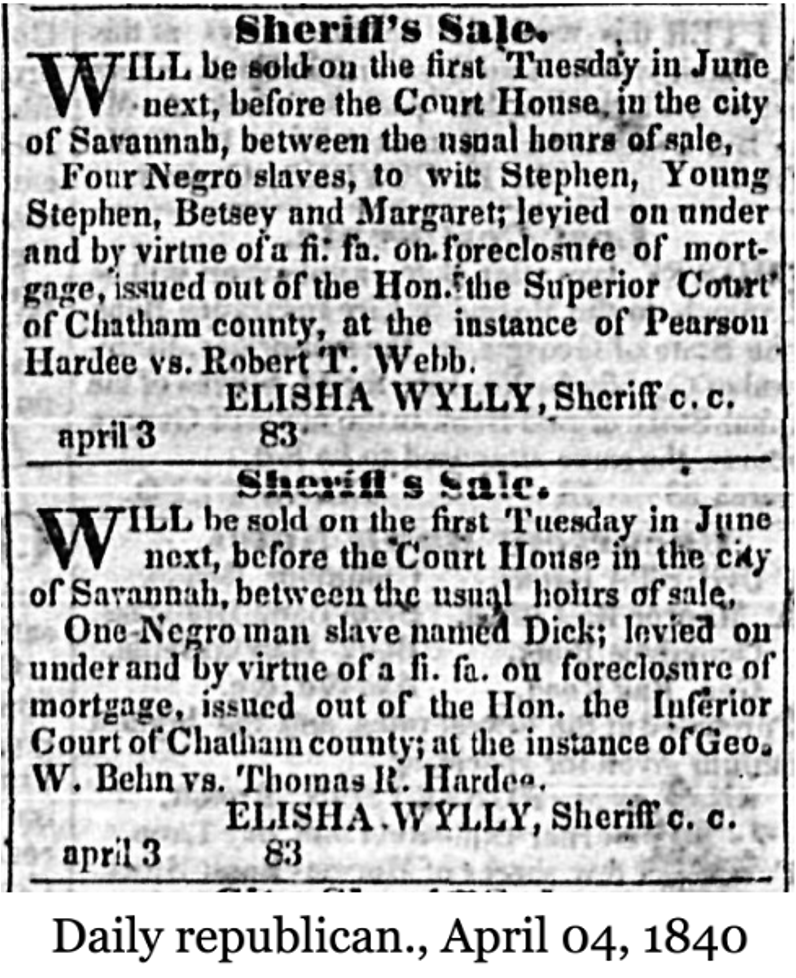
At the courthouse, the trade wore the respectable mask of law and commerce. The building served as a regular site for monthly sheriff’s sales and general estate liquidations—proceedings in which enslaved people were sold alongside furniture and land, their lives reduced to entries on an estate ledger. Though the end of the Atlantic slave trade eventually made these auctions smaller and less frequent, the selling platforms on the courthouse steps endured, even as other local venues faded from prominence.
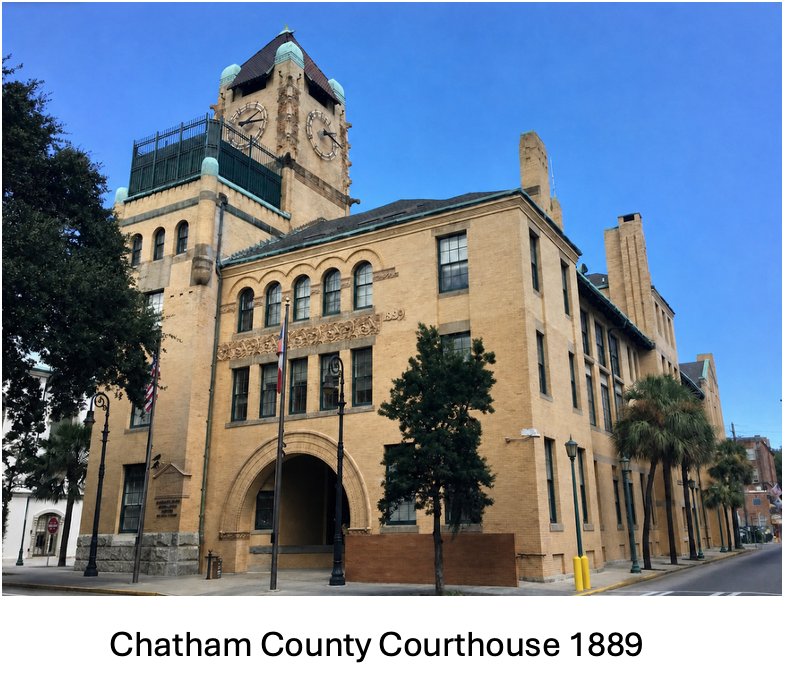
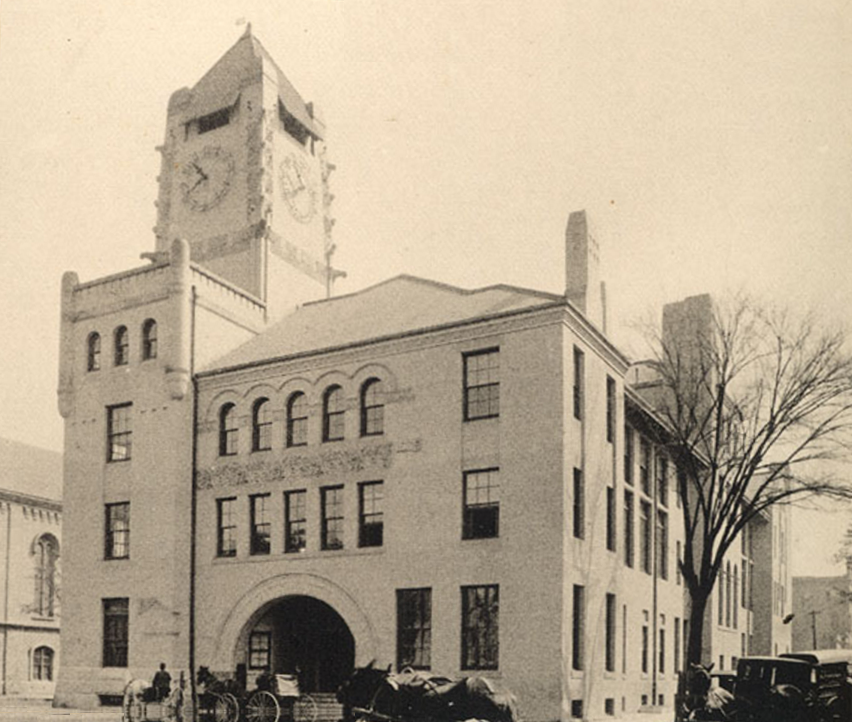
The numbers indicate the depth of that history. For seventy-five years, from 1790 to 1865, the Chatham County Courthouse stood as Savannah’s longest-running site for the sale of enslaved people. It outlasted nearly every other venue in the city. Through two successive architectural lives—the original 1773 building and the 1833 Neoclassical structure that followed—the courthouse at Bull and President Streets hosted three generations of human trafficking on the same ground. The building changed its face twice before being replaced by the current W. G. Preston building in 1889. For three-quarters of a century, however, what happened on its steps remained the same.
Only three years after emancipation, the courthouse became the setting for another struggle over human freedom—this time, the right to vote. On November 3, 1868, violence erupted at Savannah’s Chatham County Courthouse during Georgia’s first presidential election of Reconstruction. It was the first election in which African American men could vote. Large numbers of Black voters gathered around the courthouse in Wright Square, where access to the polls became contested. Newspaper accounts report an atmosphere rife with excitement, riot and bloodshed. The voters were claimed to have clashed with missiles, bludgeons, guns, razors and bricks. Sheriff’s deputies and Savannah police attempted to clear the entrance to the polls, which inflamed the riotous struggle, and gunfire ensued. The result was two Black voters dead, several policemen shot, and many injuries recorded and treated.
In the aftermath, Black voters organized among themselves and decided not to attempt to vote. There was general compliance with the directive, and at the end of the election, the numbers of White voters swelled, with Black voters largely being absent at the polls. The courthouse remained a contested site after the violence of 1868. In Savannah’s October 1869 municipal election, a large Conservative Party challenge committee monitored the polling places, while authorities maintained tight control over access to the vote.
The courthouse had once been a place where human beings were reduced to auctioneer calls, property transactions, and ledger entries. In 1868, on that same ground, African Americans risked their lives to insist that emancipation must also mean citizenship.
___
Sources:
Beehive Foundation. Historical photograph credit. Courtesy of the Beehive Foundation, Savannah, GA.
Johnson, Whittington B. Black Savannah, 1788–1864. Fayetteville: University of Arkansas Press, 1996.
Jones, Jacqueline. Saving Savannah: The City and the Civil War. New York: Vintage Books, 2008.
Savannah Daily Republican. "Public Sales: Sheriff's and Administrator's Sales at the Chatham County Courthouse Steps." April 4, 1840.
Savannah Morning News. "Public Sales: Sheriff's and Administrator's Sales at the Chatham County Courthouse Steps." 1850–1860.
"The Election Yesterday", Savannah Morning News, November 4, 1868, p.3

4Juliette Gordon Low Birthplace Museum / Mosianna Milledge
Location: 10 East Oglethorpe Avenue
___
Juliette Gordon Low Birthplace
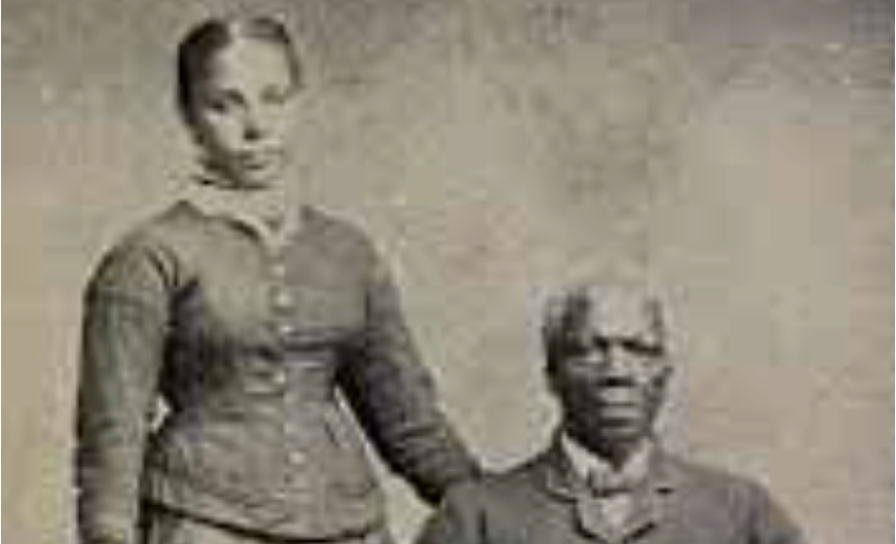
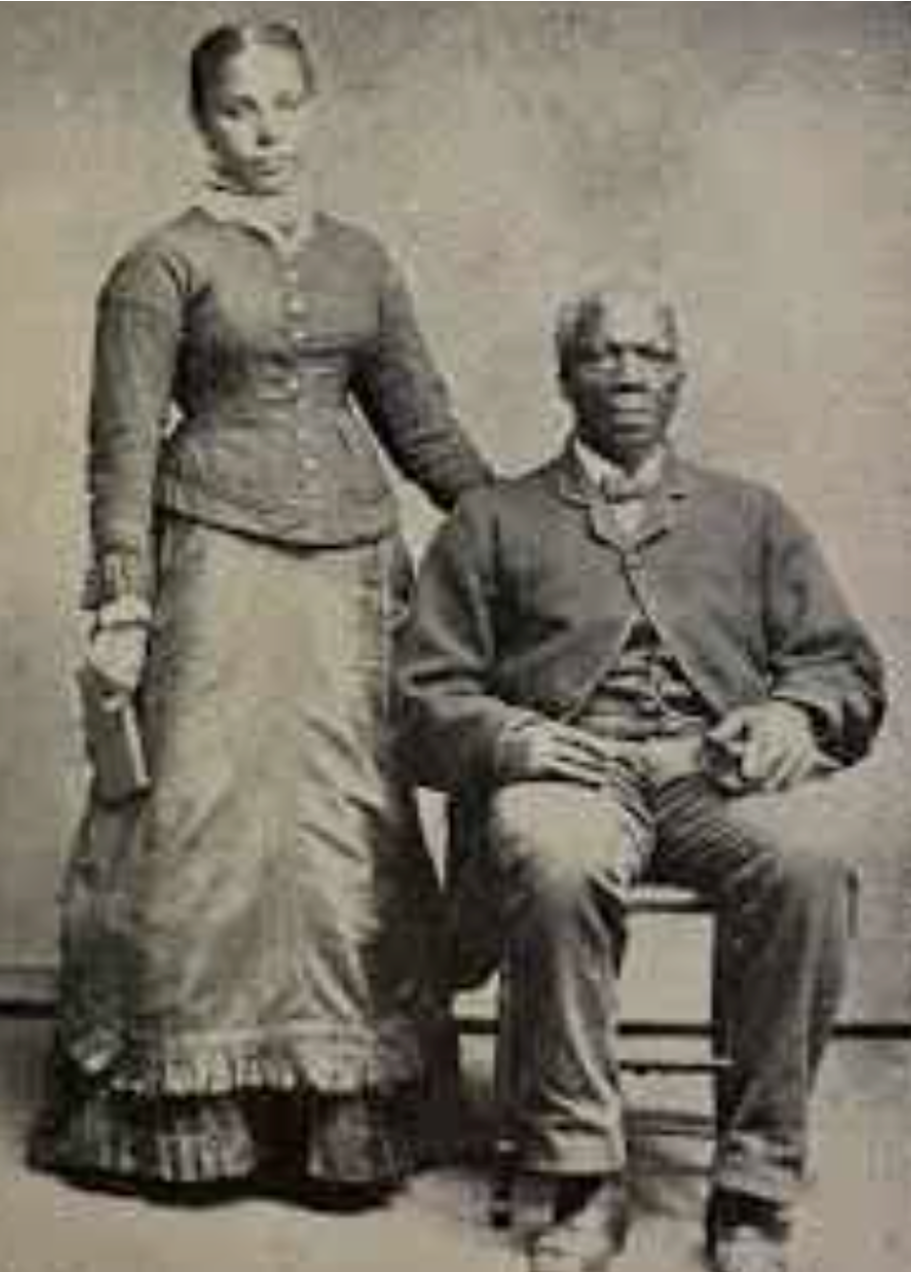
Mosianna Ruth Delegall Milledge
Behind one of Savannah's grandest houses, in the kitchen of the Andrew Low mansion, a woman born into slavery quietly built a culinary legacy that would cross an ocean and reach the table of a king.
Mosianna Ruth Delegall Milledge was born enslaved in Georgia in the mid-1800s. In time, she would gain notoriety as the longtime servant — and then the celebrated cook — for Juliette Gordon Low, founder of the Girl Scouts, and her husband, Willie Low. Mosianna spent most of her life within the residences of the Low family, her story woven through the walls of one of the city's most famous homes.
The details of her early years are few. But in 1844, Andrew Low purchased three enslaved people, and both Mosianna and the man she would marry are thought to have been among them. Andrew Low — Juliette Gordon Low's future father-in-law — was a wealthy Savannah cotton merchant whose family occupied the grand Norris-designed residence on Lafayette Square, the house known today as the Andrew Low House Museum. When Juliette Gordon Low — Daisy, as everyone called her — married into the family and moved into the Andrew Low House in 1886, Mosianna stayed on as servant and cook.
At first, the family saw little to remark on; she struck them as an uninspired house servant. Then her real gift surfaced. In the kitchen, Mosianna proved exceptional — so exceptional that she transformed the social standing of the household. The parties the Lows threw became the talk of Savannah's social circuit, and the draw was Mosianna's cuisine. Her food was revered to the point that when the Lows vacationed in England, they brought her with them. There, remarkably, she is credited with introducing African American cooking to England's elite.
According to Kathryn White, an advisor at the Juliette Gordon Low Birthplace, Mosianna passed her skills directly to one of England's most famous cooks. White explains that Mosianna taught the renowned Rosa Lewis how to prepare her Southern-style dishes, so that they could be served to Prince Edward VII when he dined at Juliette Low's English home.
Through Rosa Lewis, Mosianna's renditions of African American Lowcountry cooking spread among London's upper crust. The techniques she carried were generations deep — the use of cured meats, the handling of okra, the closely held secret of cooking perfect rice, brandied apples, and a parade of savory dishes passed down through African American kitchens. She delighted England's elite with fan favorites, too, including waffles served with hot maple syrup shipped from Vermont.
The traditions Mosianna represented still strike outsiders as revelations. Christiane Lauterbach, a French food columnist in Atlanta who specializes in Southern cuisine, marveled at how foreign these dishes once were to her: she was around thirty, she says, before she even grasped the idea of frying chicken — it simply wasn't done where she came from. Sweet potatoes went uneaten; corn was something fed to animals, not people. What draws the world to Southern food, she notes, is its terrific use of vegetables, and the distinctive practice of cooking them with cured meat — a method as historically rich as it is, suddenly, fashionable.
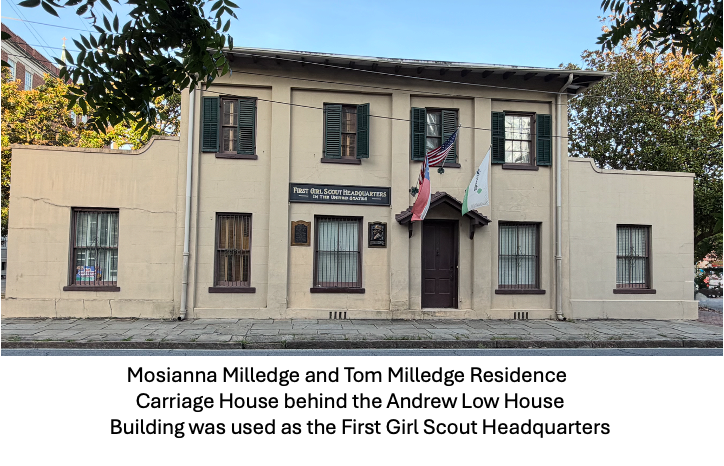
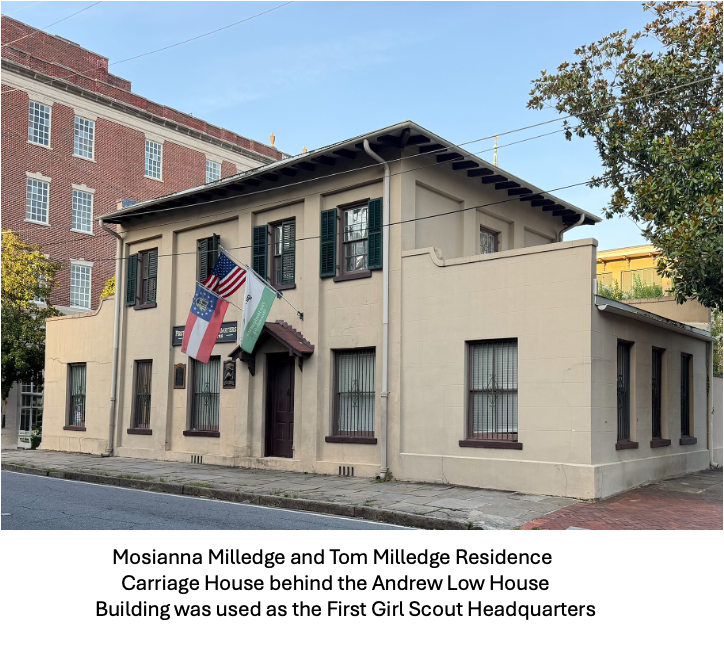
Mosianna's own family story unfolded alongside her work. It is unknown whether she was enslaved at the time of her marriage, though it is widely believed she was. Her husband, Tom, served for much of his life as Andrew Low's trusted servant, and the couple made their home in the Carriage House on the Low property. Together they raised four children — William, born around 1857; Thomas Jr., born sometime between 1865 and 1867; Mary, born between 1870 and 1877; and Rebecca, born around 1880 — all raised on the Low property on Abercorn Street.
In the years that followed, Mosianna achieved something that had once been unthinkable for a woman born into slavery: she became a property owner. She purchased two homes in the Beach Institute neighborhood — one at 513 East Gaston Street, and another at 514–516 Hartridge Street, built around 1874 and acquired around 1900–1901. The Hartridge Street residence had been built as a rental property and has since been demolished. But the Gaston Street home still stands — a quiet monument to a woman who began life enslaved and ended it as the owner of the very thing once denied her.
___
Sources:
Georgia Historical Society: Juliette Gordon Low Accessed August 23, 2026
Lumpkin-White, Arva. Photograph credit: others as noted.

5Hannah Leion / Juliette Gordon Low Federal Building Location
Location: 101 W. York Street
___
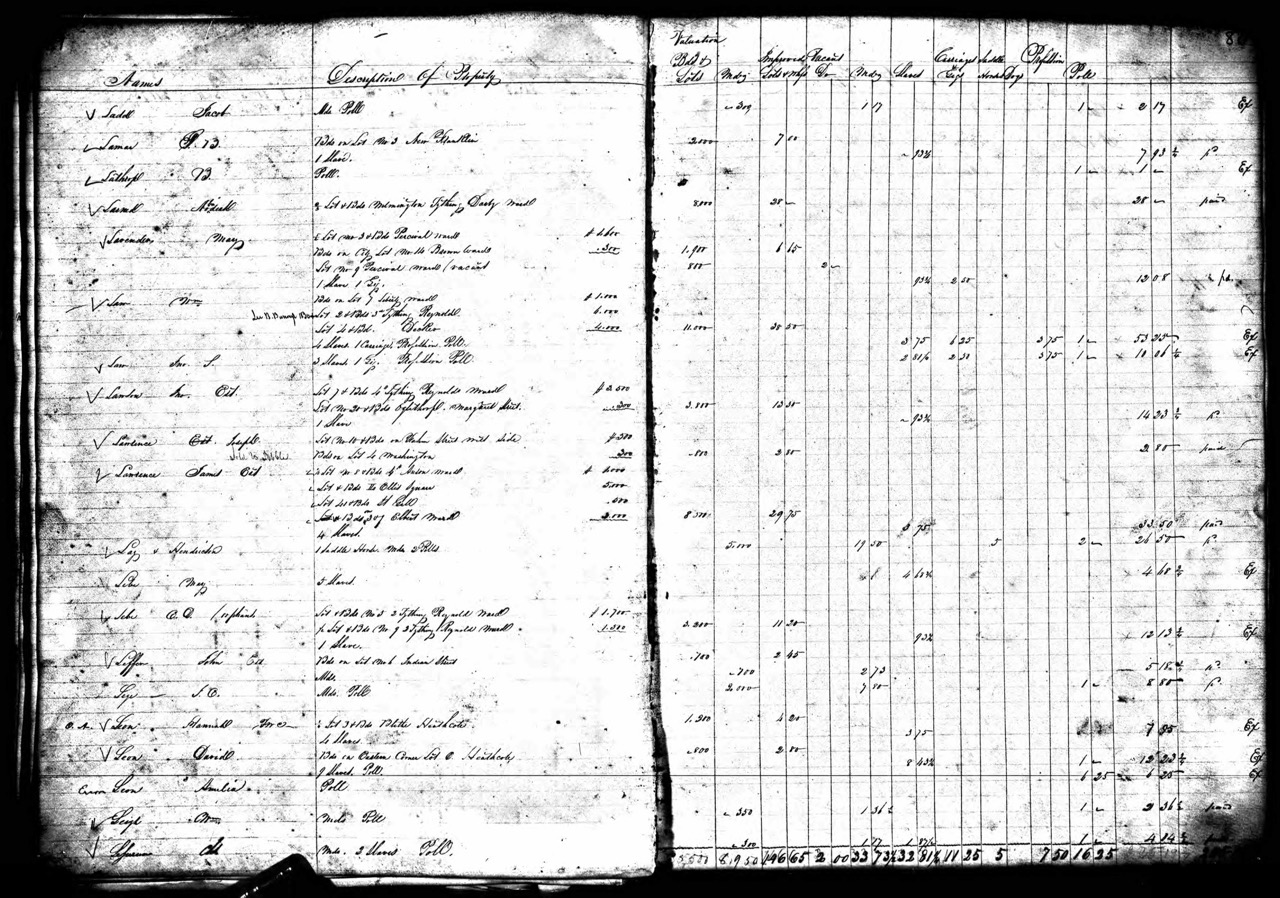
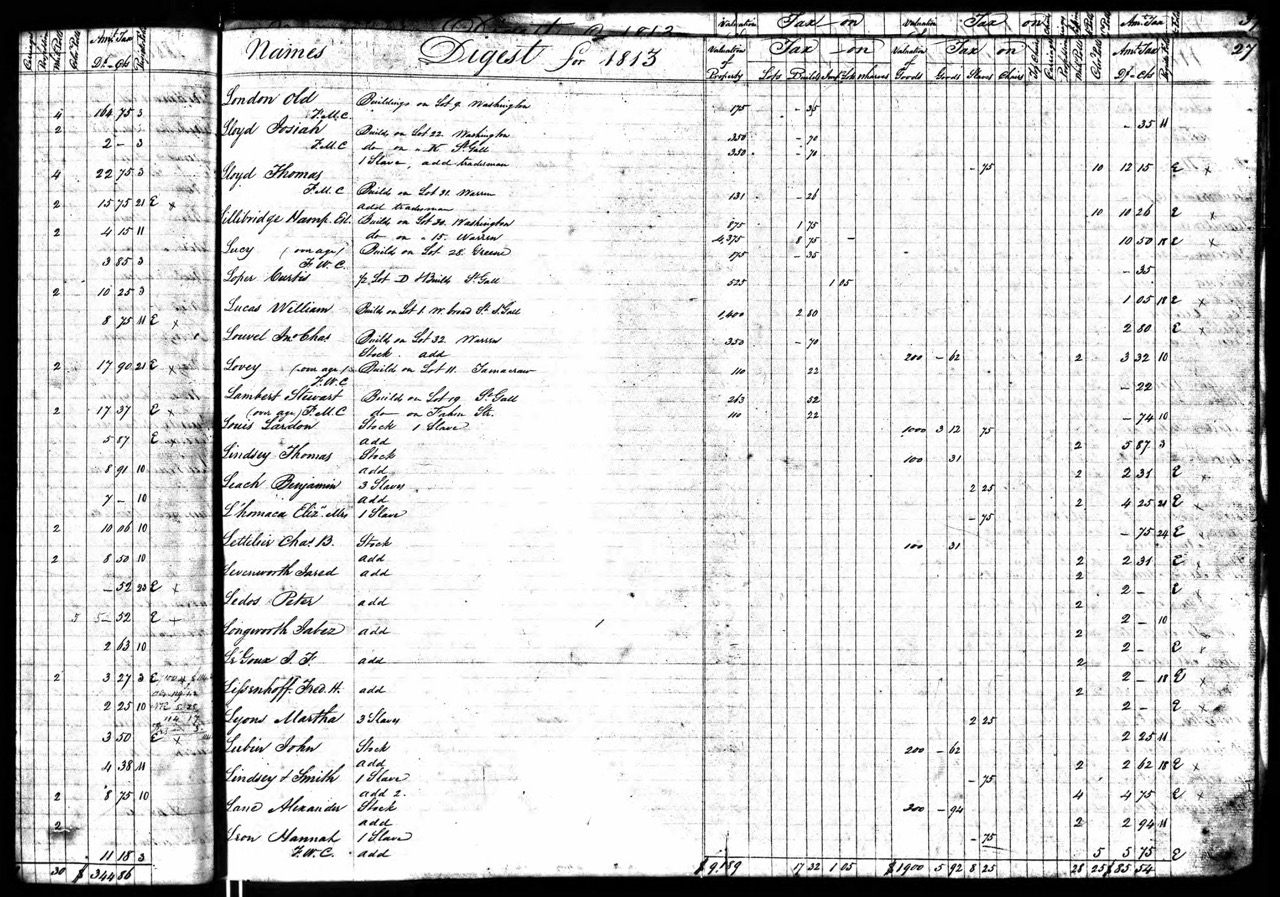
Telfair Square is one of Savannah's most beautiful, but two centuries ago it was St. James Square, and facing it on York Street lived Hannah Leion — recorded in the city's documents as both Leion and Leon. She was a free woman of color, a skilled seamstress and sometime housekeeper, and by the measures that mattered in her world, a woman of real wealth.
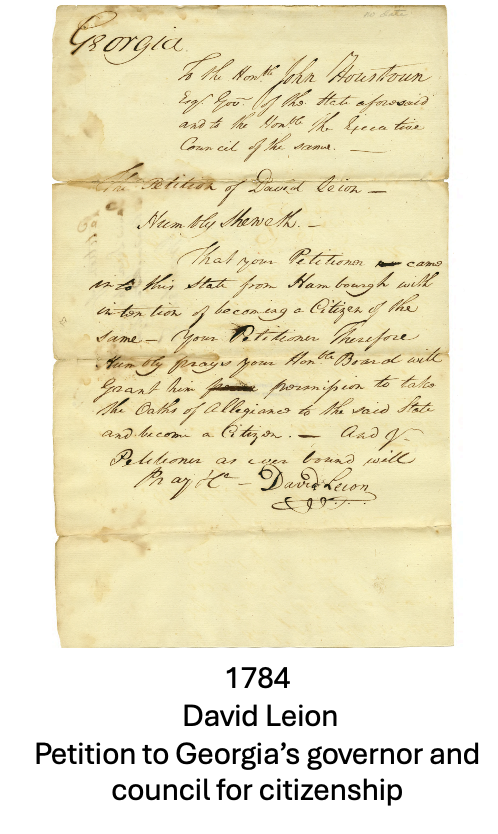
Her story begins with David Leion, a prominent Jewish businessman who came to Georgia from Hamburg, Germany, and petitioned for citizenship in 1794. Hannah was formerly enslaved by Leion, who freed her in 1791. By 1806, she had become housekeeper to Saul Simons, a member of a large, wealthy, Ashkenazic Jewish and Black inter-racial family from Charleston — and one who remembered her generously in his will.
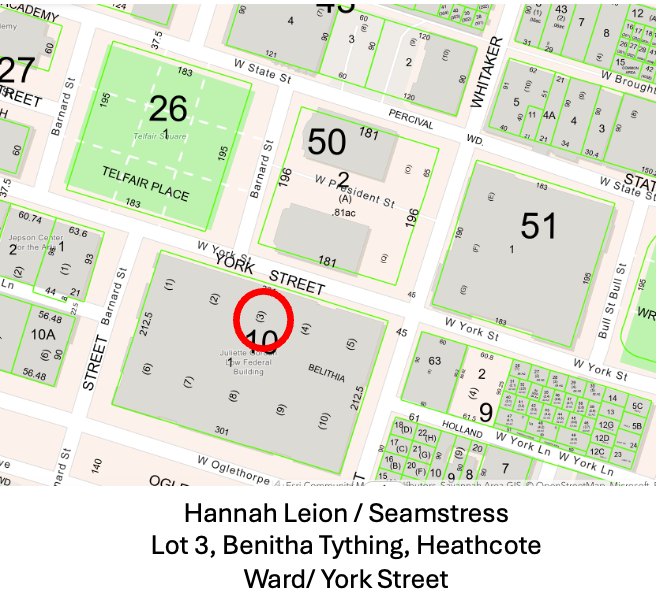
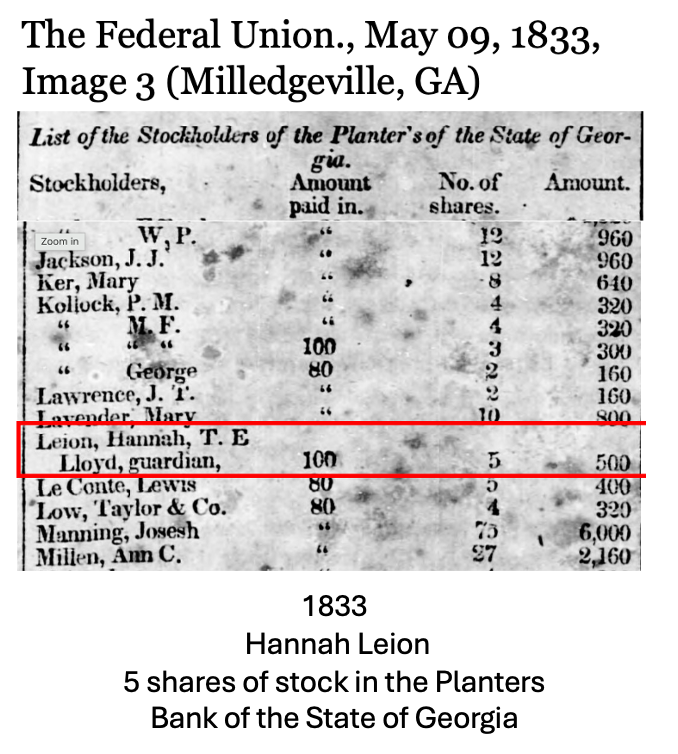
That inheritance is preserved in the record. An 1814 legal notice identifies her interest as a life estate in part of Lot 3, Benetha Tything, Heathcote Ward, describing the property as part of the estate of Saul Simons and stating explicitly that it was "Subject to the life estate of Hannah Leion." She also held $500 of stock in the Planters' Bank of the State of Georgia — substantial holdings that placed her among a very small number of free Black Savannahians with genuine capital and financial standing.
Her standing extended to human property as well. As historian David Wolkoff notes, "a decade after Saul Simons's death, Hannah Leion was the largest slave owner among the forty-two free people of color in Savannah who owned slaves — a class that included thirty-one women. According to the 1820 United States Census, she managed a household of five male and four female slaves, along with three free men of color and three free women of color." Hannah Leion was, in other words, both a free woman of color and an enslaver — one of the era's starkest contradictions.
Georgia law kept even a woman of her means on fragile legal footing: every free person of color was required to have a White guardian, and in several instances David Leion served in that role. Her household in Heathcote Ward included Henrietta, Ritta Leion, and a young David Leion, an apprentice. Henrietta Leion may have been her mother, as an 1823 Register of Free People of Color lists her as 70 years of age. It was a household headed by a woman navigating freedom, property, and family inside a system built to deny her all three.
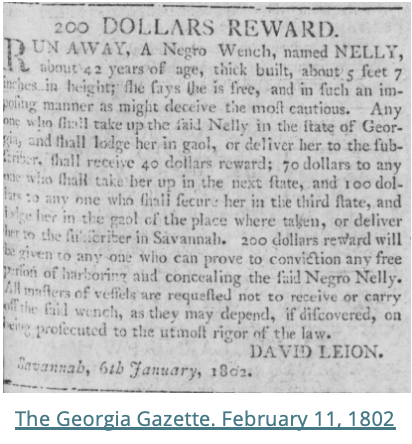
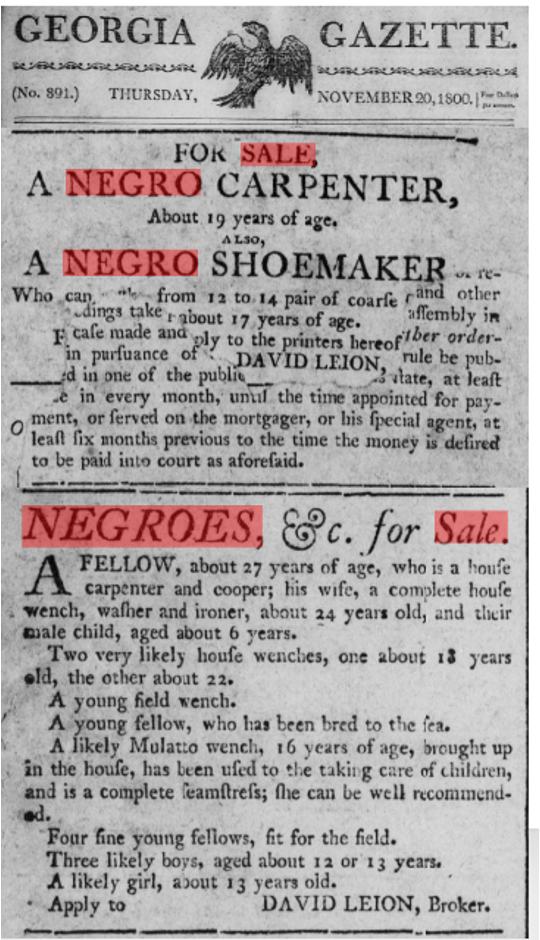
David Leion's own dealings show the wealth behind the name Hannah carried. Though he had freed her years earlier, he continued to enslave others, and when one man fled, he placed a notice in the Georgia Gazette offering $200 for his return — an enormous sum at a time when most such rewards were far less substantial. On one hand, as a guardian, he facilitated business transactions for African Americans, while the other hand facilitated bondage.
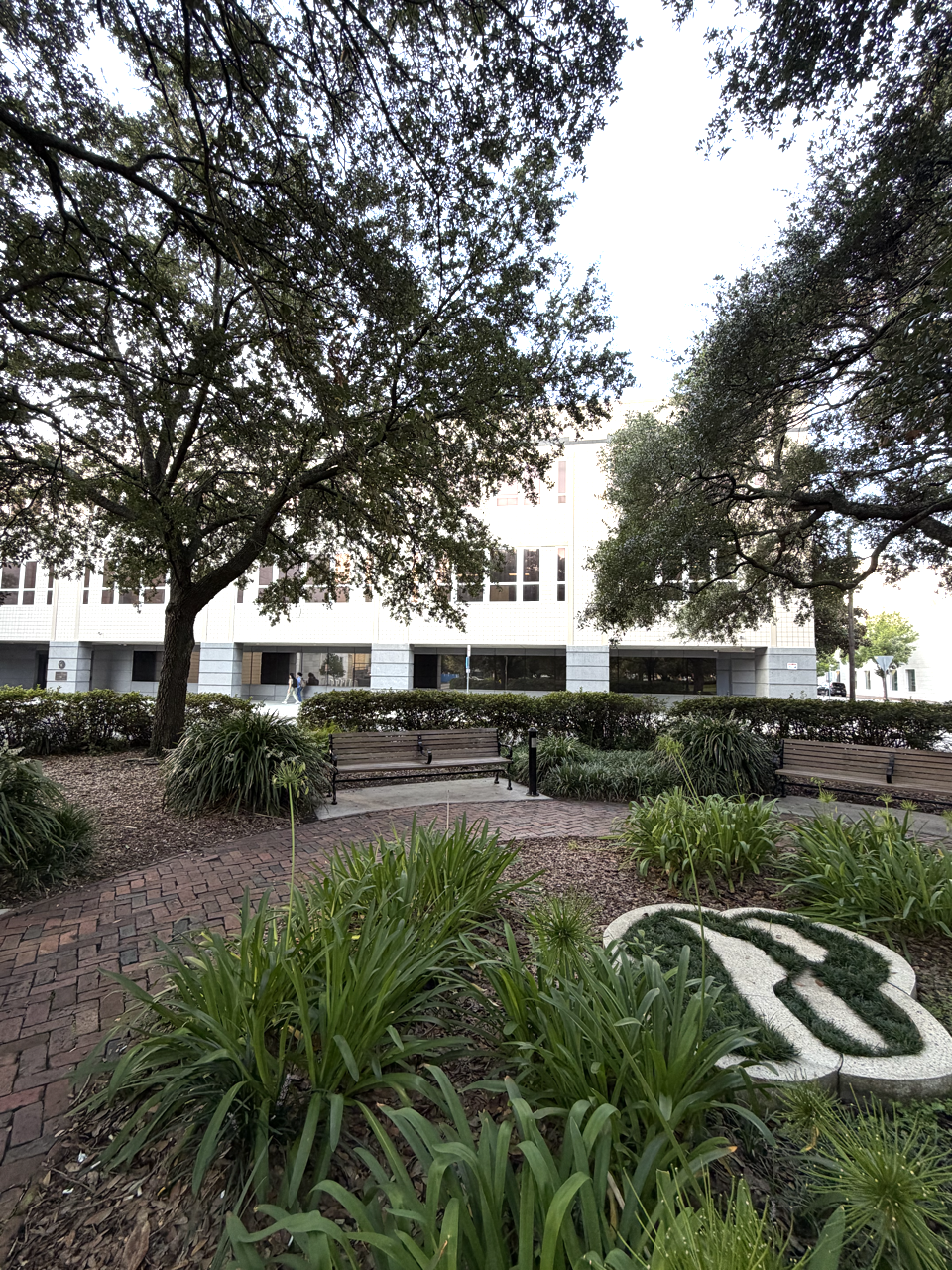
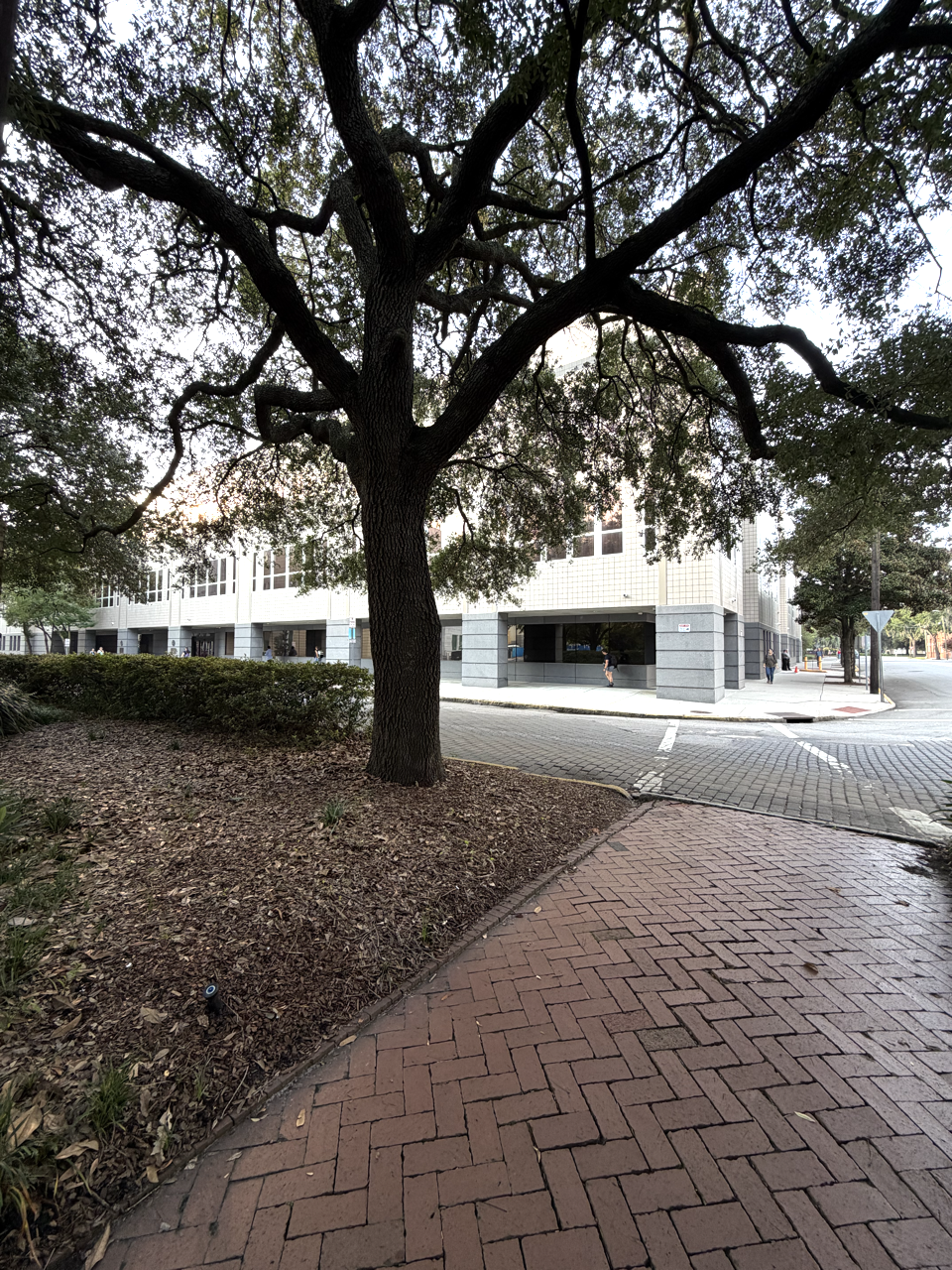
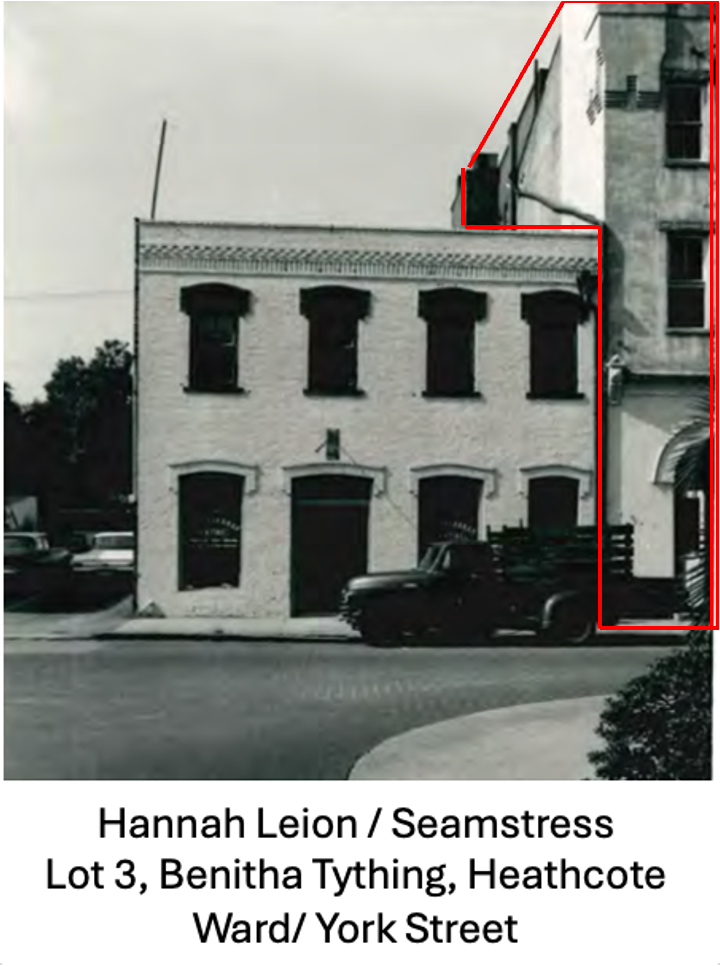
Almost nothing on York Street announces her today. The building she knew is gone, and the ground where she once held property has been absorbed into the Juliette Gordon Low Federal Complex at 101 West York Street. Yet the documentary record keeps her exactly where she stood — seamstress and housekeeper, property owner, bank shareholder, and enslaver — preserving a life the landscape itself has almost entirely erased.
___
Sources:
City of Savannah Municipal Archives. Historical photograph credit. Courtesy of the City of Savannah Municipal Archives, Savannah, GA.
City of Savannah Municipal Archives / Chatham County Records. "Hannah Lion in Savannah, Georgia, U.S., Registers of Free Persons of Color, 1817-1864" Volume 4, 1837-1849. Digital images, Ancestry.com.
City of Savannah Municipal Archives / Chatham County Records. "Land Tax and Property Records, 1809–1938." Hannah Leion, Lot 3, Benitha Tything, Heathcote Ward, [1834]. Digital images, Ancestry.com.
City of Savannah Municipal Archives / Chatham County Records. "Land Tax and Property Records, 1809–1938." Hannah Leion, Lot 3, Benitha Tything, Heathcote Ward, [1821]. Digital images, Ancestry.com.
Columbia Museum and Savannah Advertiser, February 7, 1814
Leion, David. Citizenship Petition
Lumpkin-White, Arva. Photograph credit.
Ports, Michael A. Georgia Free Persons of Color. Volume IV: Chatham County, 1817–1863. Baltimore: Clearfield Company (2016): 74, 77- 78
The Federal Union, May 09, 1833


6The Telfair Academy of Arts and Sciences
Location: 121 Barnard Street
___
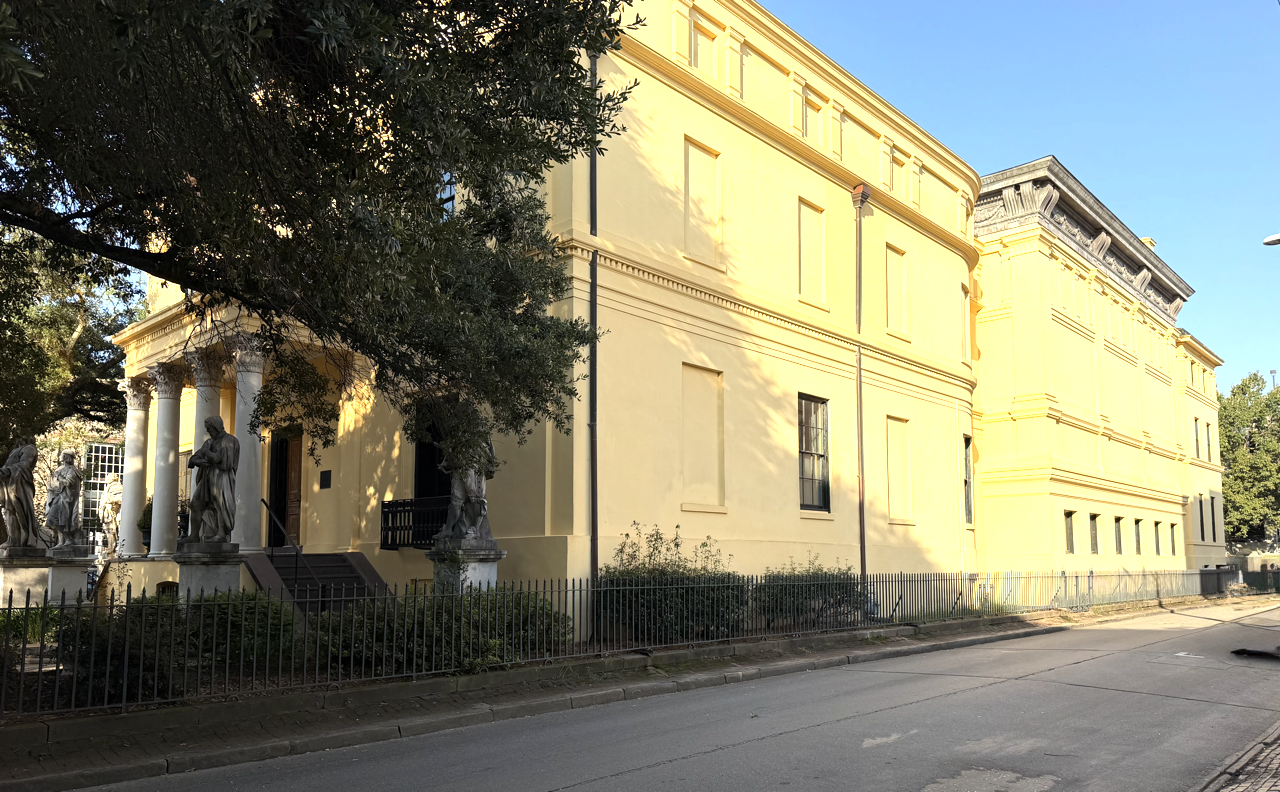
Before this building became the Telfair Academy of Arts and Sciences, it was the Savannah home of the Telfair family—one of the city’s most prominent and wealthy White families in the early nineteenth century. The Telfairs were deeply embedded in Georgia’s political, commercial, and cultural elite. Their wealth came from plantation agriculture, enslaved labor, and extensive landholdings across the state. Mary Telfair, who would later become the benefactor of the museum that bears her name, inherited this fortune and used it to shape Savannah’s cultural institutions, including the founding gift that established the Telfair Academy of Arts and Sciences in 1886. Yet the elegance of the Telfair household depended on the labor of enslaved African Americans whose lives are woven into the fabric of this grand mansion.
Among them were Juddy Telfair Jackson, the family cook; her daughter Coomba; Coomba’s husband, George Gibbons; and their daughter Lavinia, who served as Mary Telfair’s personal maid. Telfair Museums preserve the identities of Juddy and Lavinia in a rare surviving photograph of grandmother and granddaughter.
Mary Telfair’s letters highlight that both Juddy and Coomba traveled with the family to northern cities. Judy spent a summer in the North and later prepared for another trip. Coomba was written as traveling with Mary from Philadelphia. Their mobility was not unusual, as many wealthy Savannahians traveled with their enslaved; however, it did not change their legal status. They could travel far beyond Savannah and still return enslaved.
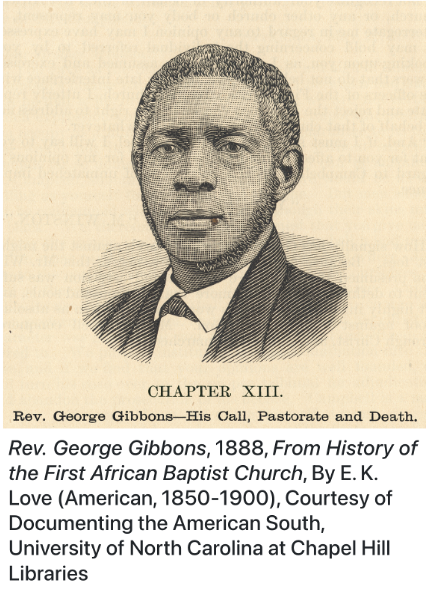
George Gibbons was born in Thorn Island, Barnwell District, South Carolina, on November 13, 1819. He was enslaved and belonged to Mrs. Telfair, who it was said was very kind to him. George Gibbons’s life reveals another side of urban slavery. He was brought into the Telfair household as a child, incorporated into the family life, and traveled extensively with the family to destinations as far as Europe. He was a trusted member of the household, yet while still enslaved, George was building a separate life within Savannah’s Black community. He was baptized at First African Baptist Church in 1844 and elected a deacon in 1860.
After emancipation, George became a minister, and in 1878, was called as pastor of First African Baptist Church. While his lifetime in the Telfair household afforded him economic and educational opportunities that might not otherwise have been available to him, it also put him at a disadvantage in the local Black community. He had a very uncomfortable tenure as pastor, and according to Rev. E.K. Love, in The History of the First African Baptist Church, “Rev. Gibbons served the church under these disadvantages for six years. He had not been visiting the annual sessions of the Baptists and hence knew very few of the brethren and practically nothing of the workings of the Baptists outside of Savannah. He had been so confined at home with the affairs of the old white people who raised him that he knew next to nothing of what was going on among the negroes in everyday life. Therefore, he was unprepared to deal with them successfully in church as a pastor. He did not know enough about them.”
When he died, an estimated 5,000 people attended his funeral, and it is said that the Telfair Family generously remembered him in their wills. His inheritance was said to be worth $7,000 to $12,000, which would be upwards of $400,000 in today’s dollars.
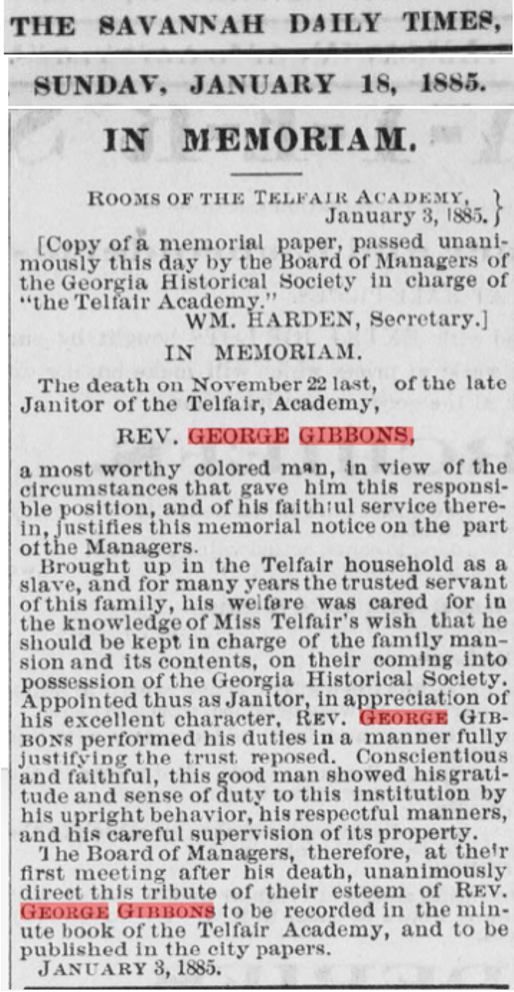
The Georgia Historical Society's managers published a memorial in the Savannah Daily Times, on January 18, 1885. It described him as having been “brought up in the Telfair household as a slave” and said Mary Telfair wanted him kept in charge of the mansion after it passed to the Georgia Historical Society. The Telfair managers wrote that he was "appointed thus as janitor, in appreciation of his excellent character." He consequently became janitor/caretaker of the future Telfair Academy.
The story of Juddy, Coomba, Lavinia, and George reminds us that slavery in Savannah did not exist only on plantations. It operated inside elegant city homes—in kitchens, work yards, bedrooms, carriage houses, and dining rooms. The Telfair house tells the story of a wealthy Savannah family. Their enslaved household tells us what made that life possible.
___
Sources:
Feay Shellman Coleman. "George Gibbons, 1819-1884". In Slavery and Freedom in Savannah, edited by Leslie M. Harris and Daina Ramey Berry, [197-199]. Athens: University of Georgia Press, 2014.
Georgia Historical Society. Telfair Family Papers, 1764–1939. MS 793. Savannah, GA. Photograph of Juddy Telfair Jackson and Lavinia, image 793-05-56-254A. Reproduced and identified by Telfair Museums in “200 Years of William Jay Architecture.”
Love, Emanuel King. History of the First African Baptist Church, from Its Organization, January 20th, 1788, to July 1st, 1888*: Including the Centennial Celebration, Addresses, Sermons, etc. Savannah, GA
Lumpkin-White, Arva: Photograph credit: others as noted.
Savannah Daily Times. “George Gibbons.” January 18, 1885
Telfair, Mary. Mary Telfair to Mary Few: Selected Letters, 1802–1844. Edited by Betty Wood. Athens: University of Georgia Press, 2007.
Young, Jeffrey Robert. "To 'Venerate the Spot' of 'Airy Visions': Slavery and the Romantic Conception of Place in Mary Telfair's Savannah." In Slavery and Freedom in Savannah, edited by Leslie M. Harris and Daina Ramey Berry, [69-74]. Athens: University of Georgia Press, 2014.


7West Broad Street School / Scarborough House
Location: 41 Martin Luther King Jr. Boulevard
___
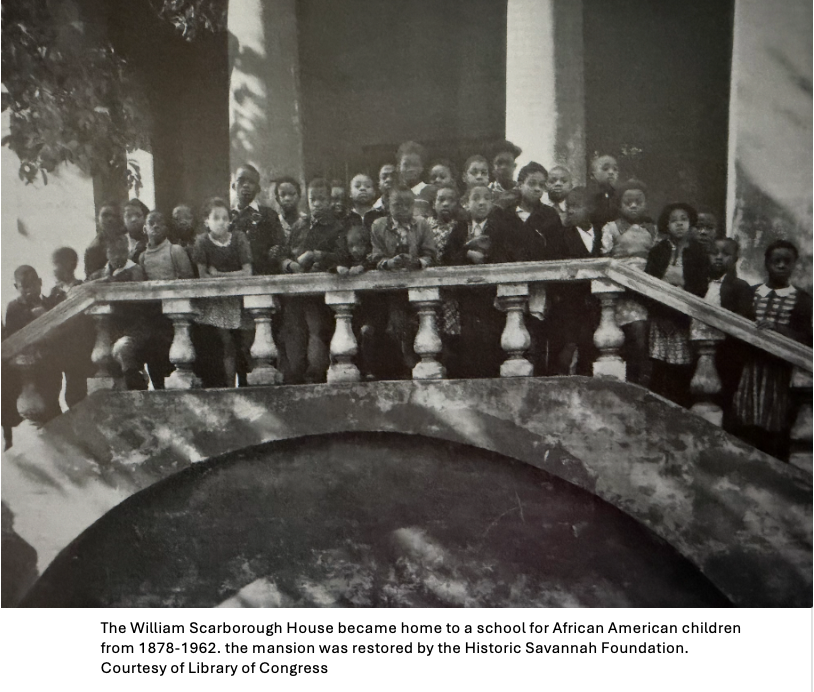
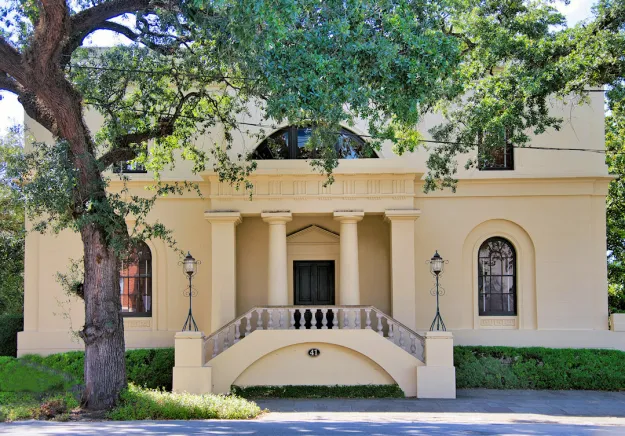
The mansion at 41 Martin Luther King Jr. Boulevard began its life as a monument to wealth. Completed in 1819 for Savannah merchant and steamship investor William Scarbrough, it was designed by the English architect William Jay and remains one of the finest surviving examples of his work anywhere in the United States. The house introduced the elegant Regency and early Greek Revival styles to Savannah, and in its day it was counted among the grandest residences in the city. So grand, in fact, that when President James Monroe toured Savannah in 1819, he came to see it. But the most remarkable chapter in this building's life was not its first — it was what came later, when a merchant's showpiece became a schoolhouse for Black children.
Scarbrough's fortune did not last. After his financial collapse in the 1820s, the house passed through several owners before eventually reaching the DeRenne family. And it was George Wymberley Jones DeRenne who set the building on its extraordinary second course, directing that the property be used for the education of Black children. The mansion was transferred to the Savannah Board of Education and became the home of the West Broad Street School, with James Porter — the same James Porter who had once risked everything to teach in secret — installed as its new principal.
The school came to the mansion almost by accident, born of disaster. The earlier West Broad Street School had been operating inside St. Stephen's Episcopal Church when fire destroyed it. In 1878, classes were relocated into the former Scarbrough mansion — and there they stayed. For the next eighty-four years, from 1878 until 1962, this opulent Regency residence served as a public school for African American children.
By the late nineteenth century, it had become one of the principal Black schools in Savannah, educating generations of children from across the city's west side. As enrollment swelled, additions rose behind and beside the original house, and the refined single-family mansion gradually transformed into a sprawling educational complex — its grand rooms filled, year after year, with students claiming the learning their grandparents had been forbidden.
The school finally closed its doors in 1962. By then the aging structure could no longer meet the demands of a modern public-school system, and the building was vacated. It was later rescued and restored by the Historic Savannah Foundation, and today it serves the community once more — this time as the Ships of the Sea Maritime Museum, a grand house that has been, in turn, a merchant's mansion, a schoolhouse for the freed, and a keeper of the city's history.
___
Sources
Board of Education of the City of Savannah and Chatham County. Minutes of the Board of Education. Savannah, GA, April 8, 1895, 211.
Board of Education of the City of Savannah and Chatham County. Sixteenth Annual Report of the Public Schools of the City of Savannah and County of Chatham. Savannah, GA, April 30, 1878, 30.
Fuller, Rita Yates. "West Broad Street School History." Savannah Black History Page (Facebook), June 27, 2026. #savannahblackhistory.URL.
Hoskins, Charles Lwanga. "The Struggle Begins." Chapter 3 in Yet With a Steady Beat: Autobiographies of Early Black Savannah. Savannah: Gullah Press, 2001, 157.


8 First African Baptist Church
Location: 23 Montgomery Street
___
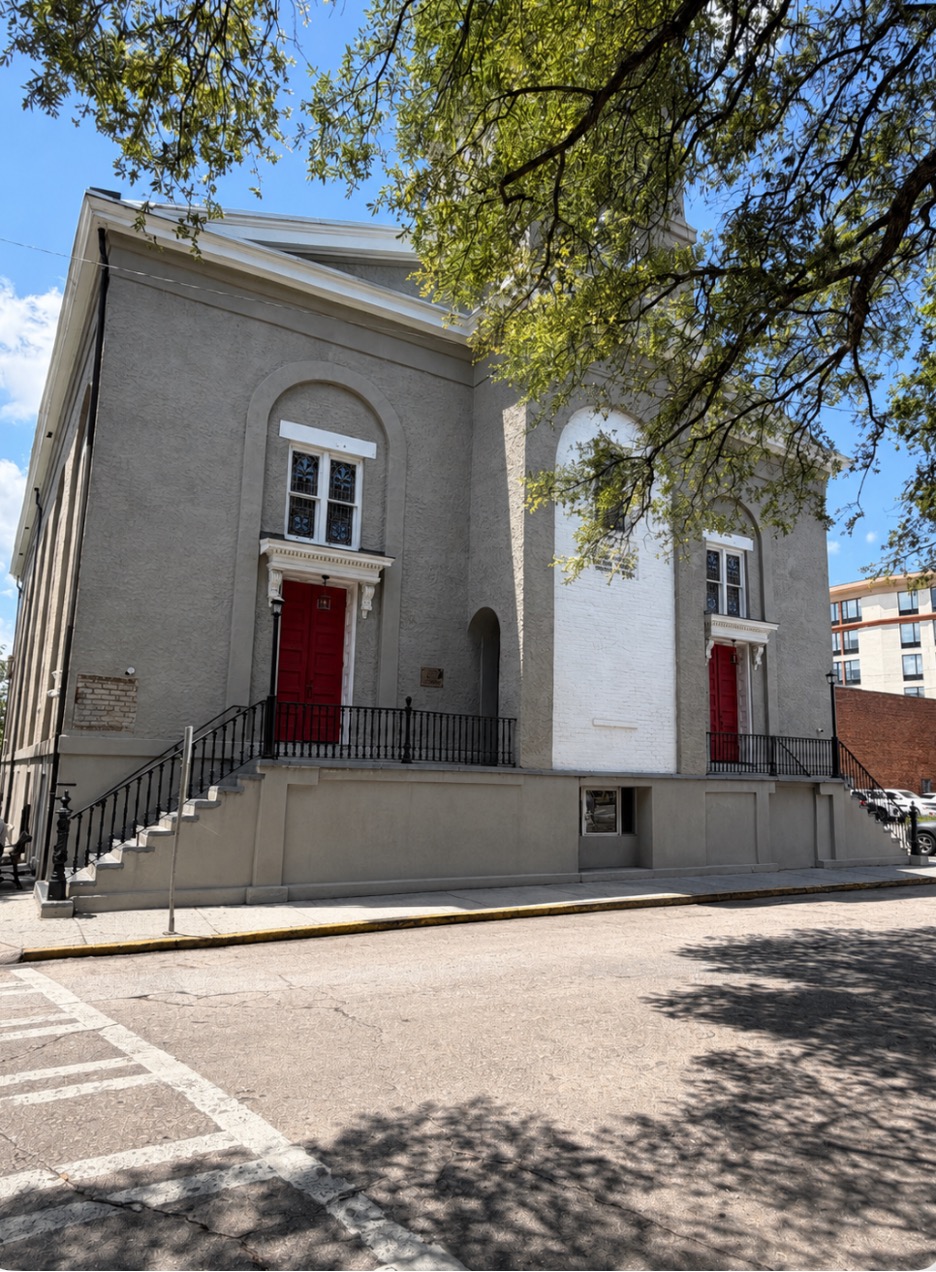
You are standing at First African Baptist Church — the oldest Black congregation in the United States. Pause on that fact for a moment: the people who founded this church did so before there was a United States at all.
The congregation was founded in 1773 by George Leile, a free man of color and one of the earliest Black Baptist ministers in all of America. Its founding predates the birth of the nation itself in 1776 — meaning this community of faith is older than the country that surrounds it.
Originally known as the First Colored Baptist Church, the congregation grew into a central institution for Savannah's free and enslaved Black population — a spiritual home, a gathering place, and something more dangerous still. The church served as a key place of refuge on the Underground Railroad, that clandestine network of routes, safe houses, and abolitionist volunteers — its railway name purely a metaphor — which guided an estimated 60,000 to 100,000 enslaved African Americans toward freedom in the Northern United States, Canada, and Mexico between the late eighteenth century and 1865. Within these walls, the work of liberation was carried out in secret, even as worship continued in plain sight.
The sanctuary you see today was built under the leadership of the congregation's third pastor, Andrew Cox Marshall, himself a free man of color, who acquired the property where the current structure stands. Construction of the building was completed in 1859 — raised, like so much of Savannah, by Black hands, but in this case for the freedom and faith of the Black community itself.
And unlike so many historic places that survive only as monuments, this one still breathes. First African Baptist Church remains an active congregation to this day, holding services in the same sanctuary, continuing a story that began more than 250 years ago.
___
Sources:
Love, Emanuel King. History of the First African Baptist Church, from Its Organization, January 20th, 1788, to July 1st, 1888*: Including the Centennial Celebration, Addresses, Sermons, etc. Savannah, GA
[BlackPast. "First African Baptist Church, Savannah, Georgia (1777– )." BlackPast.org, November 10, 2010] (https://www.blackpast.org/african-american-history/first-african-baptist-church-savannah-georgia-1777/)
Lumpkin-White, Arva. Photograph credit: others as noted

9Haitian Revolutionary Monument
Location: 23 Montgomery Street
___
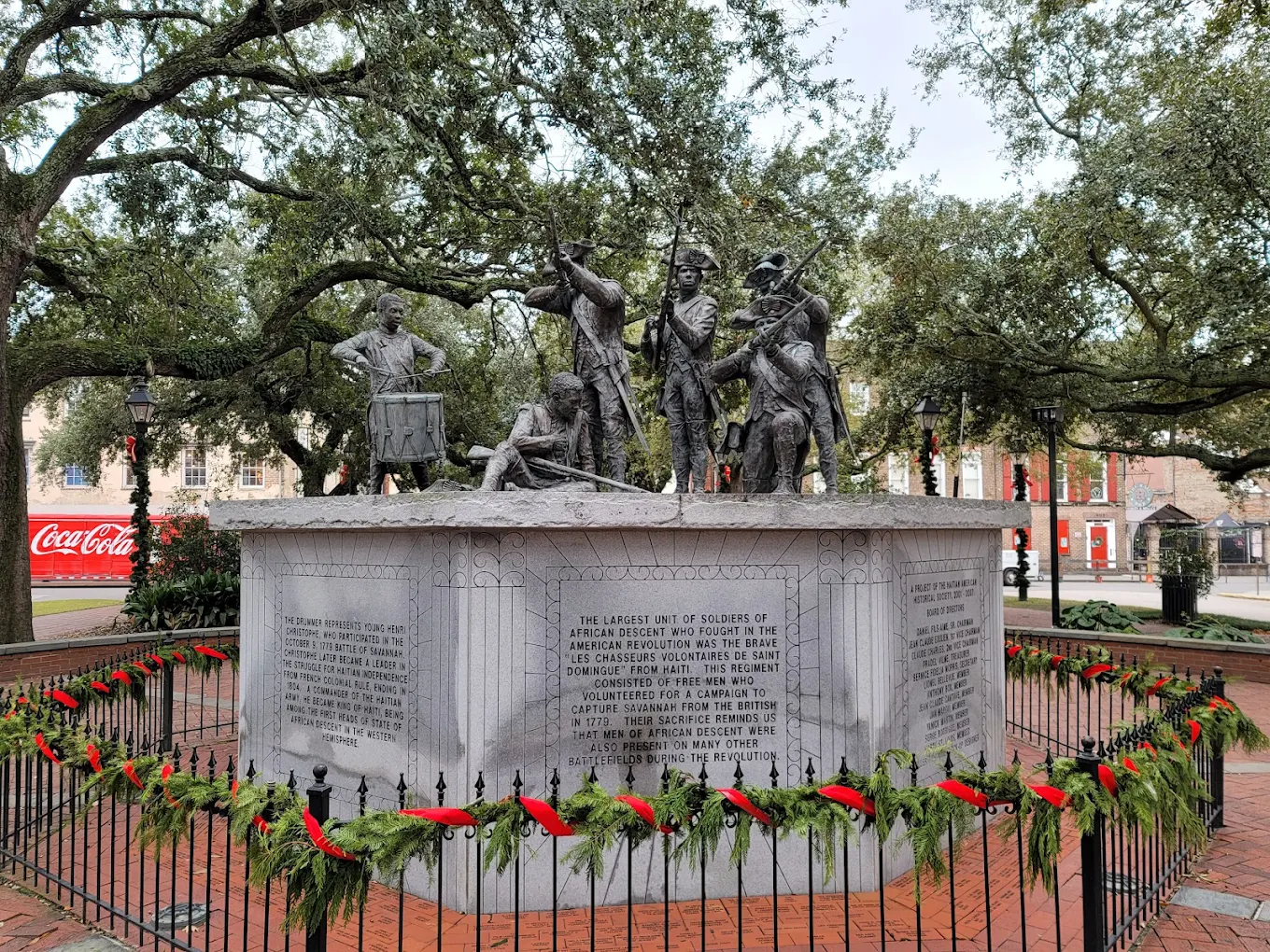
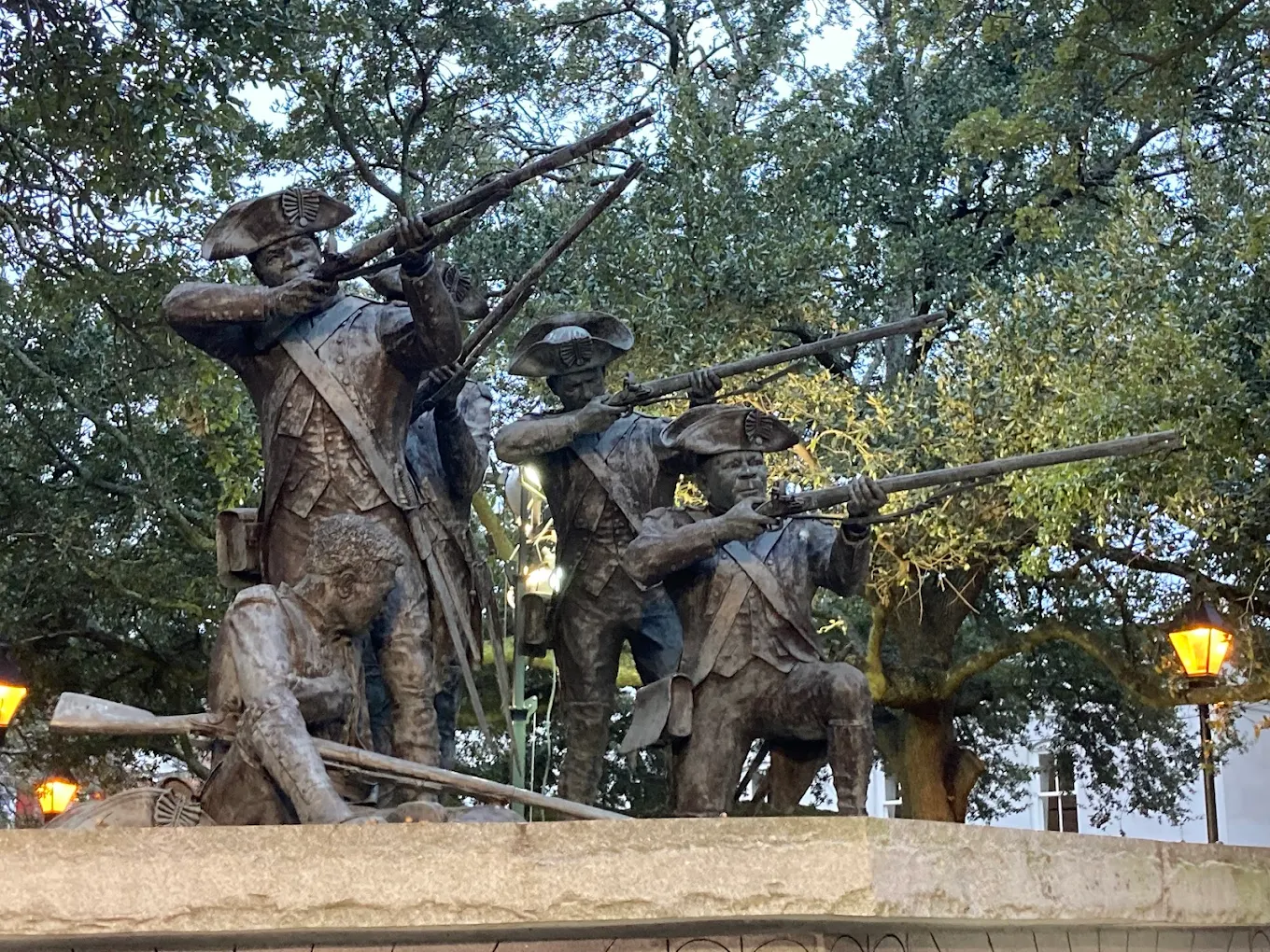
In Franklin Square, just across the street from the First African Baptist Church, a granite monument rises in tribute to soldiers whose role in American independence was, for two centuries, all but forgotten. Savannah's Haitian Monument honors the Chasseurs-Volontaires de Saint-Domingue — one of the largest units of men of African descent to fight in the entire American Revolutionary War.
These soldiers were recruited from present-day Haiti, then the French colony of Saint-Domingue, and they crossed an ocean to take part in the Siege of Savannah in 1779, lending their courage to the fight for American independence. Among their ranks marched a young drummer boy whose name would one day echo through history: Henri Christophe, who would go on to become Haiti's first president — and, eventually, its king. From a drummer in Savannah to a crown in Haiti. Today the monument stands as a tribute to the soldiers' bravery and a reminder of Savannah's deep, global connections, inviting visitors to pause, reflect, and discover a layer of the city's history that long went untold.
The story did not end with the siege. Over the following decades, a huge influx of Haitian refugees — free people of color and other émigrés, as they are called in French — came to settle in Savannah, fleeing the political upheaval and slave revolutions that convulsed their homeland. But they arrived into a contradiction. The majority of these immigrants were Catholic, and the 1732–1788 charter of the Province of Georgia explicitly prohibited Catholics from living in the colony. For a time, they were barred from practicing their own faith.
When the Catholic ban was finally lifted in 1788, these new Savannahians built something lasting. The free people of color, alongside other French-speaking immigrants, founded the congregation that became the present-day St. John the Baptist Cathedral in the late 1700's. Within its walls, many free people of color were married, baptized, and received their last rites — woven into the spiritual life of the city that had once shut its doors to them.
As free people of color, the Haitian émigrés became a vital presence in Savannah's African American community, swelling the ranks of its business owners and property holders through the late 1700s and into the 1800s. They did not simply seek refuge in the city — they helped build it.
To honor those contributions, sculptor James Mastin created the monument that stands in Franklin Square today: six figures mounted on a granite pillar, representing the soldiers of Saint-Domingue. It was dedicated in two phases, with the final figures added in 2009 — a tribute, generations overdue, to the crucial role these men played in the Revolutionary War, and to the enduring historical ties that bind Savannah to Haiti.
___
Sources:
Freymann, John Gordon.The Sorrel Family in Saint-Domingue (Haiti), 1763–1813. Revised edition. Archival monograph, Kay Kole Genealogy Room, Bull Street Public Library, Savannah, GA,
Lumpkin-White, Arva. Photograph credit
10Bryan Free School
Location: 219 W Bryan Street
___
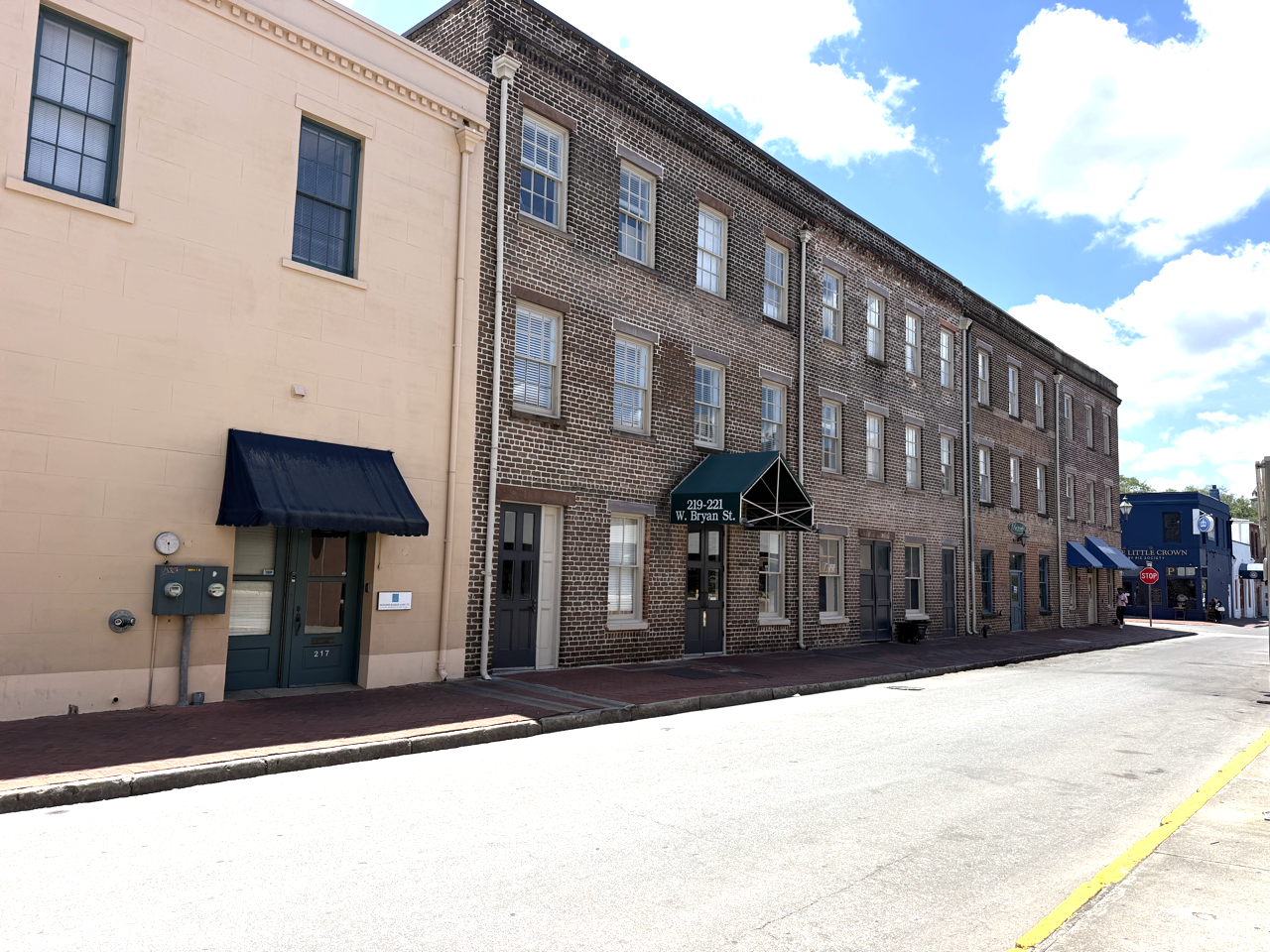
There may be no more powerful image in all of Savannah's history than the one that unfolded on a cold January morning in 1865: hundreds of formerly enslaved children walking through the streets to take their seats inside a building where, just weeks before, human beings had been bought and sold.
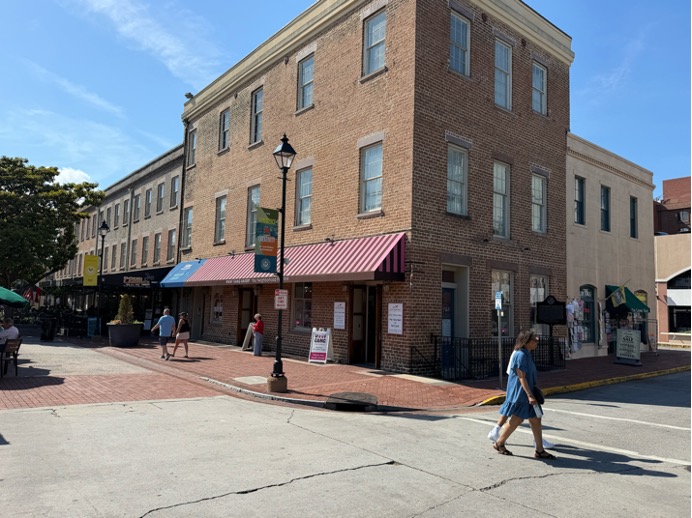
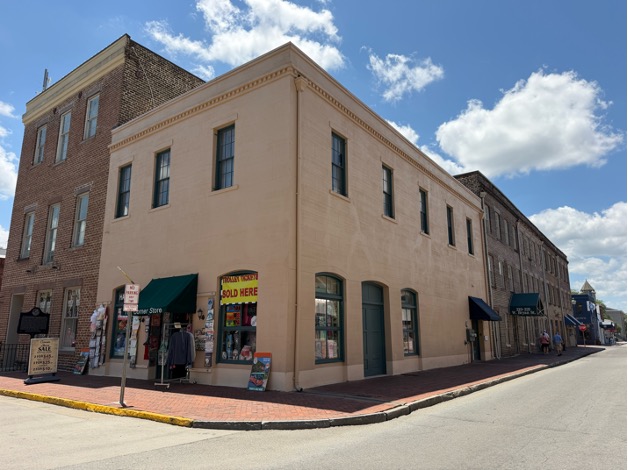
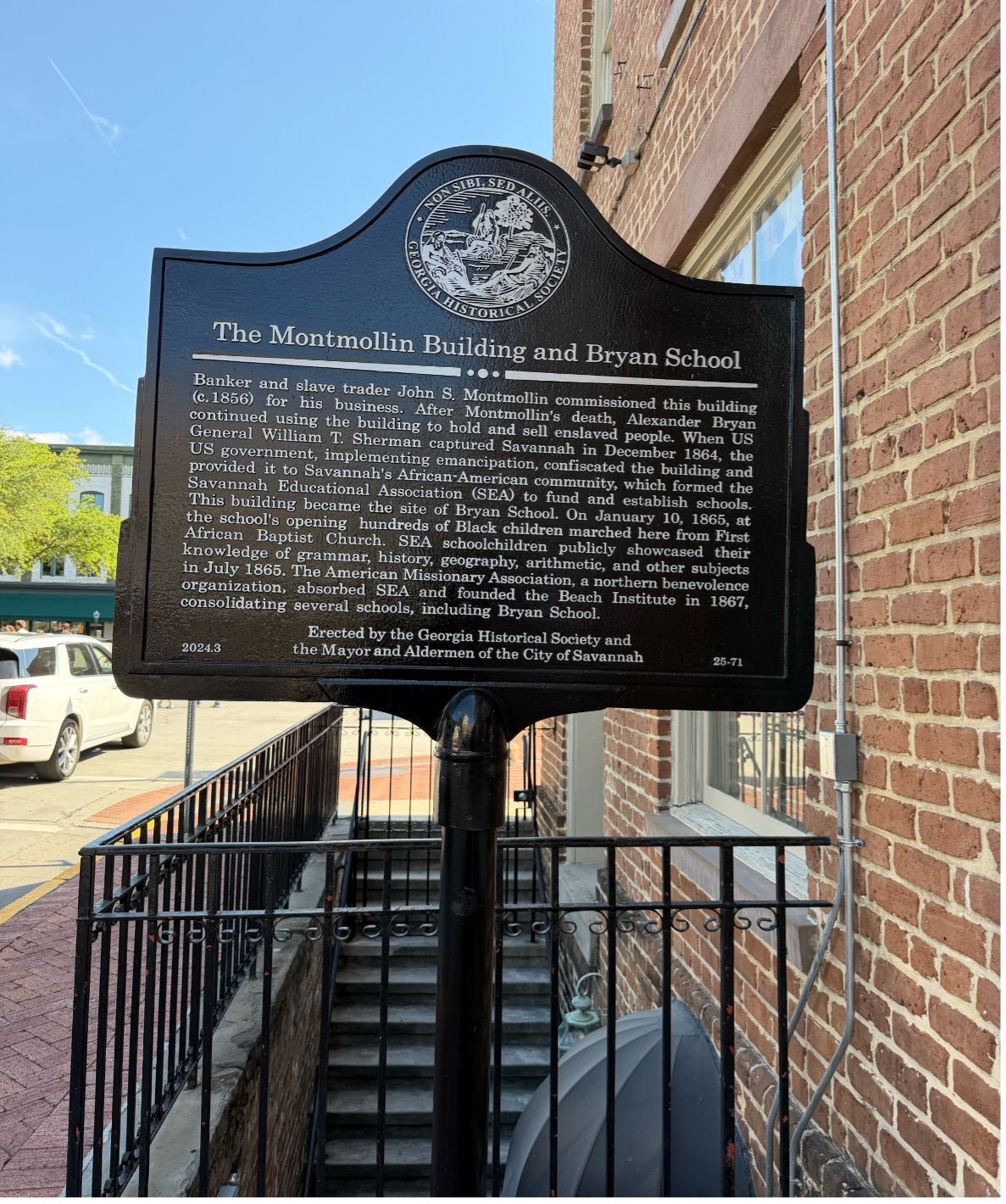
The building was the old Montmollin building — a slave mart. In December 1864, after Union General William T. Sherman captured Savannah, the federal government confiscated the property, and in 1865 gifted it to Savannah's Black community for a purpose that turned its history violently on its head: education. There it became the new Bryan Free School. The transformation was almost unthinkable, because before emancipation, teaching a Black person to read had been a crime. Georgia's slave code banned educating the enslaved, with punishment that could reach a $500 fine and a public whipping.
And yet it had been done anyway — quietly, bravely, in makeshift schools and private homes. A roll call of Savannahians risked everything to teach Black youth: James Porter, Catherine and Jane Deveaux, Julien Fromantin, Matilda Taylor Beasley, Mary Woodhouse, and James Simms. Their students became experts in disguise, hiding books in baskets and bags and pretending to run errands, so that no one would catch them carrying the forbidden cargo of a primer.
Some of these clandestine teachers grew ingenious in their cover. According to the late Frank Bynes, a local Black business leader, James Porter used his trade as a tailor to mask his secret school. Porter is said to have built a trap door into his tailor shop, so that — in his own apparent design — when his classes were about to be surprised or apprehended, his pupils might save themselves through it.
In 2024, the City of Savannah and the Georgia Historical Society dedicated a historical marker on Barnard Street, formally acknowledging the building's role in the dark history of slavery. As one sentiment of the era declared, the building would surely never again serve as a slave trader's office — it should instead be kept for the purpose of educating the Black race, and not for selling them.
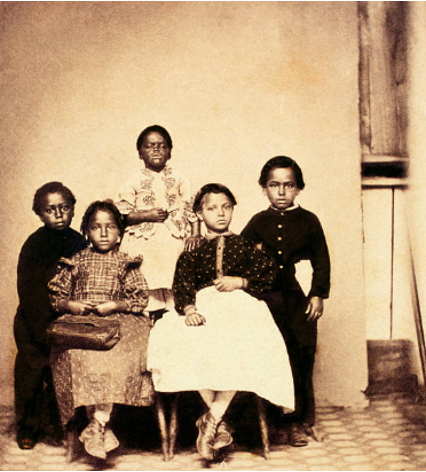
The historian Jacqueline Jones, in her book,Saving Savannah: the City and the Civil War, captured the extraordinary scene of the school's opening day. On the morning of January 10th, she writes, some 500 Black children — ragged, shoeless, and shivering in the cold — gathered in the sanctuary of Savannah's First African Baptist Church. Spilling into the streets, they marched in a mass through Franklin Square, past the edge of the city market at Ellis Square, and on to an imposing three-story brick building on Saint Julian Street: their new school, the old Bryan slave mart. Residents leaned from windows and doorways along the route to watch them pass, and to one observer this army of colored children stirred feeling and interest second only to the arrival of General Sherman's army itself.
Then came the moment that no one who saw it could forget. Inside the building where traders had bought and sold human beings only weeks earlier, the pupils took their seats on wooden benches, their feet dangling above the floor. They were surrounded by the remnants of the old regime — handcuffs, whips, paddles, and the sales receipts that had once priced people like cargo. And seated at the front, at the very auctioneer's desk now occupied by their teacher, freed girls and boys began their lessons. As Jones observes, the African American community leaders who choreographed that grand opening understood exactly what they were doing — they possessed a keen sense of the dramatic and the symbolic. Black children would seize the streets, and they would transform the trappings of slavery into the instruments of their own liberation.
___
Sources:
Hoskins, Charles Lwanga.Yet With a Steady Beat: Autobiographies of Early Black Savannah. Savannah: Gullah Press, 2001, 169–181.
Jones, Jacqueline. Saving Savannah: The City and the Civil War. New York: Vintage Books, 2008, 213–232.
Library of Congress. Historical Photograph of Antebellum / Civil War Savannah Structure. Prints and Photographs Division, Library of Congress, Washington, D.C.
Lumpkin-White, Arva. Photograph credit: others as noted.
Savannah Daily Herald. "Local News and School Reports." March 20, 1865.

11Old Slave Mart
Location: On the corner of Barnard Street and St. Julian Streets, facing Ellis Square
___
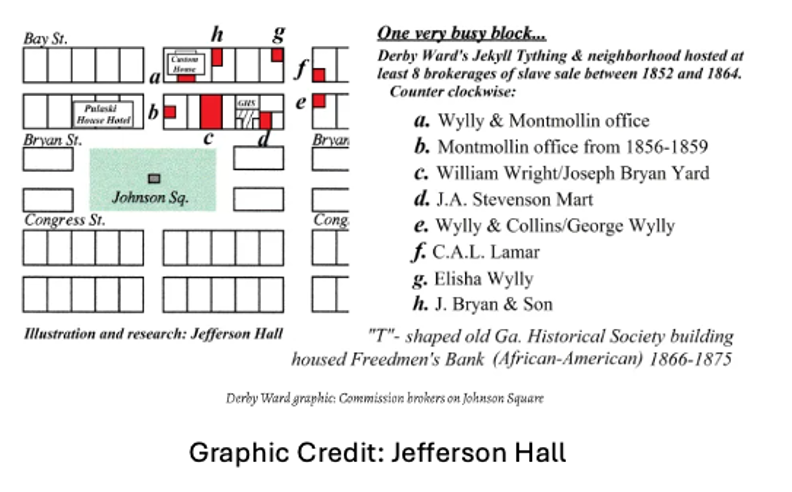
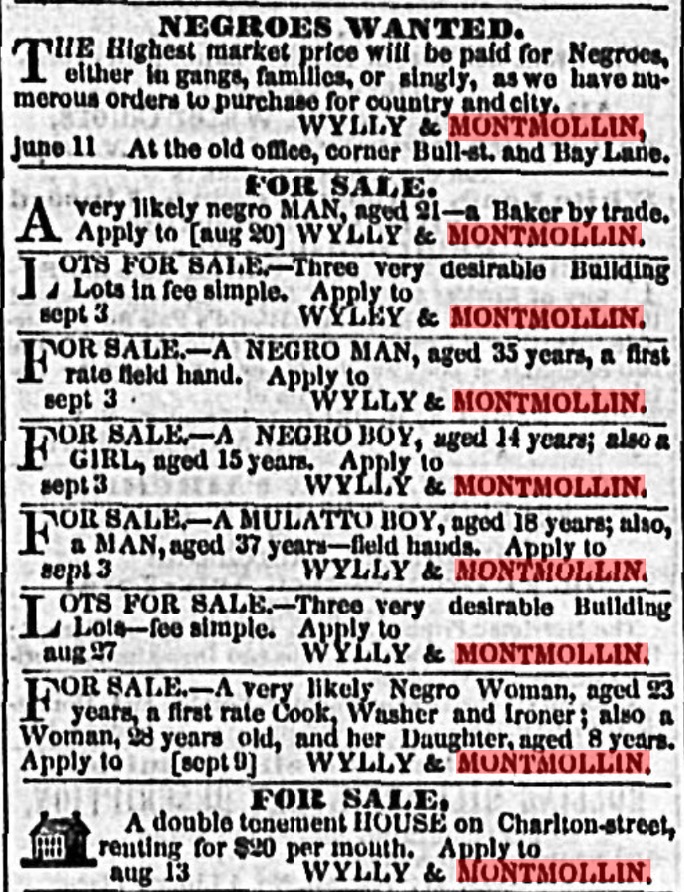
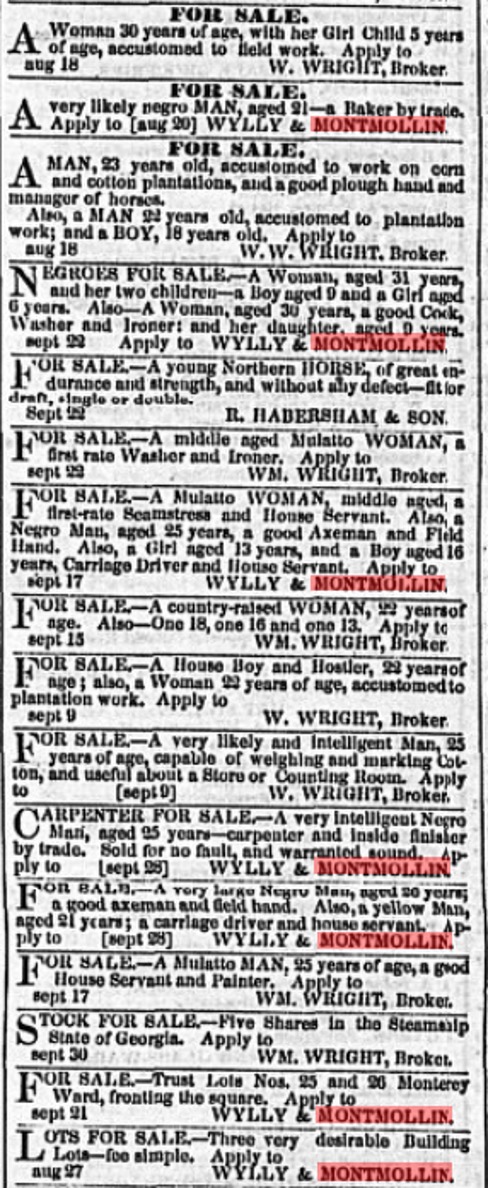
Old Slave Mart, on the corner of Barnard Street and St. Julian Streets, facing Ellis Square, was built for banker John S. Montmollin in 1855. The three-story brick building was initially used as a slave mart and general brokerage house for Montmollin. He and his partner, Andrew Bryan, specialized in selling enslaved individuals, as well as bank stock and general merchandise. The upper floors were used to hold, buy, and sell enslaved people.
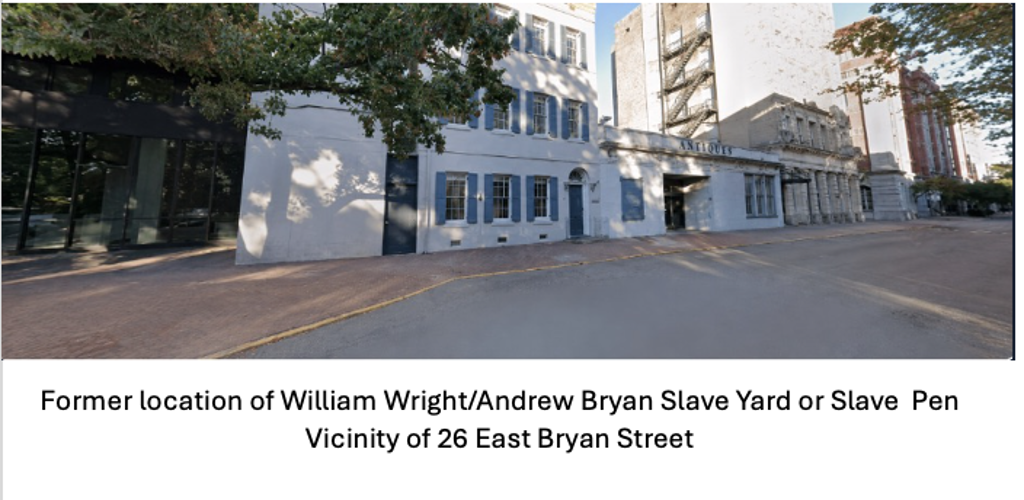
Montmollin and Bryan’s slave brokerage business was one of a community of several slave brokers in the block near City Market. There was also a lot on Bryan Street, adjacent to the brokerage firm, that was used as a “slave yard” or “slave pen “ as it was called, used for the purpose of corralling human cargo and warehousing the enslaved.
Slave Pens:
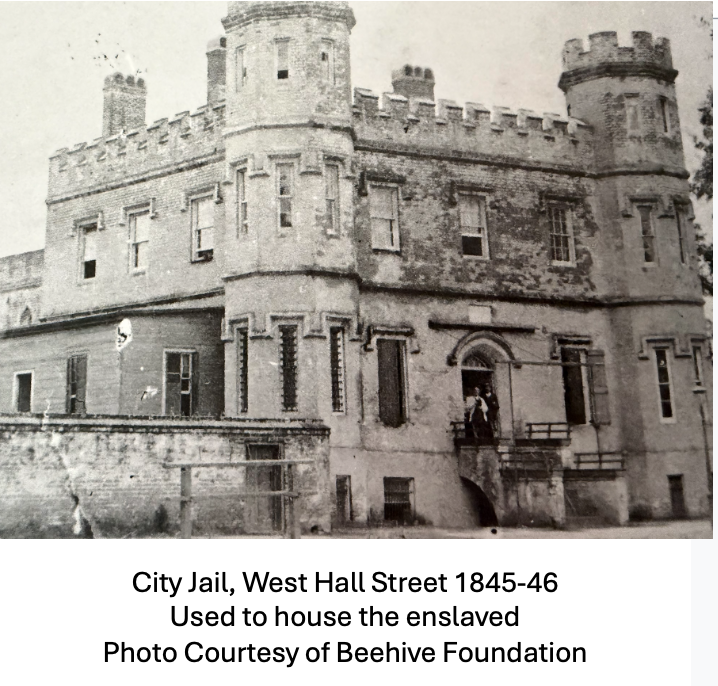
Private “pens” catering to slaveholders offered a more secure option than the dark, dank, and unventilated city jail. The city jail, while it was a taxpayer-supported institution, was used as if it were a private facility catering to the conveniences of local slaveowners. It was used to house Savannah's enslaved as a means of punishment and as a "keeping facility" while slavemasters were not in the city. City employees were also relied upon to administer punishment and "whippings" to manage the enslaved in their care.
As the enslaved population grew, so did the management problems. Montmollin seized the opportunity to offer an alternative to over-burdened city facilities. In an advertisement in the Savannah Republican on February 24, 1858, William Wright boasted that his jail and yard were the largest, safest, and most comfortable in the city, if not the state. He charged 25 cents per day for accommodations he fashioned as if it were a vacation rental for the enslaved.
Montmollin operated continuously from 1856 until December 1864—about eight years. He died in 1859 at age 51, following a catastrophic boiler explosion. According to historian Barry Sheehy, "Montmollin was taking a trip from Savannah to Augusta on a steamer called the Lawton. The steam engine blew up, killed several people, and blew Mr. Montmollin off the boat with such force and velocity that he was buried in the mud. It took two or three people to dig him out of the mud". After his untimely death, Alexander Bryan continued operating the Slave Mart until Union forces occupied Savannah in December 1864.
___
Sources:
Jefferson Hall. Map and architectural diagram graphics. Jefferson Hall Blog.
Jefferson Hall. "John S. Montmollin: Savannah Slave Broker." Jefferson Hall Blog, September 4, 2020
Jefferson Hall. "Slave Brokerages of Antebellum Savannah." Jefferson Hall Blog, March 5, 2021
Jones, Jacqueline. Saving Savannah: The City and the Civil War. New York: Vintage Books, 2008, 68, 86.
Beehive Foundation. Historical photograph of the Old City Jail (West Hall Street). Courtesy of the Beehive Foundation, Savannah, GA.
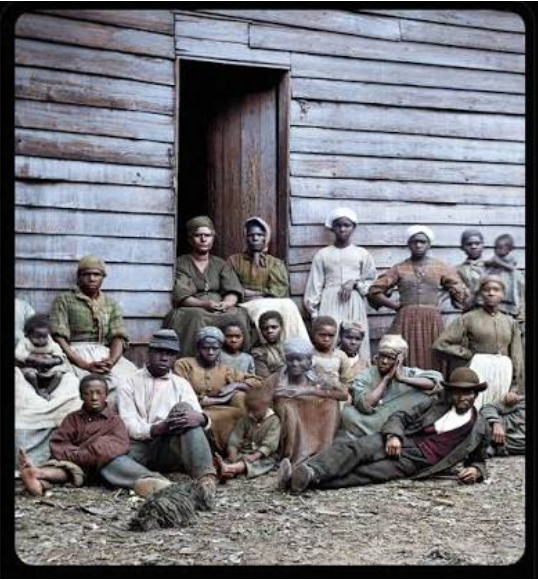
Library of Congress. Portrait of Enslaved Individuals in Antebellum Georgia. Prints and Photographs Division, Library of Congress, Washington, D.C.
Lumpkin-White, Arva. Photographic credit: others as noted.
12Johnson Square
Location: 2 East Bryan Street
___
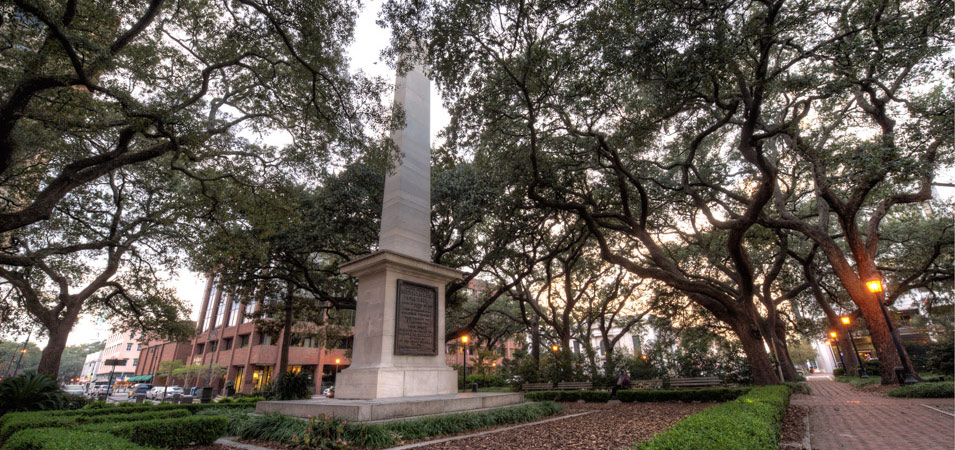
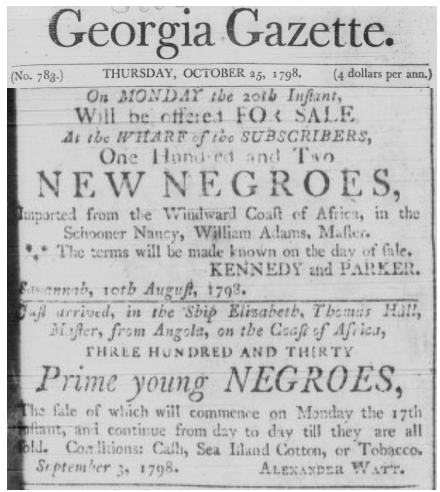
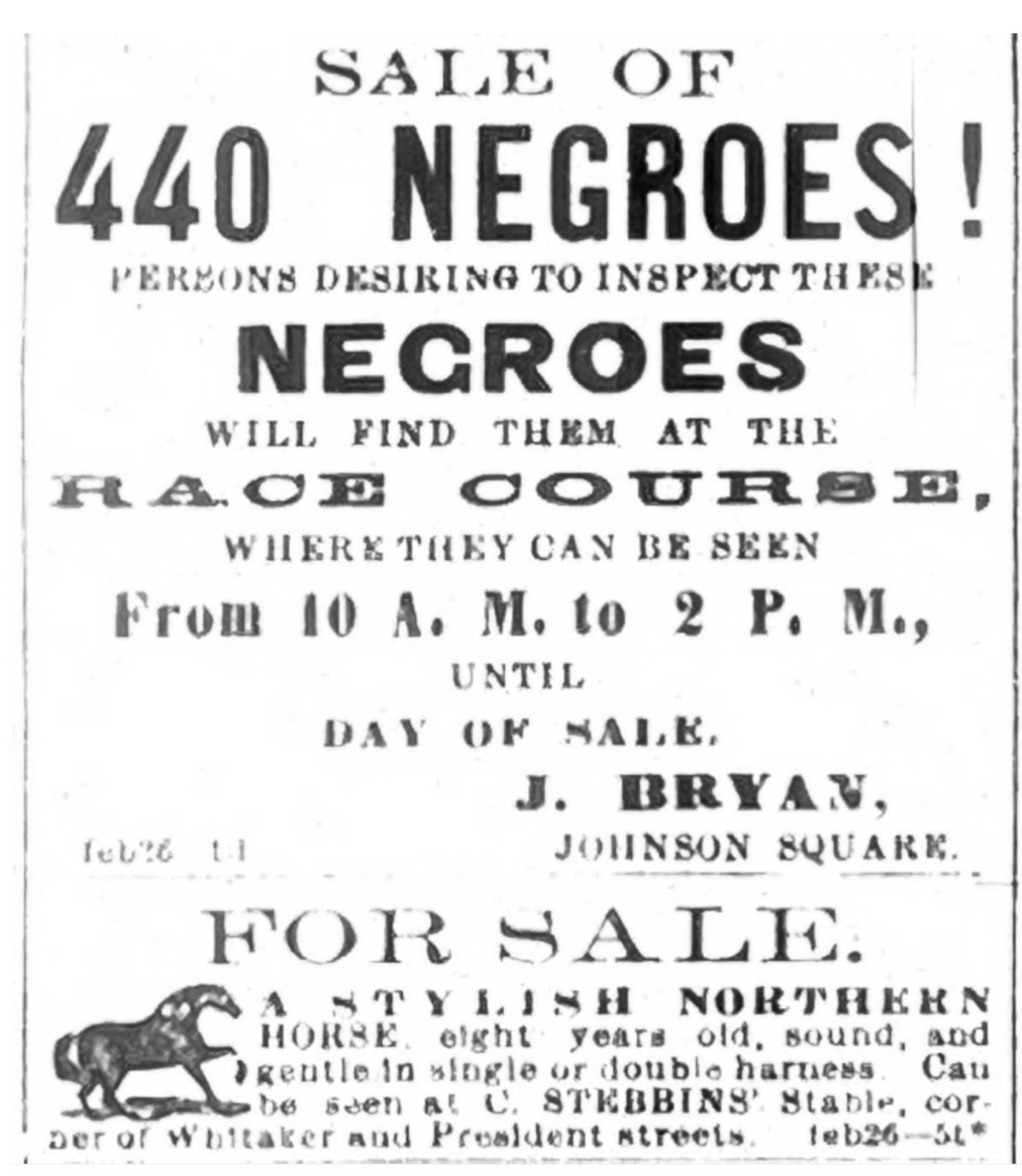
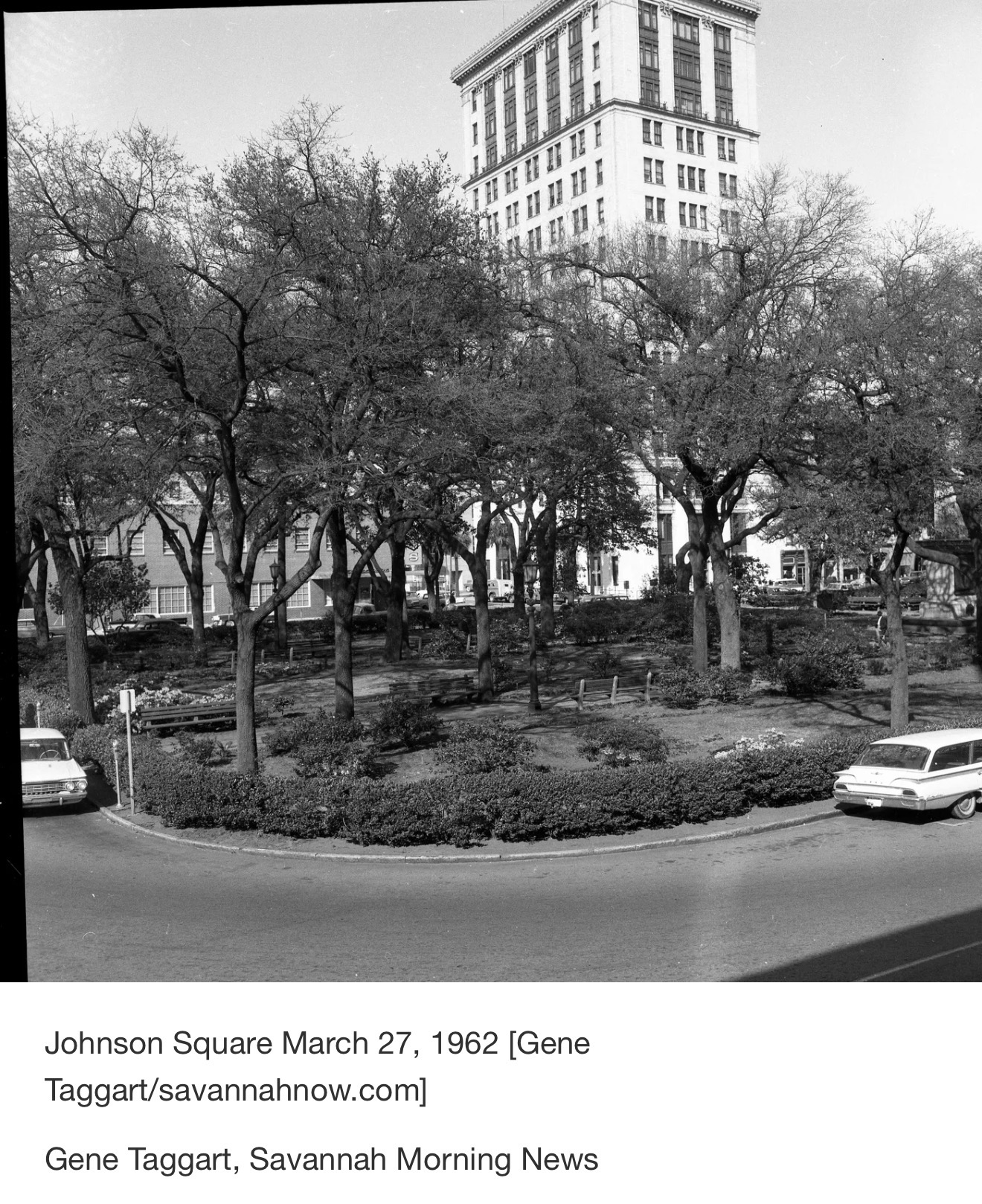
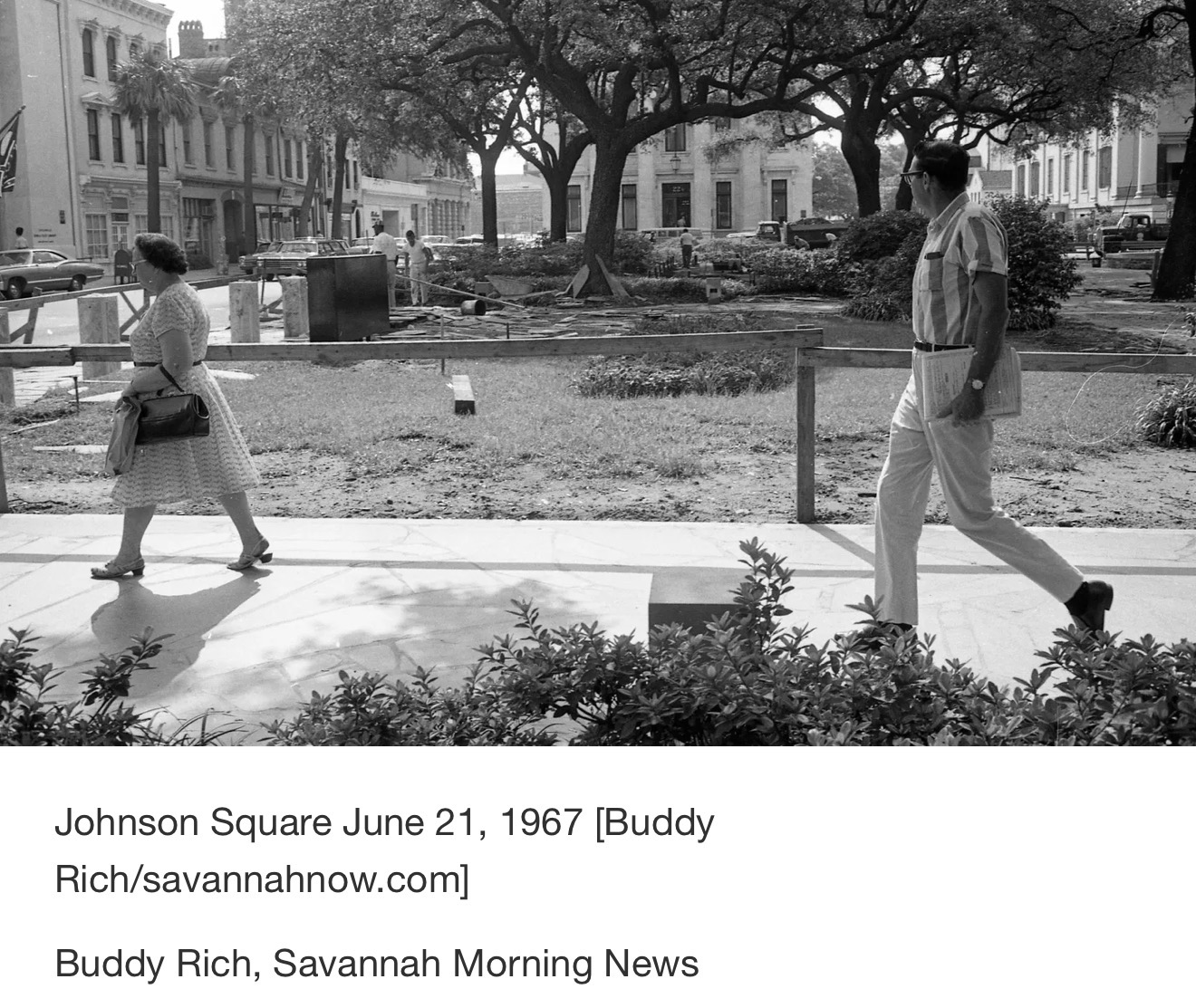
At the corner of Bull and St. Julian Streets, in the very heart of Savannah's historic district, lies the city's first and oldest public space. Johnson Square was laid out and designed as Savannah's inaugural square in 1733 — the first of what would eventually become twenty-two — and it remains the largest of them all. Today it is a place of fountains and shade and gathering. But beneath that beauty lies a history the city long declined to tell: Johnson Square was Savannah's primary, and often overlooked, antebellum slave auction site.
Before the Civil War, this elegant square functioned as a major commercial hub of a very different kind. Here, in the open, there was on display the result of the capture and commodification of people of African ancestry who arrived here enslaved. It was not a hidden transaction tucked away on the city's edge — it was central, public, and routine, a site where labor was stolen and identities erased, conducted in plain view at the core of the city.
And the square's monuments tell only part of that story. Johnson Square is dominated by a towering memorial to Revolutionary War General Nathanael Greene — a man who himself owned enslaved people on his local plantation. Yet for generations, there were no markers anywhere in the square acknowledging the enslaved men, women, and children who were sold on that very ground. Even the square's name carries the weight of that history: it honors Royal Governor Robert Johnson of South Carolina, who was instrumental in bringing slavery into the Georgia colony in the first place.
The story that lingers beneath the beauty of this square is an essential one. History will show that Johnson Square is two things at once — a gathering place of genuine beauty, central to the economic, commercial, and social life of Savannah, and the site of a dark past that still waits to be fully illuminated.
___
Sources:
Georgia Gazette (Savannah, GA). "Local News and Notices." October 25, 1798.
Georgia Gazette (Savannah, GA). "Local News and Notices." November 20, 1800.
Lumpkin-White, Arva. Photograph credit.
13Christ Church
Location: 28 Bull Street
___
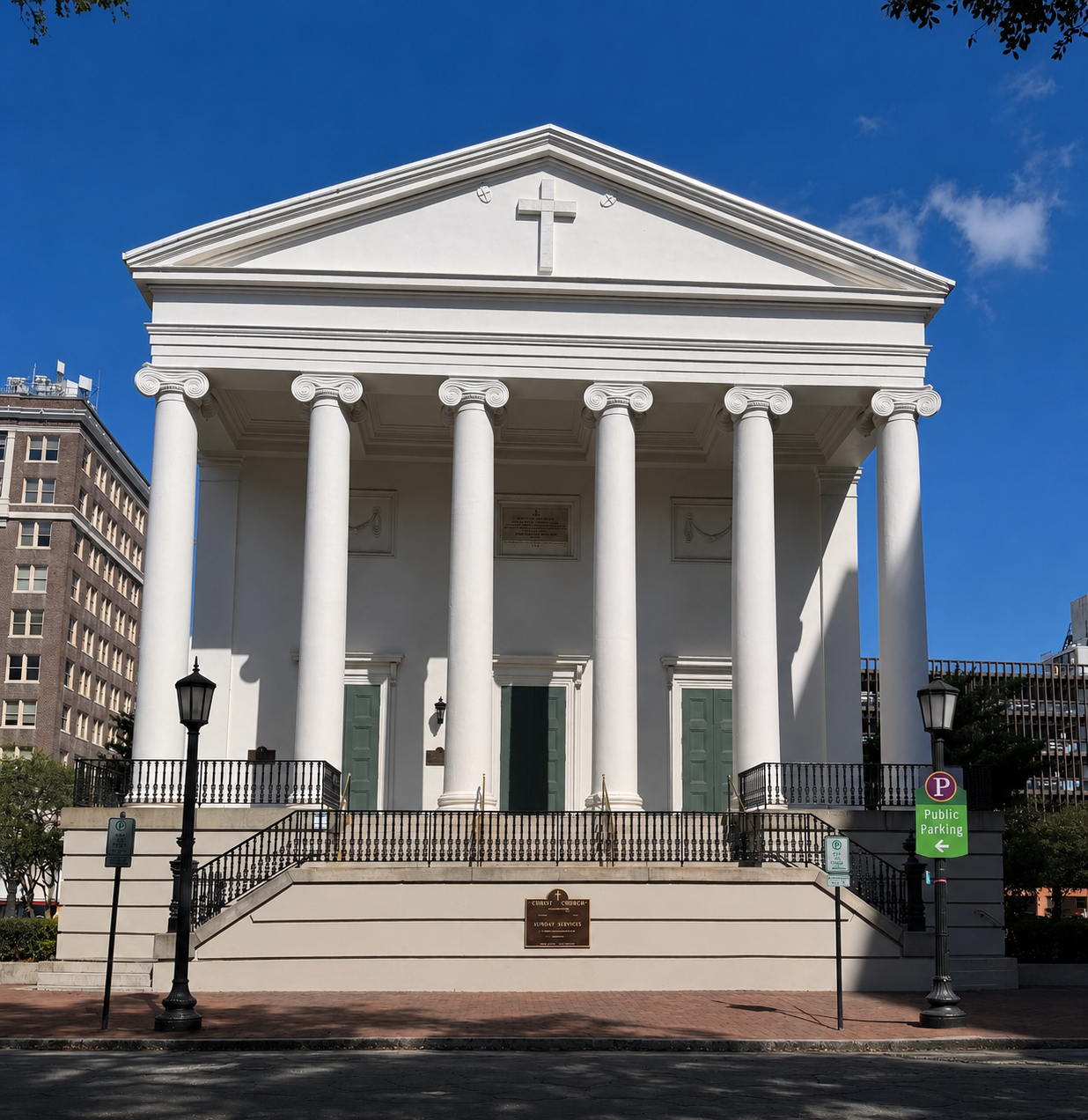
In the earliest years of Savannah, in a colony built upon slavery, an unlikely experiment unfolded inside the city's most established house of worship. Christ Church — the official Church of England parish in colonial Savannah, responsible for the spiritual life of the entire colony — became the site of one of Georgia's first organized efforts to educate enslaved people. And it was here, in the church's registers, that many Black Savannahians first entered the written historical record at all. Through baptisms, marriages, and parish records, both enslaved and free Black residents were documented long before independent congregations like the First African Baptist Church would rise as centers of Black religious and community life. On Saturday, July 7th, 1750, the Reverend Bartholomew Zouberbuhler, rector of Christ Church, baptized a Black woman — one of the first recorded Black baptisms in the colony.
Zouberbuhler held a conviction that set him apart in his time: he believed enslaved Africans should receive religious instruction. He noted with evident pride that many Black worshippers had decently joined the church's service. Determined to push the work further, he founded a school that enrolled enslaved children. His own words capture both his ambition and his frustration — he reported that the school in Savannah held 41 children and might grow much larger, if only slaveowners showed greater concern for having young Black students instructed and raised in the knowledge of God.
To run the school, Zouberbuhler recruited a striking figure: Joseph Ottolenghe, born in Casale, Italy, an Italian-born Jewish convert to Christianity who had once been a ritual butcher. He arrived in Savannah in 1751 from England. After studying the New Testament, he converted from Judaism to the Church of England. For the next eight years, Ottolenghe taught his enslaved students three evenings each week — after they had already finished a full day's labor. Attendance was never simple. Each student required the permission of the slaveowner who held them in bondage.
The lessons themselves laid bare the contradictions of colonial Georgia. Students learned to read prayers, memorize scripture, and recite the Anglican catechism — but always within the boundaries a slave society would tolerate. The education was designed to produce obedient Christians, not free and independent citizens. The aim was carefully bounded, the freedom it offered partial at best. And yet, despite their limitations, these evening classes were among the earliest organized educational programs for enslaved people in Savannah. The students joined worship at Christ Church, lifting their voices in prayers and hymns inside a society that denied them their freedom — a profound contradiction held in a single room. Ottolenghe’s educational work left little measurable success in terms of large numbers of enslaved children converts. Nevertheless, it established one of Georgia’s earliest organized schools for enslaved Africans.
The effort outlived the man who began it. By the mid-1750s, he owned hundreds of acres of land and enslaved laborers himself, illustrating the contradiction between his missionary work and participation in slavery. An even greater contradiction can be found in his appointment as Commissioner of Regulating a Work House for the Custody and Punishment of Negroes. In this position, he was charged with regularly handling cases that included the case of an enslaved man found guilty of breaking into a shop and stealing sundry goods and was sentenced to execution. The humane nature of Ottolenghe led him to petition for the sentence to be commuted to transportation. His petition was denied, and the enslaved man was executed.
When Zouberbuhler died in 1766, his will directed that the forty-nine enslaved people he held continue to receive an education. He went further still, providing that any enslaved man who showed a genuine talent for teaching the faith should be freed — and then employed and paid as a catechist to instruct others.
The church's bond with Black Savannah did not end with that generation. Long before the Diocese of Georgia ever considered establishing a separate parish for African Americans within the city, Christ Episcopal Church already counted Black communicants among its own — men and women baptized, confirmed, married, and buried there. Their names are preserved in the register. Free people of color, such as Priscilla Moodie, a cookshop owner; Robert and Mary Woodhouse of the Woodhouse School; William Garey; Mary Ann Sabbatie; Jane Hume; and Mary Gordon, who stood as sponsors at the baptisms of their relatives and friends, the ceremonies held after regular services. The stories of some of these free people of color can be found elsewhere in these African American Heritage Trails. These were not bystanders to the faith but full participants in its rites, vouching for the next generation of worshippers.
Some of their individual stories surface from the registers in vivid detail. Priscilla Moodie was confirmed at Christ Church on April 26, 1826, and was buried there at the age of seventy on June 17, 1840 — her whole spiritual life, from confirmation to grave, bound to the same sanctuary. And on May 22, 1844, Hannah Cohen was married there to James Gibbs. Hannah's story reached back to St. Augustine, Florida, where her mother, Maria, had migrated from. Maria had been a favorite of her guardian, the prominent physician and community leader Richard D. Arnold — a relationship marked by the era's stark contradictions, as Maria, in turn, bequeathed one of her own enslaved people to Arnold. The precise number of African Americans who worshipped at Christ Episcopal Church will never be known. But the registers make one thing clear: many free people of color passed through its halls, leaving their names in the only public record that would have them.
For a brief moment, Savannah witnessed something rare: a colony rooted in slavery, where some believed that enslaved people should be taught to read the very scriptures that proclaimed all souls equal before God. It was a tension that could not be reconciled — two ideas set side by side that could not both be true — and it would remain unresolved in Savannah and across the nation for generations to come.
___
Sources:
Beehive Foundation. Historical photograph credit. Courtesy of the Beehive Foundation, Savannah, GA.
Hoskins, Charles Lwanga. Yet With a Steady Beat: Autobiographies of Early Black Savannah. Savannah: Gullah Press, 2001, 3–4.
Johnson, Whittington B. Black Savannah, 1788–1864. Fayetteville: University of Arkansas Press, 1996, 15.
Lumpkin-White, Arva. Photograph credit.
The faithful pastor, Bartholomew Zouberbuhler

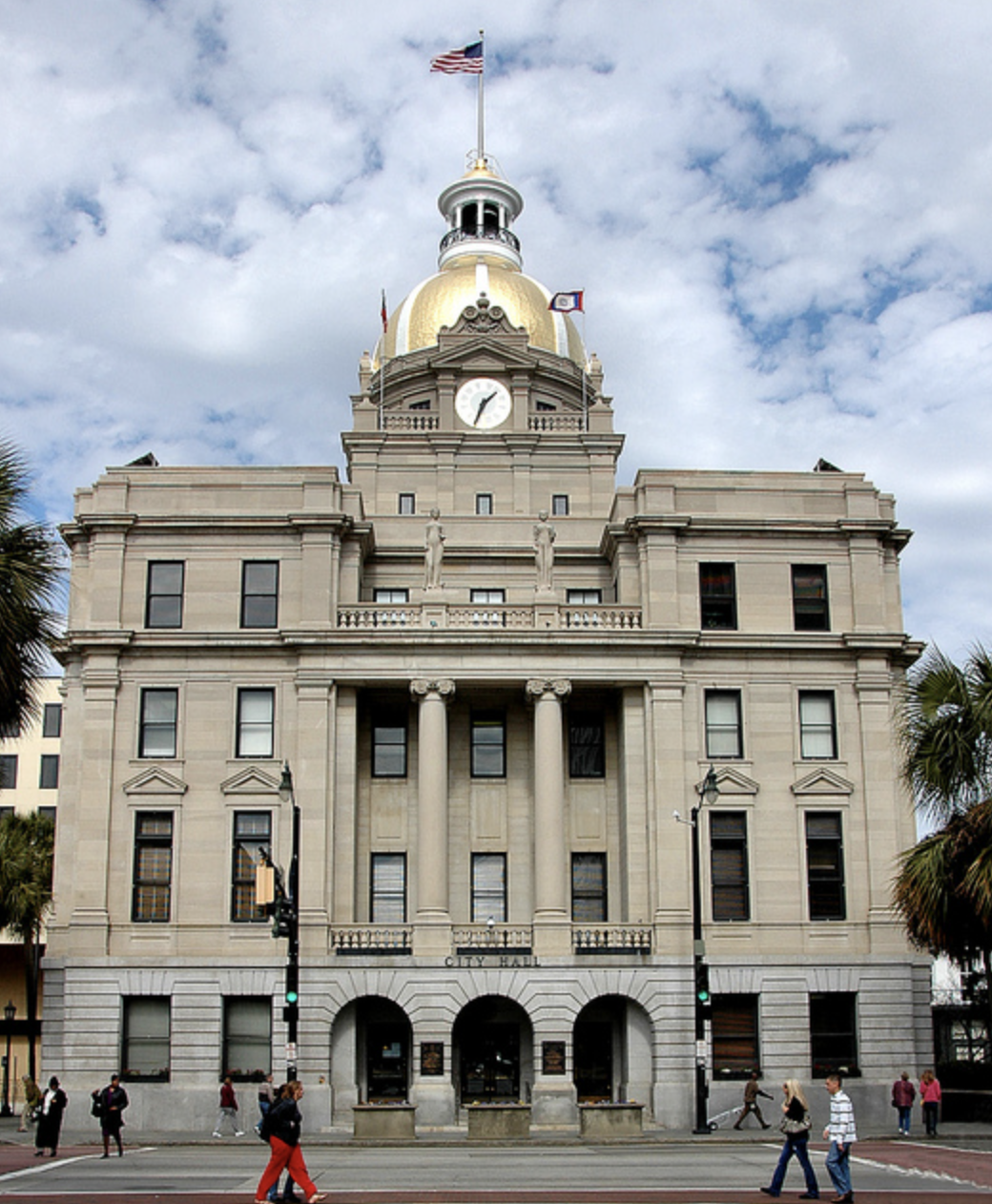
14Municipal Slavery at Savannah City Hall
Location: 2 E Bay Street
___
We often picture American slavery as something that happened on private ground — on plantations, in city mansions, in the fields, behind the doors of private businesses. But Savannah's own records tell a more uncomfortable truth. The city government itself — the municipal authority meant to serve all its residents — hired and owned enslaved African Americans to perform the essential public work that kept Savannah running.
According to historian Barry Sheehy, "people with money, Protestants, Catholics, and Jewish people, the railways, hotels, lumber yards, the City of Savannah, and the Federal Government were large employers of slave labor." The evidence sits in the city's own ledgers. During the antebellum period, enslaved laborers built and maintained Savannah's streets, cleared its drainage ditches, cleaned the public squares that tourists admire today, removed the city's refuse, and carried out the civic improvements that allowed Savannah to grow. The very infrastructure of the city was laid, in significant part, by people the city did not allow to be free.
At first, Savannah obtained these workers through the hiring-out system, renting enslaved people from their owners. But over time the city went further, purchasing enslaved men outright to staff departments such as sanitation and public works. Most of these laborers appear in the records only as property — entries in financial ledgers, valued like equipment. But a handful are known to us by name: Chance, Monday, Bob, and Ellick. In 1864 — less than a year before emancipation finally reached Savannah — the city purchased an enslaved man named Ellick, leaving behind clear, dated, documentary proof that Savannah's municipal government directly owned human beings, and did so almost to the very end of slavery.
For generations, this history remained largely overlooked, scattered and unexamined across separate archives. It came into focus only through the City of Savannah's Municipal Slavery Project, which gathered together council minutes, treasury records, deeds, and other archival documents and read them as a single story. What emerged was undeniable: enslaved labor was not incidental to Savannah's government but integral to it — a foundational part of how the city was built and maintained through the first half of the nineteenth century, written plainly in the public record for anyone willing to look.
___
Sources:
Chatham County Historic Preservation Commission. Regular Meeting Minutes. Chatham County Commission, Savannah, GA, February 4, 2009.
Connect Savannah."When the City Owned Slaves."Connect Savannah, February 16, 2011
The interactive version adds a street-following map, narration audio and a guided stop-by-stop experience.