Self-Guided Heritage Trail · Savannah, GA
Hearths and Homes | North Historic District Trail
Homeownership: The American Dream
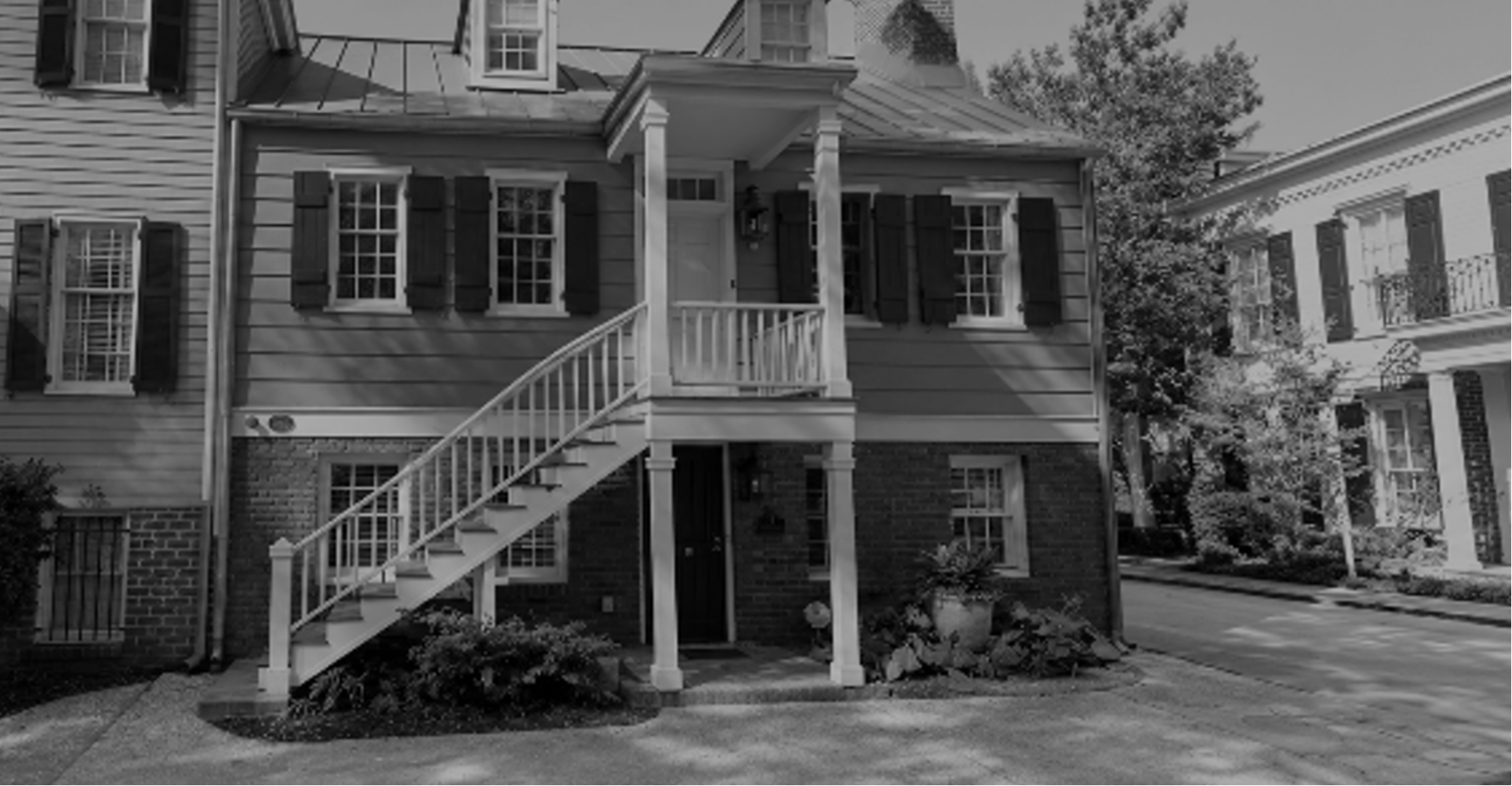
- 1 hr 31 min
- 1.1 miles
- 14 stops
- Free
For an interactive map and audio narration, press Start this trail.
About This Trail
This self-guided African American heritage trail explores the homes and properties owned by Savannah's free people of color and urban enslaved — people for whom owning property was one of the few paths to economic independence.
The South, and Savannah in particular, was governed by systems of discrimination that were deeply oppressive yet imperfect. In the gaps between those laws, free people of color found openings — acquiring homes and investment properties across the city despite rules built to stop them. Many didn't just survive; they prospered, in a society that offered freedom without equality and autonomy without security. For some, a second property brought rental income. For those who owned enslaved people, another dwelling may have housed the people they enslaved.
After 1818, Georgia law forced free and enslaved people to hold property in the name of a white guardian or trustee — so the names on historic deeds don't always reveal the true owners. The record made it look as though white Savannahians owned far more of the city than they did. Beneath it was a substantial Black property-owning class, operating through white intermediaries. The law didn't make ownership impossible. It made ingenuity a requirement.
Every home was more than an asset. It was a claim to belonging, a foothold in a society built to deny them one, and proof that their futures could not be entirely controlled by the laws written against them.
The Route
1John Ballon Homes, 1839
Location: 415(417) and 419 East Congress Street
___
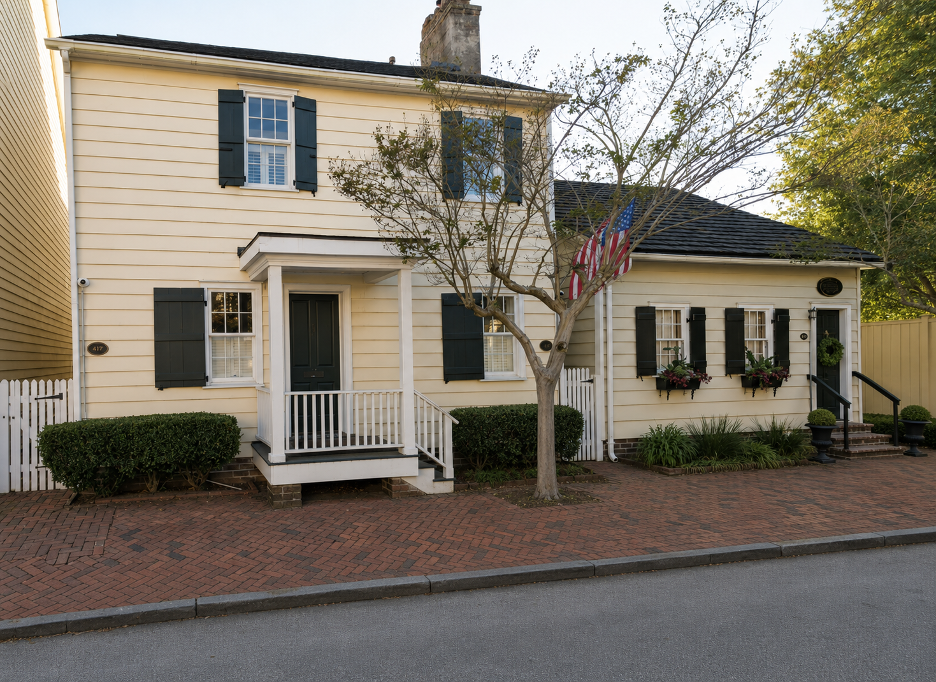
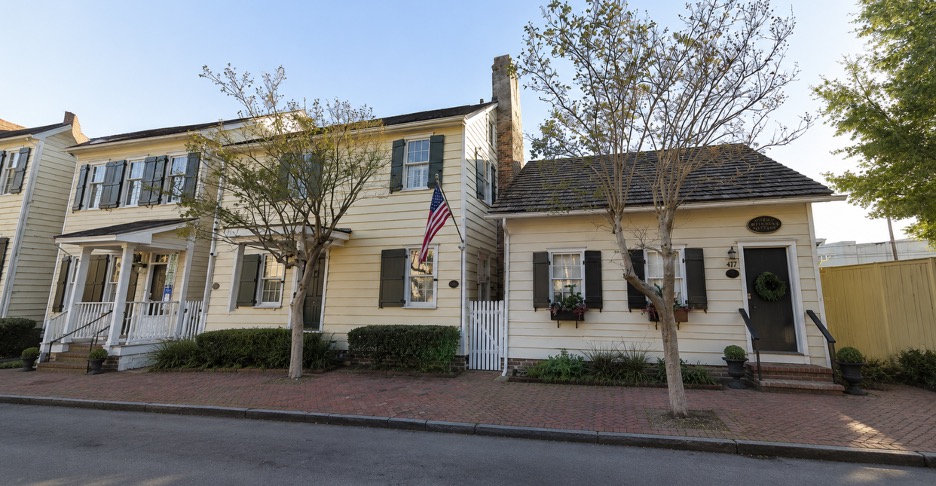
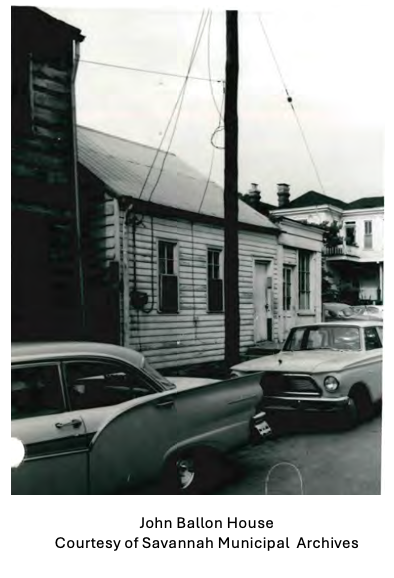
Still standing and known today as the Freeman’s Cottages, both houses were built around 1839 for John Ballon, a free man of color. Little is known about John Ballon’s business history or the source of his finances; however, he is believed to have emigrated from Haiti.
Although Ballon was legally free, Georgia imposed controls and limitations requiring free Black property owners to conduct certain transactions through a White legal guardian. In Ballon’s case, that guardian was a man named John Sullivan, who served as the legal intermediary in the property’s purchase.
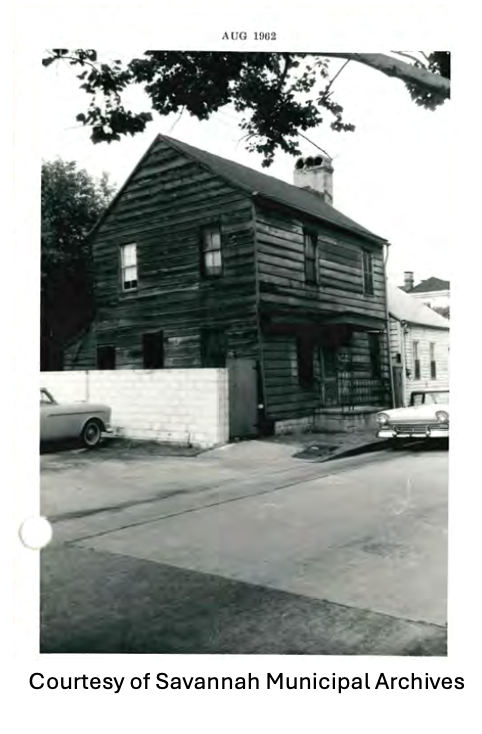
By the turn of the twentieth century, the cottages experienced periods of neglect before eventually being restored. The property was once occupied by an Irishwoman named Catherine Sullivan, likely a relative of the guardian, John Sullivan, who operated a tiny general store built next door. The addition shared a stoop and common wall on the back of the house. The home at 417 East Congress Street is recognized on the National Register of Historic Places. The history of the structure is famously detailed in Susan B. Johnson's book, Savannah's Little Crooked Houses: If These Walls Could Talk. Though that storefront has since been demolished, the photographs shown here reveal only the dramatic transformation of the properties from their deteriorated condition to the carefully preserved structures you see today. Today, at least one is being used as a vacation rental.
___
Sources:
City of Savannah Municipal Archives. Historical photograph credit. Courtesy of the City of Savannah Municipal Archives, Savannah, GA.
Lumpkin-White, Arva. Photograph credit
2Manette Tardieu Homes, 1823
Location: 421 East Congress Street
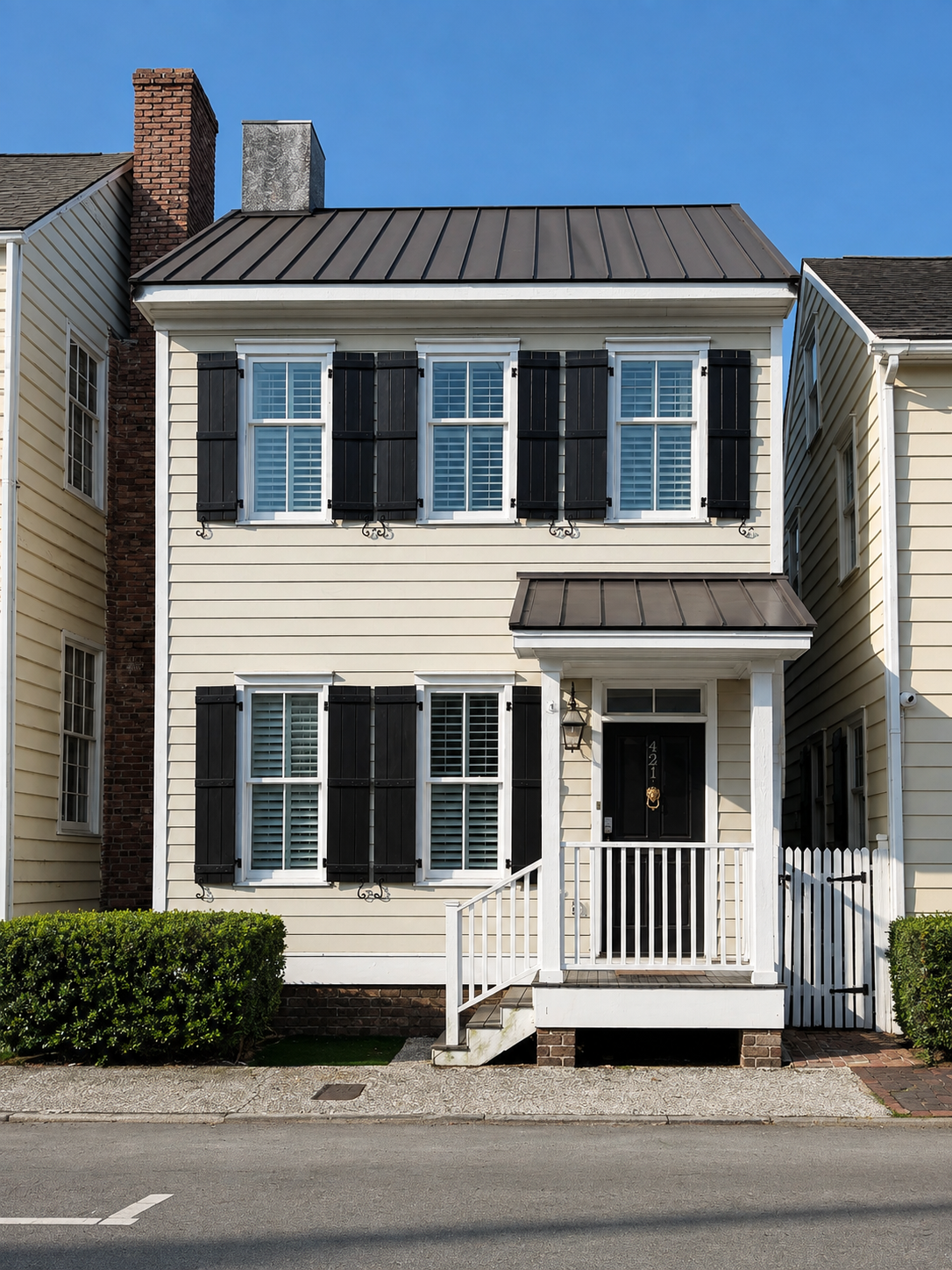
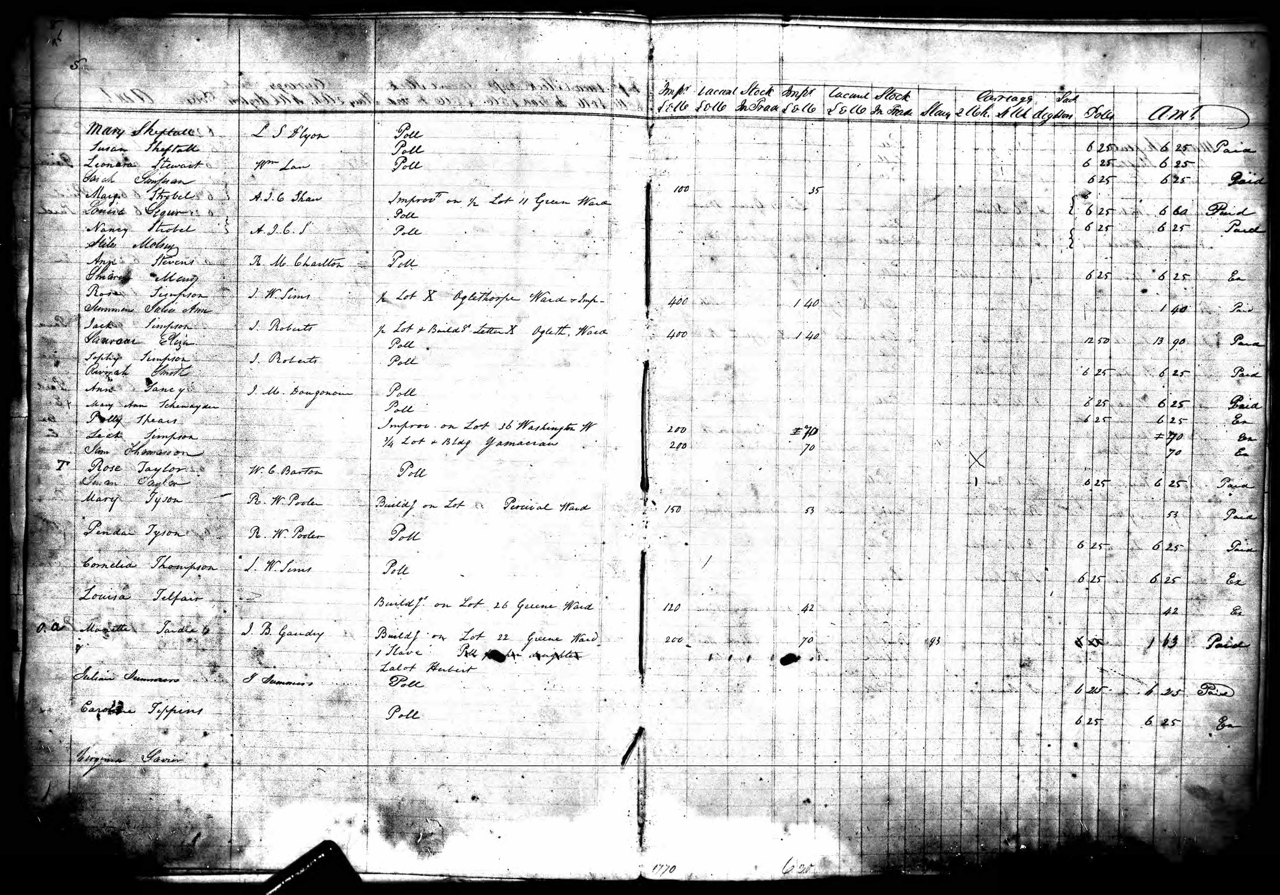
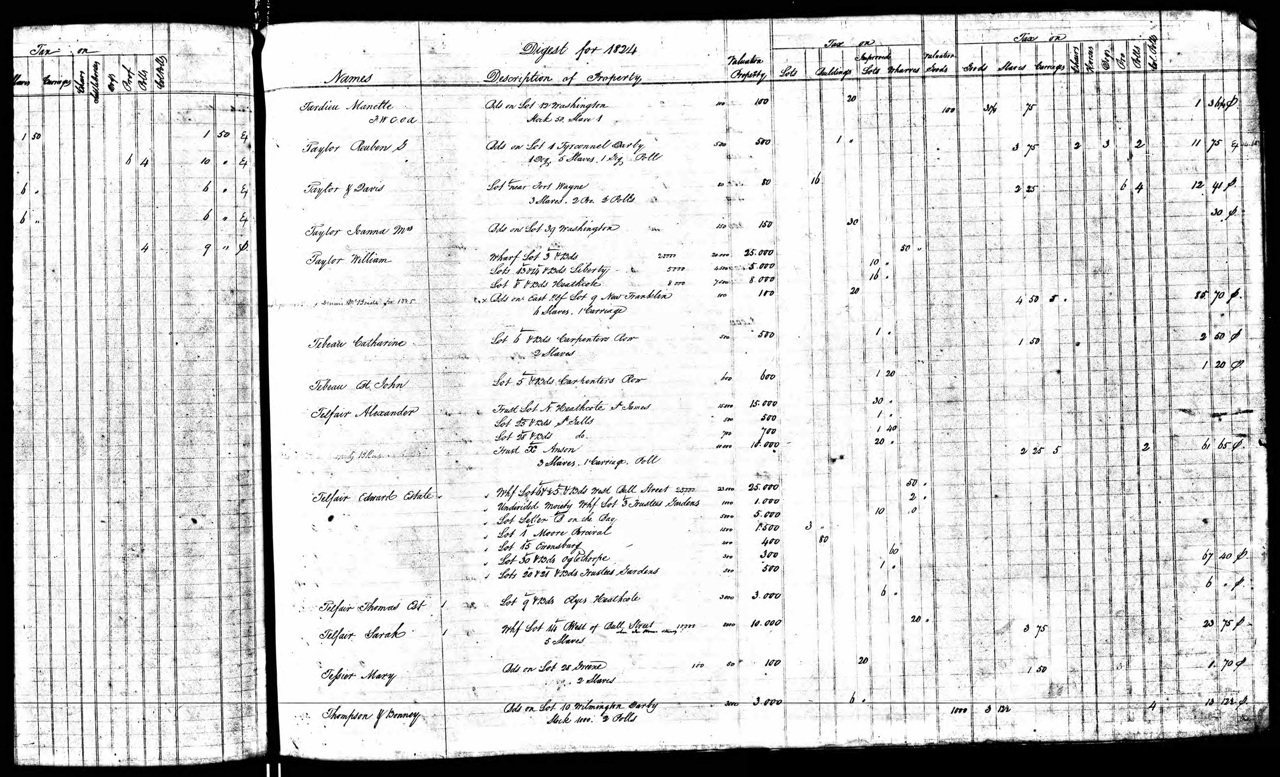
Manette Tardieu is hidden in plain sight. She was a free woman of color and shopkeeper born in 1776. Her arrival in Savannah followed immigration from Saint-Domingue during the Haitian Revolution in 1795. Tardieu had a daughter and was the owner of one enslaved person. Not much is known about her personal life or the location of her business; however, she has left a sizable footprint in the tax digests of downtown Savannah.
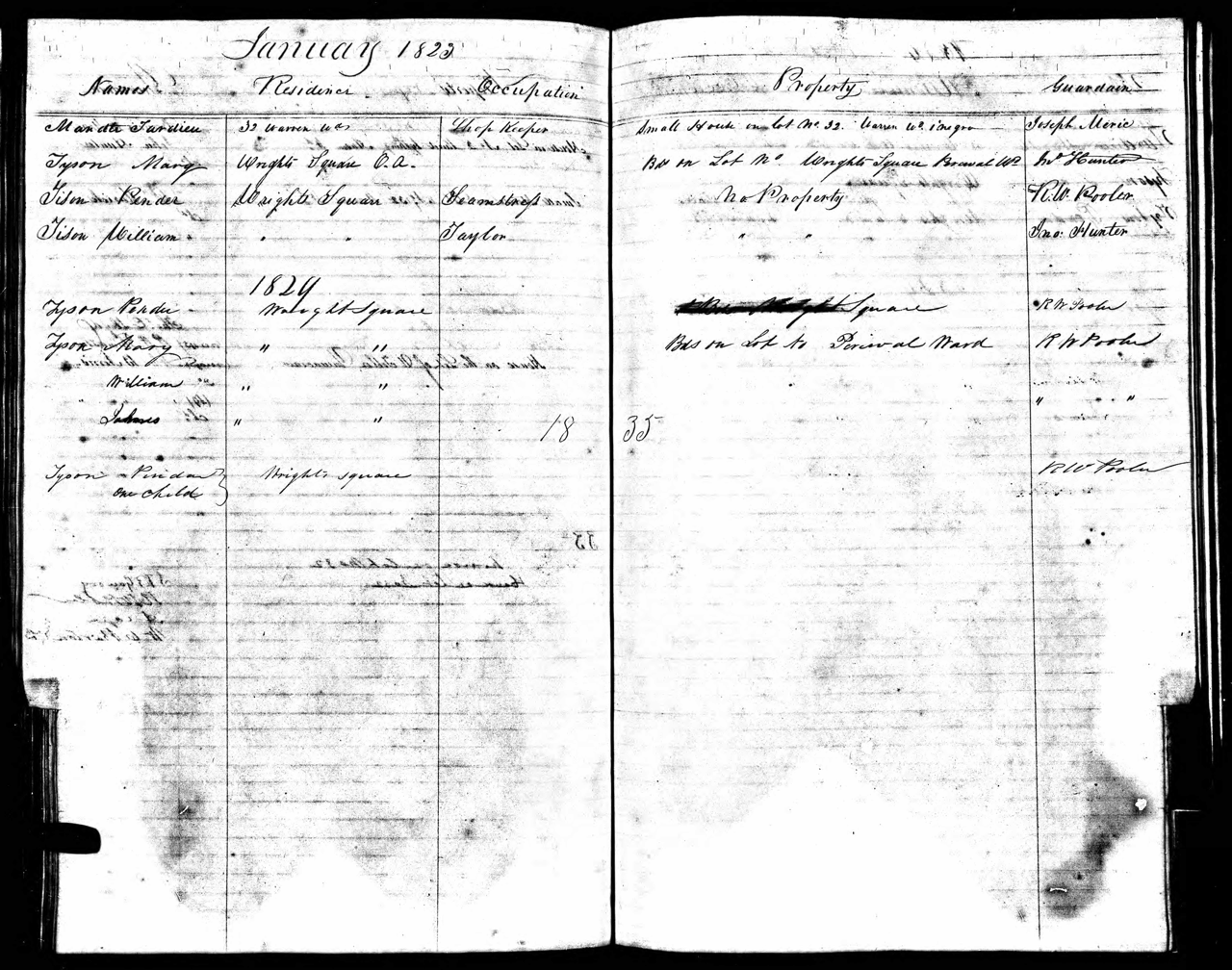
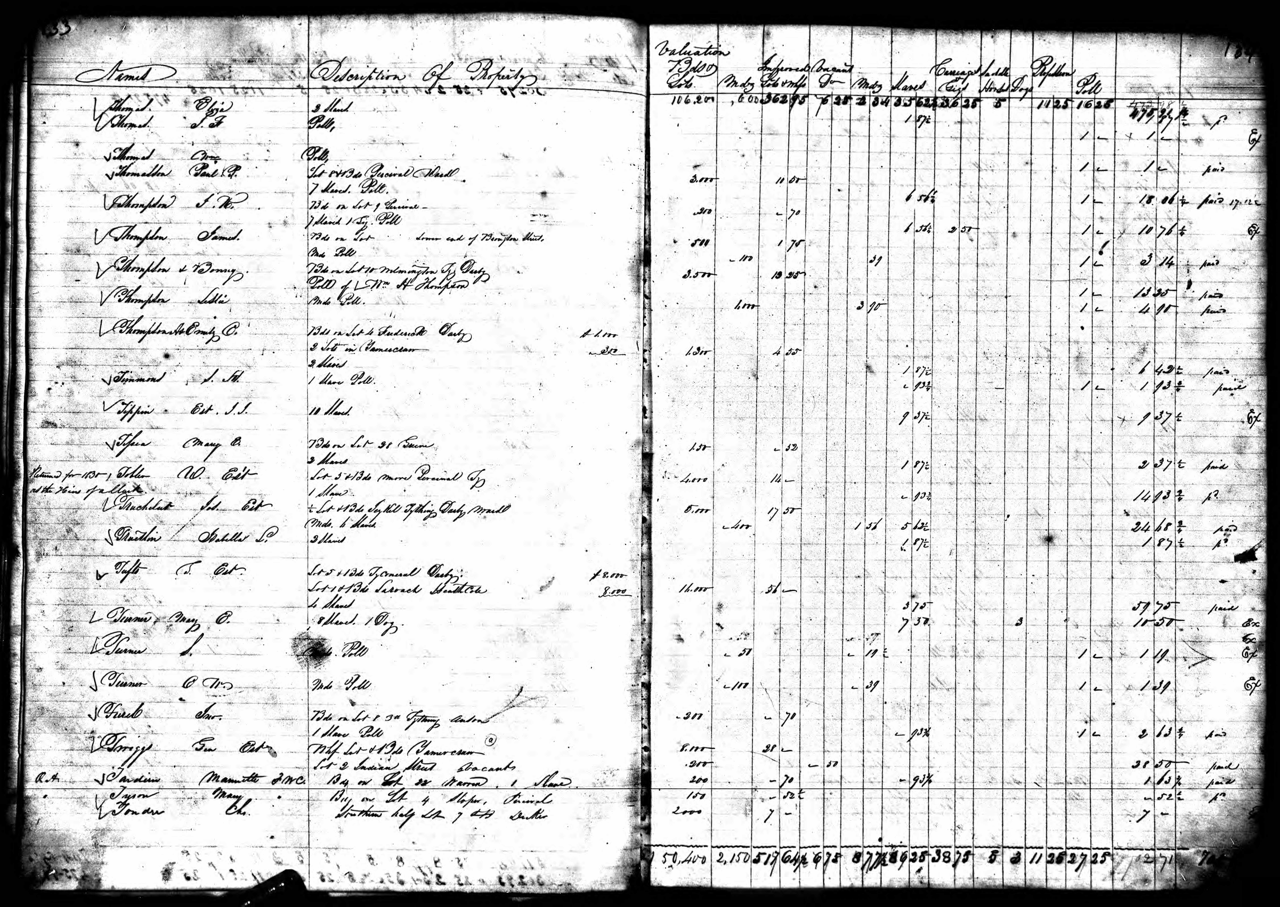
As a free woman of color and businesswoman in nineteenth-century Savannah, she appears throughout the surviving records—but rarely under the same name more than once. Clerks recorded her as Manette Tardier, Monet Tarder, Manette Tardies, Mandle Tardieu, Mandte Tardieu, and other variations, often translating unfamiliar French sounds into approximate spellings. Her presence also emerges through proximity of others in the records. In several registries, she appears on the page with free woman of color Mary Tyson and Alexander Telfair, whose names were recorded more consistently. These neighboring entries offer a glimpse of how free people of color occupied Savannah’s streets, communities, and records—even when the documentation obscured their identities.
Manette’s story is therefore not one of absence, but of fragments: a name altered by clerks, a neighboring entry, a property record that may have been held in trust by a White guardian, and a brief newspaper notice that together bring her back into view from a place of hiding in plain sight. Nearly two hundred years have passed since she first entered the records--- now she can finally be seen.
Tax digests show her holding property or having an interest in several wards in Savannah.
Known property entries include:
• 1834: Lot 22, Greene Ward
• 1829, 1830, 1831,1836: Lot 22, Warren Ward, later associated with the Mongin House
• 1828: Lot 31, Warren Ward
• 1823,1834: Lot 32, Warren Ward
• 1824: Lot 12, Washington Ward
___
Sources:
Hartridge, Walter C., "The Glory That Was Savannah: Recently Restored Carswell House Steeped In History,"Savannah Morning News-Evening Press Magazine, March 19, 1967
City of Savannah Municipal Archives / Chatham County Records. Mandte Tardieu in Savannah, Georgia, U.S., Registers of Free Persons of Color, Volume 1, 1817, 1823-1829.[Lot 32, Warren Ward]. Digital images, Ancestry.com [1824]
City of Savannah Municipal Archives / Chatham County Records. "Land Tax and Property Records, 1809–1938 [Manette Tardieu accessed via Mary Tyson search] Tax Digests 1834-1837. [Lot 22 Greene Ward] Digital images, Ancestry.com. [1834]
City of Savannah Municipal Archives / Chatham County Records. "Land Tax and Property Records, 1809–1938." [Manette Tardieu accessed via AlexanderTelfair search], Tax Digests 1816-1824. [Lot 12, Washington Ward]. Digital images, Ancestry.com. [1824]
City of Savannah Municipal Archives / Chatham County Records. "Land Tax and Property Records, 1809–1938." [Manette Tardieu accessed via Alexander Telfair search] Tax Digests 1826-1832. [Lot 31, Warren Ward]. Digital images, Ancestry.com. [1828]
Ports, Michael A. Georgia Free Persons of Color. Volume IV: Chatham County, 1817–1863. Baltimore: Clearfield Company (2016): 124,256

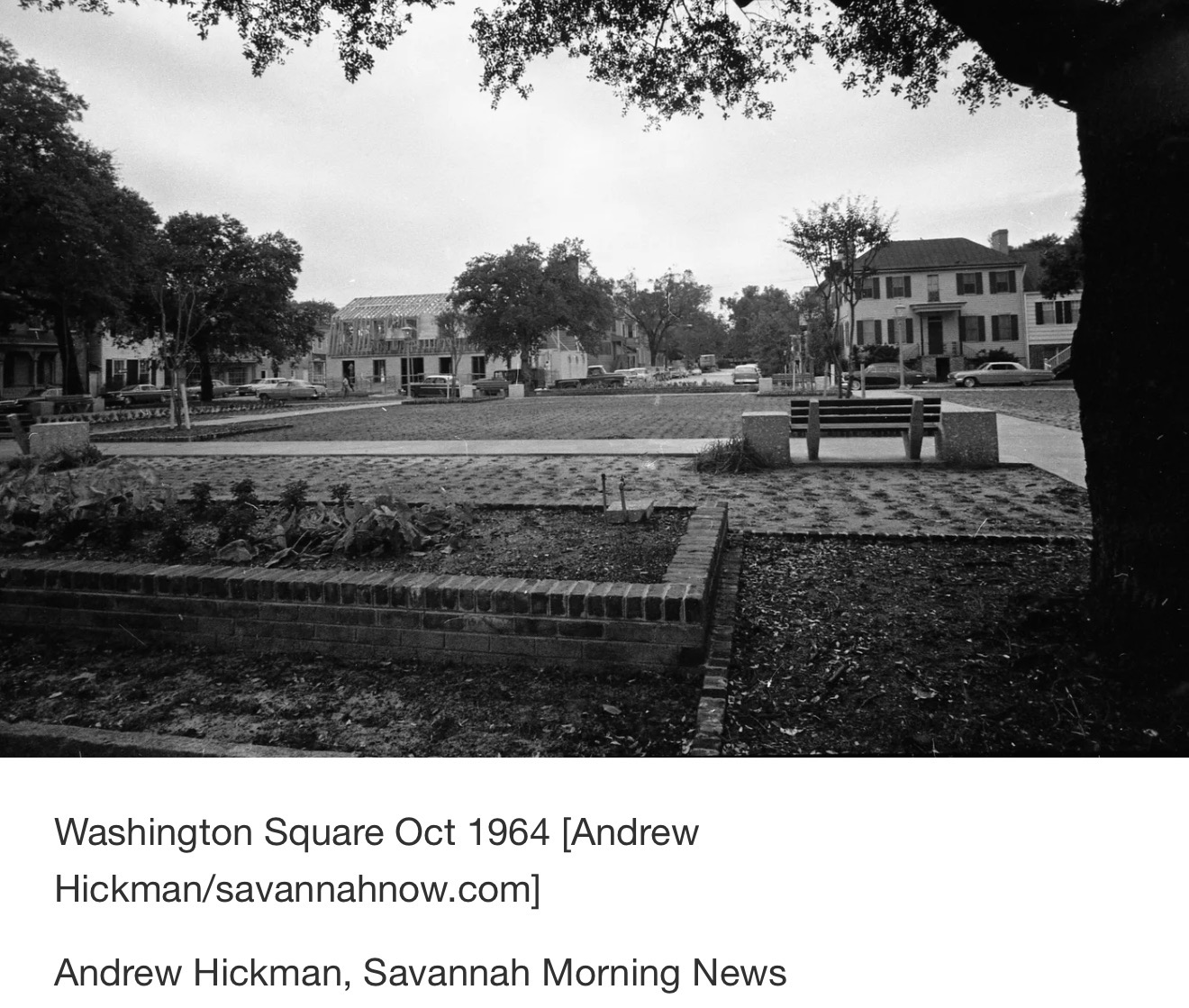
3Major Charles Odingsells and son Anthony Odingsells (free man of color) Homes
Location: 510 East Saint Julian Street and Little Wassaw Island
___
Revolutionary War veteran Major Charles Odingsells (1754-1810) came to Savannah early in life and became a prominent planter and state legislator. He was a large Savannah landowner, including sizable holdings on Skidaway and other barrier islands. He lived much of his time on the Skidaway Island property and maintained this home, built in 1797, as his Savannah residence.
Anthony Odingsells ( free man of color),
The son of Major Charles Odingsells and an enslaved woman, Hannah, he was born enslaved and was freed by his father. When Charles Odingsells died, he generously remembered his mulatto son, leaving him the 200-acre Little Wassaw Island and eleven enslaved laborers. The management of the assets left in his father's will was entrusted to a guardian, Mr. C. O. Screen, of Sunbury/Midway. He was instructed to oversee Anthony’s education, as he was to receive a “first-rate education” befitting the son of a wealthy planter.
Among free people of color, he was the largest landowner of his time and quite successful in farming. Continuing to amass property, he grew his initial inheritance to two thousand acres of land, thirteen enslaved laborers, thirty-five cows, fifty sheep, and seventy-five pigs. Selling many meats and produce in the central market and in Thunderbolt, he produced milk, meats, wool, and hides, and was a fisherman and oyster farmer. With his business holdings secure, Anthony met and married a young free woman of color named Madalane. Odingsells' farm allowed them to live a very comfortable life.
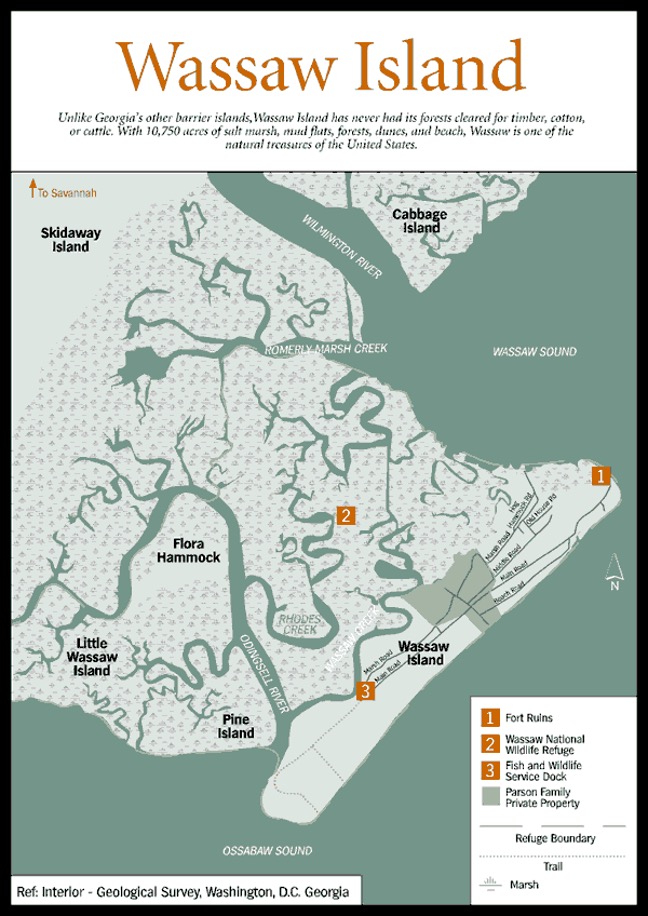
In 1835, Anthony, with the help of his enslaved laborers, cleared land on Little Wassaw Island and built a home for his family and quarters for the enslaved. Although Pine Island was the most desirable spot on Little Wassaw, with its lovely bluff facing Ossabaw Sound, Anthony built on Flora Hammock, a mile upstream from Pine Island, because it was more likely to ensure privacy for his family.
Anthony and Madalane had a daughter, Lucy Ann, born in 1828, a few years before their move. Her early life on Little Wassaw was isolated, with few opportunities for playing with outside children except the enslaved children. She was educated by her parents and blossomed into a cultured young lady. As she matured, a young free man of color, I.M. Barnard, who had business with her father at Little Wassaw, took a fancy to her. They were married in 1847.
Although little is known about Barnard's background, it is thought that he had a background similar to Odingsells', with his father ensuring he received a good education as a free man of color. His father was thought to be Timothy Barnard and an enslaved woman from Wassaw Island. Timothy Barnard purchased neighboring Great Wassaw Island in 1792.
This would explain I.M.'s presence in the vicinity of Little Wassaw as well as his freedom and excellent education. Barnard and Lucy Ann stayed on Little Wassaw with Madalane and Anthony for fifteen years after their marriage.
Anthony and Madalane both died in the late 1870's, and Barnard and Lucy Ann sold Little Wassaw to the Parsons family of Maine. George Parsons purchased the island as a gift for his wife. The family eventually formed the Wassaw Island Trust to preserve Wassaw in its natural state. After the Odingsells sold the island, it reverted to an uninhabited island.
___
Sources:
City of Savannah Municipal Archives. Historical photograph credit. Courtesy of the City of Savannah Municipal Archives, Savannah, GA.
Hoskins, Charles Lwanga. Yet With a Steady Beat: Autobiographies of Early Black Savannah. Savannah: Gullah Press, 2001, 108.
Johnson, Whittington B. "Free Blacks in Antebellum Savannah: An Economic Profile." The Georgia Historical Quarterly 64, no. 4 (Winter 1980): 418–431.
Jones, Jacqueline. Saving Savannah: The City and the Civil War. New York: Vintage Books, 2008, 48, 225.
Lumpkin-White, Arva. Photograph credit: others as noted
Morrison, Mary Lane, ed. Historic Savannah: Survey of Significant Buildings in the Historic and Victorian Districts of Savannah, Georgia. Savannah, GA: Historic Savannah Foundation, 1979, 48.
Schweninger, Loren. "Prosperous Blacks in the South, 1790–1880." The American Historical Review 95, no. 1 (February 1990): 31–56.
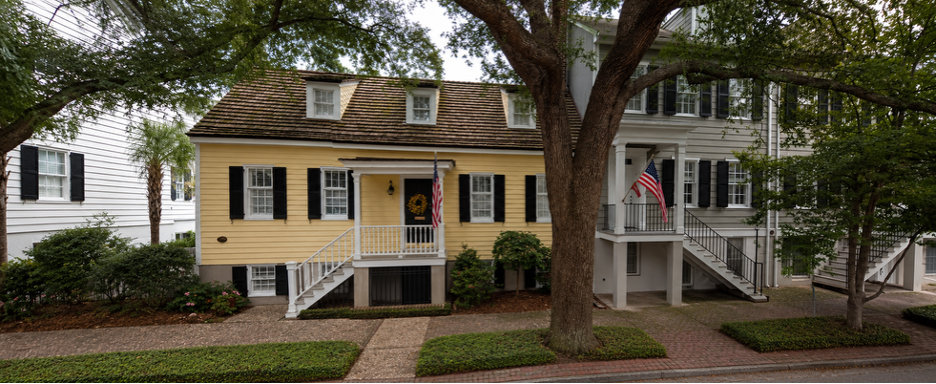
4Simon Mirault Home, 1852
Location: 21 Houston Street
___
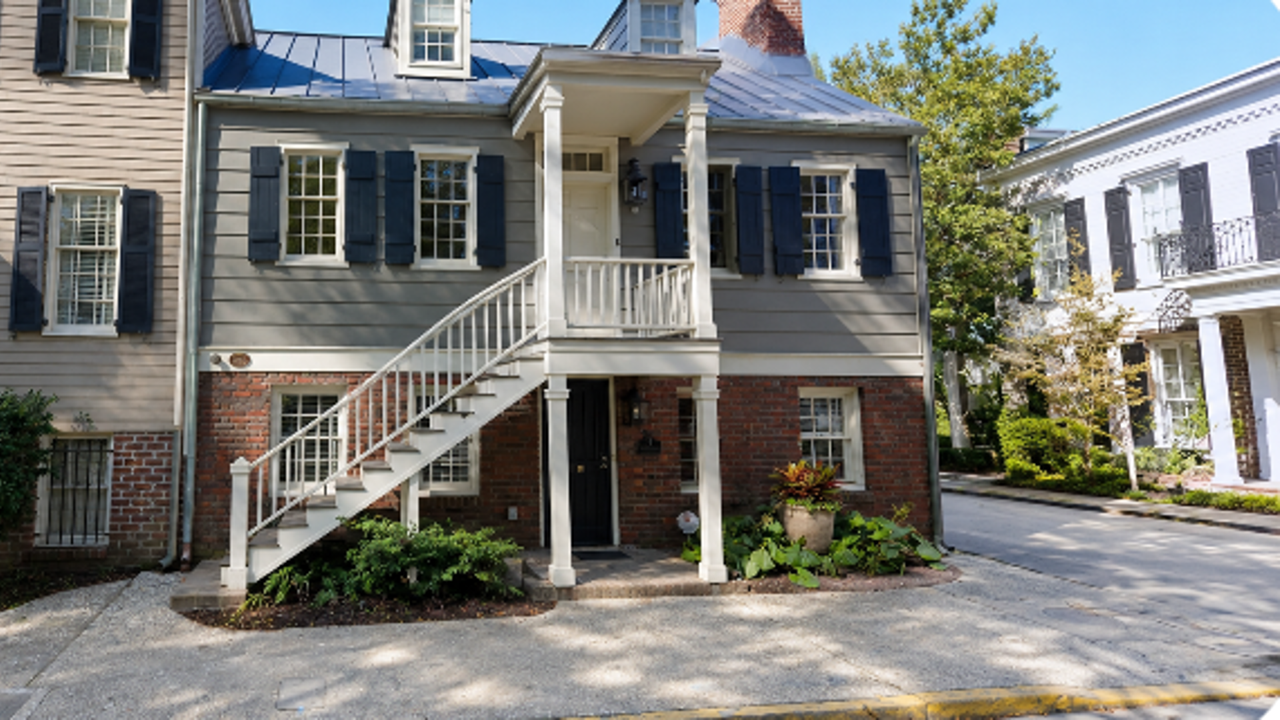
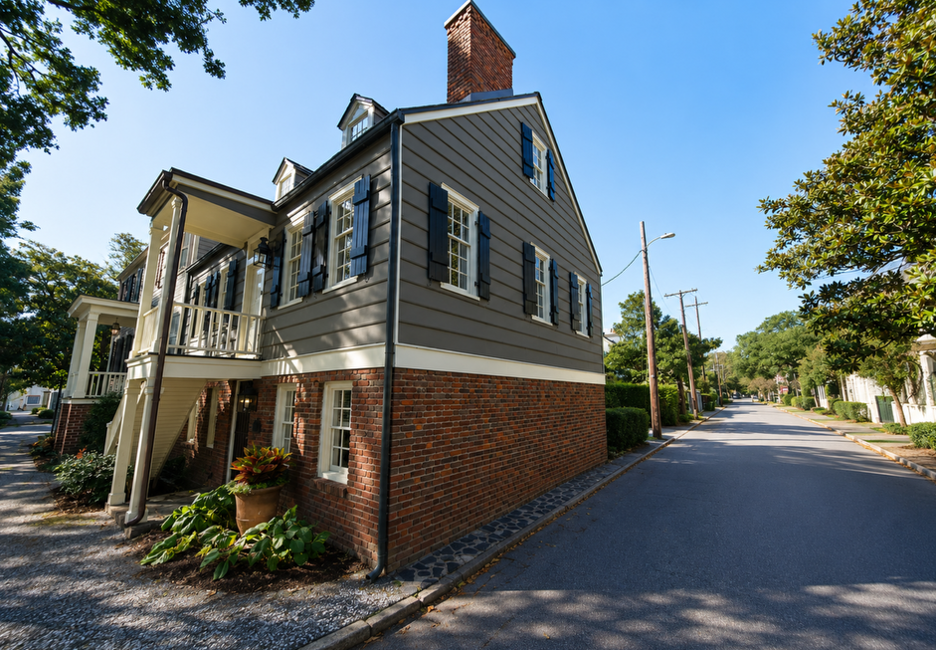
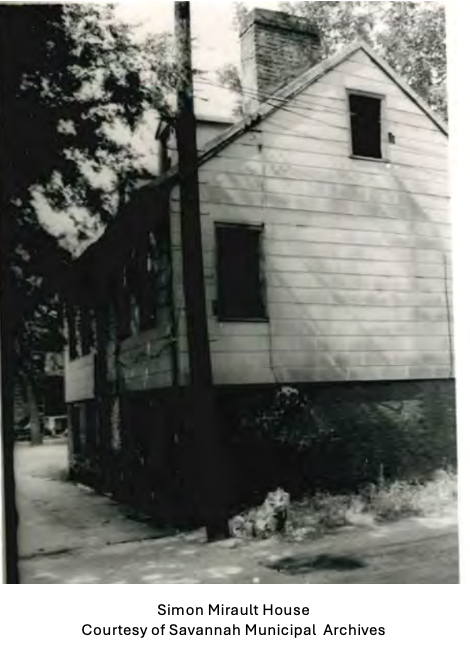
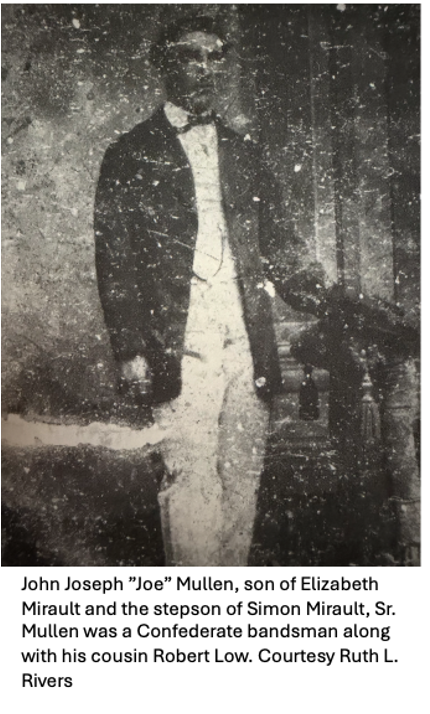
Simon Mirault was born in Savannah as a free man of color, and the son of Haitian émegrés. In 1812, as a local businessman, he operated a confectionery at the corner of Whitaker and Broughton Streets. He owned two enslaved people.
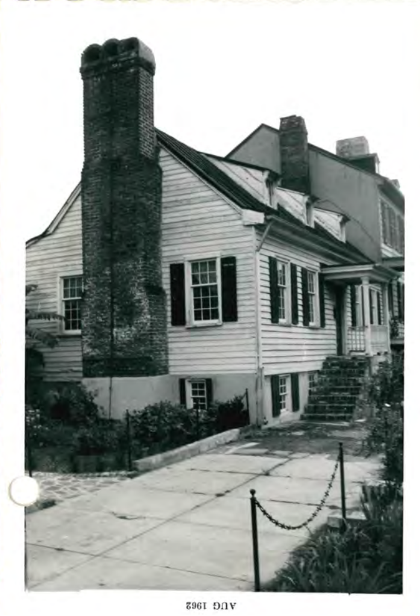
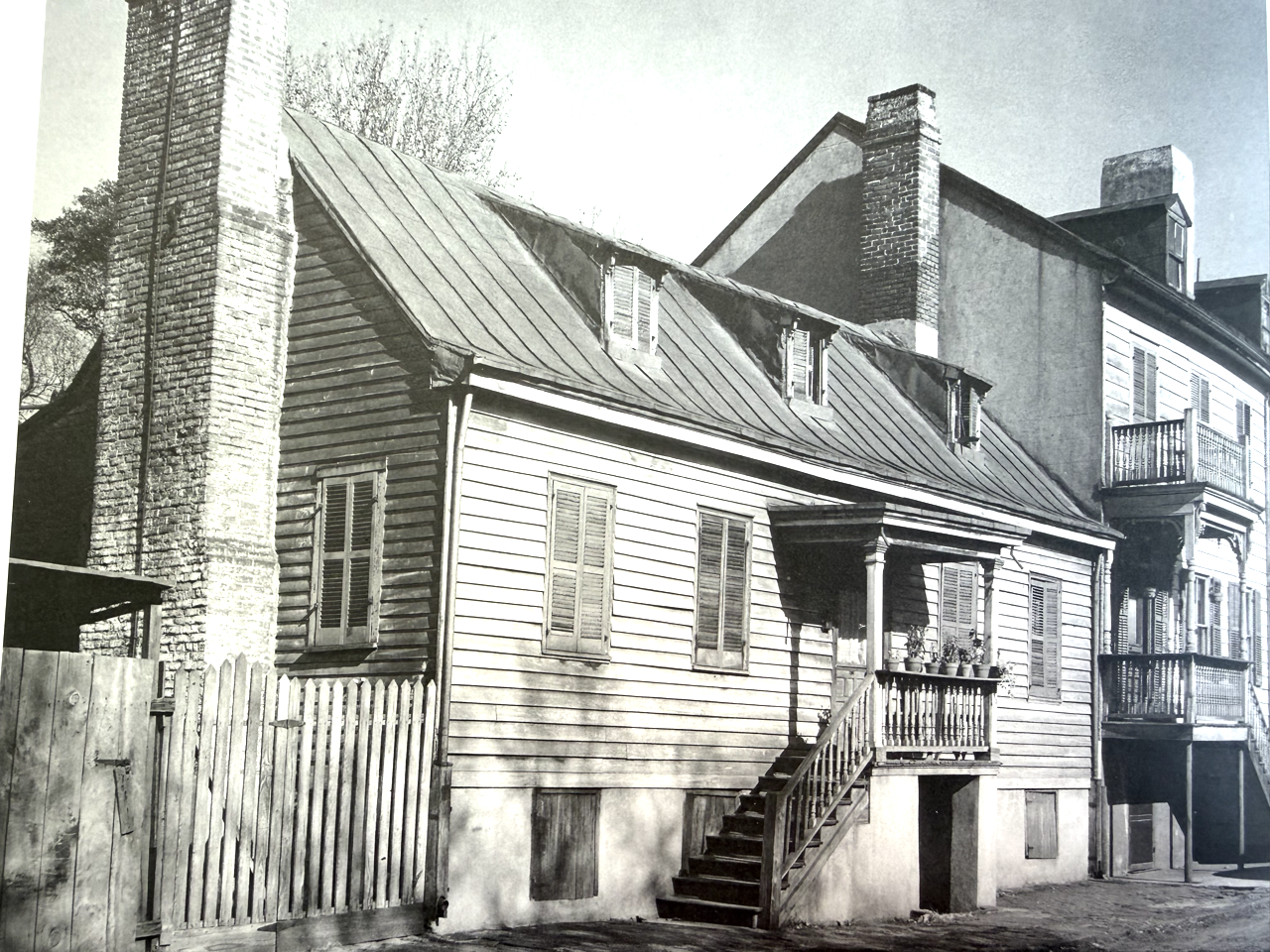
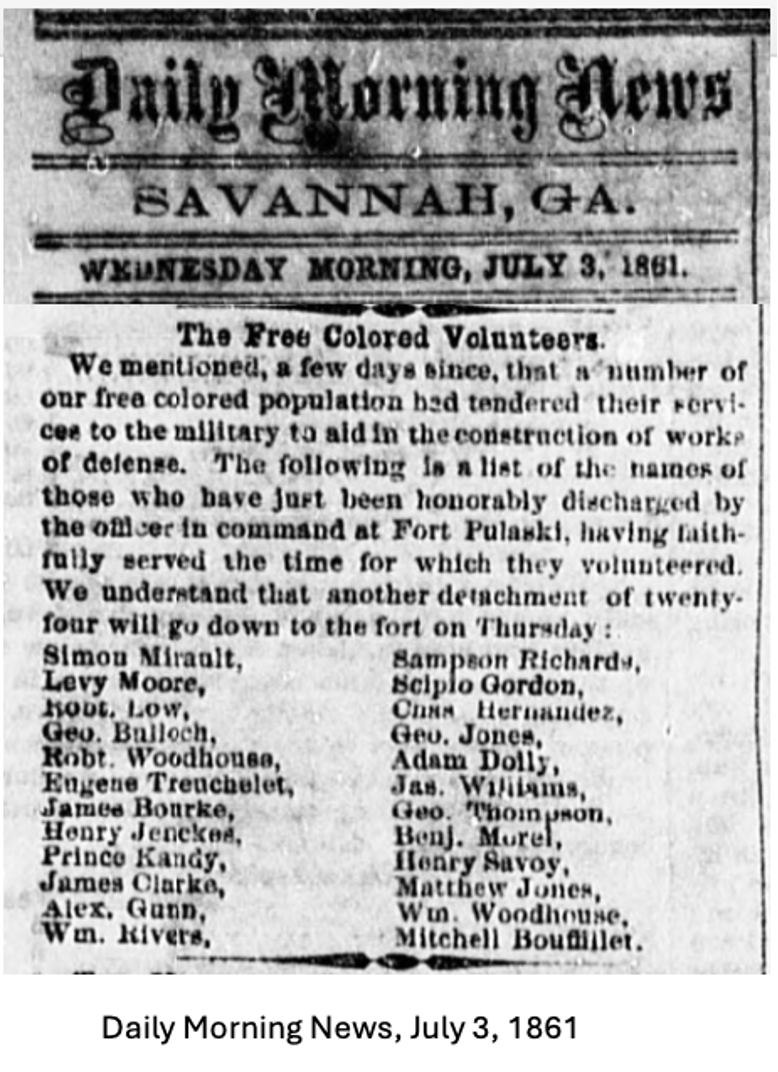
Before his career as a confectioner, Mirault was a brick mason. As a skilled brick mason, he demonstrated civic responsibility by volunteering with other free men of color to build Savannah’s defenses and Fort Pulaski, an effort recognized by the Daily Morning News in July 1861. His wife Elizabeth worked as a washerwoman, and they had four children: Rose, Louis, Francis, and Susan. He earned enough to build the home that still stands today. The home, however, was moved from its original location in Troup Ward to its current location on Houston Street—the historical photo dates to 1962.
___
Sources:
City of Savannah Municipal Archives. Historical photograph credit. Courtesy of the City of Savannah Municipal Archives, Savannah, GA.
[“Daily Morning News.” July 3, 1861. Image 2. Savannah, Georgia. Georgia Historic Newspapers. Digital Library of Georgia. Accessed August 22, 2026]
Hoskins, Charles Lwanga. W. W. Law and His People: A Timeline and Biographies. Savannah: Gullah Press, 2012, 27.
Hoskins, Charles Lwanga. Yet With a Steady Beat: Autobiographies of Early Black Savannah. Savannah: Gullah Press, 2001, 14.
Johnson, Whittington B. “Free Blacks in Antebellum Savannah: An Economic Profile.” The Georgia Historical Quarterly 64, no. 4 (1980): 418–31. http://www.jstor.org/stable/40580706.
Lumpkin-White, Arva: Photograph credit: others as noted.
Morrison, Mary Lane, ed. Historic Savannah: Survey of Significant Buildings in the Historic and Victorian Districts of Savannah, Georgia. Savannah, GA: Historic Savannah Foundation, 1979, 48.
Ports, Michael A. Georgia Free Persons of Color. Volume IV: Chatham County, 1817–1863. Baltimore: Clearfield Company, 2016. 222, 296- 298.
5Saunders Motta Property
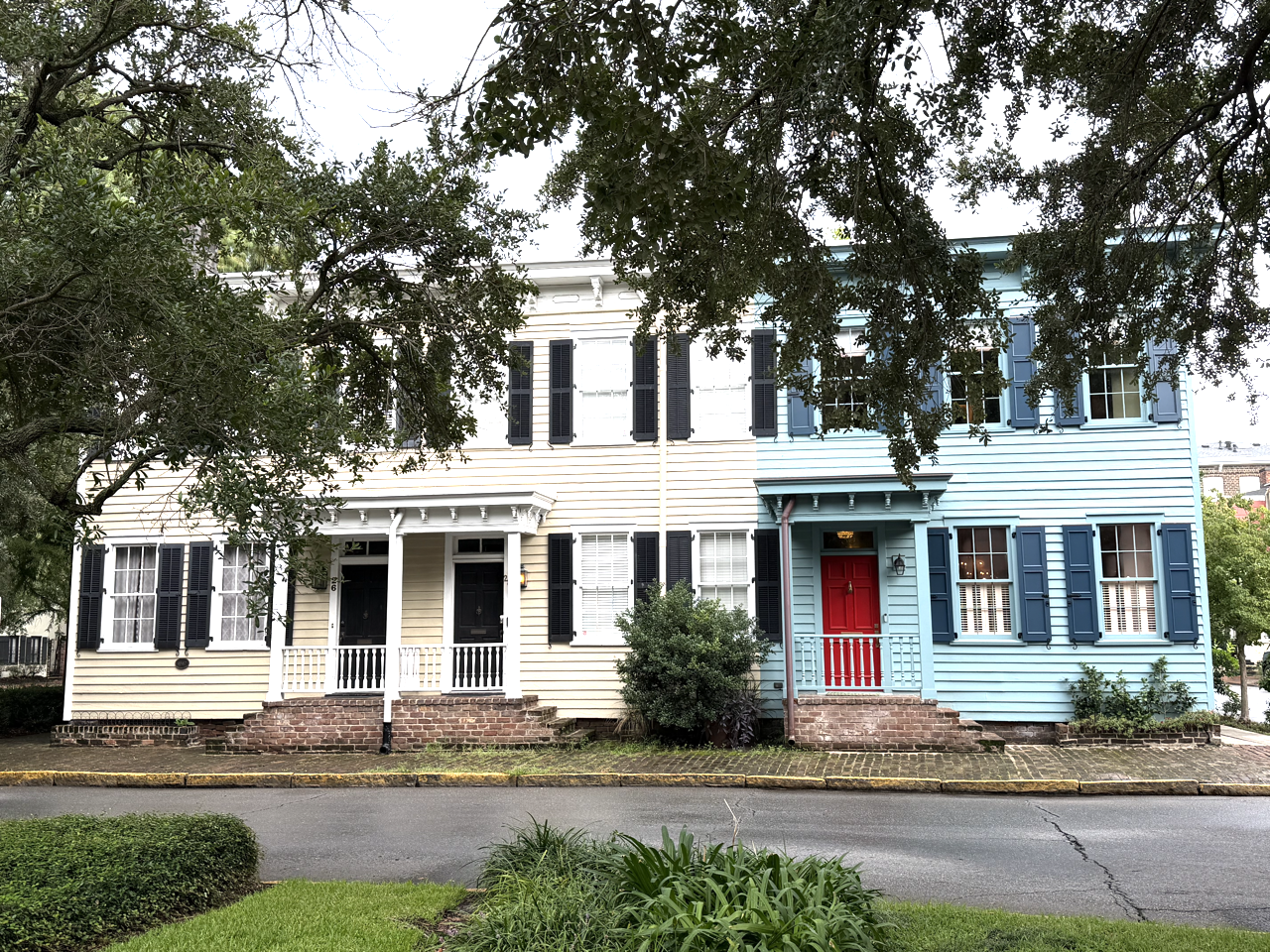
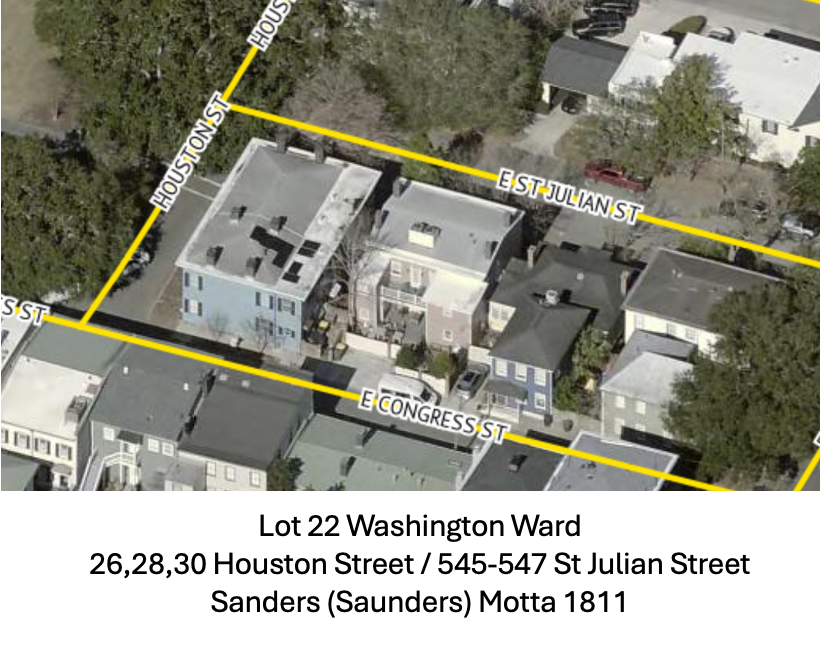
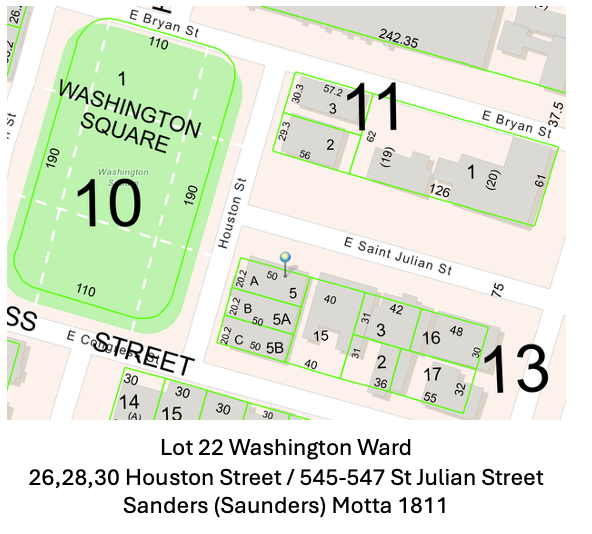
Location: 26,28,30 Houston Street and 545 East Saint Julian Street (Two properties on the same lot)
___
* This property was also in the tax digest for free man of color, George Carter.
___
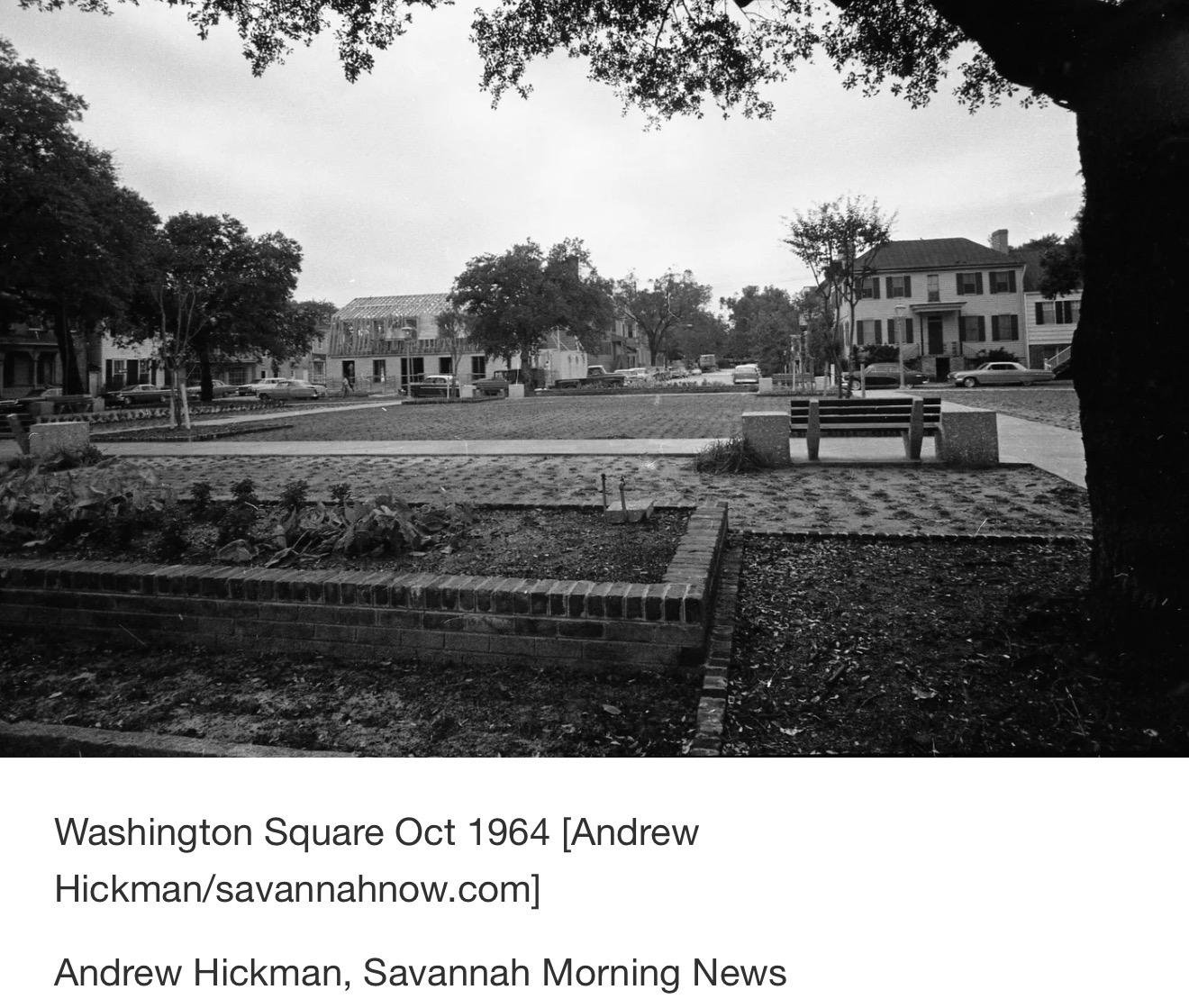
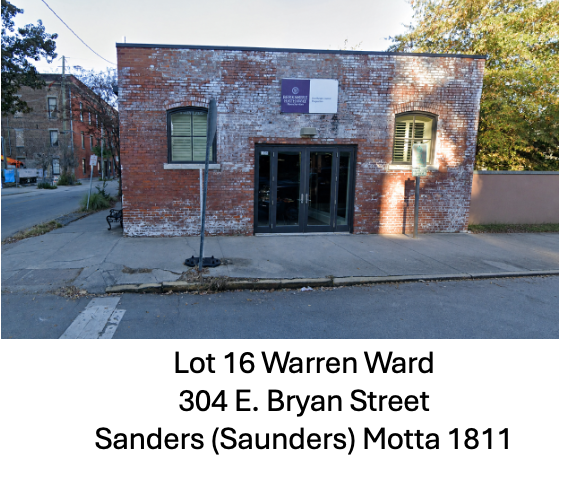
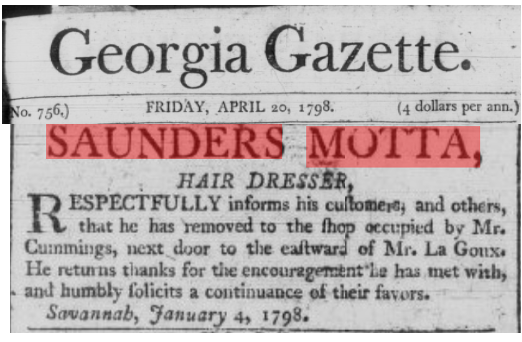
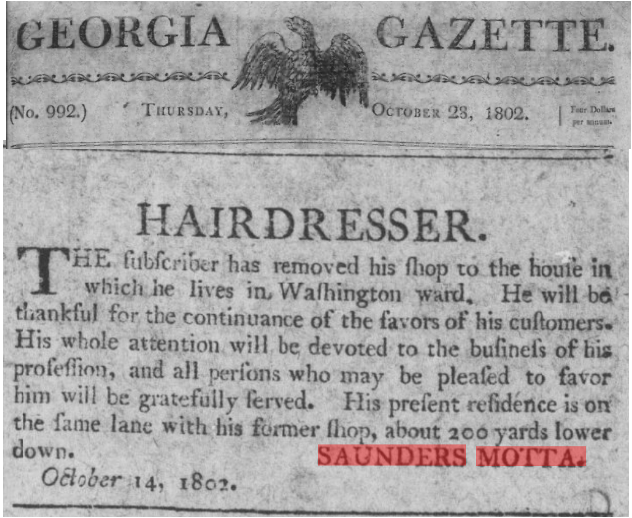
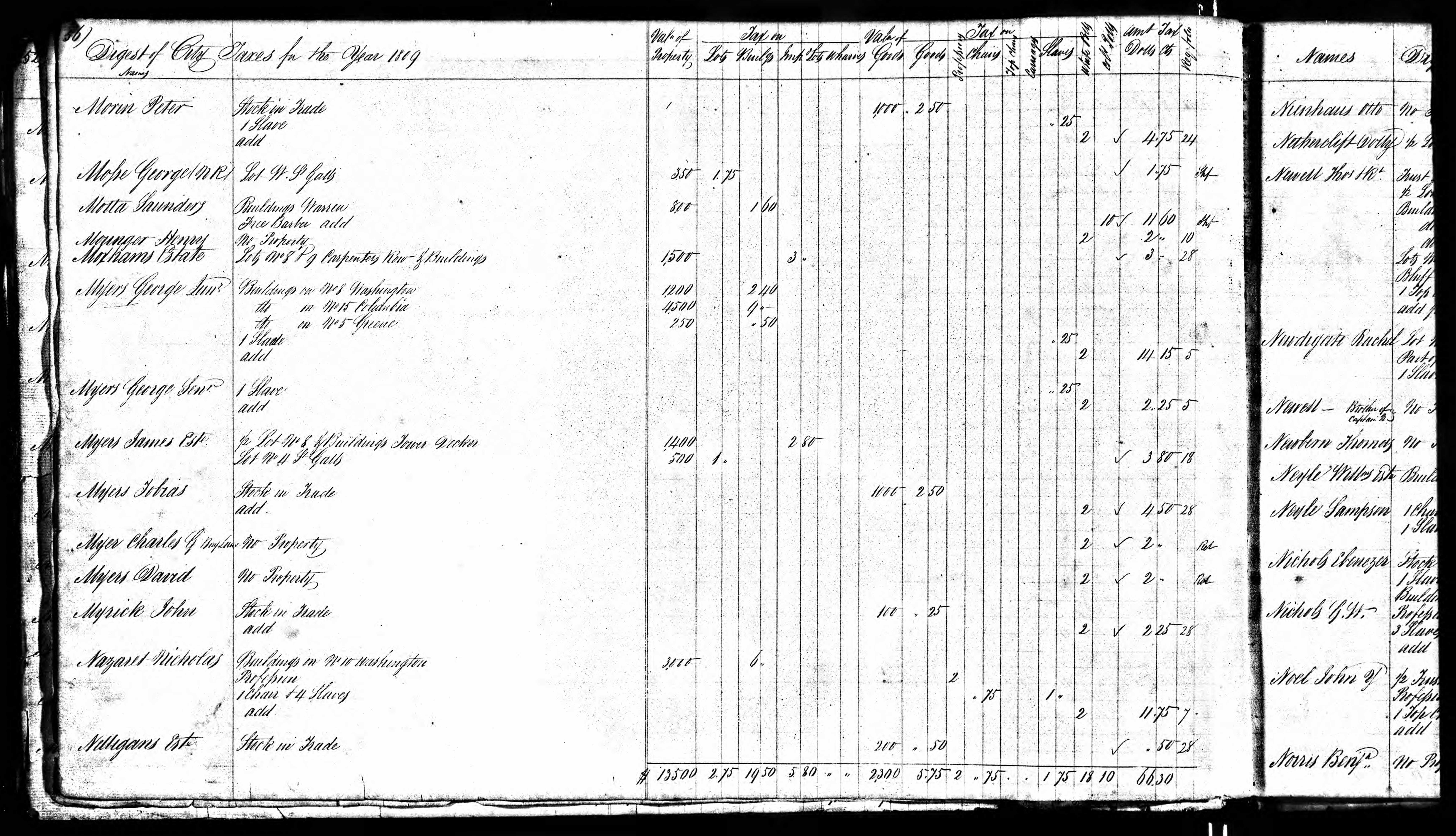
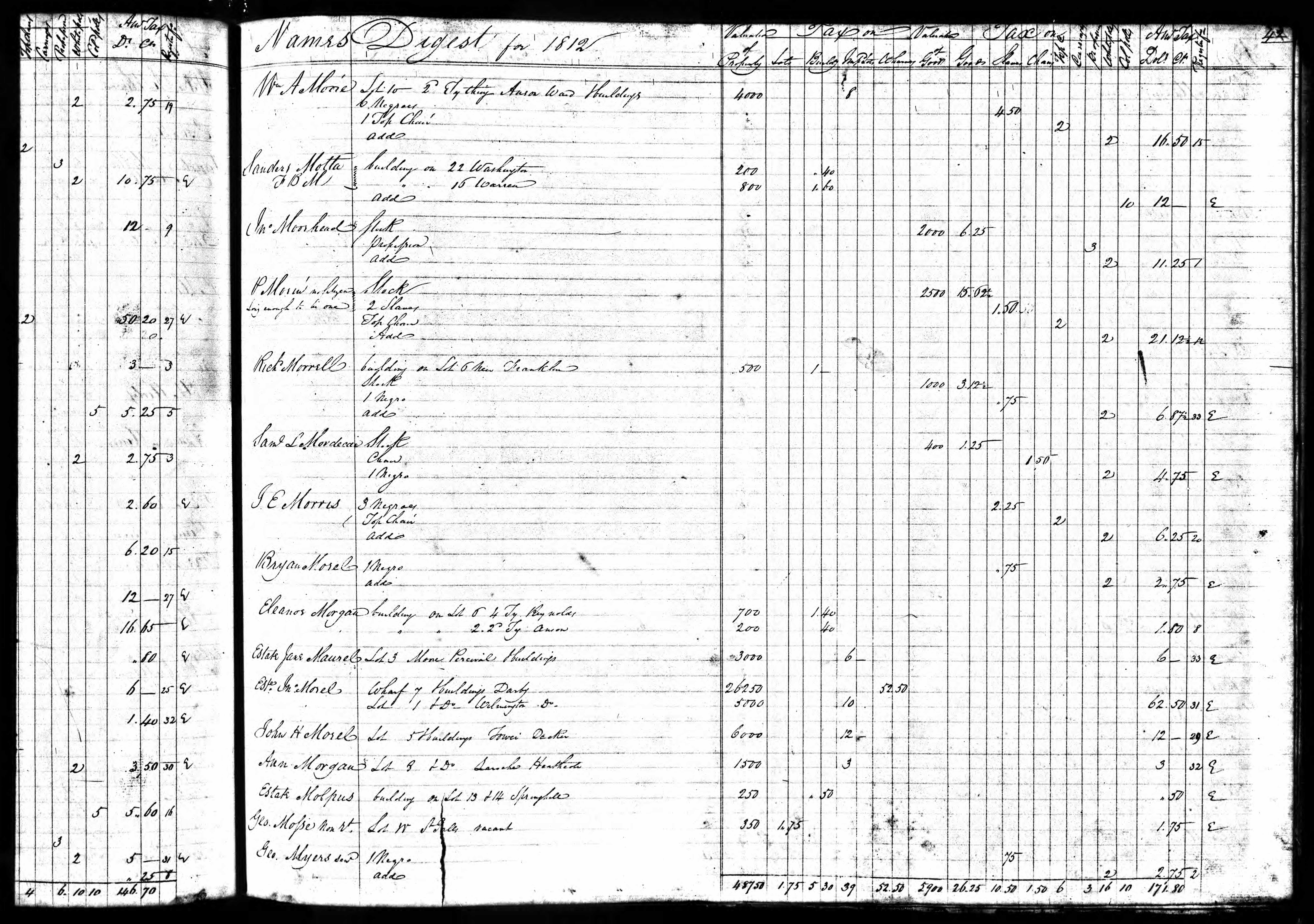
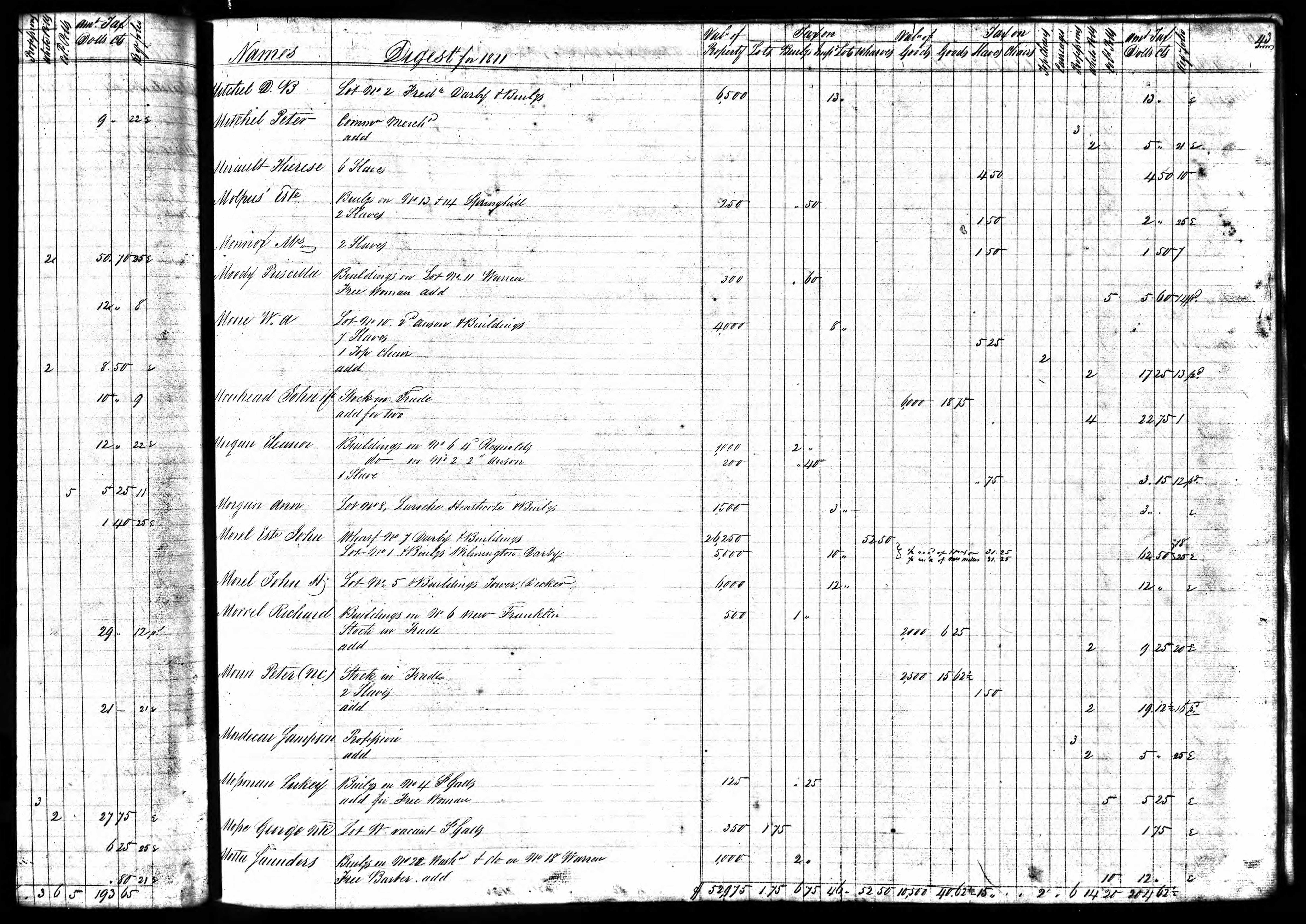
The property at 26-30 Houston Street shares a lot with 545 East Saint Julian Street. Together with another nearby property—later absorbed into an assemblage and demolished—these sites trace a real estate history connected to Saunders Motta, a free man of color and barber in early nineteenth-century Savannah.
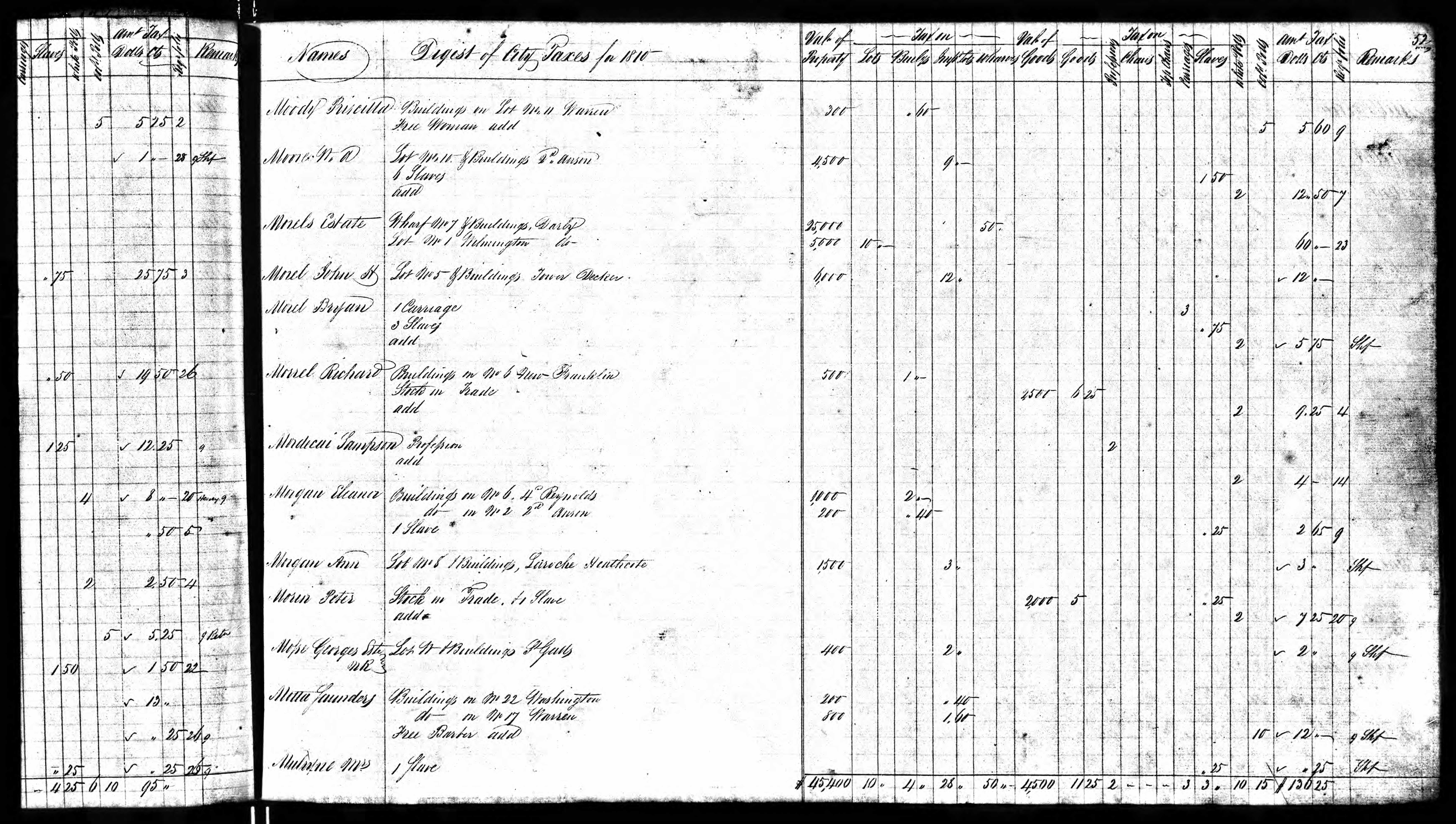
Motta was a significant property holder. Savannah’s 1810 tax digest placed him among the small number of African Americans whose taxable property reached at least $1,000. Active in the local community, he held a trusted civic position: Noted in City Council, "In 1808, Saunders Motta was engaged to ring the Presbyterian church bell in the event of fire. Prior to this, the guard notified the inhabitants by ringing the bells of the Exchange and the Baptist church." The appointment suggests the level of trust Motta held within the city.
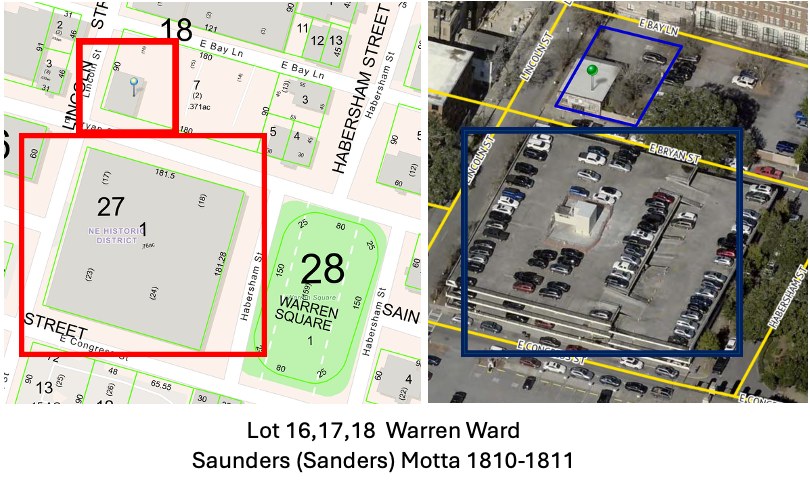
Another part of Motta’s property holdings included a building at 304 East Bryan Street and an adjoining parcel, now used as a parking lot. The properties are identified in the records as Lots 16–18, Warren Ward.
In Motta's personal life, he was married to Eve Dolly, a member of Savannah’s prominent Dolly family. On August 10, 1793, family elder and local blind fiddler London Dolly purchased Eve from the Richards family and then entered an agreement in the Chatham County records allowing Eve to live with her husband, Motta, without interference. Motta agreed to pay London five dollars per month and provide Eve with clothing and other necessities. Historian Austin D. Washington interpreted the agreement as the arrangement through which Eve secured her full freedom. The Dolly family was business first.
Saunders Motta was therefore more than a barber and property owner. As the son-in-law of Quamino and Juno Dolly and the husband of Eve Dolly, he belonged to a free Black family whose history of freedom, family connections, and landholding began during the Revolutionary era and extended from Savannah to the Ogeechee River.
___
Sources:
City of Savannah Municipal Archives / Chatham County Records. "Land Tax and Property Records, 1809–1938." [Saunders Motta] Tax Digests 1809-1815. [Lot 22, Washington Ward] and [Lot 17 Warren Ward]. Digital images, Ancestry.com. [1810]
City of Savannah Municipal Archives / Chatham County Records. "Land Tax and Property Records, 1809–1938." [Saunders Motta] Tax Digests 1809-1815. [Lot 22, Washington Ward] and [Lot 18 Warren Ward]. Digital images, Ancestry.com. [1811]
City of Savannah Municipal Archives / Chatham County Records. "Land Tax and Property Records, 1809–1938." [Saunders Motta] Tax Digests 1809-1815. [Lot 22, Washington Ward] and [Lot 16 Warren Ward]. Digital images, Ancestry.com. [1812]
Lumpkin-White, Arva: Photograph credit: others as noted.
Savannah Area Geographic Information System (SAGIS). "SAGIS Property Map Viewer." Chatham County-Savannah Metropolitan Planning Commission.
The Georgia Gazette, October 28, 1802
The Georgia Gazette, March 23, 1798
Thomas Gamble Jr., A History of the City Government of Savannah, Ga., from 1790 to 1901 (Savannah, GA: Savannah City Council, 1901), 76.
6Eve Dolly (Daly) Property
Location: 25 Houston Street / 514 East Saint Julian Street (Two homes on this lot)
___
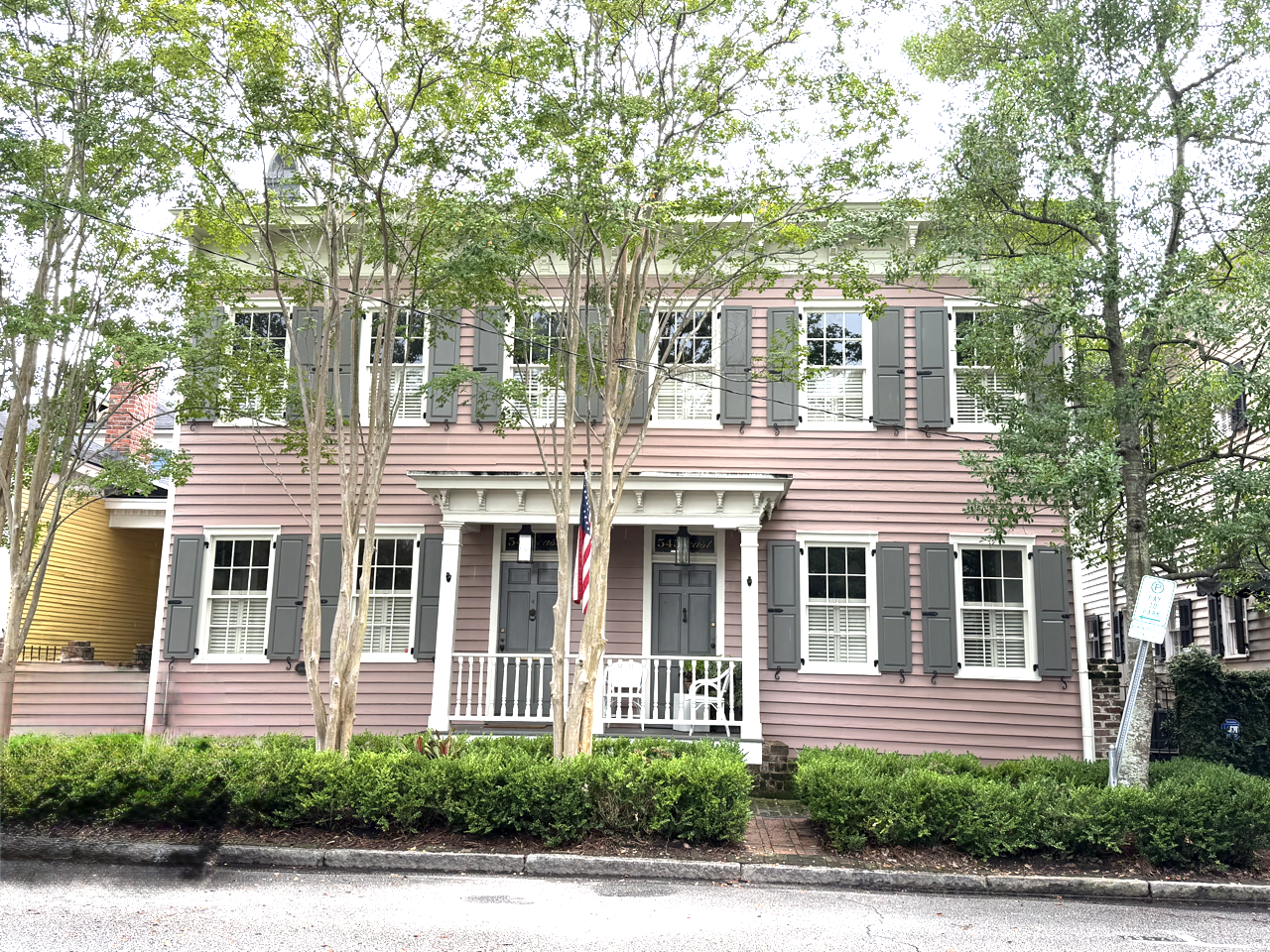
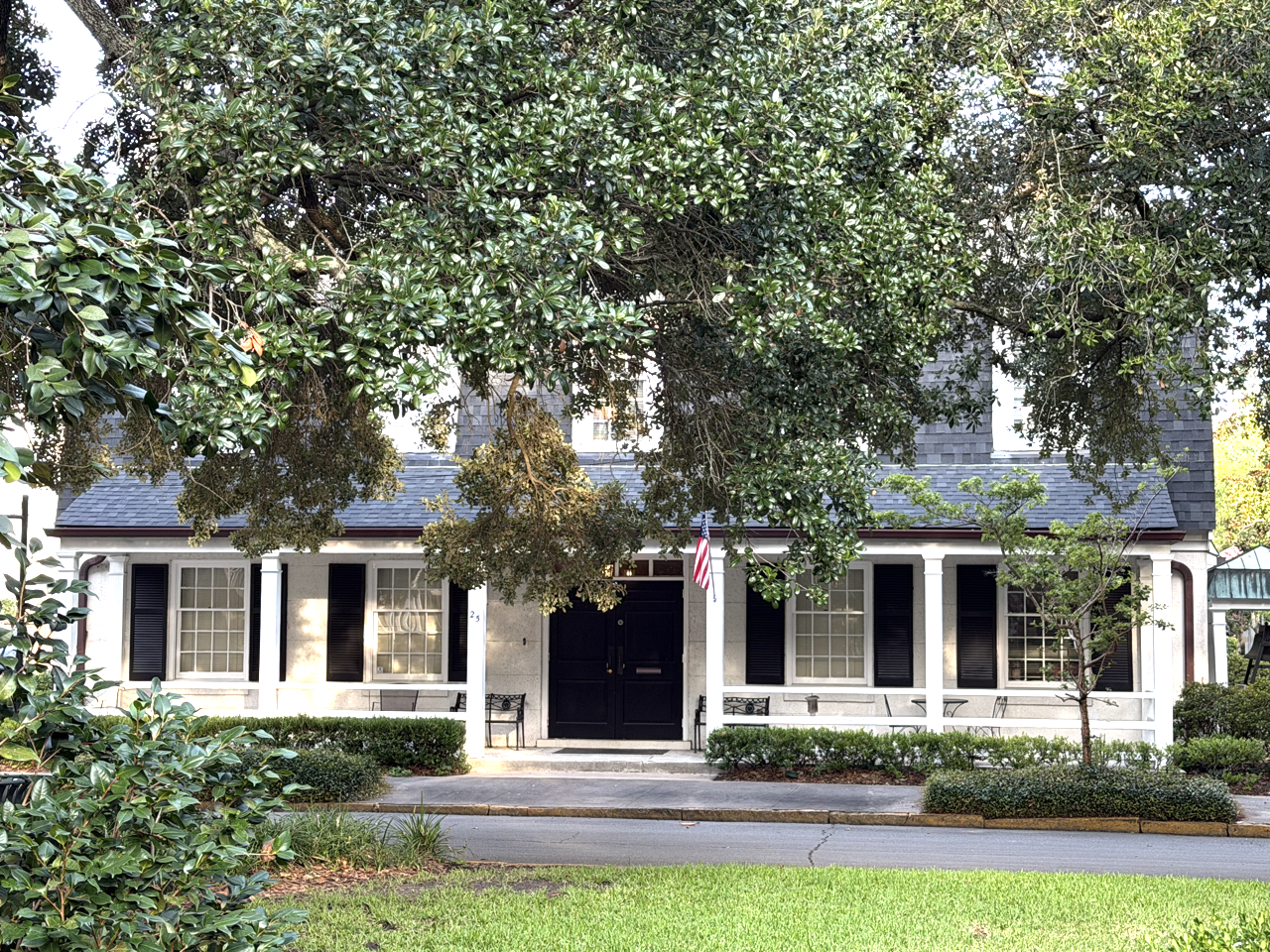
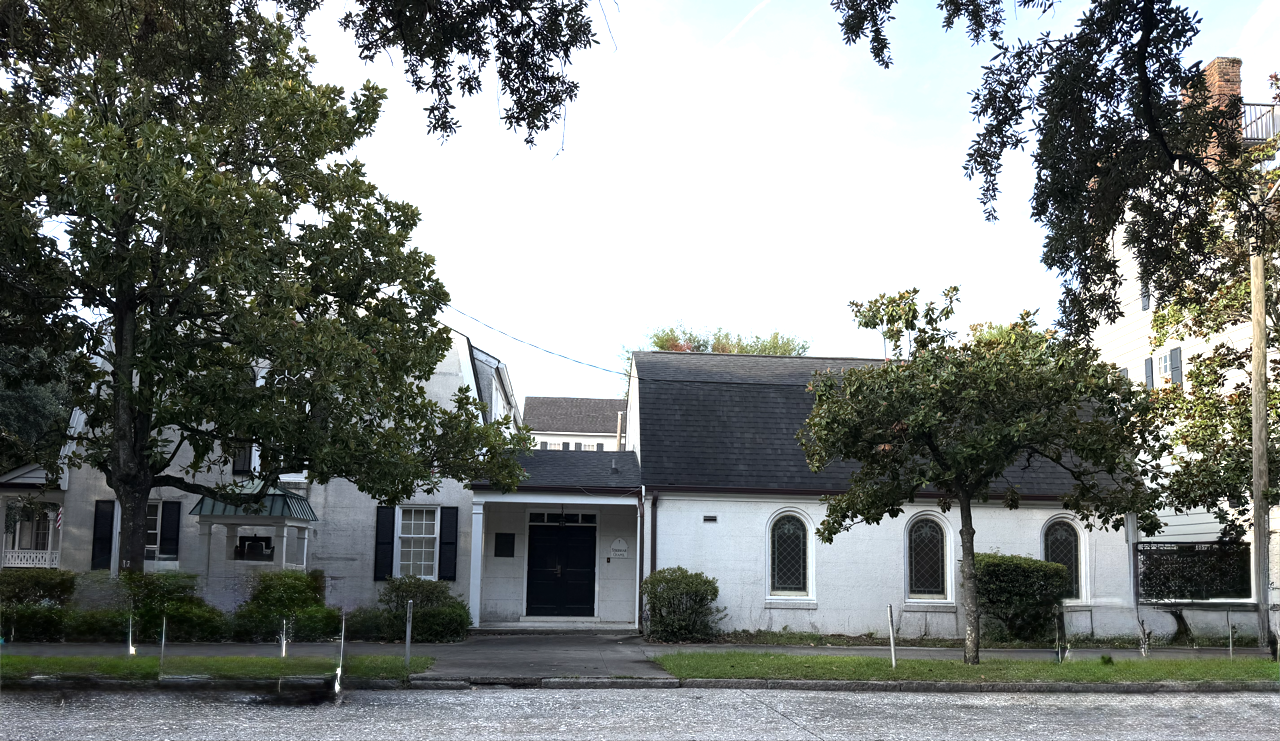
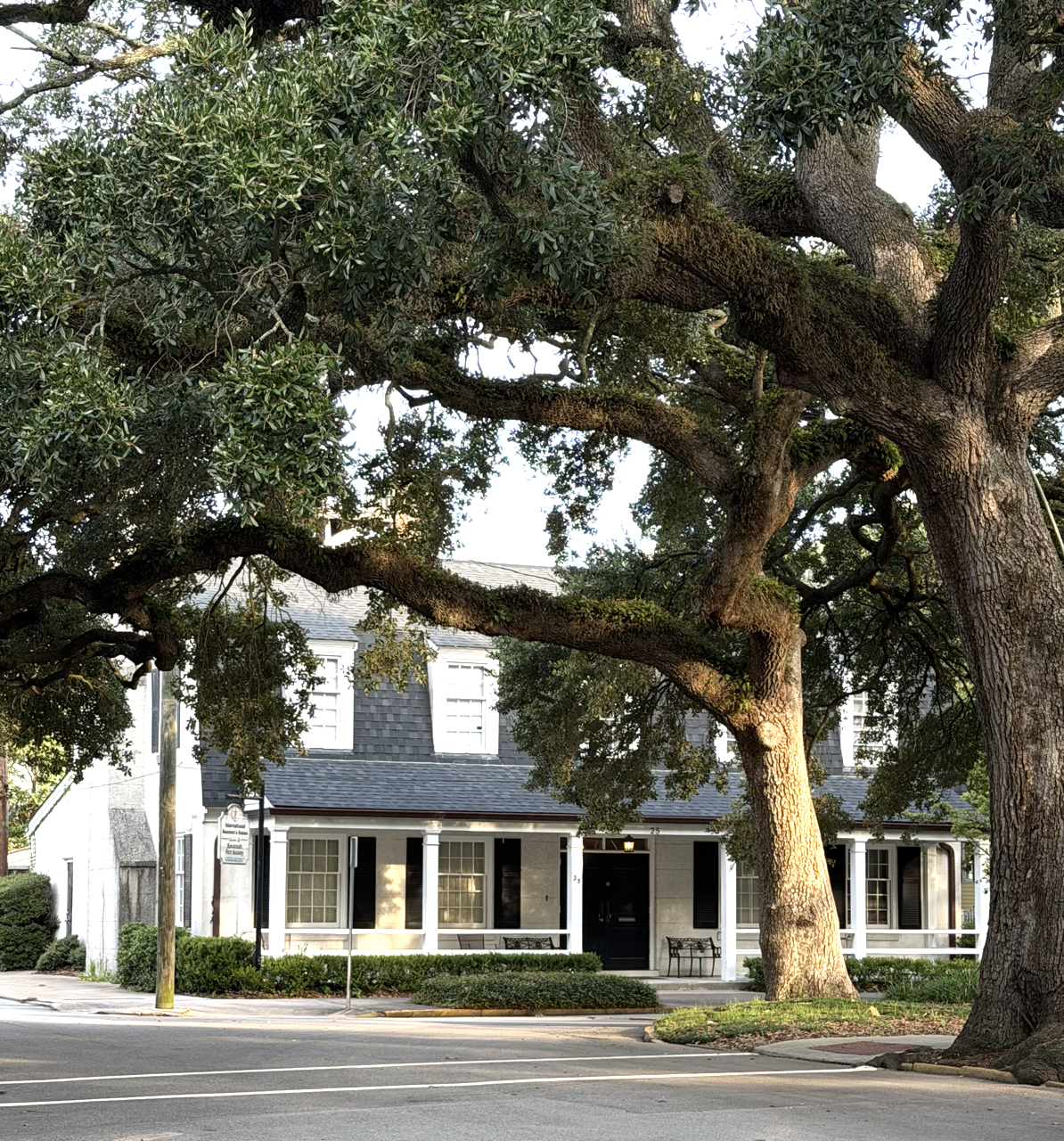
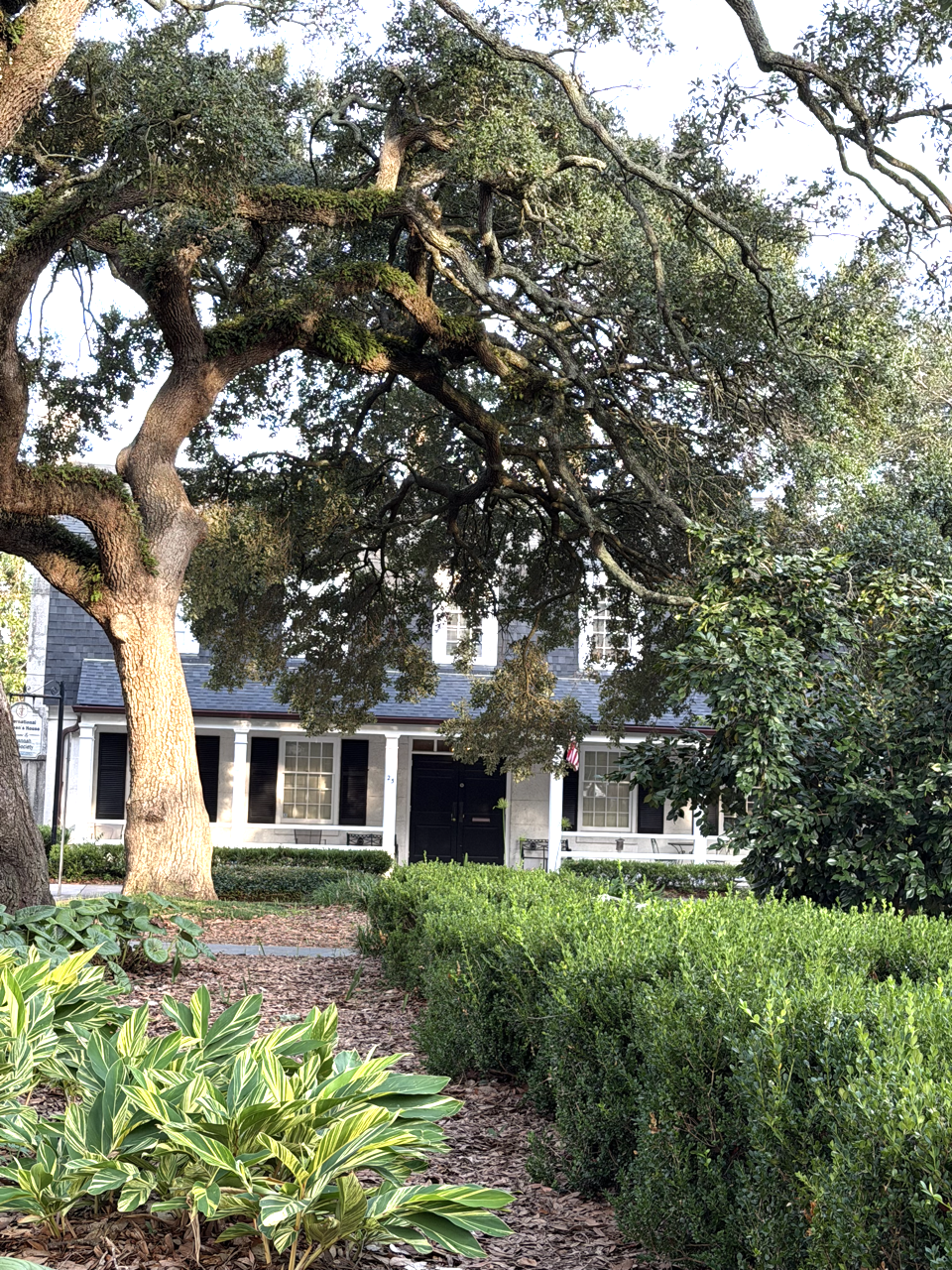
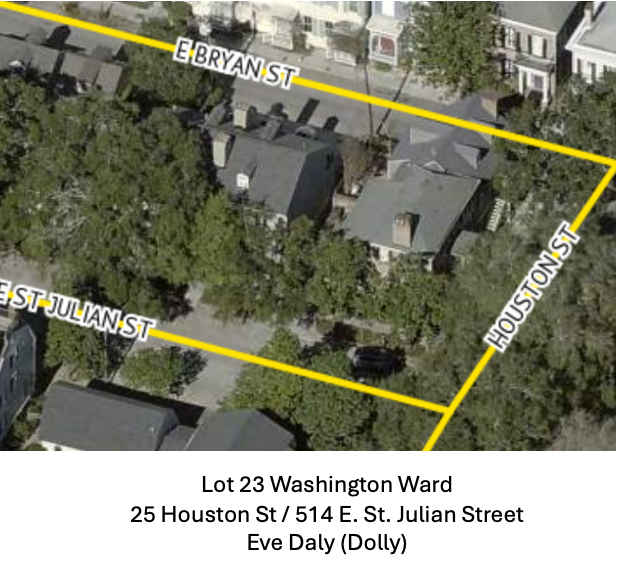
This ground once belonged to Eve Dolly—a free woman of color, vendor of small wares, and daughter of one of Antebellum Savannah’s most remarkable free Black families.
The Dollys were strategic, determined, and always looking toward the future. Their story enters the record during the British capture of Savannah in 1778, when an enslaved Black oysterman led British troops along a hidden path through the marshes, a route that let them slip behind the American defenses and seize the city. Later Savannah histories identified him as Quamino Dolly, Eve’s father. Historian Charles Hoskins challenges the idea that Quamino “betrayed” the American side, asserting," as though slavery itself was not a sufficient grievance to trigger a dash for freedom.”
Ten years later, Quamino bought his freedom for 30 pounds sterling. Other relatives followed in formation: Qua Dolly purchased his freedom that same year, while Qua’s son, London Dolly, had bought his in 1786. London became the family’s dealmaker. He purchased Eve from the Richards family for 45 pounds sterling. Eve paid him back one quarter pound sterling—enough, in London’s eyes, to make her “semi-free,” free in practice while the paperwork caught up.
Even Eve’s marriage became a negotiation. She married Saunders Motta, a free man of color and barber, but London required Motta to pay him $5 a month for the privilege of living with his own wife undisturbed. Eventually, London granted Eve her full freedom.
The Dollys understood that freedom was only the beginning. They acquired property across Savannah and Bryan County, passing land from one generation to the next. By 1830, Quamino's nephew, James Dolly, owned 245 acres near the Ogeechee River, while London transferred property to him, including land here in Savannah. Their wills reveal a family intent on protecting what they built. Quamino placed land and other assets in trust for his wife, Eve, and their children, shielding the inheritance from the control, debts, or future husbands of the women who received it. The Dollys were building for permanence.
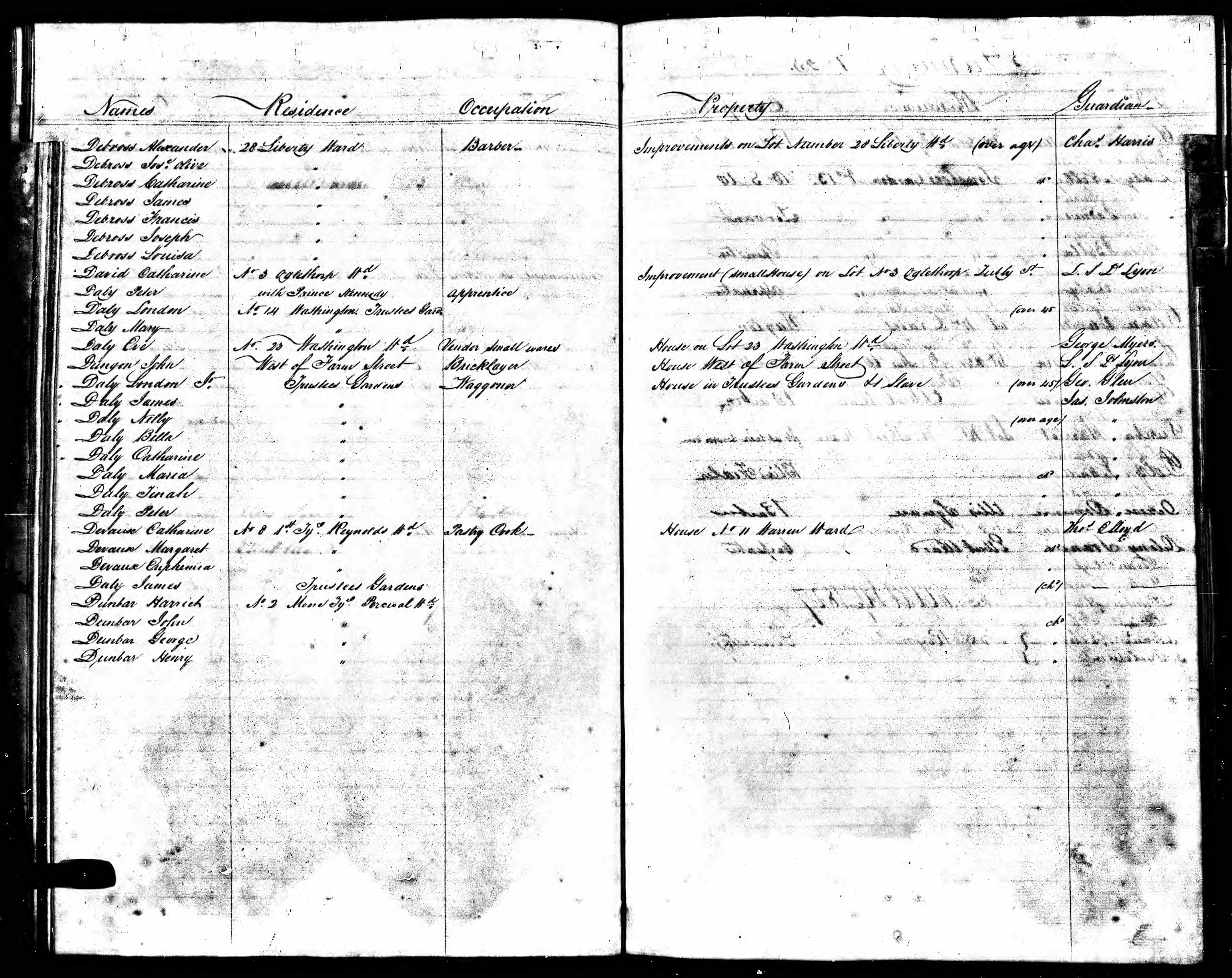
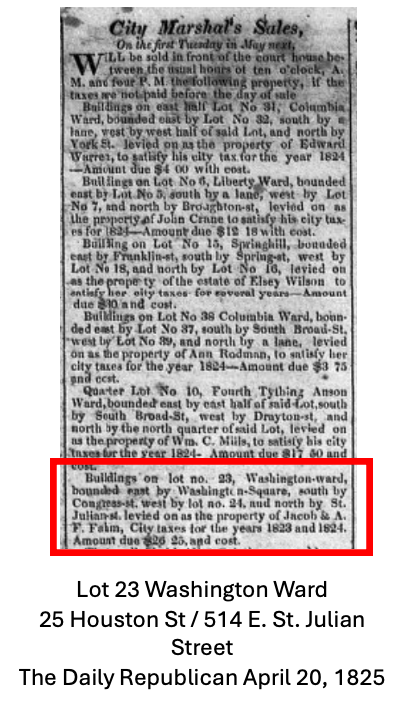
Eve and Saunders continued that tradition. Saunders held several lots in Warren and Washington Wards. Eve held Lot 23 in Washington Ward—the parcel beneath your feet.
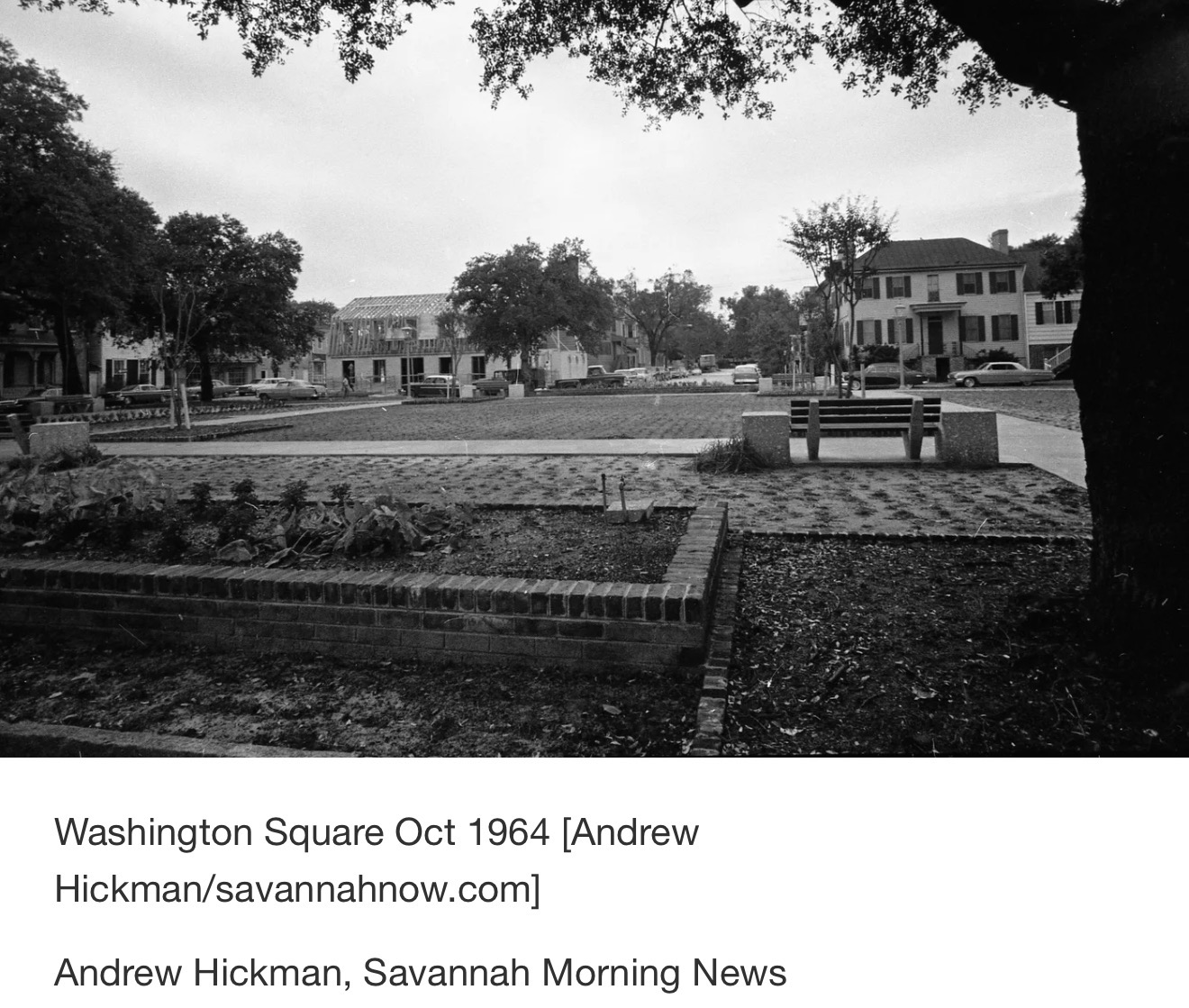
The original building at 35 Houston Street is gone, but the record keeps Eve firmly in place: daughter, wife, vendor, property owner, and part of a free Black family whose holdings stretched from Savannah to the Ogeechee River.
Living in slavery’s shadow, the Dollys seized every opening they could—and turned it into freedom, land, and a future. From the streets of Savannah, all the way to the Ogeechee River. The Dollys were playing the long game.
___
Sources:
City of Savannah Municipal Archives / Chatham County Records. Eve Daly in Savannah, Georgia, U.S., Registers of Free Persons of Color, 1817-1864. Volume 1, 1817, 1823-1829. Digital images, Ancestry.com
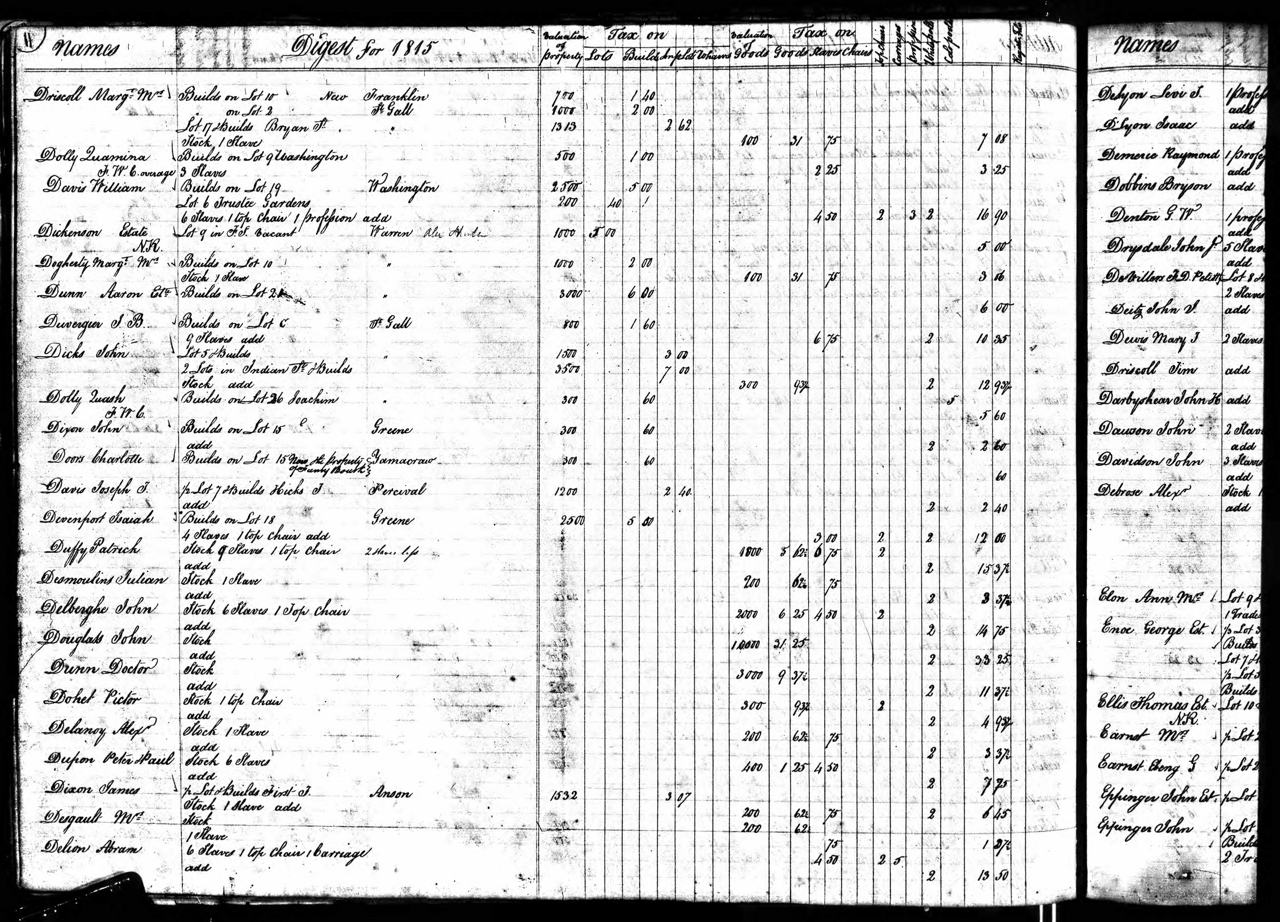
City of Savannah Municipal Archives / Chatham County Records. "Land Tax and Property Records, 1809–1938 [Quamina Dolly] Tax Digests 1809-1815. [Lot 26 Joachim] Digital images, Ancestry.com. [1815]
City of Savannah Municipal Archives / Chatham County Records. "Land Tax and Property Records, 1809–1938 [Quash Dolly] Tax Digests 1809-1815. [Lot 9 Washington Ward] Digital images, Ancestry.com. [1815]
Hoskins, Charles Lwanga. Yet With a Steady Beat: Autobiographies of Early Black Savannah. Savannah: Gullah Press, 2001, 10.
Thomas Gamble Jr., A History of the City Government of Savannah, Ga., from 1790 to 1901 (Savannah, GA: City of Savannah, 1901), 44.
Lumpkin-White, Arva: Photograph credit
Ports, Michael A. Georgia Free Persons of Color. Volume IV: Chatham County, 1817–1863. Baltimore: Clearfield Company, 2016. 48.
Savannah Area Geographic Information System (SAGIS). "SAGIS Property Map Viewer." Chatham County-Savannah Metropolitan Planning Commission.
Savannah Daily Republican, April 20, 1825
Sumler-Edmond, Janice L. "Free Black Life in Savannah: Jane Deveaux and Her Secret School." In Slavery and Freedom in Savannah, edited by Leslie M. Harris and Daina Ramey Berry, 26-27, 128. Athens: University of Georgia Press, 2014.
They had names, p.80
7George and Mary Carter Home
Location: 545-547 East Saint Julian Street and 26,28,30 Houston Street (2 Properties at a corner)
___
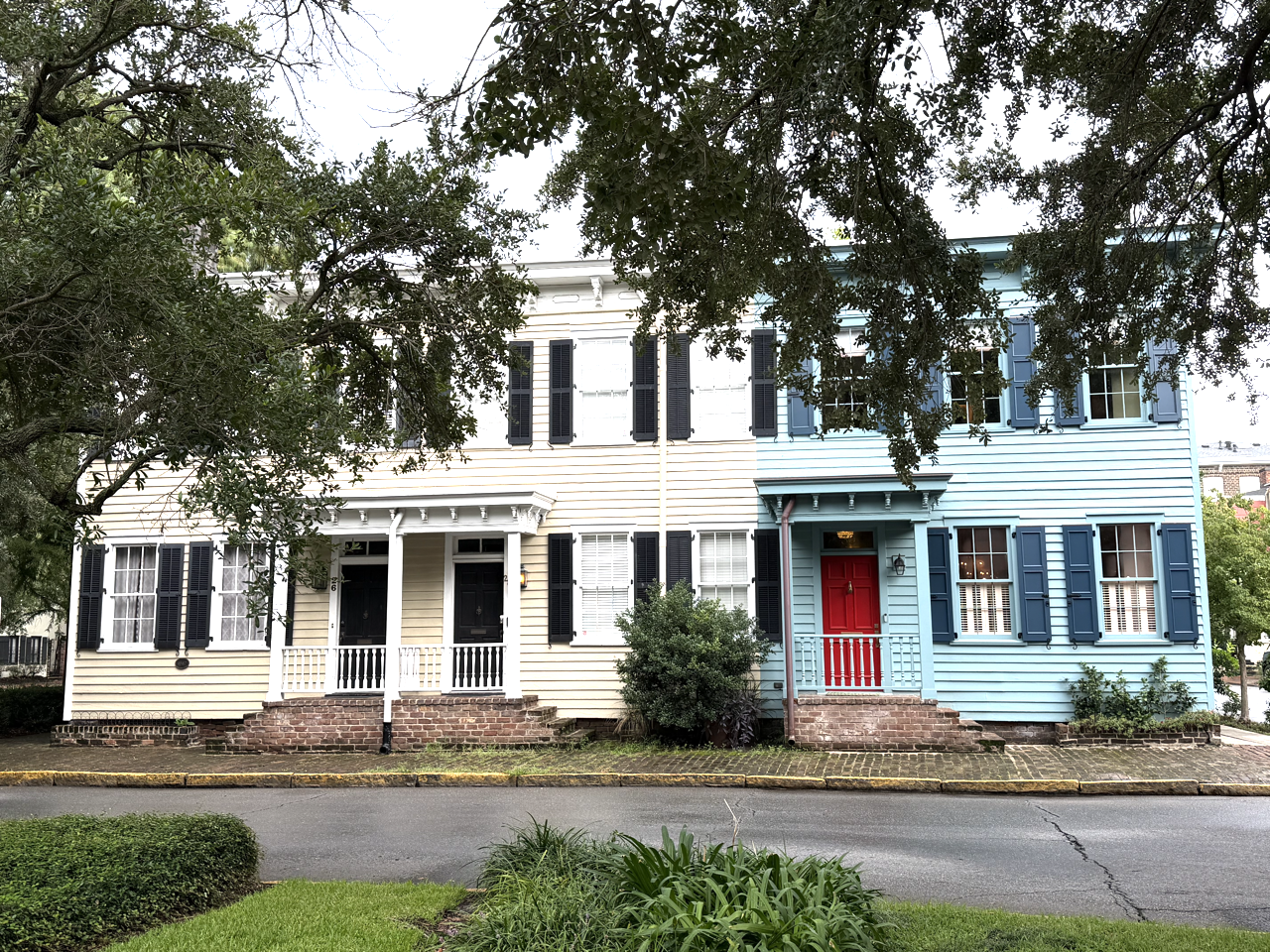
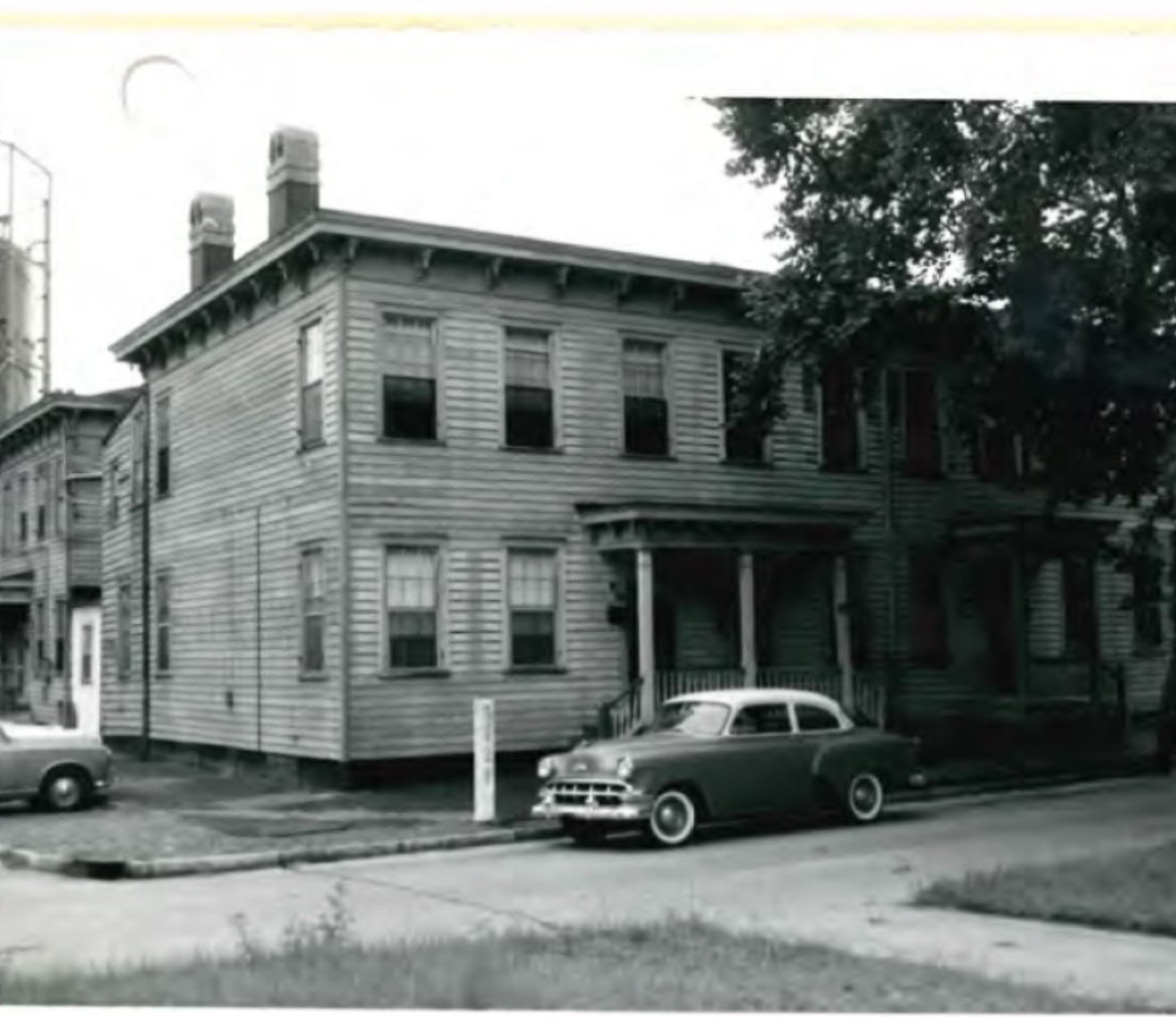
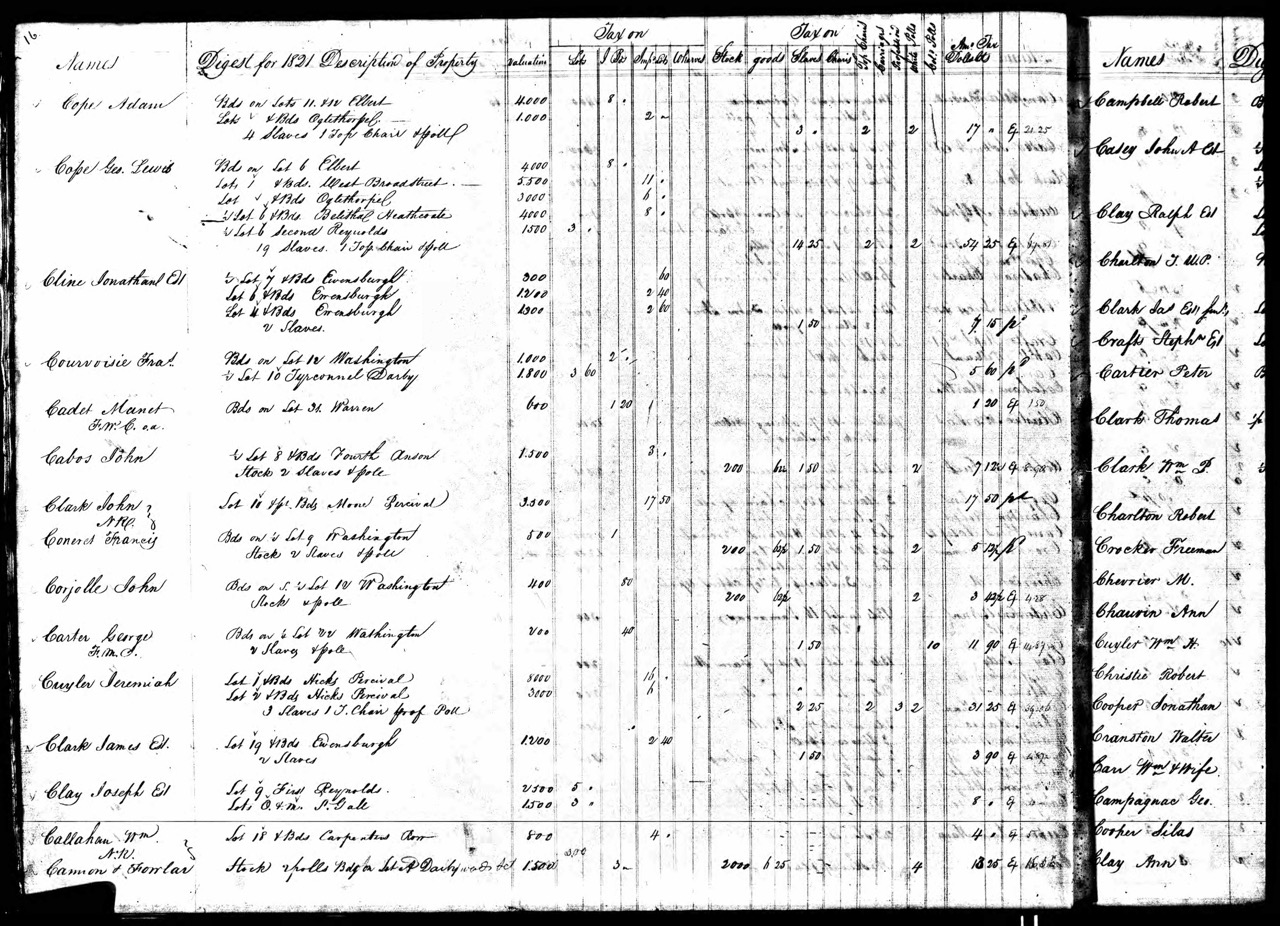
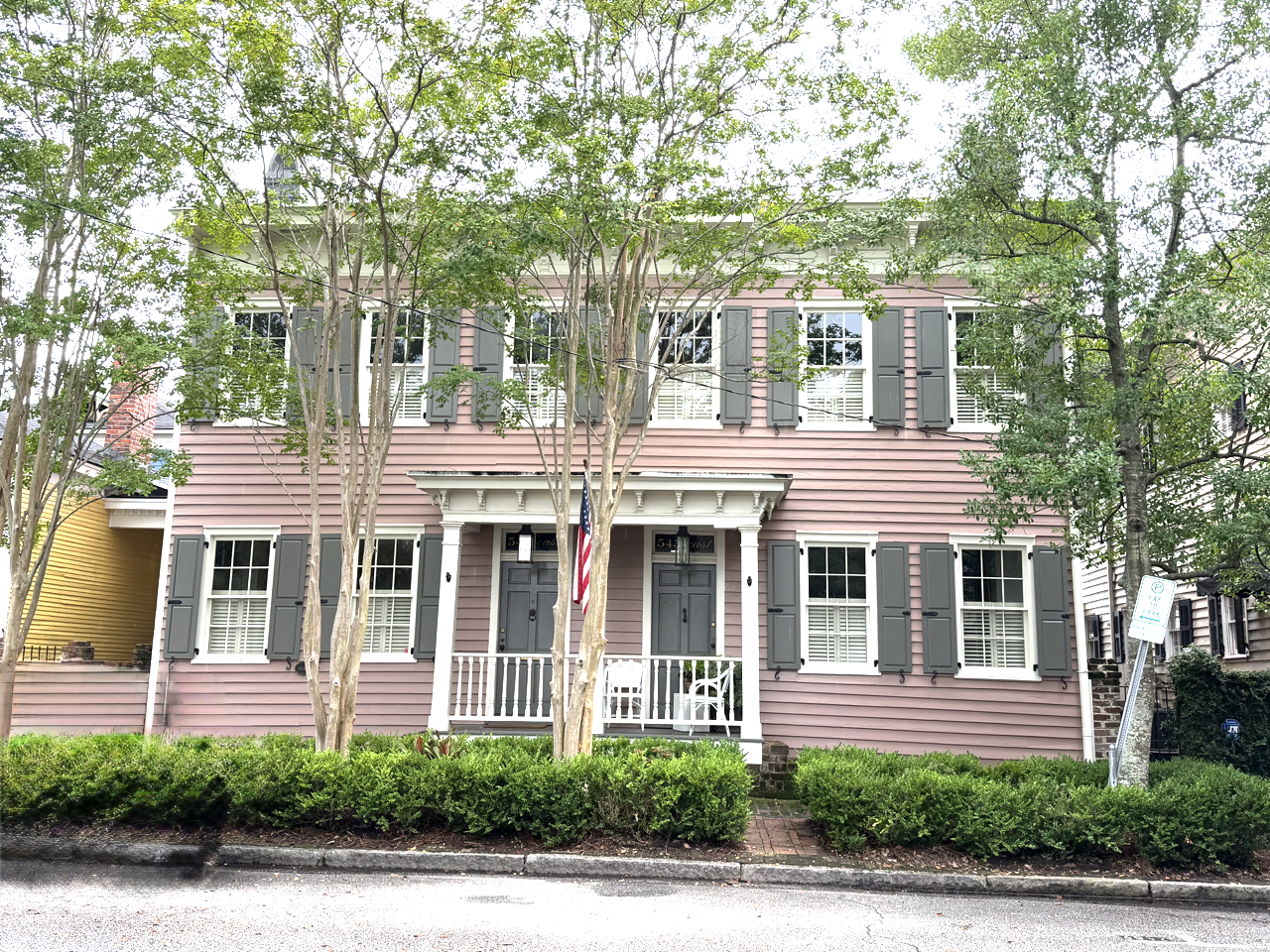
George Carter was a free man of color and a carpenter. Not much is known about his personal life other than he and his wife, Mary, owned four enslaved individuals. He owned a portion of this lot that contains multifamily homes. The historical information does not appear to point to which of these homes he resided in. The homes on the lot are a duplex at 545/547 East St. Julian Street and a triplex at 26, 28, and 30 Houston Street. All of the homes are located on Lot 22, Washington Ward.
___
Sources
City of Savannah Municipal Archives. Historical photograph credit. Courtesy of the City of Savannah Municipal Archives, Savannah, GA.
City of Savannah. Municipal Records of Savannah, Georgia. Land Tax and Property Records, 1821—City of
Savannah Research Library and Archives, Savannah, Georgia.
City of Savannah Municipal Archives / Chatham County Records. "Land Tax and Property Records, 1809–1938." [George Carter] Tax Digests 1816-1824. [Lot 22, Washington Ward] Digital images, Ancestry.com. [1821]
Lumpkin-White, Arva: Photograph credit: others as noted.
Ports, Michael A. Georgia Free Persons of Color. Volume IV: Chatham County, 1817–1863. Baltimore: Clearfield Company, 2016. 37
8Mary Speers Home, 1821
Location: 532 East Broughton Street
___
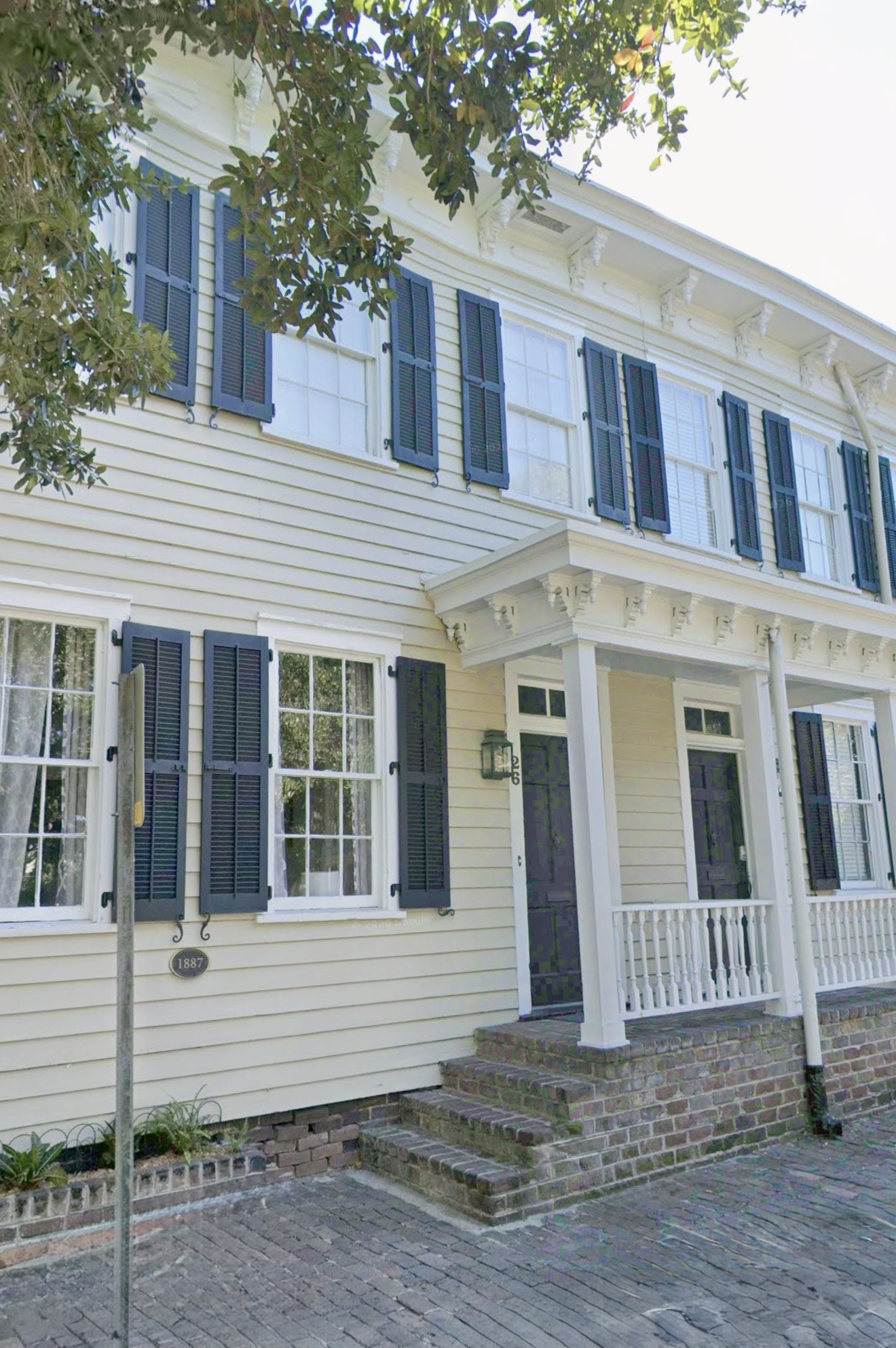
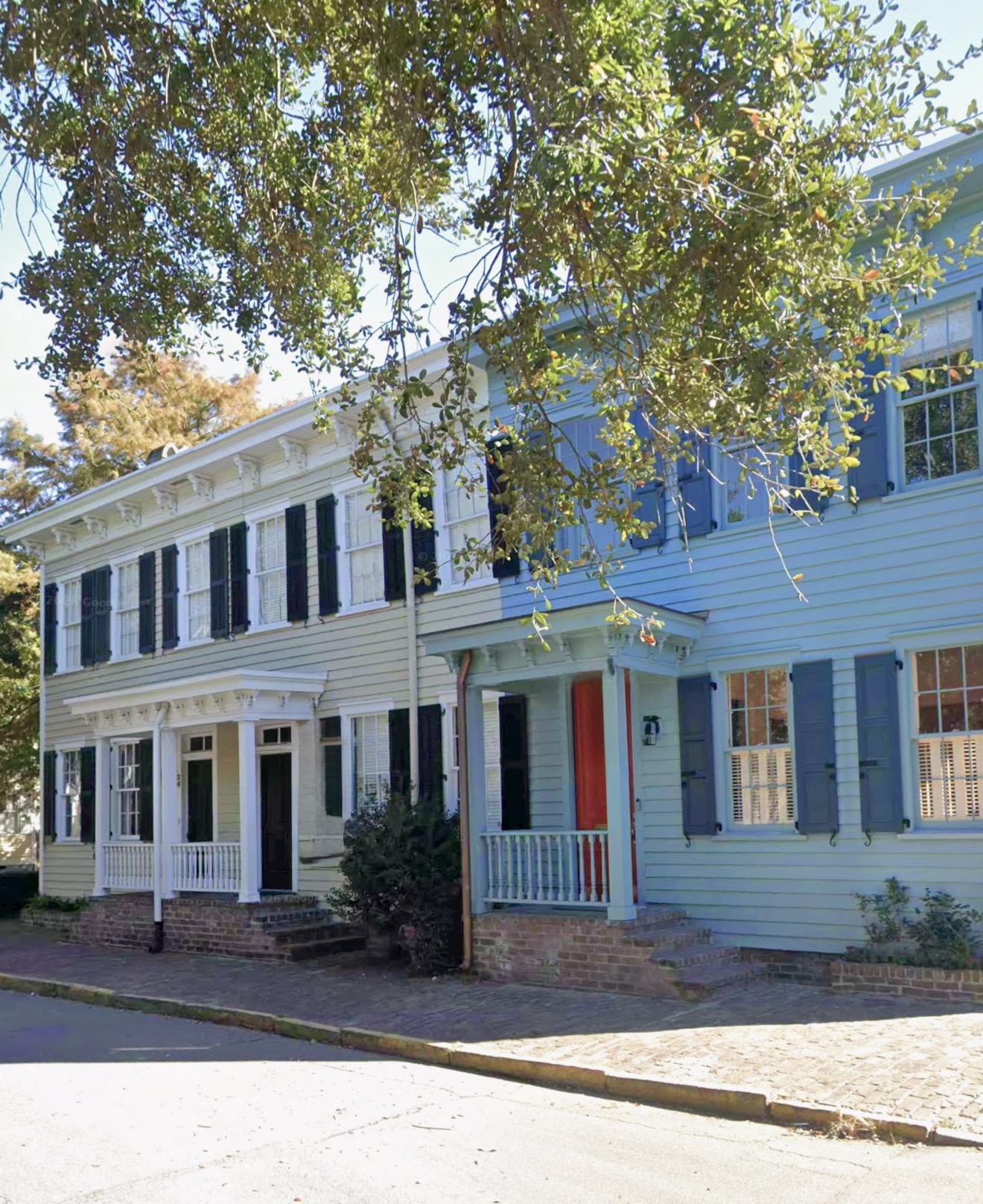
Mary Speers was a washerwoman who owned five enslaved people. Her name, Speers, also appears in records as Spiers or Spears. When we think about wealth in early Savannah, we often imagine merchants, ship captains, or plantation owners. Few people would expect that being a washerwoman would enable her to purchase the home still standing at 532 East Broughton Street. It was not unusual in the Black community at that time for multiple members of the Black community to sell and purchase homes among themselves, thereby reducing barriers to property purchases. Other free people of color who have owned this home include Simon Mirault (tailor), Richard Cunningham (pastor of Second Baptist Church), Richard and Ann Houston, and Polly Spears.
Before modern plumbing, electricity, or washing machines, garments had to be hauled by hand, boiled in large kettles, scrubbed, rinsed, dried, ironed, and returned to customers. It was menial, but essential work.
Mary Spears transformed this humble occupation into a successful business. Through years of labor and determination, she accumulated enough wealth to purchase real estate and five enslaved individuals. She likely utilized them in her laundry operations, demonstrating both her financial success and the complex realities of Savannah’s free Black community.
___
Sources:
Lumpkin-White, Arva, Photograph credit: others as noted.
Morrison, Mary Lane, ed. Historic Savannah: Survey of Significant Buildings in the Historic and Victorian Districts of Savannah, Georgia. Savannah, GA: Historic Savannah Foundation, 1979, 50.
Savannah, Georgia. Land Tax and Property Records, 1809–1938. City of Savannah Municipal Archives / Chatham County Records, Savannah, GA.
9William and Charlotte Wall Home, 1818
Location: 542 East State Street
__
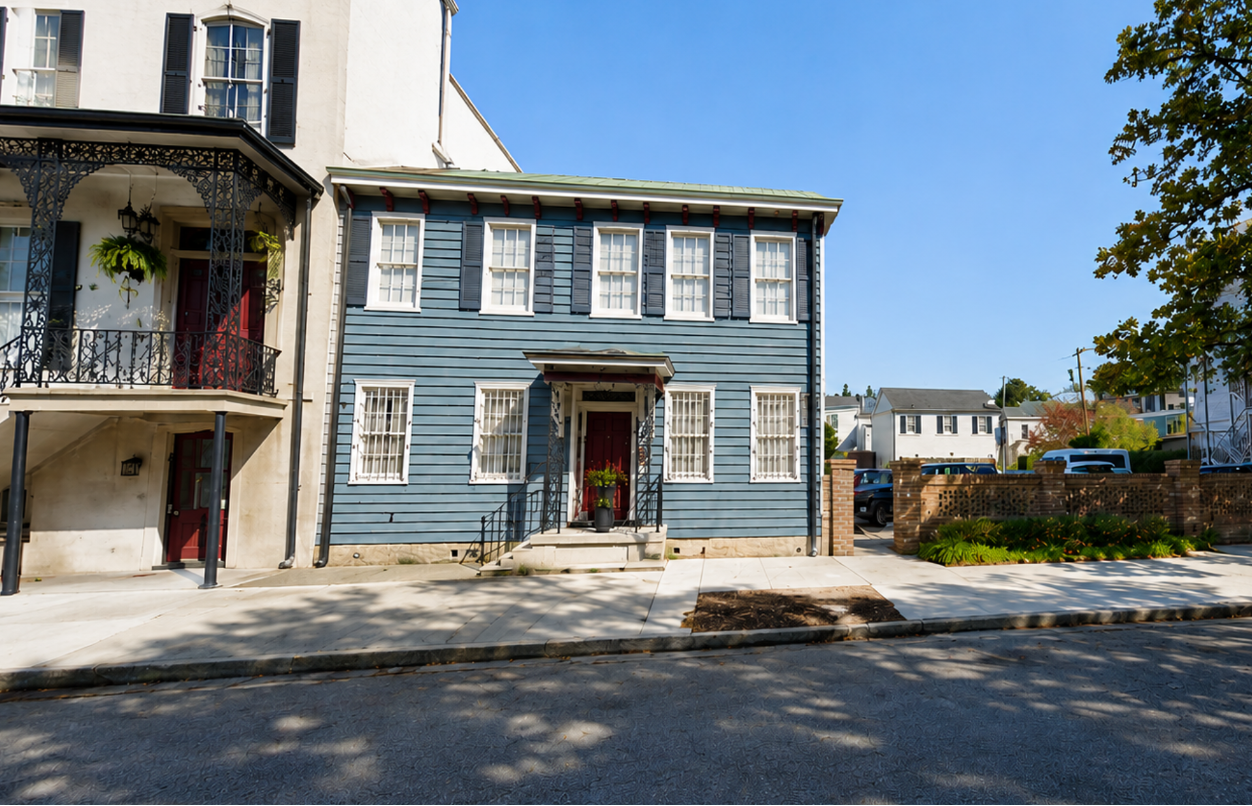
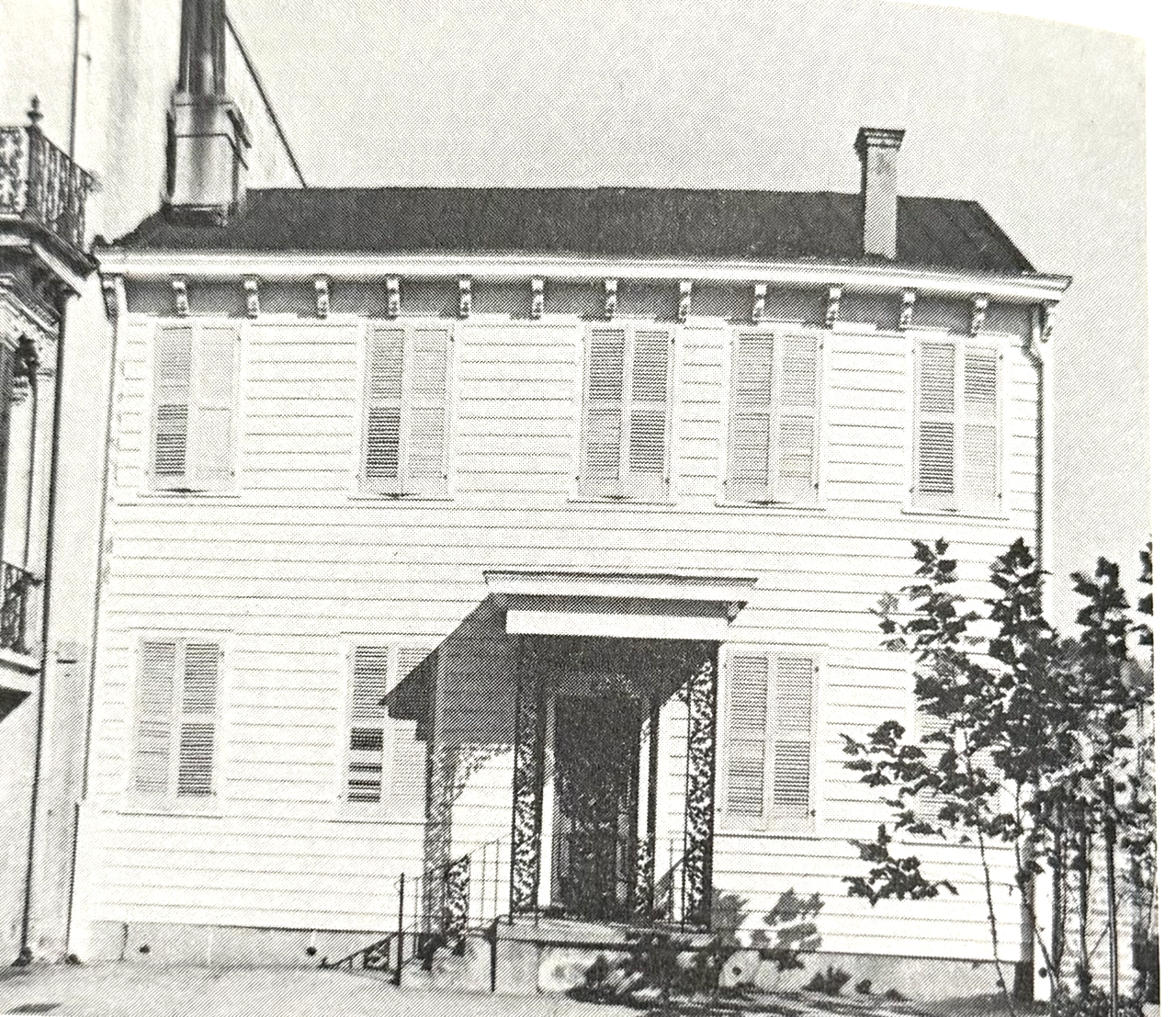
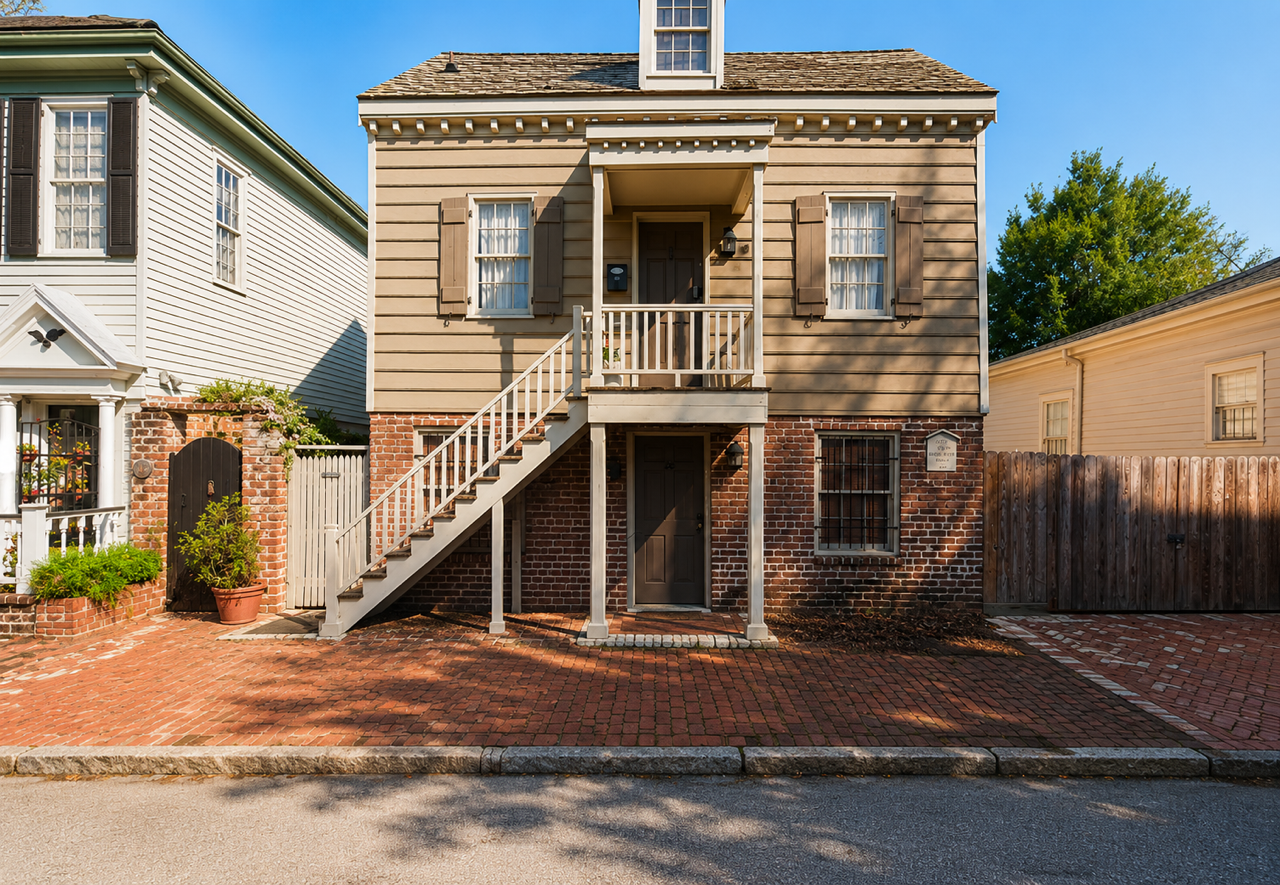
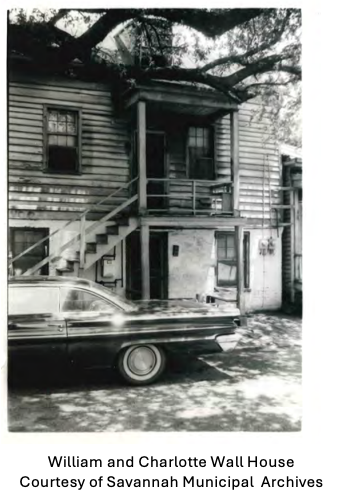
This home at 542 East State Street was built for William and Charlotte Wall, free people of color, in 1818. William worked as a river pilot, and Charlotte was a washerwoman. They were leaders in the Second African Baptist Church. The home still stands today. Beyond their occupations, little is known about their personal stories.
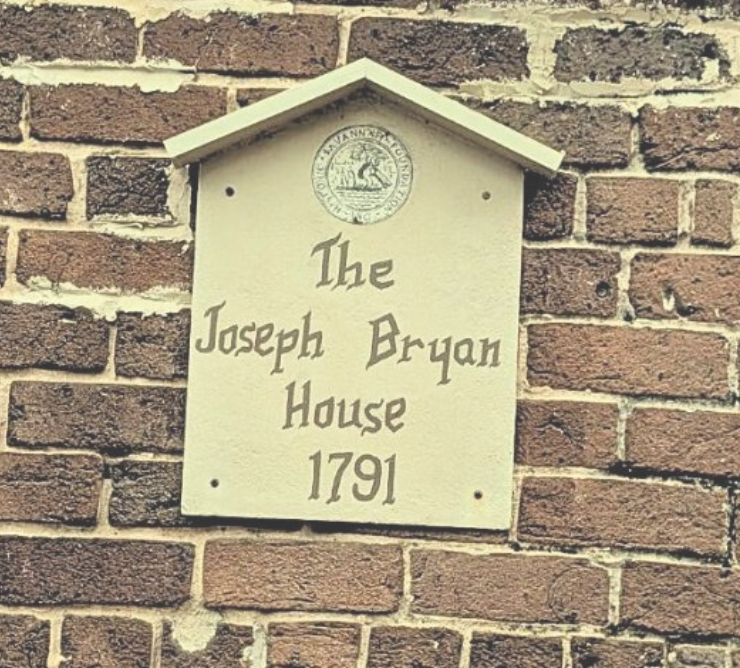
There is a plaque on the front of the house that reads "The Joseph Bryan House 1791." Historical records and local historian Michelle Partham have examined the claim made by the plaque on the house. To date, there is not enough information to verify this claim. There are records, however, to verify that William and Charlotte Wall were the original owners of the property in the early 1800's.
___
Sources:
City of Savannah Municipal Archives. Historical photograph credit. Courtesy of the City of Savannah Municipal Archives, Savannah, GA.
Lumpkin-White, Arva: Photograph credit: others as noted.
Partham, Michelle. "Savannah's Joseph Bryan House." La Dolce Savannah, April 18, 2021
Savannah, Georgia. Land Tax and Property Records, 1809–1938. City of Savannah Municipal Archives / Chatham County Records, Savannah, GA.
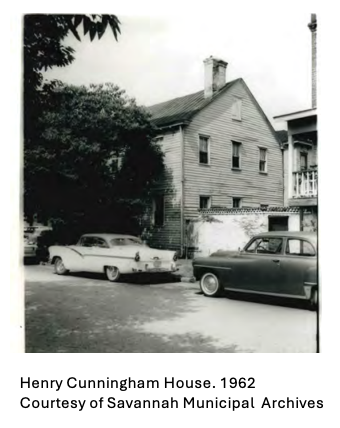
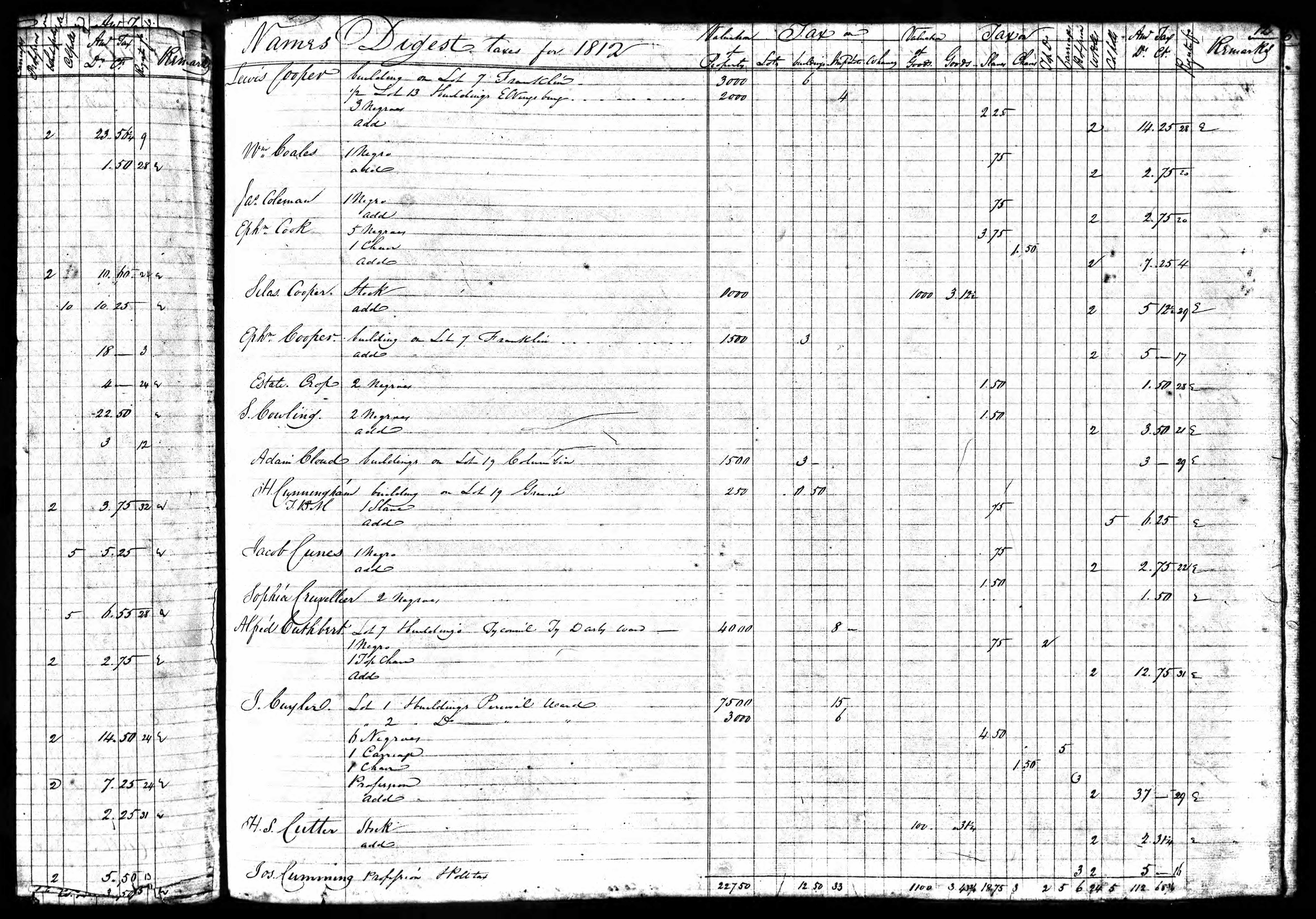
10Henry and Betsy Cunningham Home, 1810
Location: 117-119 Houston Street
___
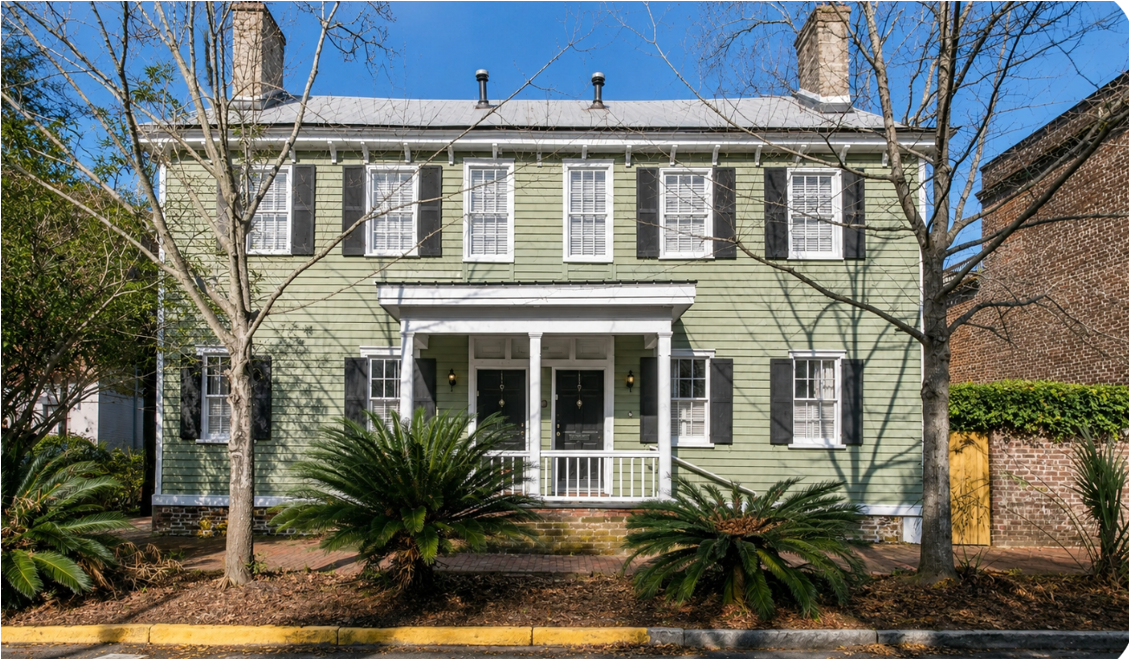
Standing along the north side of Greene Square is the Cunningham home. It is one of the oldest surviving homes in Savannah associated with a free person of color. Built in 1810, this duplex remains a remarkable reminder of the accomplishments of Henry Cunningham, as minister, entrepreneur, and community leader.
Cunningham was born enslaved in McIntosh County, Georgia, in 1759. He came to Savannah as a free man of color and a cooper by trade. When and how he obtained his freedom is unclear. He served as the founding pastor of Second African Baptist Church. Among the original organizers of the church were other prominent free people of color in the business community. Brethren Scippio Gordon, William Walls, Richard Houston, Thomas Anderson, Sisters Betsy Cunningham, Leah Simpson, Silvia Whitfield, Charlotte Walls, Silvia Manox, Susan Jackson, and Reverend John B. Deveaux. Cunningham led the congregation from its establishment in 1802 until 1833—a remarkable 31-year tenure. The home stands just steps to the right of the church he helped establish, connecting two important landmarks in Savannah’s early Black history.
His wife, Elizabeth “Betsy” Cunningham, worked as a skilled seamstress. Alongside other seamstresses, including Catherine Deveaux, she contributed her talents to sewing and repairing 100 military uniforms during the Civil War, providing essential support to soldiers serving in the Confederate Army.
Henry Cunningham’s activities were not limited to ministry. He was also involved in real estate development and operated a drayage (hauling) business. Cunningham and his wife owned as many as five enslaved people during his lifetime. As a successful businessman, he likely utilized the labor of these enslaved individuals to operate his hauling and carriage business. An advertisement published in the Savannah Republican in 1809—one year before the duplex was built—reveals that Cunningham also offered a professional carriage service, functioning much like a taxi operation for residents and visitors navigating the growing city.
___
Sources:
City of Savannah Municipal Archives / Chatham County Records. "Land Tax and Property Records, 1809–1938." [Henry Cunningham] Tax Digests 1816-1824. [Lot 34, Washington Ward] Digital images, Ancestry.com. [1823]
City of Savannah Municipal Archives. Historical photograph credit. Courtesy of the City of Savannah Municipal Archives, Savannah, GA.
Find a Grave. "Rev Henry Cunningham (1759–1832)." Memorial #82443094. Created December 27, 2011
Hoskins, Charles Lwanga. Yet With a Steady Beat: Autobiographies of Early Black Savannah. Savannah: Gullah Press, 2001, 48.
Johnson, Whittington B. Black Savannah, 1788–1864. Fayetteville: University of Arkansas Press, 1996.
Johnson, Whittington B. “Free Blacks in Antebellum Savannah: An Economic Profile.” The Georgia Historical Quarterly 64, no. 4 (1980): 418–31. http://www.jstor.org/stable/40580706.
Lumpkin-White, Arva. Photograph credit.
11Hannibol Britton Home (enslaved), 1820
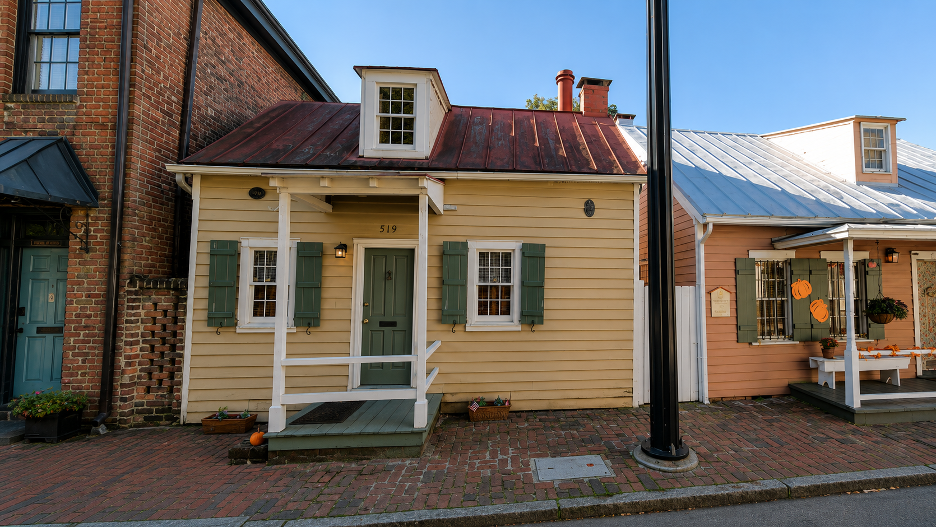
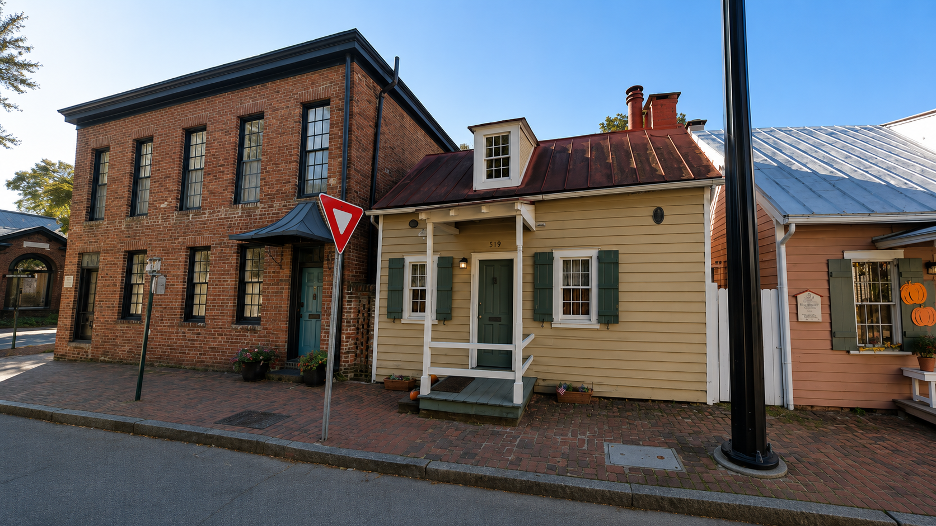
Location: 519 East York Street
___
The modest house standing at 519 East York Street offers a glimpse into one of the most unusual and least understood aspects of slavery in Savannah.
Purchased in 1820, this is the home of Hannibal Britton; little is known about Britton other than his social classification as enslaved. He was a man who was likely classified as a nominal slave. Although legally recorded as enslaved, his daily life appears to have been far different from that of most enslaved people. Many masters allowed their nominal slaves to live independently, work for their own benefit by hiring out their time, much like an independent contractor, in exchange for a percentage of their wages. They accumulated property, worked as skilled tradesmen, and exercised a degree of freedom uncommon to other enslaved people.
The arrangement emerged from a complicated legal reality. Their freedom was fragile at best. In many cases, free people of color “owned” spouses, children, or other family members to keep families together. Southern laws often made it difficult for newly emancipated individuals to remain in the state, and nominal ownership became a means of avoiding forced separation. In other situations, enslavers allowed trusted individuals to live and work with considerable independence while still retaining legal ownership over them.
No matter how independently they lived, nominal slaves remained legally classified as property. They could be sold, seized by creditors, inherited by heirs, or lose whatever freedoms they had managed to secure. Their status existed in a gray area between slavery and freedom—offering opportunity while providing little true security.
___
Sources:
City of Savannah Municipal Archives. Historical photograph credit. Courtesy of the City of Savannah Municipal Archives, Savannah, GA.
City of Savannah Municipal Archives / Chatham County Records. "Land Tax and Property Records, 1809–1938." [Hannibal Britton] Tax Digests 1826-1832. [Lot 29, Greene Ward] Digital images, Ancestry.com. [1826]
Lumpkin-White, Arva. Photograph credit.
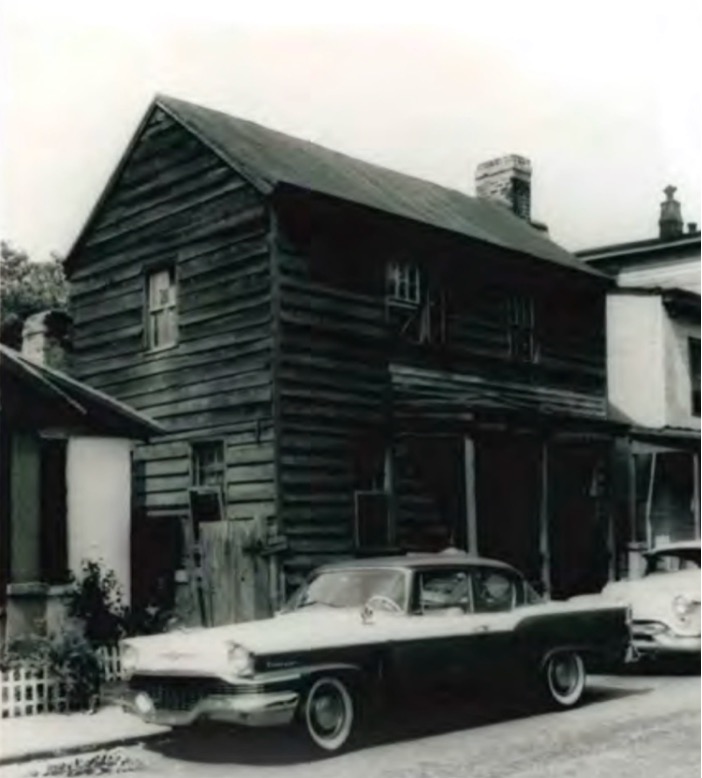
12Catherine and Jane Deveaux Home
Location: 513 East York Street
___
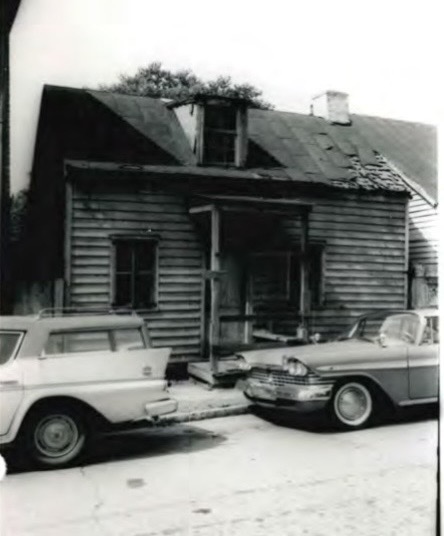
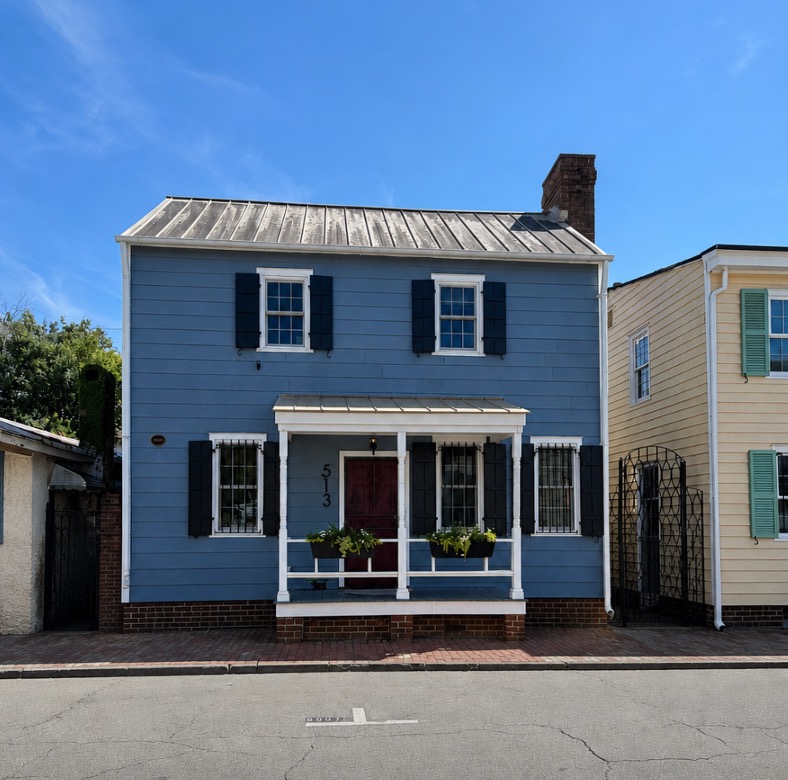
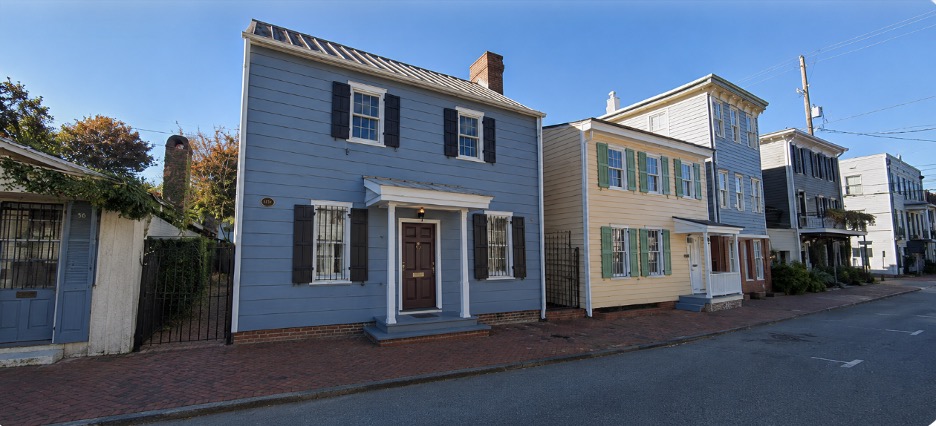
Catherine Deveaux had an extraordinary life. She was one of Savannah’s remarkable free people of color.
Born free around 1785 on the Caribbean island of Antigua, Catherine eventually settled in Savannah, where she built a life marked by entrepreneurship, property ownership, education, and, like many free people of color living in the deep South, difficult contradictions. She was married to John Benjamin Deveaux, a formerly enslaved Savannahian who later became pastor and choir director of Second African Baptist Church.
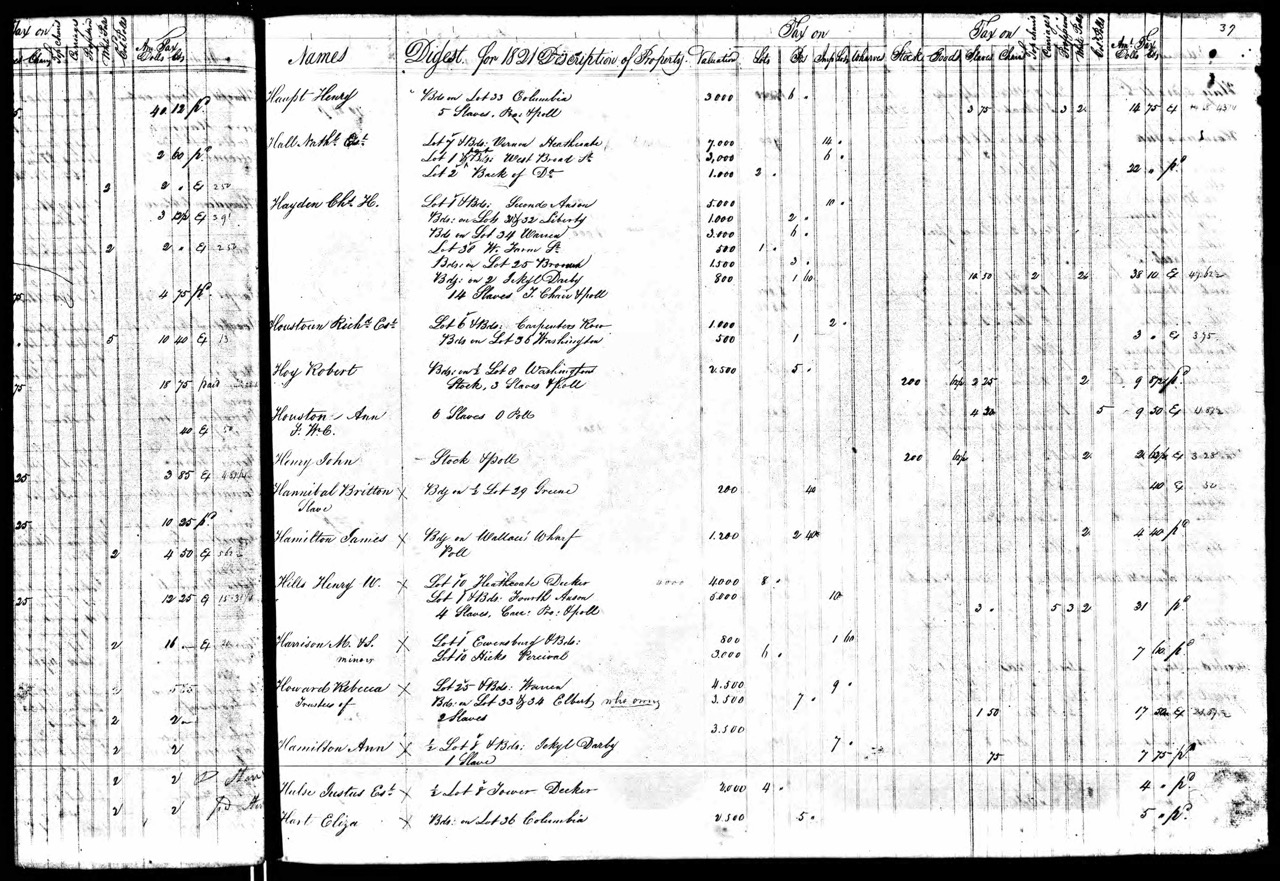
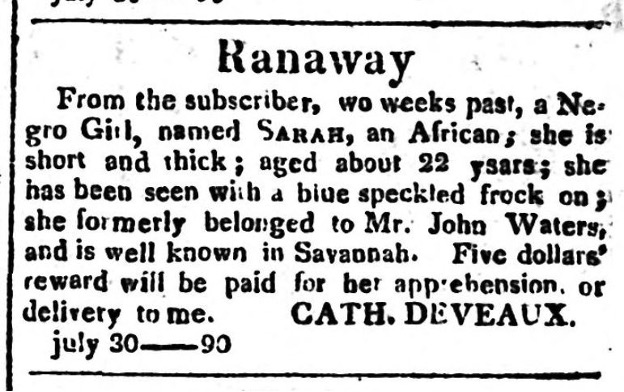
By the early nineteenth century, Catherine had become a successful property owner. Her primary residence still stands at 513 East York Street in Greene Ward, but records indicate that she eventually owned at least five properties throughout the city. Between 1814 and 1826, she also owned several enslaved individuals, a reminder that free people of color sometimes participated in the same economic system that restricted their own freedoms. The practice of owning enslaved people for African Americans was also often fraught with the same problems for free people of color as white slave owners. Catherine placed ads in the Savannah Republican in July 1814, offering a reward for her runaway slave, Sarah.
The home at 513 East York Street was historically owned by several other free women of color, including Ann Craig, and Sarah Middleton. It was also owned in 1816 by an enslaved man, George Bolton.
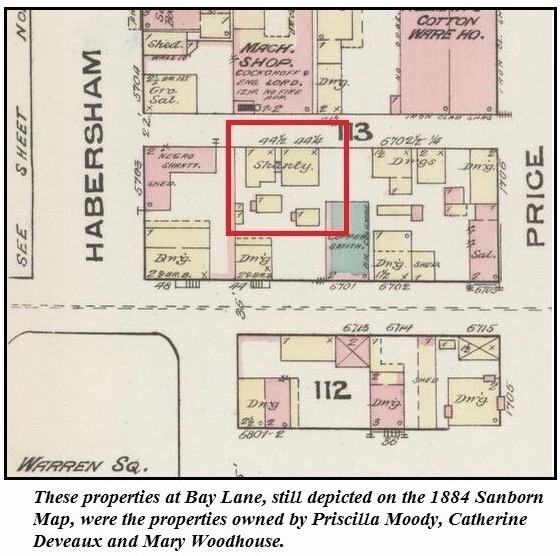
Yet, Catherine, with the help of her daughter, Jane Deveaux, created an enduring legacy in their roles as educators. At a time when teaching African Americans to read and write was illegal, she helped establish and operate clandestine schools for Black children. Lessons were held in her York Street home and in a property she owned on Bay Lane alongside fellow free women of color Priscilla Moodie and Mary Woodhouse. The site later became known as the Woodhouse School.
The risks were enormous. Georgia law imposed severe penalties on anyone caught teaching Black students, including substantial fines and even public whipping. To avoid detection, students often concealed their books inside buckets, baskets, and bundles, making it appear they were carrying out errands for their masters or guardians. Years later, noted educator and Civil War memoirist Susie King Taylor would recall the secret school on Bay Lane as part of Savannah’s hidden educational network.
The Bay Lane property served many purposes. Catherine advertised rooms for rent, took in boarders, and operated a small restaurant from the premises. Newspaper advertisements frequently promoted one of her specialties—Green Turtle Soup, a delicacy popular in Savannah’s dining culture during the early nineteenth century.
Catherine kept one of her homes, as did many urban slaveowners of the period, as a property to house her enslaved. These houses were commonly known as “Negro houses.” As a businesswoman, the enslaved were usually not used for personal service, but were retained as additional workers in her businesses. Such arrangements reflected the complicated realities of life in a city where freedom and slavery existed side by side.
Catherine Deveaux’s story reminds us that Savannah’s free Black community was far more complex than many people realize. She was a businesswoman, property owner, wife, mother, educator, and slaveholder. Her life reveals both the opportunities and contradictions that existed for free people of color in the decades before the Civil War.
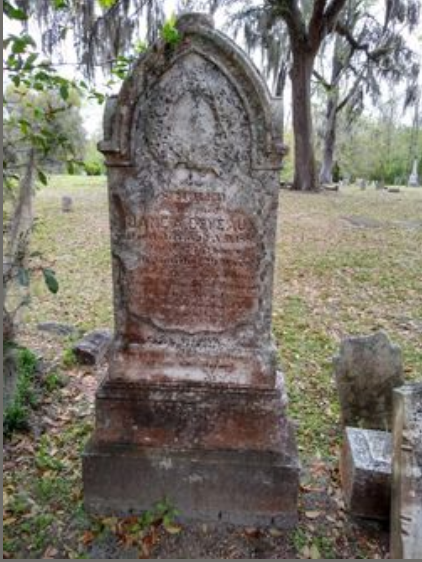
Jane Deveaux is buried in Laurel Grove South, Section OLD, Lot 875. The epitaph on Jane Deveaux's tomb reads "Sacred to the memory of Jane A. Deveaux Died June 12 A.D. 1885 Aged 74 years 10 months 29 days A devoted Christian, celebrated as an early educator of her people, she has built for herself a name more enduring than monuments of stone or brass."
___
Sources:
City of Savannah Municipal Archives. Historical photograph credit. Courtesy of the City of Savannah Municipal Archives, Savannah, GA.
Freeman, Freeman's Rag. "All in the Family." Freeman's Rag: Historical Ruminations, July 2, 2021
Herd-Clark, Dawn. "Jane Deveaux and Her Secret School." In Slavery and Freedom in Savannah, edited by Leslie M. Harris and Daina Ramey Berry, 134. Athens: University of Georgia Press, 2014.
Lumpkin-White, Arva. Photograph credit.
Savannah, Georgia. Land Tax and Property Records, 1809–1938. City of Savannah Municipal Archives / Chatham County Records, Savannah, GA.
13Mary Tyson Home
Location:15 East York Street
___
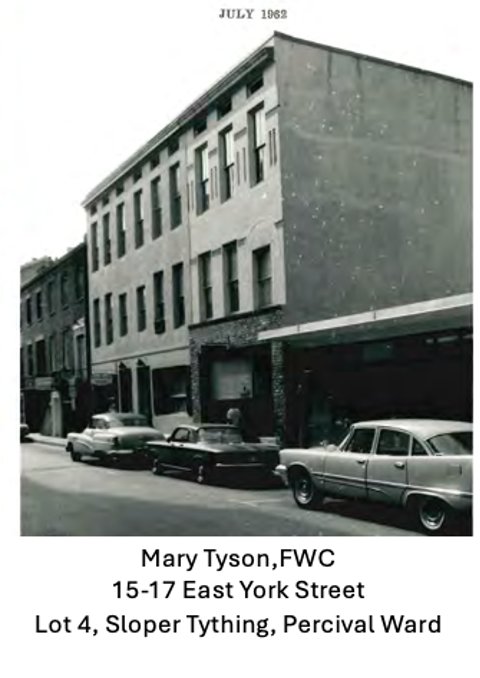
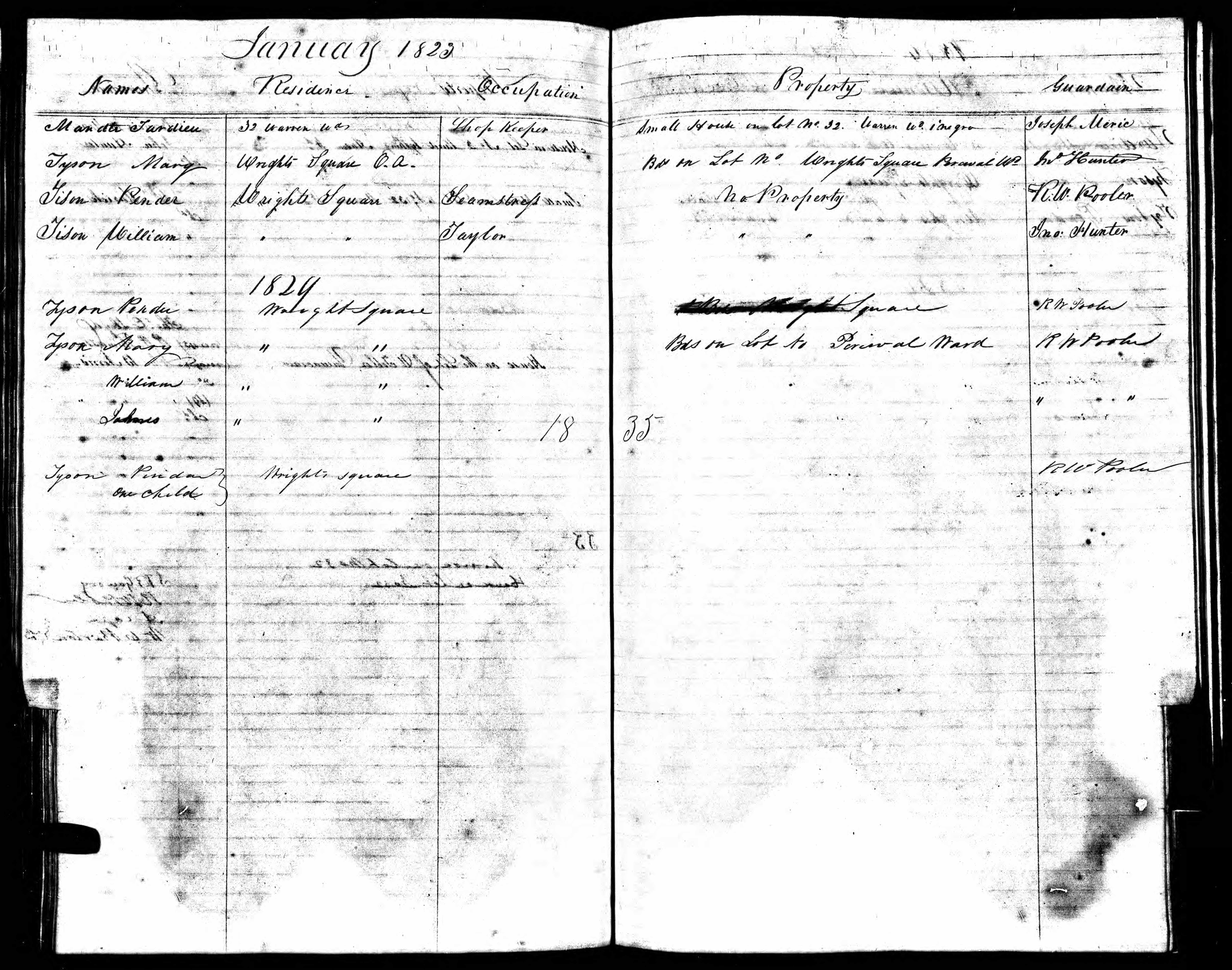
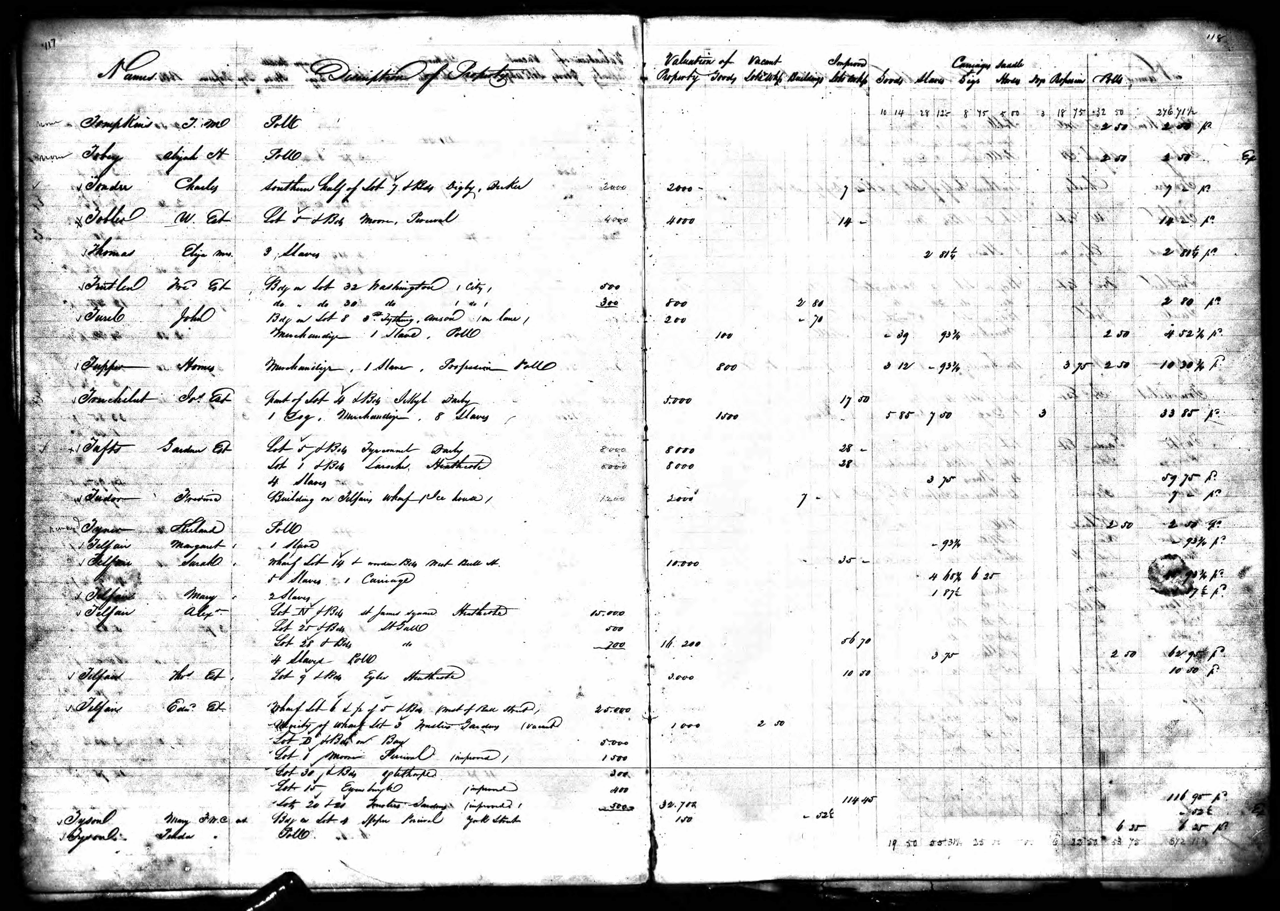
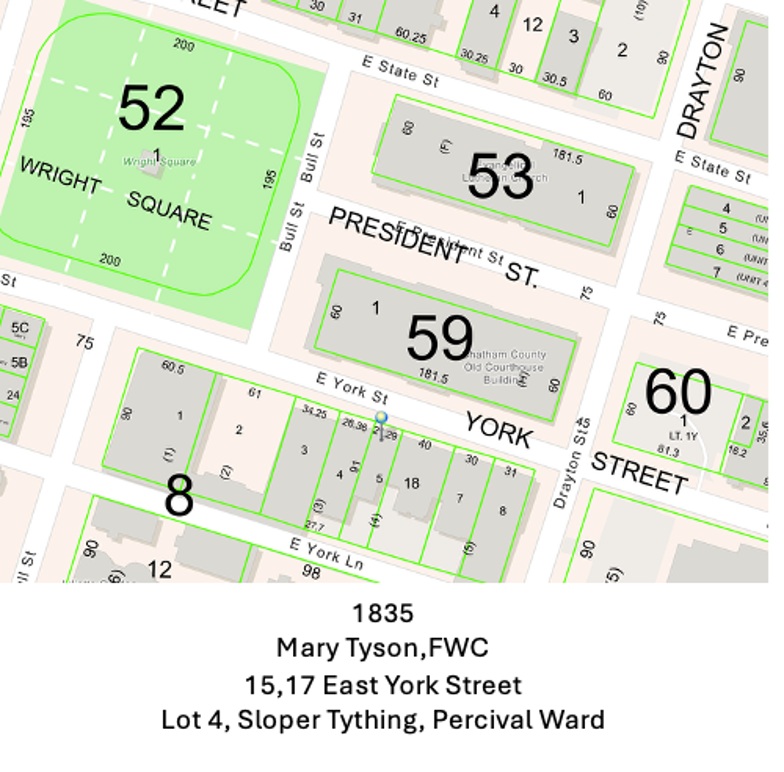
This lot marks the former site of a residential building associated with Mary Tyson, a free woman of color who was born about 1767, whose name appears in the property’s tax digest for over twenty years. Little else is currently known about her personal life or occupation. The present building was constructed around 1892, so her home predates the existing building. The entries in the tax digest place her living a significant portion of her life at this prime downtown location.
___
Sources:
Lumpkin-White, Arva: Photograph credit
City of Savannah Municipal Archives / Chatham County Records. "Land Tax and Property Records, 1809–1938." [Mary Tyson] Tax Digests 1809-1815. [Lot 4, Sloper, Percival Ward] Digital images, Ancestry.com. [1811]
City of Savannah Municipal Archives / Chatham County Records. "Land Tax and Property Records, 1809–1938." [Mary Tyson] Tax Digests 1816-1824. [Lot 4, Sloper, Percival Ward] Digital images, Ancestry.com. [1820]
City of Savannah Municipal Archives / Chatham County Records. ” Mary Tyson in Savannah, Georgia, U.S., Registers of Free Persons of Color, 1817-1864. Volume 1, 1817, 1823-1829. Digital images, Ancestry.com
City of Savannah Municipal Archives. Historical photograph credit. Courtesy of the City of Savannah Municipal Archives, Savannah, GA.
Lumpkin-White, Arva: Photograph credit
Savannah Area Geographic Information System (SAGIS). "SAGIS Property Map Viewer. Chatham County-Savannah Metropolitan Planning Commission


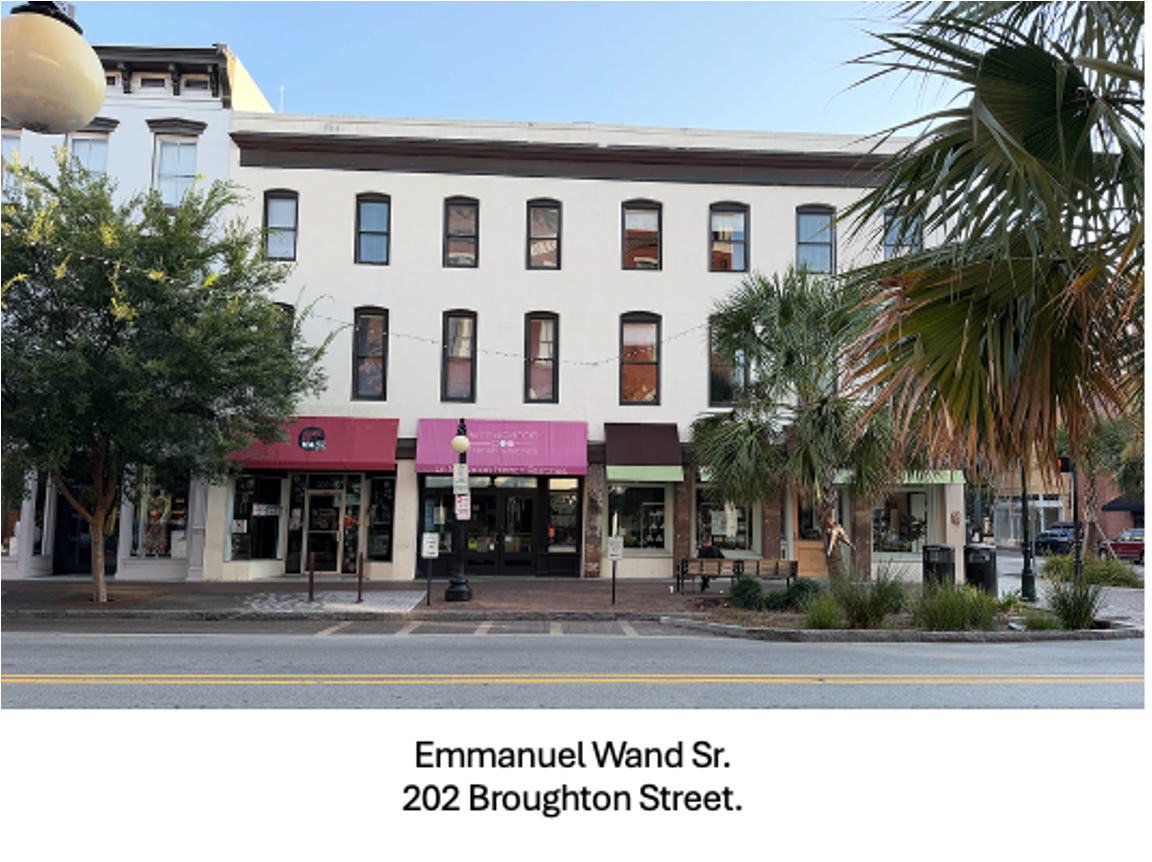
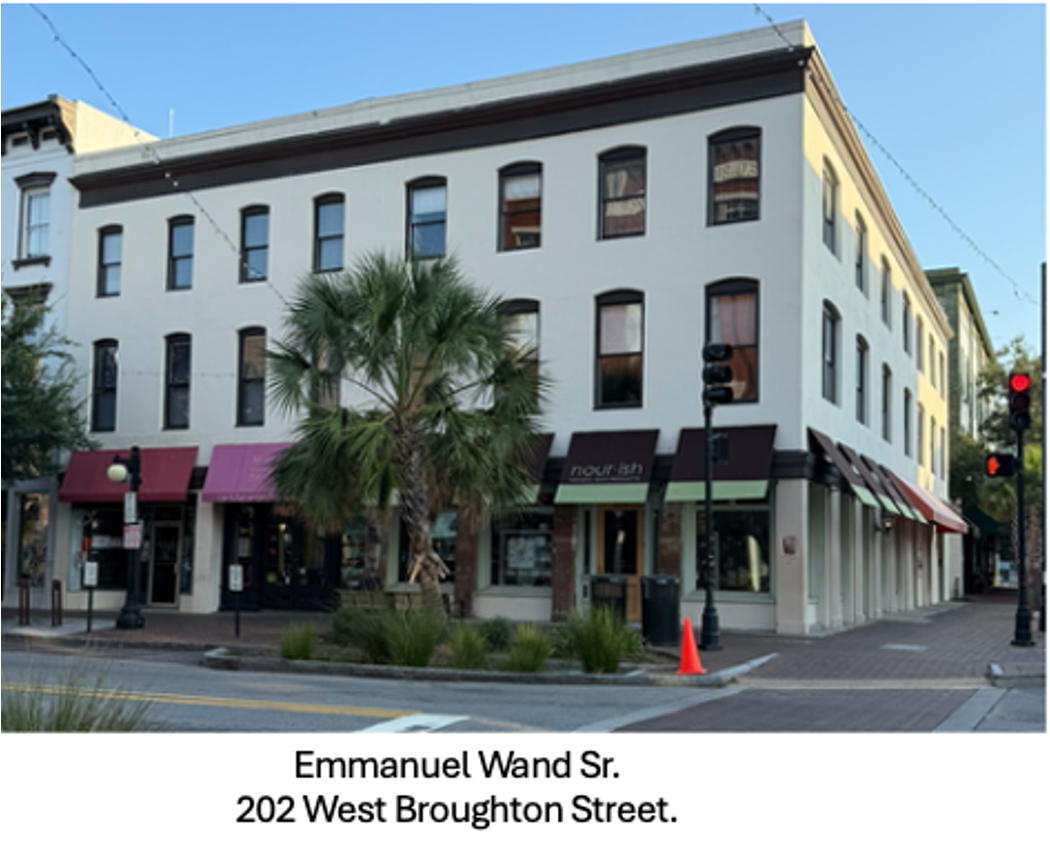
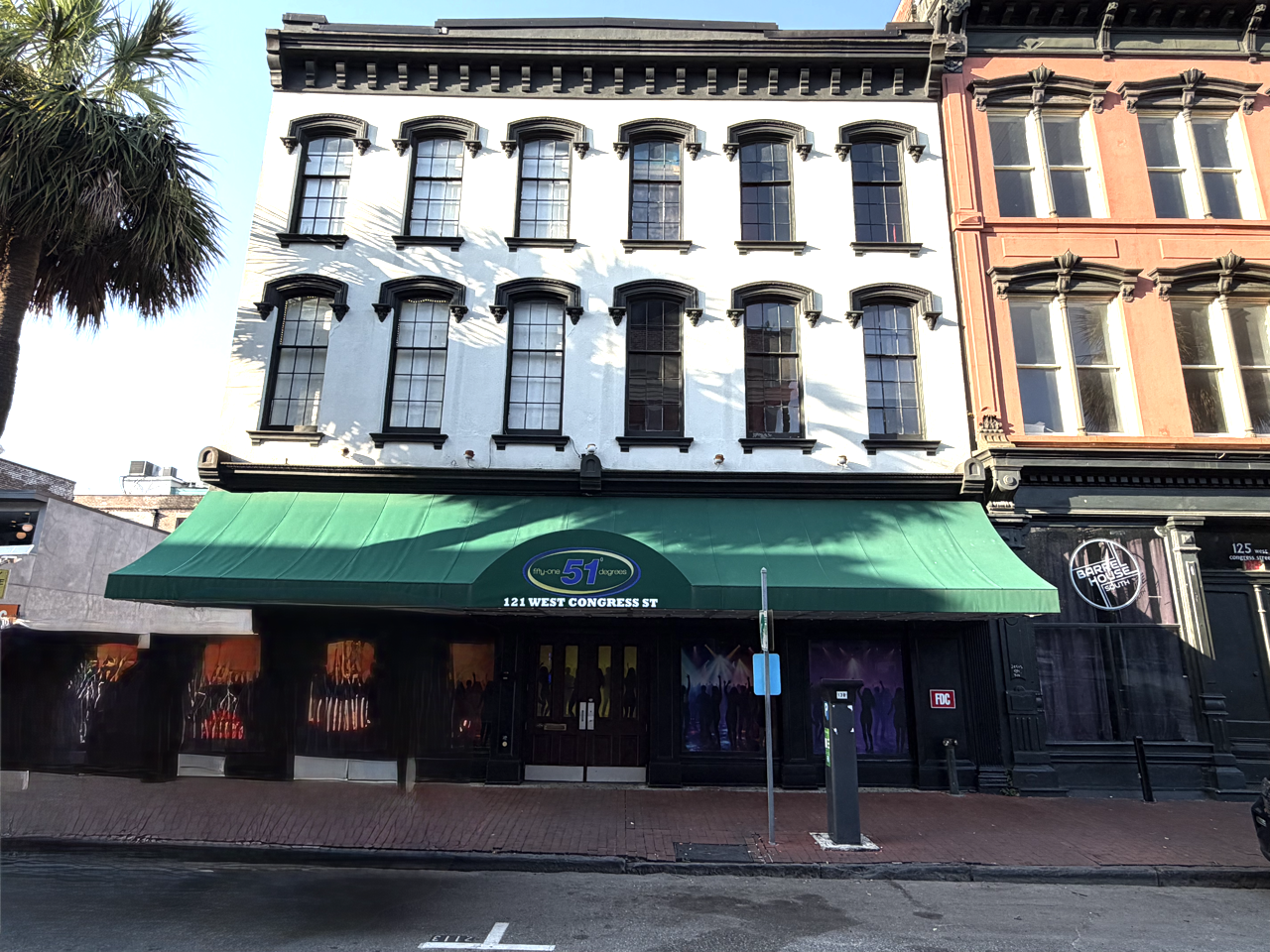
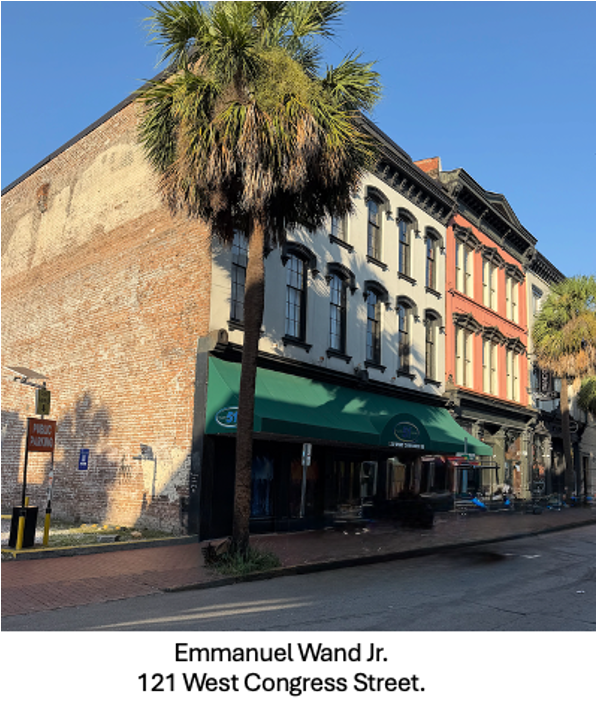
14Emmanuel Wand Homes
Location: 201 West Broughton Street
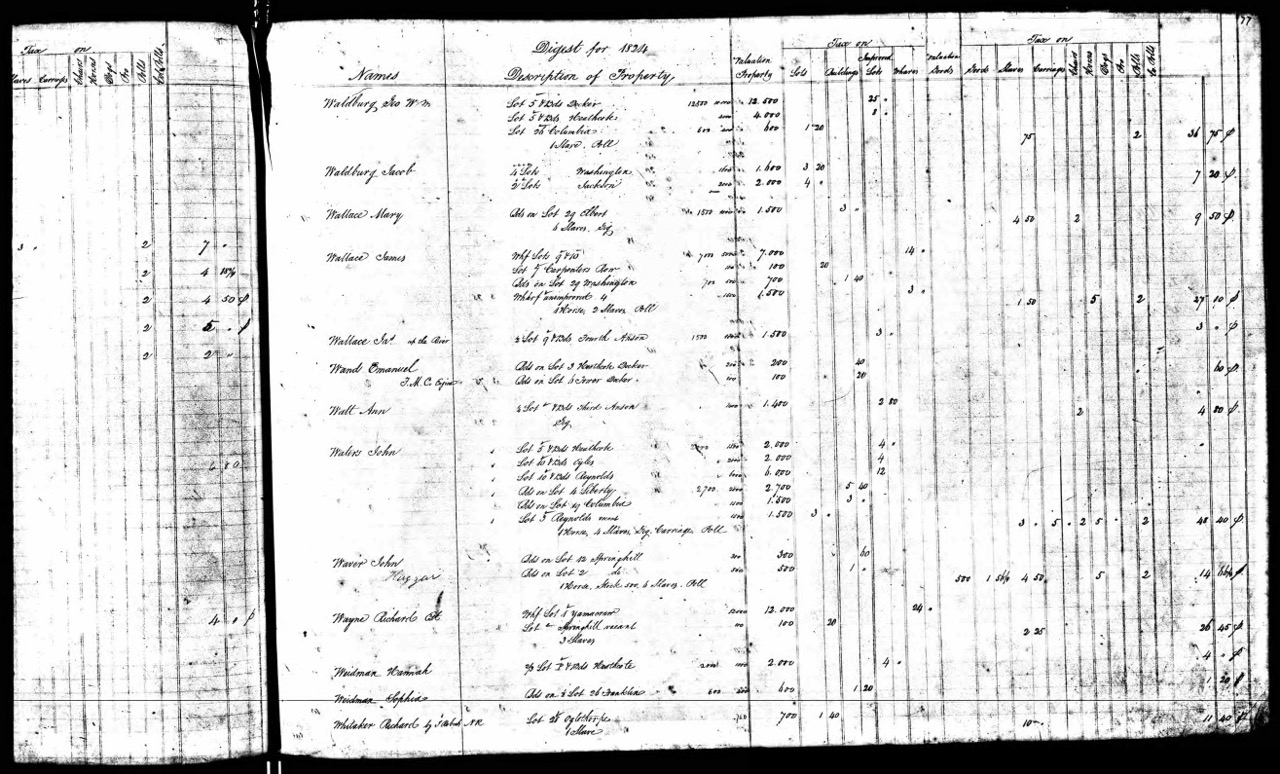
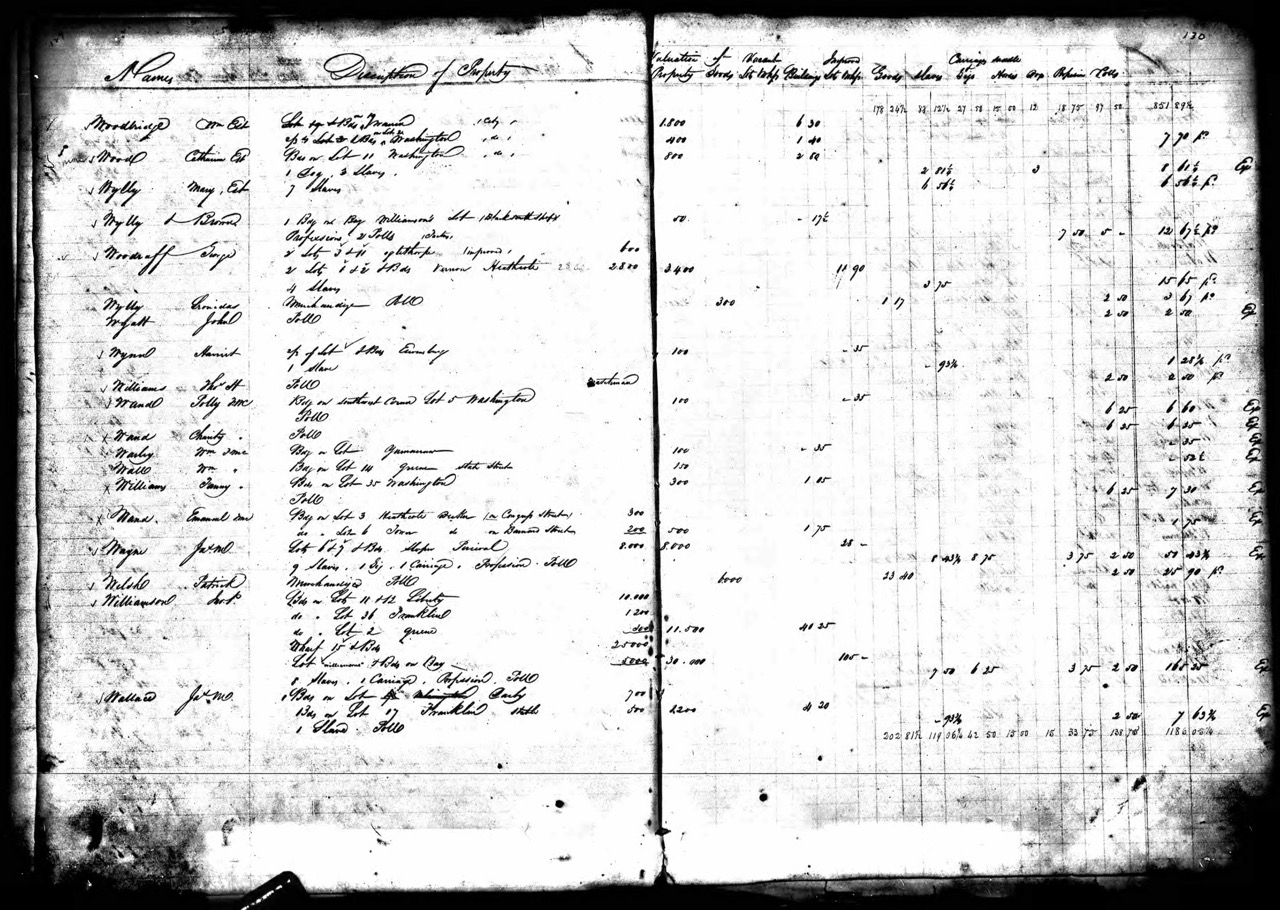
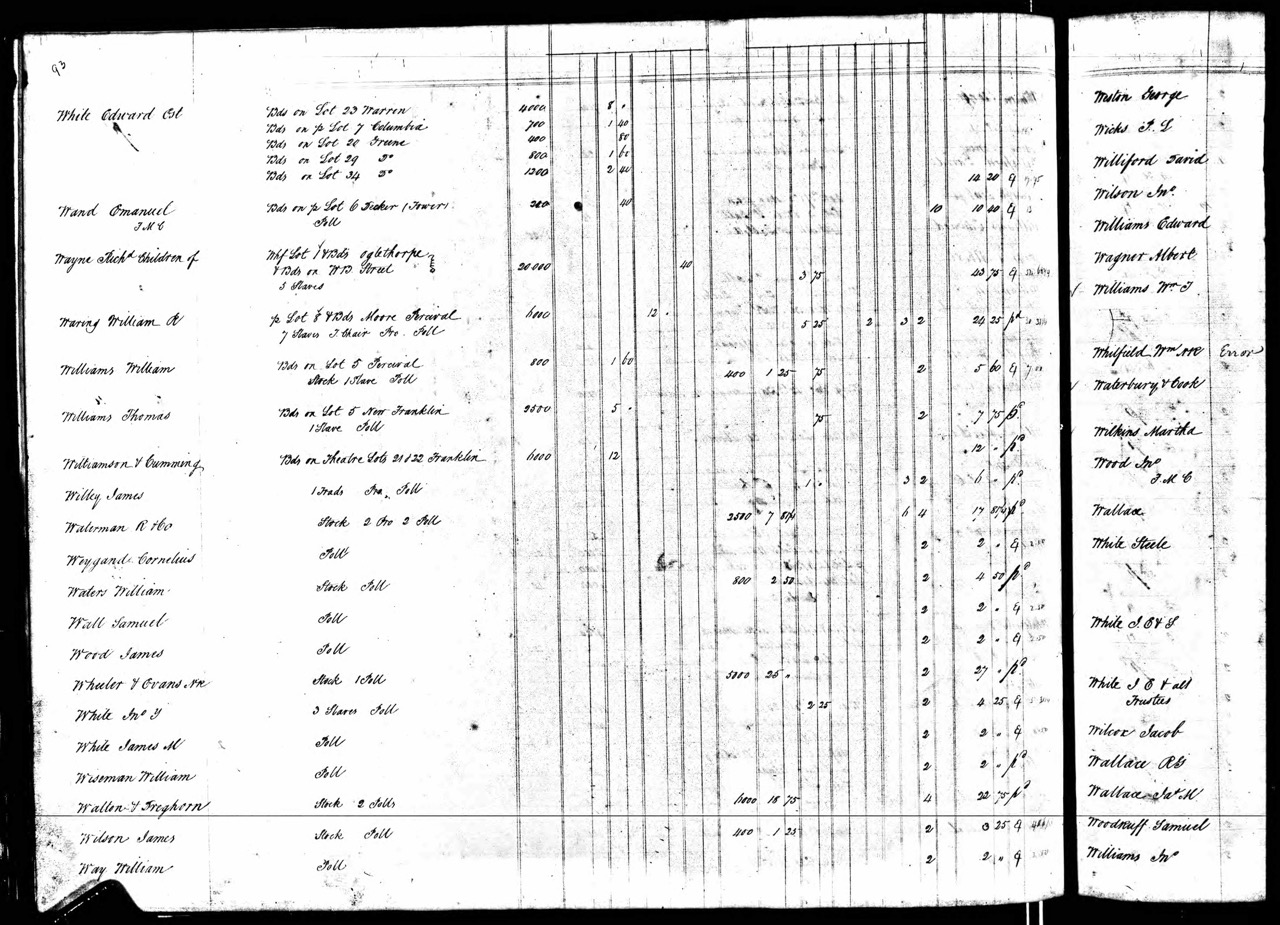
Emmanuel Wand Senior, born in 1773, was a free man of color and a barber. His son, Emmanuel Wand Junior, born in 1804, worked as a drayman and became the owner of the downtown property now known as 121 West Congress Street. Tax records place him there as early as 1826—decades before the current building was constructed in 1859.
Emmanuel Senior also owned property at what is now 201 West Broughton Street in the heart of Savannah's central commercial district. He appears in Savannah’s tax digests as the owner in 1809 and 1811, nearly a century before the building standing there today was built. Together, their stories reveal the important presence and contributions of free people of color in Savannah’s early history.
___
Sources:
City of Savannah Municipal Archives / Chatham County Records. "Land Tax and Property Records, 1809–1938." [Emmanuel Wand ] Tax Digests 1816-1824. [Lot 6, Tower Tything, Decker Ward] Digital images, Ancestry.com. [1821]
City of Savannah Municipal Archives / Chatham County Records. "Land Tax and Property Records, 1809–1938." [Emmanuel Wand ] Tax Digests 1816-1824. [Lot 6, Tower Tything, Decker Ward and Lot 3 Heathcote Tything, Decker Ward] Digital images, Ancestry.com. [1824]
City of Savannah Municipal Archives / Chatham County Records. "Land Tax and Property Records, 1809–1938." [Emmanuel Wand ] Tax Digests 1816-1824. [Lot 6, Tower Tything, Decker Ward and Lot 3 Heathcote Tything, Decker Ward] Digital images, Ancestry.com. [1826]
Lumpkin-White, Arva. Photograph credit
Ports, Michael A. Georgia Free Persons of Color. Volume IV: Chatham County, 1817–1863. Baltimore: Clearfield Company (2016): 130-133
The interactive version adds a street-following map, narration audio and a guided stop-by-stop experience.