Self-Guided Heritage Trail · Savannah, GA
Civil War Under Two Flags | Bricks, Boats and Battle
Historical Context: Savannah's Enslaved And Free In The War

- TEXT READ AND NARRATION ONLY | No Physical Trail Stops
- 7 stops
- Free
For an interactive map and audio narration, press Start this trail.
About This Trail
In a text-only, narration-based historical atlas, we uncover some enslaved and free people of color in Savannah who were invisible participants and silent witnesses in the Civil War. Slavery and the Confederacy are the twin pillars, irrevocably bound, that anchor the history of the Antebellum South. Yet the people who held those pillars up appear in its histories mostly as numbers, line items, or names in someone else's inventory.
Savannah in 1861 was a city where the majority of Black residents were enslaved and a smaller number were free, and the war pressed on both. Enslaved men were impressed from plantations and households to dig the batteries and earthworks that ringed the river, their labor charged to their owners by the day. Enslaved women cooked, laundered, and nursed for the regiments that garrisoned the city. Free men of color, tailors and carpenters and musicians who paid taxes and held lots, were ordered to the same trenches, or marched with Confederate companies as cooks, teamsters, and bandsmen, their names buried in muster rolls under the word "servant." None of them were asked which side they were on.
When the Union lines settled on the sea islands, the choices multiplied. Enslaved people slipped away by the hundreds toward Port Royal, some returning in blue as soldiers of the United States Colored Troops. Free families weighed whether to stay and keep their shops open under two flags in four years, or risk everything on the water. Those who remained watched the harbor empty, prices climb, and the city's grip tighten with every rumor of an approaching army.
In December 1864, that army arrived, and Savannah surrendered rather than burn. Within weeks, the city's Black ministers and tradesmen, some born free and some formerly enslaved, sat across a table from Sherman and Stanton and told them, in plain language, what freedom would have to look like.
The war conscripted their hands, tested their loyalties, and then wrote its histories without them. This trail gives them back their names.
___
The Route
1Civil War Labor: The Work Must Be Done
Fortifications: National Battlefield Trust Short Video
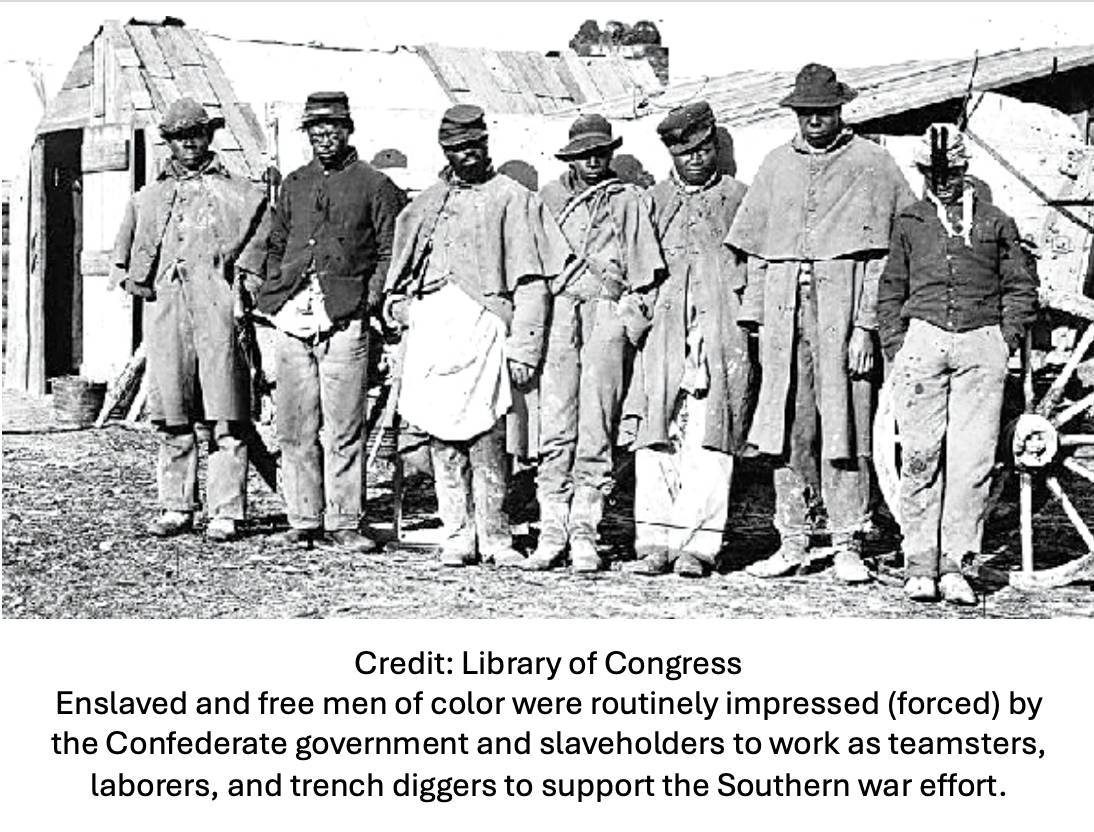
When visitors imagine the Civil War in Savannah, they may picture soldiers, cannons, ships, and fortified walls. But behind every wall stood human labor. Before a cannon could be fired, earth had to be moved. Before soldiers could march, roads had to be cleared. Before a fort could function, someone had to cook, wash clothing, carry supplies, cut wood, nurse the sick, repair tools, and guide boats through the coastal marshes.
Much of that work was performed by Black people—free men of color and the enslaved.
Their work helped Confederate forces defend Savannah, Fort Pulaski, the Savannah River, and the surrounding coast. Some African American workers were hired and paid. Some were hired out by enslavers, with the money going primarily to the people who claimed ownership of them. Others were impressed—taken or assigned for military labor by Confederate authorities. Their work was essential. Their freedom was not.
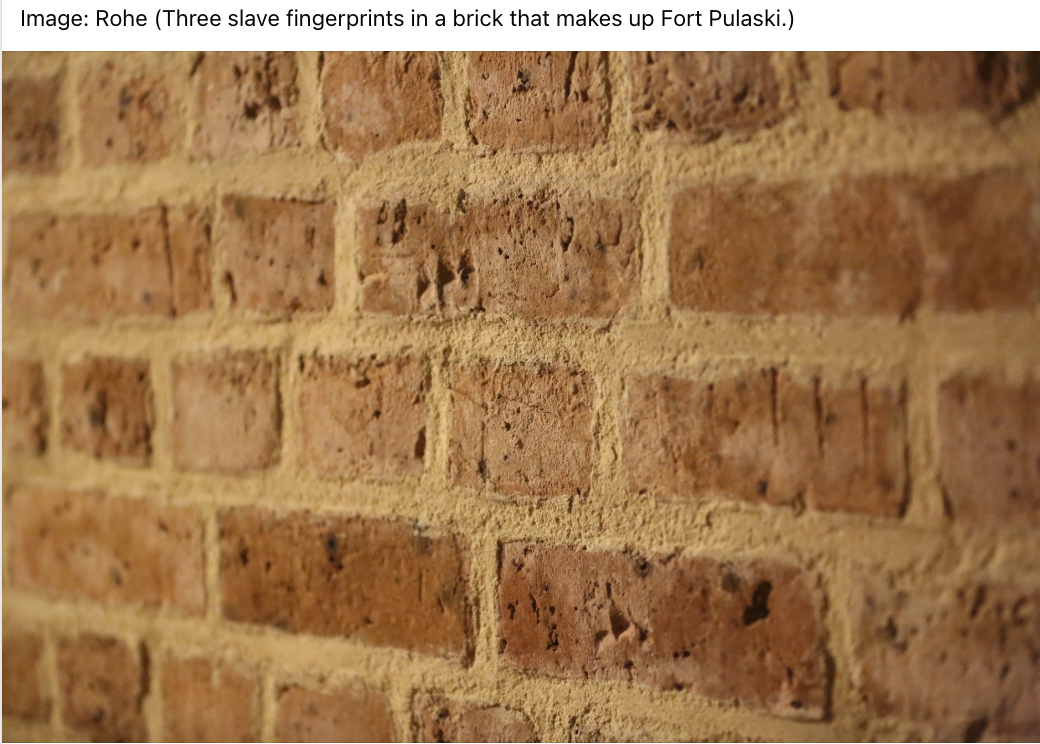
At Fort Pulaski, on Cockspur Island, free men of color and the enslaved were used almost immediately after Georgia militia seized the fort in January 1861. Nearly 300 enslaved men were sent by local enslavers, including members of the Daniels, Habersham, Huger, and Screven families. They cleared and deepened the fort’s moat and performed the heavy work required to prepare the neglected installation for war.
After about two weeks, many of the men were sent back to the rice plantations from which they had been taken.
In March 1861, another group of seventeen enslaved men was sent to Fort Pulaski for 245 days. The men’s enslavers were paid fifty cents per day for each worker. The arrangement made the system clear: Confederate military preparation relied on enslaved labor, and enslavers were compensated for the use of the people they claimed as property.
The fort depended on more than digging. The workers served as carpenters, general laborers, woodcutters, wagon drivers, nurses, cooks, and personal servants. Servants cleaned quarters, washed clothing, mended garments, prepared food, and cared for officers. Other workers transported materials, maintained the grounds, and helped keep the fort operating from day to day. These were not minor tasks. An army cannot function without food, transportation, clothing, medical care, fuel, communications, and maintenance. A fort's walls may be made of brick and earth, but its military power depends on people: They often labored between 3 and 18 days. Carpenters earned up to $2.00 per day for their enslaver, while laborers earned $.50 cents per day for their enslaver. Builders and contractors received about $282 from the Confederate army for the labor of these men while held in bondage.
Free men of color also contributed to Confederate military operations in the Savannah area. In July 1861, Savannah’s government passed a measure stating that free men of color employed at Fort Pulaski could be paid up to eleven dollars per month if Confederate officials failed to pay them. In October, three workers submitted a claim concerning taxes they owed “in compensation for their service at Tybee Island and Fort Pulaski."
Savannah assigned the largest enslaved and free workforce to its defensive works. Historian Clarence L. Mohr found that about 800 Black people were already working on the city’s defenses by March 1862. After Confederate impressment, the number rose to approximately 1,500 in August. By November, about 1,000 remained. In December, another 1,500 enslaved people were impressed. During the first three months of 1863, the free and enslaved labor force was often as large as 2,000.
These figures do not represent a Black Confederate regiment. They represent a labor force.
Many workers came from middle and southwestern Georgia because Confederate authorities needed labor in Savannah. They dug, hauled, cleared, constructed, and maintained the defenses surrounding the city. Their work helped prepare Savannah for a possible Union attack.
The conditions were difficult and often dangerous. Workers were expected to complete daily assignments, particularly in excavation and construction. Some could earn additional money after completing their required tasks. Those who failed to satisfy overseers could face harsh punishment.
By 1863, Savannah newspapers regularly published runaway advertisements for enslaved men who had escaped from military labor assignments. These advertisements provide a record of resistance. They show that some workers attempted to leave the Confederate labor system even while their work remained necessary to it.
Savannah’s military operations also depended on the coastal environment. The city was connected to rivers, creeks, sounds, islands, and marshes. Boats carried mail, supplies, and people. Pilots and navigators who understood the waterways could determine whether a vessel reached its destination—or became trapped, lost, or exposed to the enemy.
Free and enslaved maritime workers possessed knowledge that Confederate authorities needed. Their experience with the Savannah River and coastal waterways became a military resource. Some guided vessels, carried supplies, transported messages, and helped Confederate forces move through difficult terrain.
Their skills were valuable, but skill did not erase inequality. An enslaved pilot could be trusted to guide a military vessel through dangerous waters while still being denied the rights and status given to White officers. An enslaved worker could be paid for his labor while the person who claimed ownership of him controlled the payment. A free worker could seek wages while remaining subject to discriminatory laws.
This is why the word “service” must be used judiciously.
Free and enslaved men worked for Confederate military purposes in Savannah. Their labor sustained Confederate defenses and military operations. But the evidence does not show that all of them volunteered, shared the same beliefs, or supported slavery and secession. In many cases, the records tell us what people did—not what they thought or believed.
Some labored because they were enslaved. Some were impressed. Some were hired. Some may have used military employment to earn money, protect family members, or improve their circumstances within a system that offered them very few choices.
Their contribution was real even when freedom was incomplete.
The history of free and enslaved labor for the Confederacy is therefore more complicated than a simple story of loyalty or resistance. A person could perform work that strengthened Confederate defenses without freely choosing the Confederate cause. A skilled laborer could become essential to military operations while remaining legally powerless. The same waterways that made enslaved navigators valuable to Confederate forces could later become routes to freedom.
The surviving records preserve the names of only a few laborers. Most appear in groups, through payment records, impressment lists, newspaper advertisements, occupational descriptions, or the names of the enslavers who claimed them. The absence of their names does not mean the absence of their importance.
The fortifications around Savannah were built and maintained by human hands. Those hands moved bricks, dug trenches, hauled timber, drove wagons, prepared meals, carried messages, nursed the sick, and guided boats.
Free and enslaved labor was a foundation of Confederate Savannah.
To tell this history accurately is to recognize both sides of that fact: Free and enslaved laborers made indispensable contributions to the Confederate war effort—work systematically coerced through the brutal machinery of slavery.
___
Sources:
Jacqueline Jones. “Wartime Workers, Moneymakers: Black Labor in Civil War-Era Savannah.” In Slavery and Freedom in Savannah, edited by Leslie M. Harris and Daina Ramey Berry, 139–54. Athens: University of Georgia Press, 2013.
National Park Service. “Contraband Camp.” Fort Pulaski National Monument. Updated January 7, 2025
City of Savannah “Municipal Slavery in Savannah”
2"Raise Your Hand High"
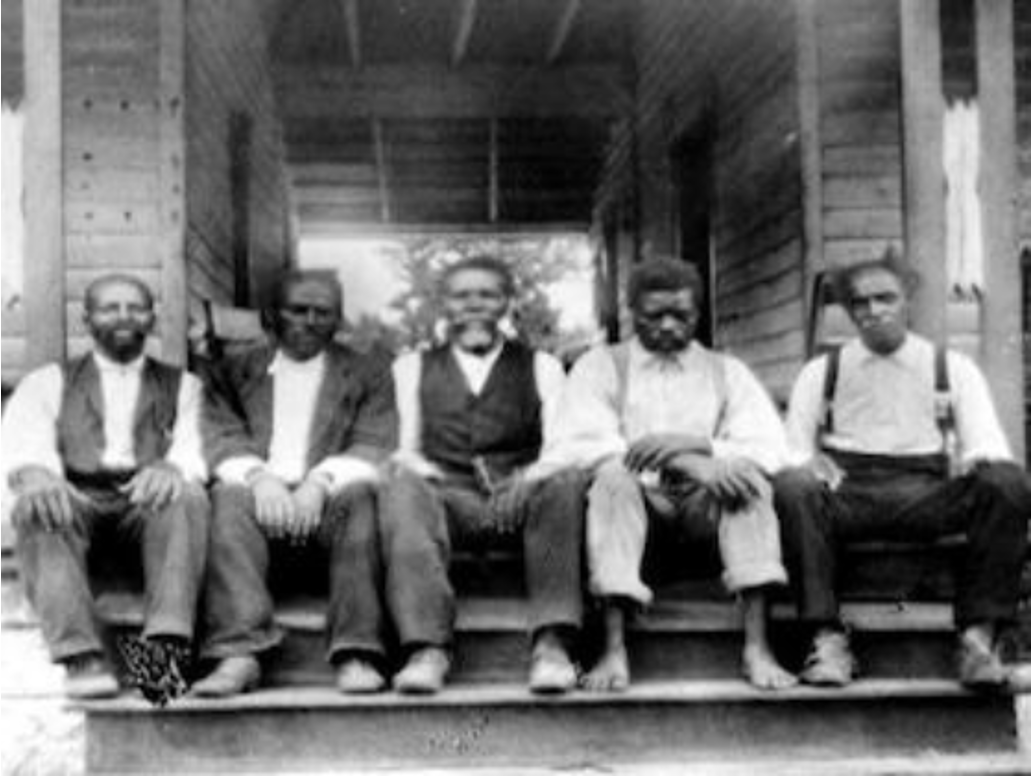
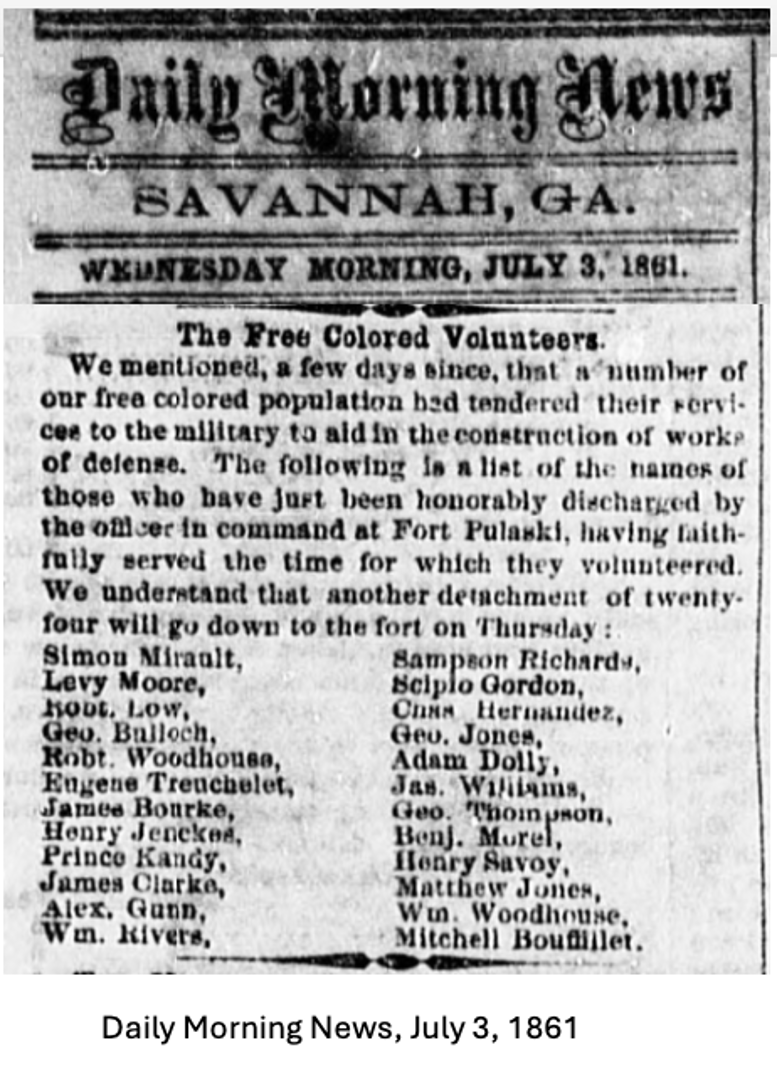
A number of free men of color in Savannah willingly volunteered their labor to the Confederate war effort. In early 1861, the National Park Service records that fifty-five free Black men volunteered to help prepare Fort Pulaski for battle. The Daily Morning News posted the names of the free men of color who volunteered, many of them community leaders and skilled tradesmen:
Simon Mirault, Levi Moore, Robert Low, Geo Bullock, Robert Woodhouse, Eugene Treuchhholet, James Burke, Henry Jenckes, Prince Kandy, James Clarke, Alex Gunn, William Kiverns, Sampson Richards, Scipio Gordon, Geo Jones, Adam Dolly, James Williams. Geo Thompson, Benjamin Murel, Henry Savoy, Matthew Jones, William Woodhouse, and Mitchell Boufillet.
Their decision should be understood within the limited choices available to free people of color in a slave society. Volunteering could provide wages, protect employment, demonstrate usefulness to white authorities, and help safeguard their families and property. It may also have reflected personal connections to Savannah, local community concerns, or a desire to defend the place where they lived. The surviving record confirms their willingness to work, but it does not reveal one shared political motive.
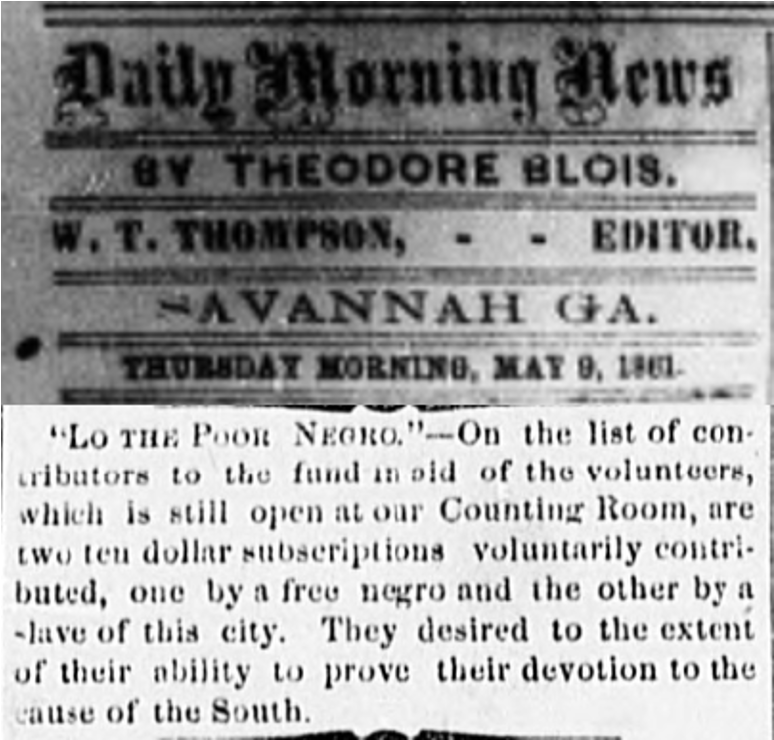
According to the Daily Morning News, May 1861, a free person of color and a slave visited the local counting room. After they left, it was discovered that "two ten-dollar subscriptions were voluntarily contributed, one by a free Negro and the other by a slave of this city. They desired, to the extent of their ability, to prove their devotion to the cause of the South."
Their participation was real, but it did not mean that Savannah’s free Black community supported slavery or secession. These men contributed to Confederate military preparations while remaining excluded from political power and vulnerable to racial laws. Their story is best understood as one of agency under pressure: they made practical choices in a dangerous society, using available opportunities to survive and protect what they could.
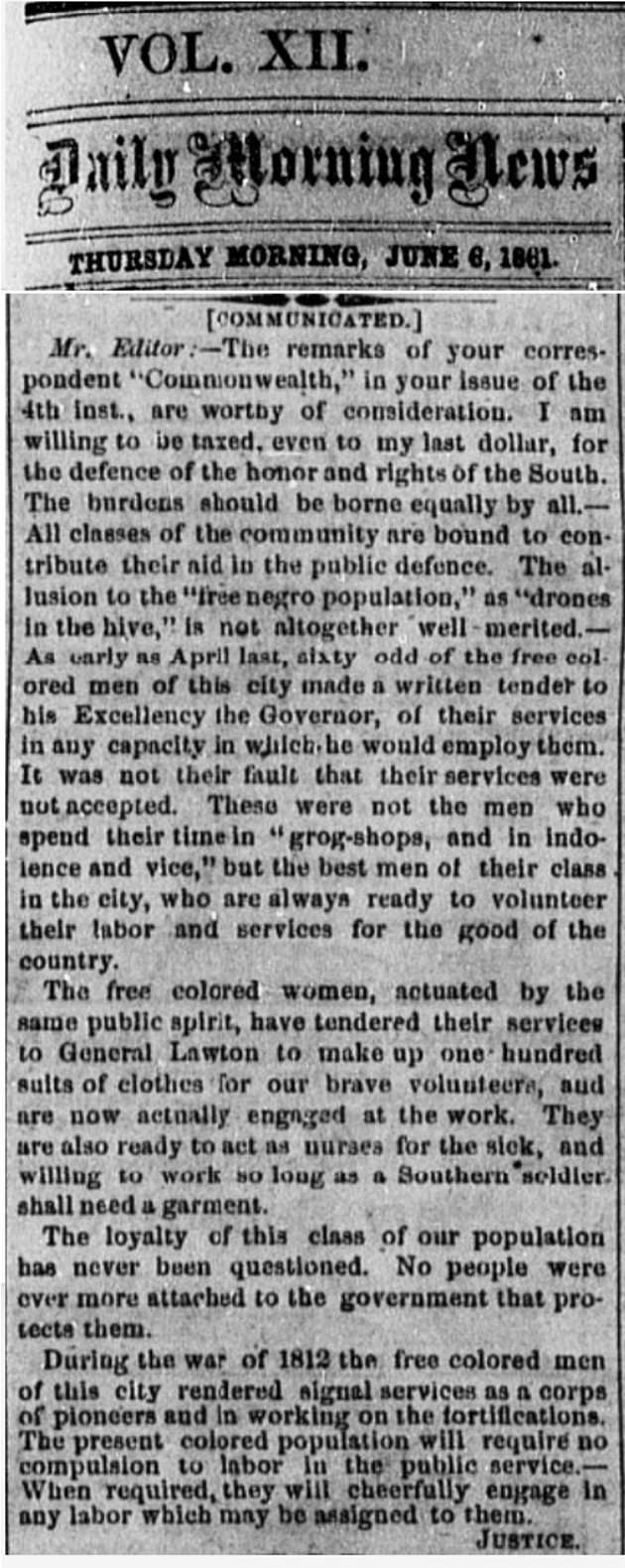
A letter to the editor of the Daily Morning News, in 1861, gave support to the free men of color who have shown due patriotism when called upon:
"The remarks of your correspondent, "commonwealth", in your issue of the 4th Inst., are worthy of consideration. I am willing to be taxed, even to my last dollar, for the defense of the honor and rights of the South. The burden should be borne by all - All classes of the community are bound to contribute their aid to the public defense. The allusion to the "free Negro population," as "drones in the hive" is not altogether well merited. As early as April last, sixty-odd of the free colored men of this city made a written tender to His Excellency the Governor, of their services in any capacity in which he would employ them. It was not their fault that their services were not accepted. These were not the men who spend their time in "grog shops" and in "indolence and vice", but the "best men of their class in the city, who are always ready to volunteer their labor and services for the good of the community.
Catherine Deveaux and a group of fellow free women of color, all seamstresses united by a sense of public spirit, stepped forward to offer their services to General A.R. Lawton. They tendered their services to make up one hundred suits of clothes for the soldiers and worked with great intention on the project. They were also ready to act as nurses for the sick and willing to work "so long as a Southern soldier shall need a garment. The loyalty of this class of our population has never been questioned. No people were ever more attached to the government that protects them."
During the war of 1812, the free colored men of this city rendered signal services as a corps of pioneers in working on the fortifications. The present colored population will require no compulsion to labor in the public service. When required, they will cheerfully engage in any labor which may be assigned to them. --- Justice."
___
Sources:
Editorial on allegiance of free Blacks, Daily Morning News, June 06, 1861, Image 1
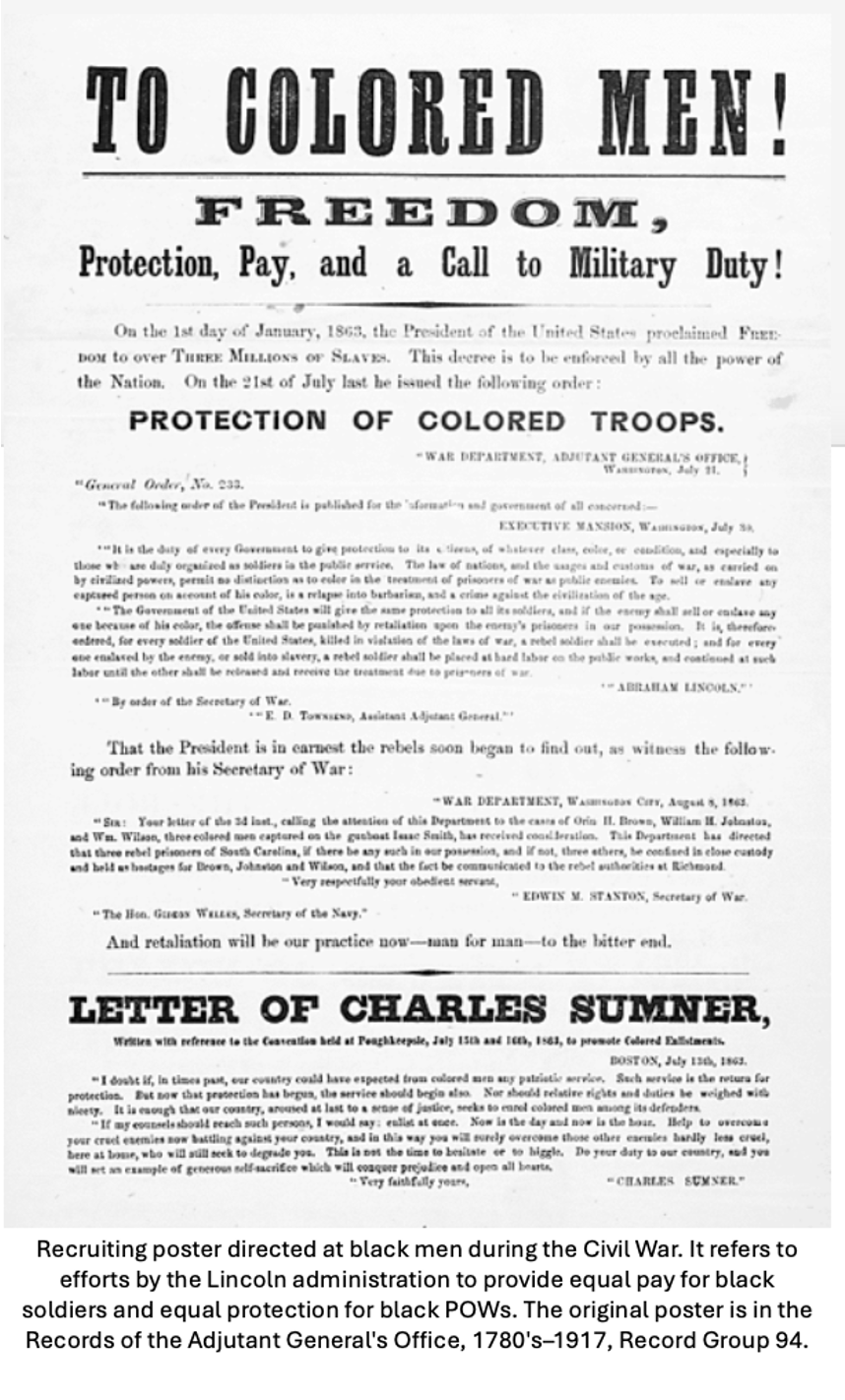
Freeman, Elsie, Wynell Burroughs Schamel, and Jean West. "The Fight for Equal Rights: A Recruiting Poster for Black Soldiers in the Civil War." Social Education 56, 2 (February 1992): 118-120. [Revised and updated in 1999 by Budge Weidman.]
Hoskins, Charles Lwanga. Yet With a Steady Beat: Autobiographies of Early Black Savannah. Savannah: Gullah Press, 2001, 13-14
"Lo the Poor Negro", Daily Morning News (Savannah, Ga.) May 09, 1861, Image 2
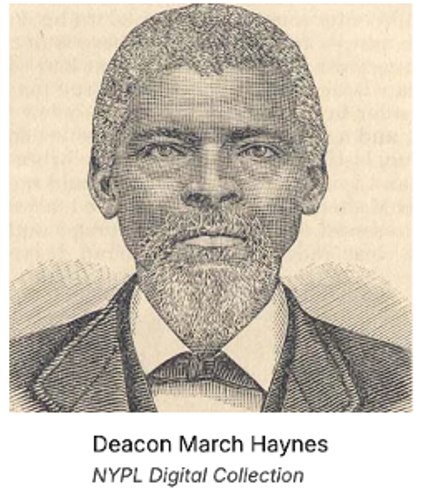
3March Hayes :The Pilot Who Freed the River
March Haynes was born March 4, 1825, in Pocotaligo, South Carolina, into slavery. Little survives of his early years, but by 1849 he was serious enough about his faith to be elected a deacon of the Wilmington Baptist Church. In 1858 he was brought to Savannah, still enslaved, and became the property of John C. Rowland. Rowland hired him out as a boat pilot and stevedore — common practice among Savannah slaveholders looking to profit from the people they held in bondage — and it was in that work, guiding boats through the creeks and marshes of the Savannah River, that Haynes built an intimate, almost instinctive knowledge of the waterways around the city. It was knowledge that would matter far more than Rowland ever intended.
When Rowland enlisted in Confederate service in 1861, he took Haynes with him to Fort Pulaski on Cockspur Island, where Haynes — still enslaved — was put to work as a conscripted carpenter. He was there when Union guns opened on the fort in April 1862, and there when it fell after a bombardment that shattered the assumption that masonry forts could withstand modern artillery. Two days later, Union Major General David Hunter issued General Orders No. 7, declaring that every person of color who had been held in bondage at Fort Pulaski and on Cockspur Island be free. Rowland was taken prisoner. Haynes walked out a free man.
He didn't leave. Instead, Haynes went to work for the Union Army under Brigadier General Quincy Adams Gillmore, commander of the Tenth Army Corps — and turned his knowledge of the marshes into a weapon. In a boat Gillmore had built for him and painted the drab color of the river itself, Haynes made repeated night trips up the creeks toward Savannah, slipping past Confederate pickets to gather intelligence on the city's forts, batteries, and camps. On the same trips, he carried people the other direction: enslaved men and women he guided out of Savannah and down the water to Union lines, boatload after boatload, until he finally brought out his own wife as well. Union chaplain Frederic Denison, who served alongside the Third Rhode Island Heavy Artillery and later wrote two separate accounts of Haynes's exploits, called him a man of remarkable resourcefulness — someone who understood, in Denison's words, "the spirit and scope of the war" from the moment Fort Pulaski fell.
The work nearly cost him everything. On August 20, 1864, Haynes formally enlisted in the 21st United States Colored Infantry, Company K. Four days later, on one of his river expeditions to bring more people out of Savannah, his party was delayed past daylight and ran into six Confederate pickets along a creek. In the gunfight that followed, three of the Confederate soldiers were killed, and Haynes took a bullet through the thigh — but he escaped capture and got his people through. He was hospitalized at Hilton Head, South Carolina, and was ultimately discharged for disability in March 1866, his right leg permanently weakened by the wound.
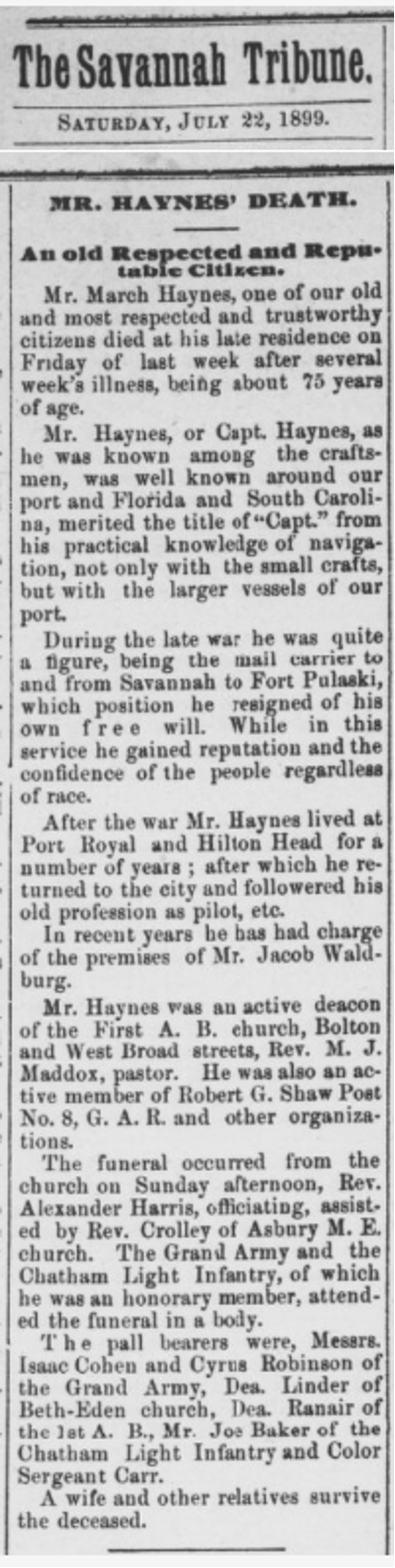
Haynes returned to Savannah after the war and to the congregation that had shaped him for decades, First African Baptist Church, where he remained a respected deacon and community figure for the rest of his life. He died in Savannah on July 16, 1899. His obituary in the Savannah Tribune remembered him simply as an old, respected, and reputable citizen — a description that gives no hint of the boats, the gunfire, or the hundreds of people who owed him their freedom.
___
Sources:
Denison, Frederic. A Chaplain's Experience in the Union Army. Providence: Soldiers' and Sailors' Historical Society of Rhode Island, 1893.
Denison, Frederic. Shot and Shell: The Third Rhode Island Heavy Artillery Regiment in the Rebellion, 1861–1865. Providence: Third Rhode Island Heavy Artillery Veterans Association, 1879.
National Park Service, March Haynes.Fort Pulaski National Monument. Updated December 3, 2024
"Mr. Haynes Death: An Old Respected and Reputable Citizen." Savannah Tribune (Savannah, GA), July 22, 1899.
4Moses Dallas and John H. Deveaux - USS Water Witch
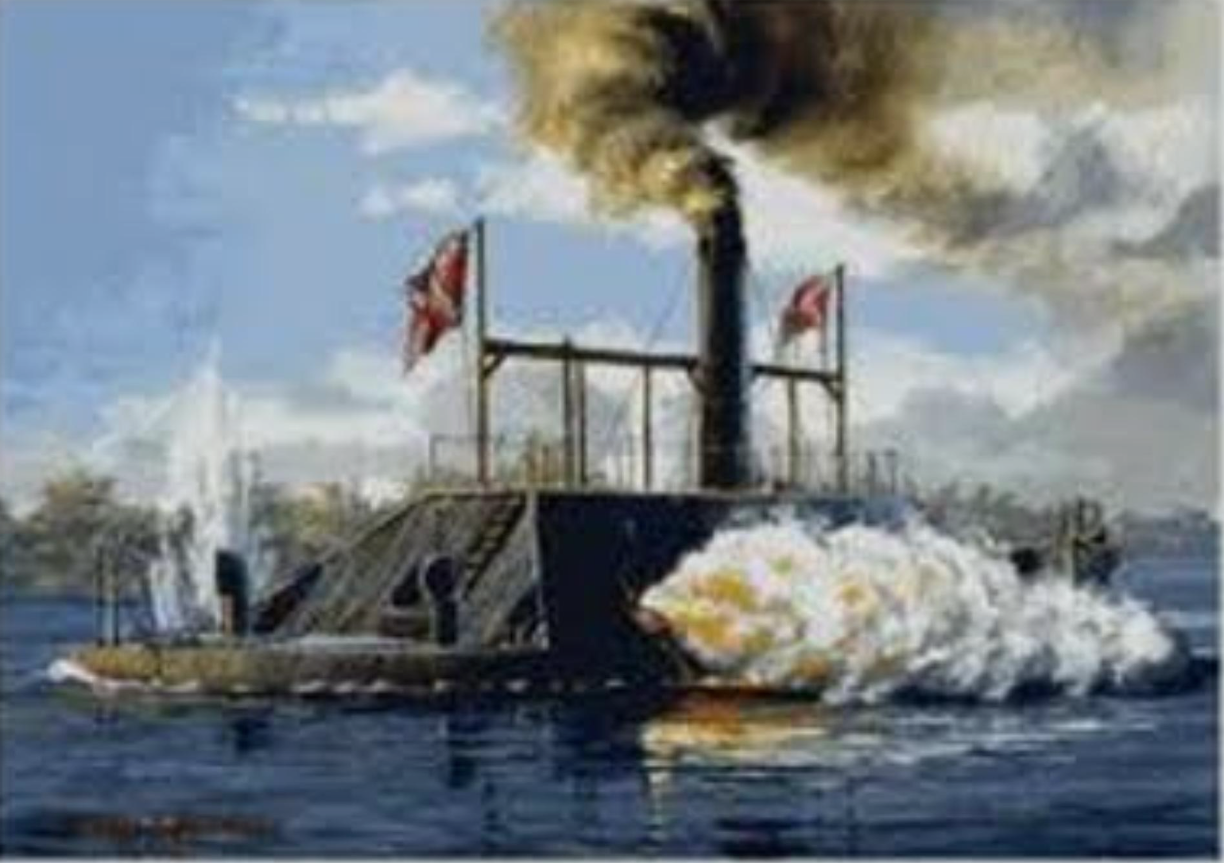
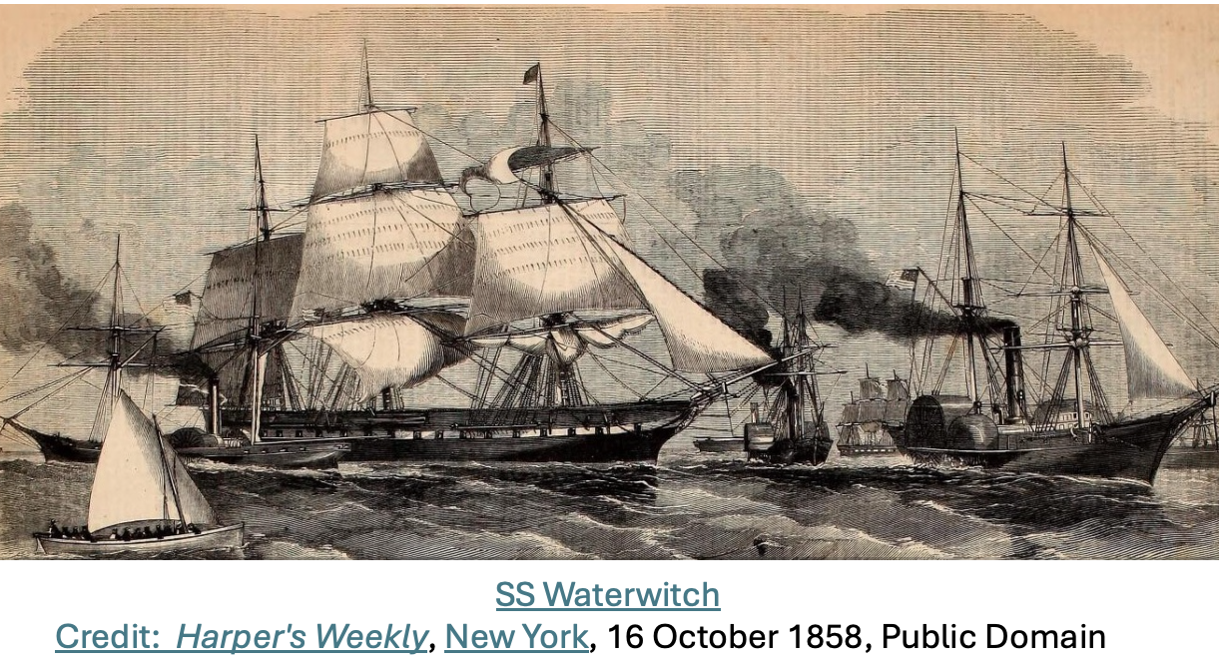
Savannah's Confederate navy could not have operated without free men of color and enslaved men's knowledge of the coast, even as it fought to preserve the system that enslaved most of the men who supplied both. Moses Dallas and John H. Deveaux sat at two different points inside that contradiction — an enslaved pilot whose skill was worth more to the Confederacy than his freedom, and a free-born teenager swept into a "mosquito fleet" running errands through Savannah's back channels. Their paths crossed in the same boat, on the same violent night in June 1864, when a Confederate raiding party slipped across Ossabaw Sound to seize a Union gunboat by surprise.
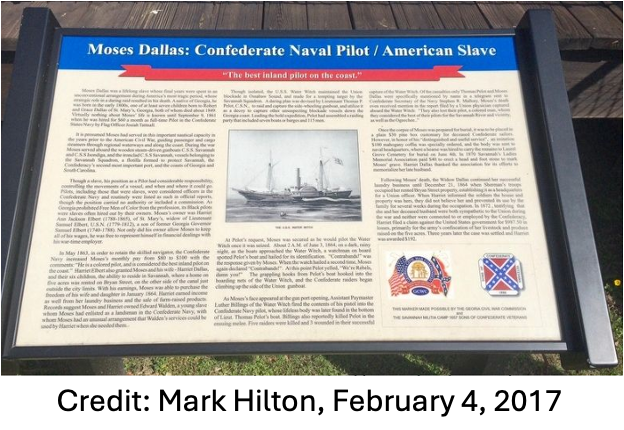
Little is documented of Dallas's early life. A Georgia Civil War Commission historical marker, co-sponsored by a Sons of Confederate Veterans camp, places his birth in the early 1800s in St. Marys, Georgia. He was one of seven or more children in the family of Robert and Grace Dallas. He lost both his parents by around 1849. Some accounts place his birth in Florida; however, St. Marys sits directly on the Georgia-Florida line, so the two accounts likely describe the same doorstep from opposite sides of the state border rather than genuinely disagreeing. Dallas spent decades piloting the channels, rivers, and sounds linking Florida, Georgia, and South Carolina — expertise that made him valuable long before the war gave it military purpose.
Dallas was enslaved by his owner, Harriet Ann Jackson Elbert (1788-1865), of St. Mary's, widow of Lieutenant Samuel Elbert, U.S.N. (1779-1812), a son of former Georgia Governor Samuel Elbert (1740-1788). His owner, the widow Elbert, let him keep his own wages, and he was free to manage his own financial dealings with his employer. On September 9, 1861, Confederate flag officer Josiah Tattnall hired him as a full-time pilot at $60 a month. By 1863, Dallas was pressing commanding officer William A. Webb about the cost of his own uniforms and expenses. Webb wrote Secretary of the Navy Stephen Mallory that he had raised Dallas's pay to $100 a month, calling him "the best inland pilot on the coast." Richmond approved the raise within a week. Dallas served aboard the CSS Savannah, CSS Isondiga, and the ironclad CSS Savannah, part of the Savannah Squadron defending the Confederacy's second-busiest port.
Dallas's position exposed a strange legal fiction in Confederate naval practice: enslaved pilots were routinely treated as officers in the records, carrying real authority over how a vessel moved, while holding no rank, commission, or freedom. His enslaver also permitted Dallas, his wife Harriet, and their six children to live together on a rented Bryan Street property just outside Savannah. With his pilot's wages, Dallas purchased his wife's and daughter's freedom in January 1864 — five months before the raid that killed him. Harriet supplemented the household's income as a washerwoman and with the sale of local produce.
By spring 1864, the USS Water Witch sat almost alone enforcing the Union blockade in Ossabaw Sound, fifteen miles south of Savannah. Lieutenant Thomas Postell Pelot organized a night raid to seize her, assembling a force that varied by account between roughly 115 and 130 officers and men in seven small boats. Dallas piloted the lead boat, the only man aboard who knew the sound well enough to bring the raiders in undetected.
The attack began around 2 a.m. on June 3, 1864, in dark, rainy conditions. A Water Witch watchman spotted Pelot's boat and hailed it for identification. Dallas answered, "Contrabands" — the term for escaped or freed enslaved people, a plausible cover on a coast where such boats were common. Challenged again, he repeated it until Pelot broke the deception by shouting that they were Confederates. Grappling hooks went into the boarding nets, and the raiders climbed the gunboat's side. As Dallas's face appeared at a gun port, a Union officer shot him at close range, killing him instantly; his body was found in the bottom of Pelot's boat, alongside Pelot, killed in the same fighting. Union sources differ on which officer fired the fatal shot. Five Confederate raiders died, and three were wounded in an assault that succeeded in taking the ship.
Dallas's death registered on both sides. A telegram to Secretary Mallory named only two Confederate casualties: Pelot and Dallas. A Union physician captured aboard the Water Witch reported that the Confederates had lost the pilot they considered best for the Savannah River and the Ogeechee. The Confederate Navy ordered Dallas an unusually costly mahogany coffin and paid for a hearse to Laurel Grove Cemetery, where he was buried on June 4. In 1870, Savannah's Ladies Memorial Association discussed erecting a headstone in his memory, though it was apparently never completed.
Harriet Dallas kept the laundry business running until Union troops seized her 5-acre home on Bryan Street that December, initially refusing to believe her ownership claim. Historical accounts indicate that Moses and Harriet owned one enslaved man, Edward Walden. Moses arranged for Walden's enlistment as a landsman in the Confederate Navy, but under a notable condition: Harriet retained the right to call on Walden's labor whenever she required it. In 1872 she filed a federal claim for wartime losses, testifying that she and her late husband had both been sympathetic to the Union; the claim was settled years later for a fraction of what she asked.
Here the record splits in a way worth presenting honestly. The Confederate record is unambiguous: Dallas died in the boarding action and was buried with military honors. But other evidence complicates that ending. A Union enlistment record shows a "Moses Dallas" reappearing on Navy rolls that August, less than three months after his reported death, and this name enlisted in the 128th United States Colored Infantry the following March, mustering out as a corporal in 1866 before rejoining family in Jacksonville, Florida, where he is said to have died in 1874. The Organization of Black Maritime College Graduates, which honored Dallas in 2007, states plainly that he faked his death and defected to Union service. A 2013 public talk at Savannah's Ships of the Sea Maritime Museum, by Civil War naval historian Maurice Melton, was framed around exactly this question, without a clear answer. The evidence does not allow us to state confidently which record is correct.
Enter John H. Deveaux's role in the night the Water Witch was under fire. His role in the events is smaller than Dallas's but no less telling. Deveaux was about thirteen years old when Georgia seceded the Union in January 1861 and was conscripted into Confederate service. He served in Savannah's "mosquito fleet," small boats working the inner harbor and surrounding channels, built on local knowledge and the ability to move unnoticed through narrow water.
A contemporary writing to the Savannah Morning News identified Deveaux as mess boy to Lieutenant Pelot, placing him aboard the gunboat Savannah with Pelot and Dallas during the run at the Water Witch. By this account, Deveaux was ordered out of the boat as Pelot and Dallas moved to board; when both were killed, Deveaux recovered Pelot's body and delivered it to the Pelot family — considerable responsibility for a boy not yet sixteen. Hoskins also connects Deveaux to service aboard the Samson and the Resolute, and records an officer's view of him as reliable and respectful. He was roughly sixteen when Union forces occupied Savannah in December 1864.
This mess boy grew up to be the same John H. Deveaux who became one of Reconstruction-era Savannah's most prominent Black Republican officeholders. Born free in Savannah in 1848, he co-founded the Colored Tribune (later the Savannah Tribune) in December 1875, served as its first editor, and was later appointed U.S. collector of customs at Savannah and Brunswick. Every year afterward, Deveaux placed a wreath on Pelot's grave, explaining that Pelot, once he was in a position to do so, had made sure former Confederates were provided for "in employment or otherwise." The gesture speaks to a loyalty that outlasted the war itself, from a man who spent his later career fighting the very system Pelot had died defending.
Dallas and Deveaux represent different points on the same spectrum of Black men conscripted or coerced into Confederate service at Savannah. Dallas's specialized skill gave him leverage almost no other enslaved person in the city could claim — enough to buy his wife's and daughter's freedom, enough to be called an officer without a commission — but none of it extended to controlling his own life or, in the end, to certainty about how it ended. Deveaux's recorded role was an errand-runner's, not a combatant's, yet he stood close enough to one of the coast's most significant naval actions to carry a dead lieutenant's body home. Neither man's presence in Confederate service should be read as evidence of Confederate sympathy; both worked inside a system that gave them little say, and Deveaux went on to spend his career fighting everything that system stood for — even while keeping a personal loyalty to the officer who died beside him.
___
Sources:
Hoskins, Charles Lwanga.Yet with a Steady Beat: Biographies of Early Black Savannah. Savannah: Gullah Press, 2001, 17, 135.
"John H. Deveaux." New Georgia Encyclopedia. Accessed September 2026
Organization of Black Maritime College Graduates. "Capt. Moses Dallas."
"Savannah Tribune." Wikipedia. Accessed September 2026
5Black Frank and Joe Parkman
Black Frank
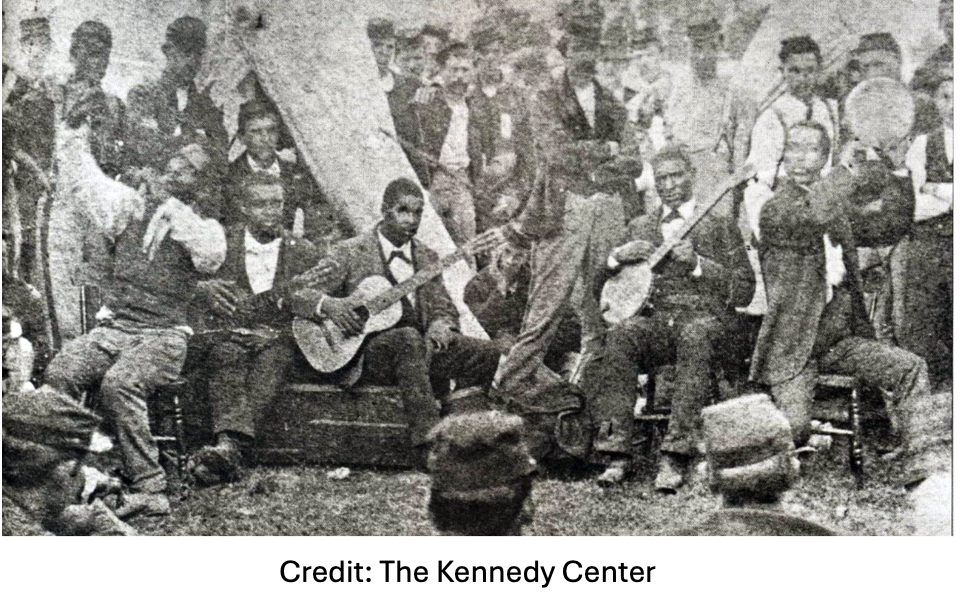
Frank and George Stiles arrived in the world at nearly the same time, in the same household — one born free, the other born enslaved, and both raised as though that distinction hardly mattered to the two boys themselves. They grew up side by side, inseparable in the way only childhood allows. George found his instrument at the piano. Frank found his at the drum, and by the time they were grown, that drum had become part of how Frank carried himself in the world.
When war came, it did not separate them. Frank went to camp alongside George, and there his drumming took on a new purpose — steadying tired men, lifting a camp's spirits when there was little else to lift them. Whatever else the war took from Savannah's men, it did not take Frank and George from each other. They marched together and they came home together.
Back in the city, Frank did not fade into the background. He held himself with a quiet dignity people noticed and remembered — a bearing described as almost pious — and he took an active role in Savannah's all-Black local militia, carrying the same discipline from the drum into civic life.
It was only death that finally did what the war could not. When George Stiles died first, the two friends were divided by Savannah's color line one last time. George was buried in Laurel Grove North, the cemetery reserved for white Savannahians. Frank was laid to rest across the way in Laurel Grove South — close enough that the two cemeteries share a name and a history, far enough that a lifetime of closeness ended at the grave.
___
Joe Parkman, "Old Joe"
Old Joe Parkman held the fife the way Frank Stiles held the drum — as the voice that carried the Savannah Volunteers through camp and column alike. As their leader of music, it fell to Joe to set the sound the whole company marched to.
When war came, Joe went with them. He mustered in with Company A and stayed with the unit through the war's long unraveling, all the way to its final days — service that carried him to Sailor's Creek, within sight of Appomattox Courthouse, in the war's last week.
It was there, in that closing chaos, that thirst rather than a bullet took him. Joe reached for a bottle, drank, and died soon after — whatever was in it turning out to be the thing the war itself hadn't managed. He was buried where he fell, in Virginia soil, in a grave that carries no name — but buried with military honors all the same, the Volunteers he'd led into every battle standing over him for the last one.
According to Henry Kennedy, he left the verdict history remembers him by: "There was never a man more devoted to the cause than he." Faithful to the very end — faithful past the point anyone could have asked of him.
___
Hoskins, Charles Lwanga. Out of Yamacraw and Beyond: Discovering Black Savannah. Savannah, GA: Gullah Press, 2002. 14
Hoskins, Charles Lwanga. Yet with a Steady Beat: Biographies of Early Black Savannah. Savannah, GA: Gullah Press, 2001. 16-18
6War Time Roll Call | We won't forget their names
Not every name called enters the books with a full story attached. Some come down to us as a single sentence in an old regimental history, a role, a place, a fate — and that is still enough to matter. This section holds the men whose stories are brief, but who marched, served, and lived through the same war all the same--they mattered.
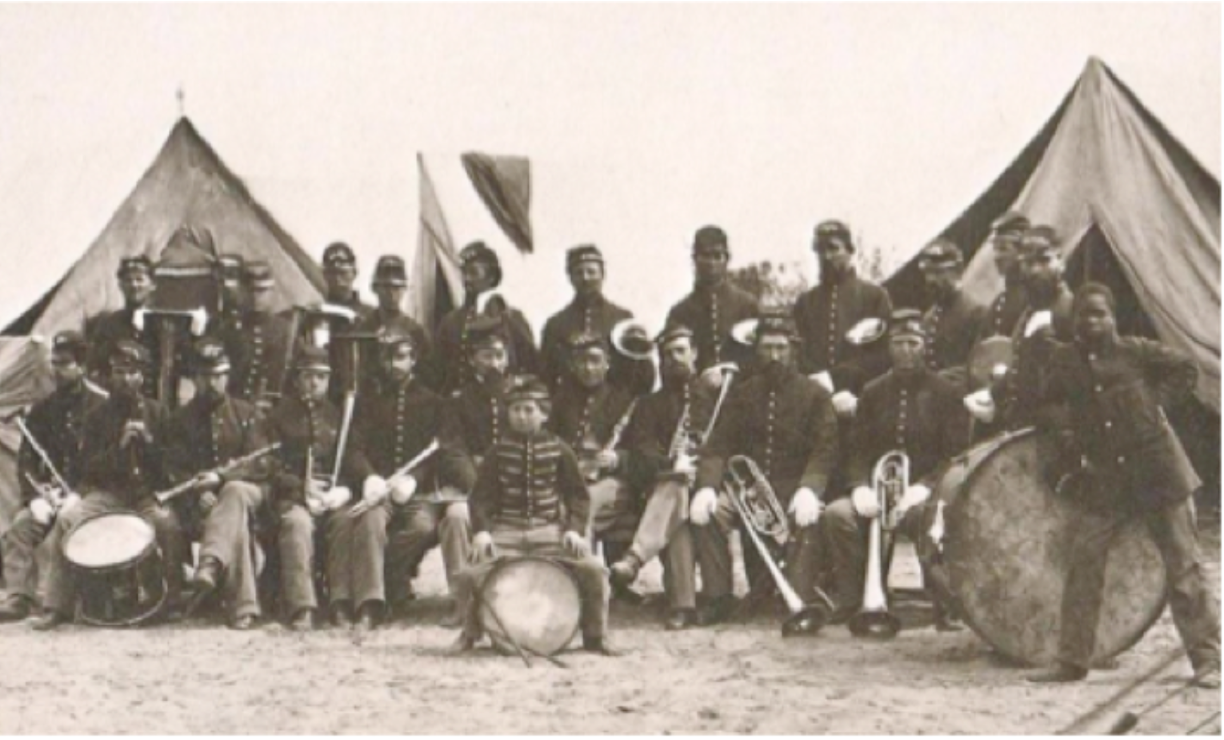
Among the Guard's own musicians were two free men of color, Joe Verdery and Jack Bolton, who kept time on the kettle drums, and Lewis Dubross, a fifer. Dave Ellison, enslaved, played bass drum. When the war called the Guard into active service, DuBross and Verdery stepped away rather than go, while two more free men of color, Henry McCleskey and George Postell, did serve — Ellison's own service cut short only by poor health. Those who did go carried the corps' music to Fort Boggs and Savannah's defenses, to Battery Gregg in South Carolina, and into Virginia itself. It was this generation of Black musicians that prompted William Starr Basinger, writing the corps' history years later, to insist they not be left out of it — recalling their "unswerving fidelity" and the steadiness with which they bore the same dangers and hardships as everyone else in the ranks.
Not all of Savannah's Black soldiers stood with Sherman's Gray. William Waters, born in 1832, marched off as a drum sergeant with the Republican Blues. Others crossed the lines entirely: Cyrus Robinson, Hamilton Praylor, and men known only as Weeks, Burney, and Houston took up the Union cause instead. Some left Savannah altogether to enlist far from home — Josiah Jenkins, a 23-year-old farmer, joined the Union Navy in Philadelphia; Joseph DeVillers, a 20-year-old carpenter, enlisted in New York; Alexander Anderson, 22, and Prince Beatty, a 17-year-old steward, both signed on in Philadelphia as well.
A few of these men left deeper footprints. Old Tom, born enslaved in Savannah in 1808, served the Confederacy at the side of his owner, Captain John Wheaton, throughout the war — service that earned him a Southern Cross marker over his grave in Laurel Grove South. Edward Wicks took the opposite path: born free in Savannah in March 1842, he joined First Bryan Baptist Church as a teenager and served the Union in uniform during the war. He came home to a lifetime of service in his own community — fifty years as a deacon of his church, thirty-four as its clerk, membership in the Odd Fellows' Myrtle Lodge and the Deacons Union, and, fittingly, work as adjutant of the Grand Army of the Republic's Robert G. Shaw Post, named for the White colonel who had led one of the war's most famous Black regiments. David J. Deas was remembered by the press as a “well-known and greatly esteemed negro. He was a cotton buyer on a considerable scale.” His cotton merchant operations were located overlooking the docks on River Street. He was also remembered for his service as a scout for the Confederate army.
The war touched free men of color, Savannahians who never picked up a weapon at all. Jackson B. Sheftall, a mulatto butcher, kept Confederate forces supplied with beef for pay — though he would later insist the arrangement had been forced on him — and he was far from the only free butcher who helped feed the Southern cause. Anthony Odingsells, the region's largest landowner among free men of color, profited from Confederate business of his own until Fort McAllister fell to Sherman's army and took his enslaved laborers with it.
By the war's final winter, Savannah itself had filled with Black soldiers in blue. Sherman could not count any free or enslaved in his rolls as Confederate soldiers. The First South Carolina — the war's first Black regiment — had organized back in May 1862 in Beaufort, in the wake of Hilton Head's fall, and by January 1865 the 55th Massachusetts had reached Savannah, its companies manning the batteries ringing the city; Company F held Old Fort Jackson itself from early January until the second of February. Years later, the men who had served the Union cause kept that history alive on their own terms, organizing as ex-Union soldiers and gathering at their hall — with Abraham Burke standing as their secretary.
By 1865, Savannah's occupation carried a weight its Confederate defenders could scarcely have imagined: at least four Black Union regiments were garrisoned in the city, the 54th Massachusetts among them — the very kind of regiment Savannah's own men had spent the war fighting against. That March, the First South Carolina Volunteers arrived as well, though not under that name anymore; the army had renamed them the 33rd United States Colored Troops the year before. Between these units and others, roughly 2,300 Black soldiers in Union blue now walked Savannah's streets — not as fugitives or contraband, but as the occupying force itself.
Even Savannah's own newspaper couldn't deny what it saw. The Savannah Republican, no friend to the Union cause, described the Black troops on parade as solidly soldierly, disciplined to a high state of perfection — a grudging admission from a paper that had spent four years insisting men like these had no place in uniform at all. Not long after, Companies C, D, and G of the 103rd United States Colored Troops boarded a steamer bound for Fort Pulaski, carrying that same discipline out to guard the harbor their army now controlled.
Hoskins, Charles Lwanga. Out of Yamacraw and Beyond: Discovering Black Savannah. Savannah, GA: Gullah Press, 2002. 14
Hoskins, Charles Lwanga. Yet with a Steady Beat: Biographies of Early Black Savannah. Savannah, GA: Gullah Press, 2001. 16-18
7 Susie King Taylor - First Black Army Nurse
Location: 164 E Gordon Street
___
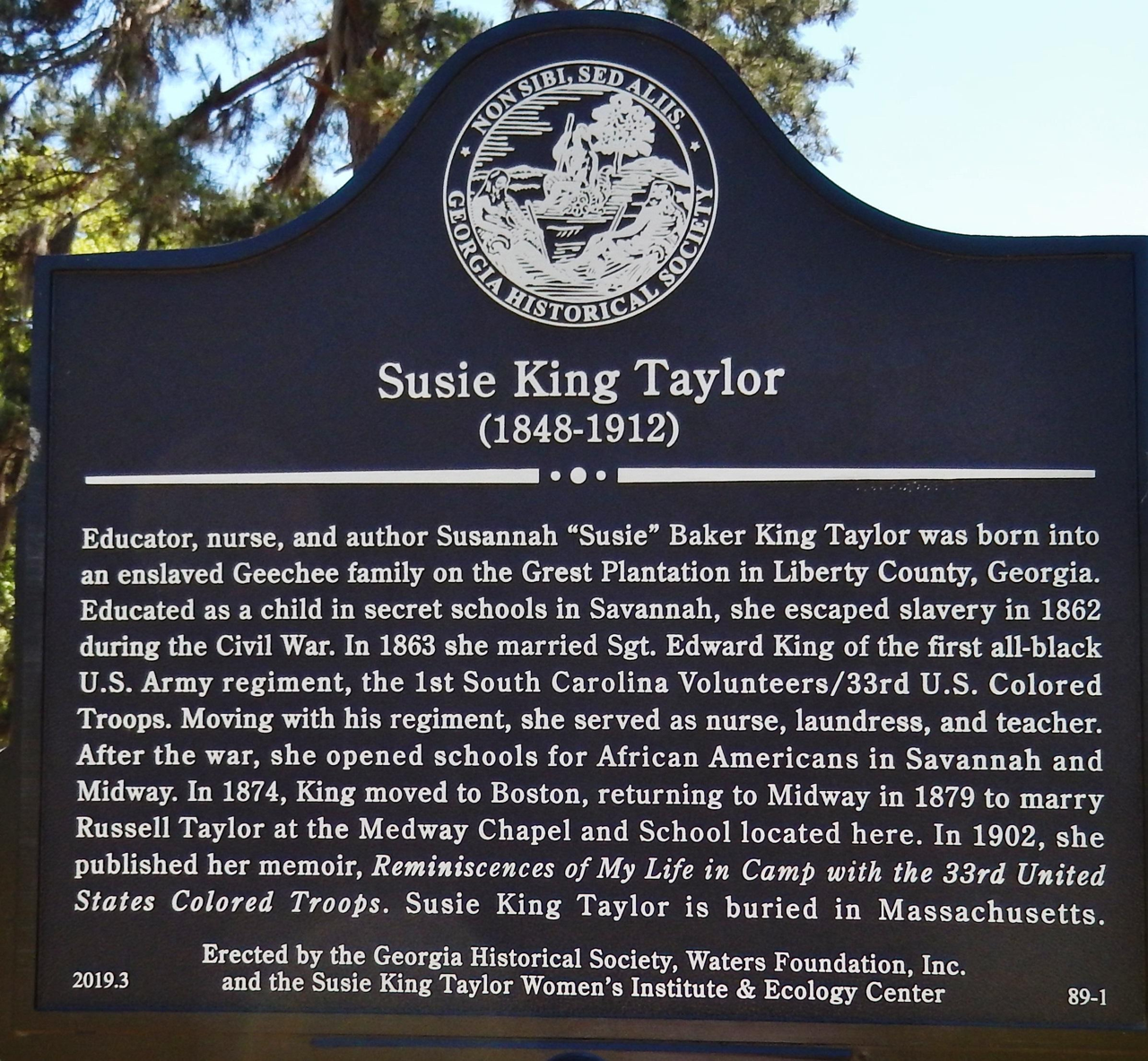
The Georgia coast, 1848. Susan Ann Baker—known as Susie—was born into slavery on the Isle of Wight’s Grest Plantation. At seven, she was sent to Savannah to live with her grandmother, Dolly Reed, a free woman of color. Susie's great-grandmother had been a midwife in the city, and her grandmother Dolly was a washerwoman who supplemented her income running a lucrative boarding house for bachelors, as well as selling chickens and eggs at city market.
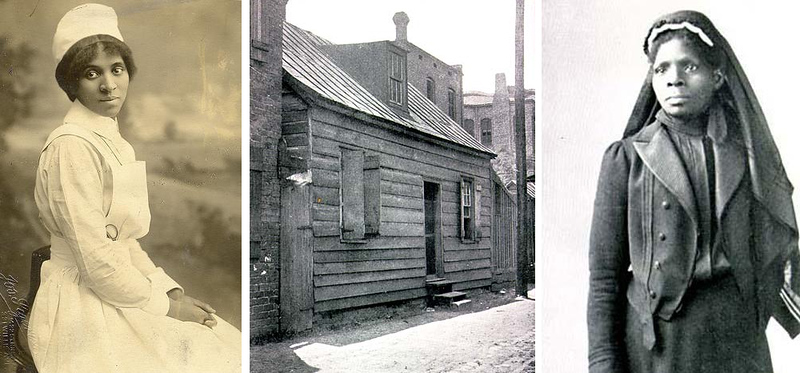
Living in Savannah with her grandmother, Susie attended a secret school, now demolished, on Lot 11, Bay Lane, Warren Square. Here, Catherine Deveaux and Mary Woodhouse taught Black children to read and write—an illegal act under slavery. She took further lessons from a woman whose name, Matilda Taylor (Beasley), would also be written in history. Her grandmother bought her books, and Susie used her education for good, but also to dangerous use. A child’s handwriting turned into a key. She forged “travel passes” that helped grandmother Dolly move through Savannah after the curfew imposed on Black residents each night. Then Dolly was arrested for committing the crime of singing freedom hymns, and Susie returned to live with her mother at Fort Pulaski.
In April 1862, fourteen-year-old Susie fled slavery with her uncle and others, reaching a Union gunboat near a Confederate-held fort. On St. Simons Island, she began openly teaching enslaved children. Soon, Union commanders asked her to organize a school—and that she did.
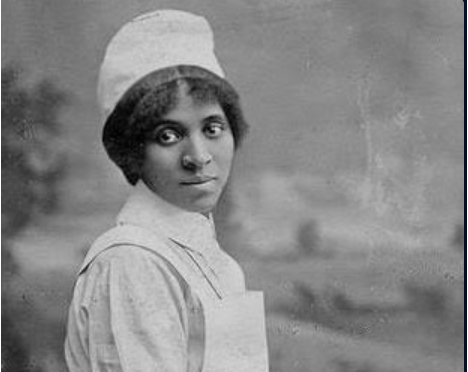
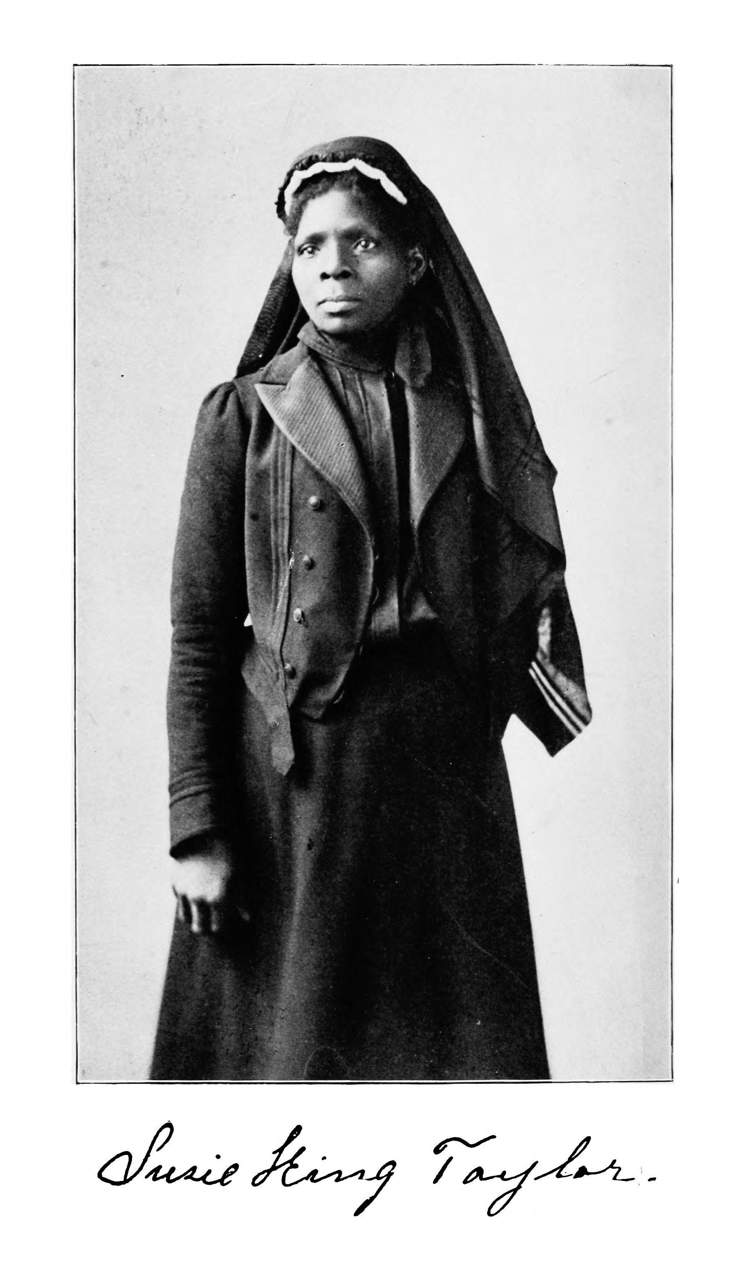
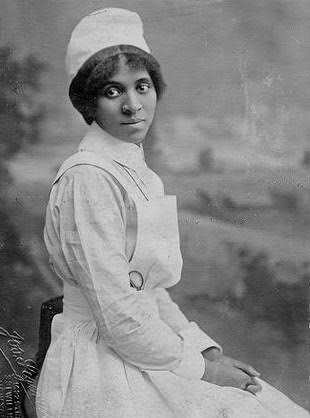
Susie later married Edward King, a soldier in the First South Carolina Volunteers of African Descent, eventually redesignated the 33rd United States Colored Troops. She followed the regiment and became recognized as the first Black Army nurse in American history. She cared for wounded soldiers and taught them to read and write—without pay.
After Edward died in 1872, Susie worked in Savannah for Mrs. Charles Green (Aminta) as a laundress. The Green family is known as the original owners of the local museum, the Green-Meldrim House. The house is famously known as General Sherman’s personal headquarters, where he organized Special Field Order No. 15, which gave rise to the term “forty acres and a mule.”
Susie traveled with the Greens to Rye Branch for the summer and served as their cook. The summering ladies at Rye Branch put on a fair where Susie won a prize for her excellent cooking. Later, traveling north to Boston, she married Russell Taylor and joined the Women’s Relief Corps. In 1893, she became president of her corps and published Reminiscences of My Life in Camp with the 33d United States Colored Troops, the only Civil War memoir published by a Black woman.
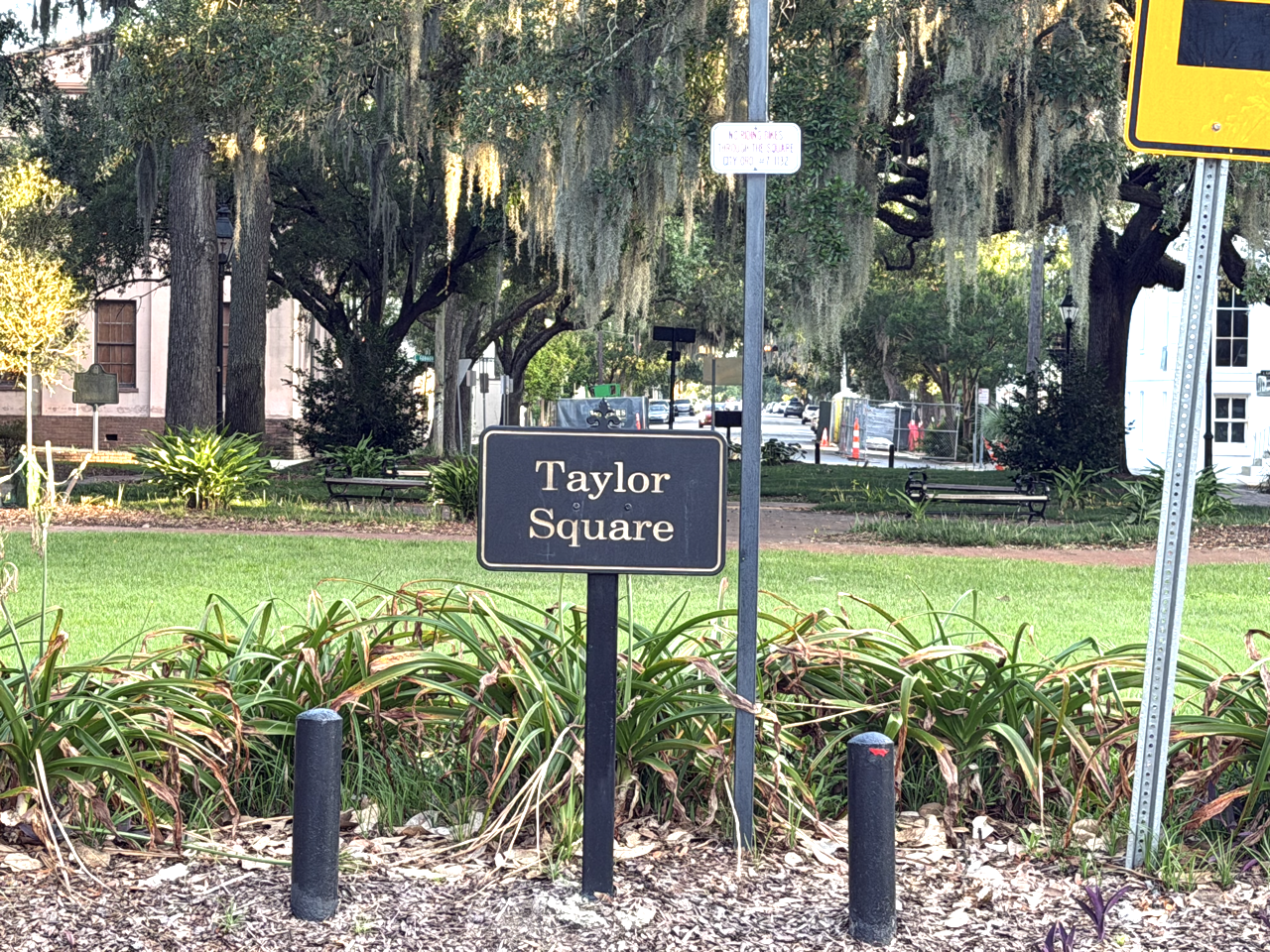
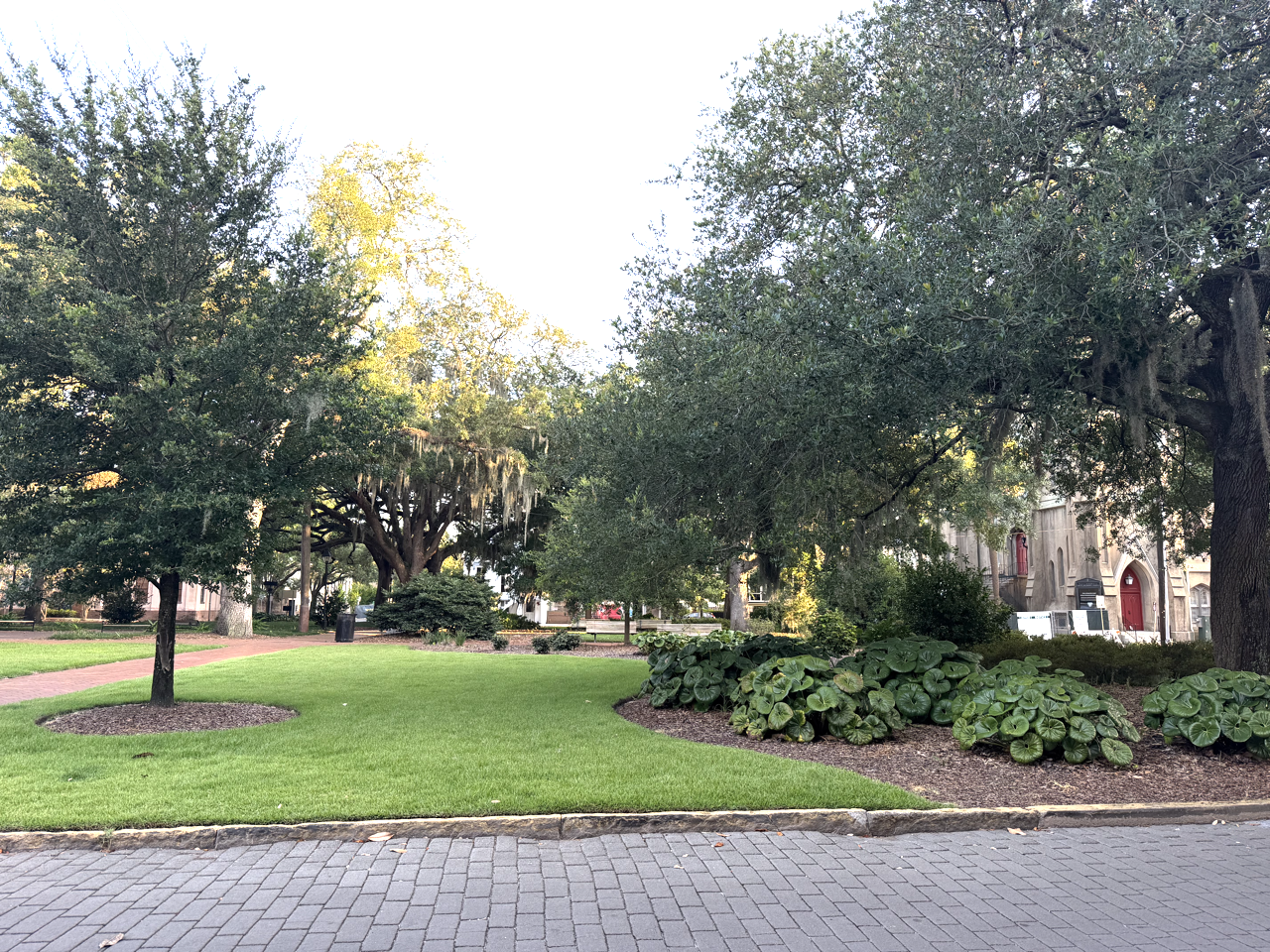
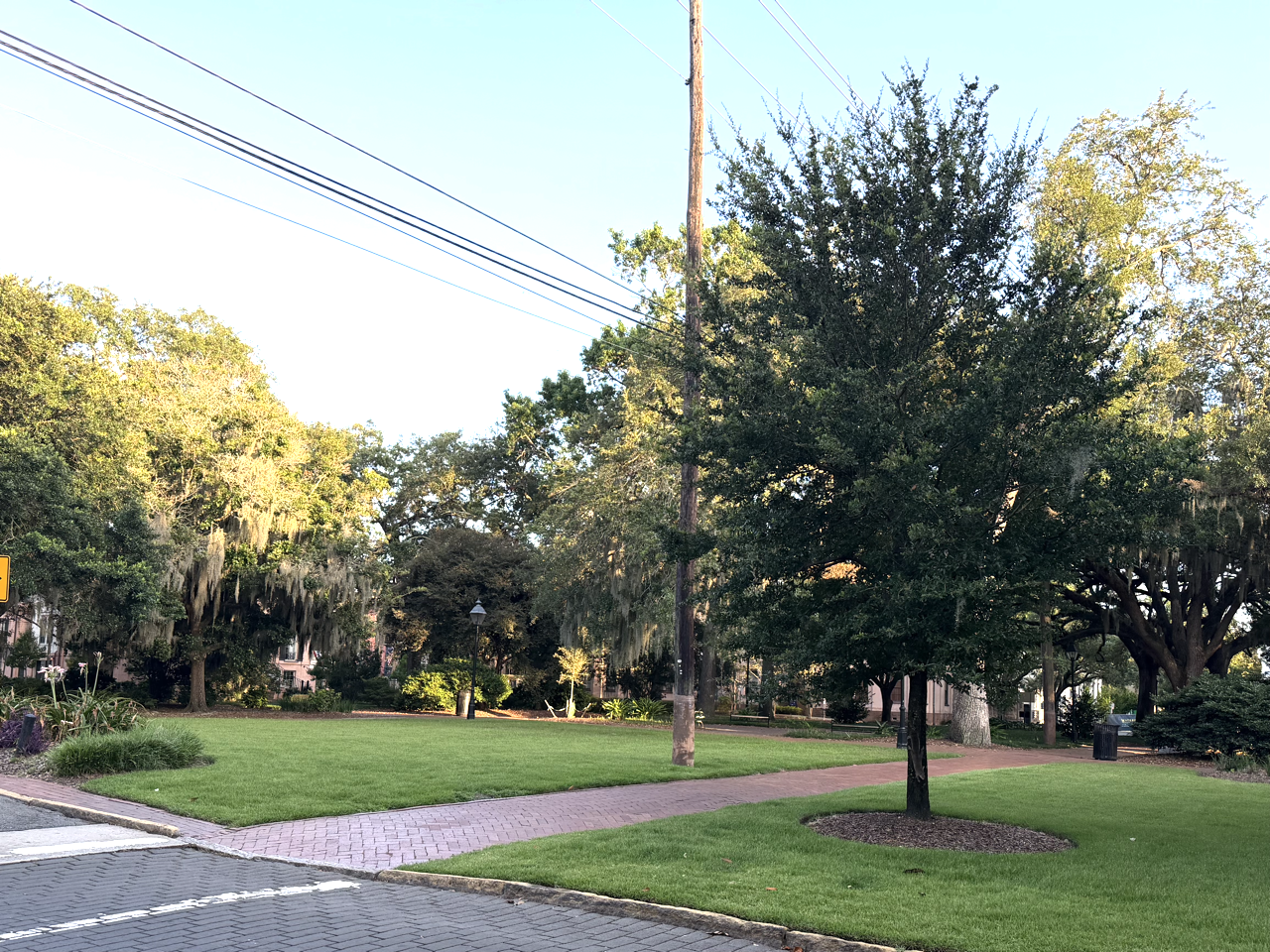
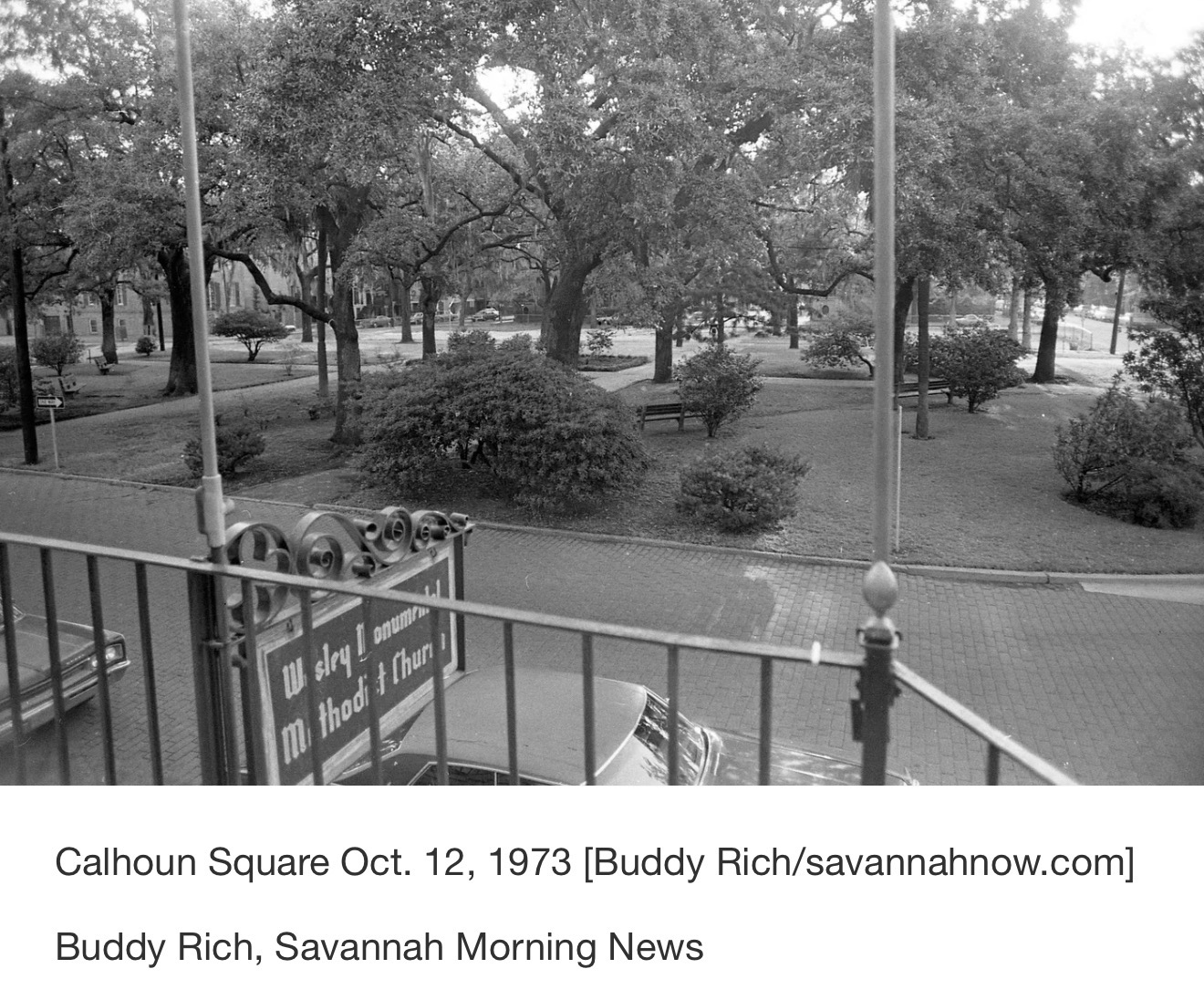
The story did not end with her death. In 2023, in the heart of historic downtown Savannah, at the corner of Abercorn and Wayne streets, a public square was rededicated in her honor. Once called Calhoun Square, it became Susie King Taylor Square — the first and only one of Savannah's twenty-two squares named for both an African American and a woman. In 2018, she was named a nominee for Georgia Women of Achievement.
From a forged pass written by a child in a darkened schoolroom, to a square bearing her name in the open light of the city — Susie King Taylor's whole life was an act of refusing the limits set for her.
___
Sources:
Bartoletti, Susan Campbell. "Teaching in Secret: The Underground Schools of Civil War Savannah." Georgia Historical Quarterly 82, no. 2 (1998): 245–268.
Boisseau, Tracey Jean. "Daughter of Savannah: Susie Baker King Taylor, 1848-1912." In Slavery and Freedom in Savannah, edited by Leslie M. Harris and Daina Ramey Berry, [155-158]. Athens: University of Georgia Press, 2014.
Taylor, Susie King. Reminiscences of My Life in Camp with the 33d United States Colored Troops, Late 1st S.C. Volunteers. Boston: Published by the author, 1902. Reprint, Mineola, NY: Dover Publications, 2014.
Visual Material Photo Credit
Prints and Photographs Division, Library of Congress (LC-DIG-ppmsca-67943)
American Battlefield Trust. "Susie King Taylor." Biographies. Accessed August 2, 2026
The Jaxson. "Susie Taylor: A USCT Story of Civil War Jacksonville." April 19, 2019
The interactive version adds a street-following map, narration audio and a guided stop-by-stop experience.